Makes › Alfa Romeo › 6C › 6C 1750 Gran Sport Series IV Spider · Rare specification · 1930 Extremely Rare
Alfa Romeo
6C 1750 Gran Sport Series IV Spider
Fourth-series Gran Sport spiders (Zagato and others)
Contents
01Overview
At a glance
- Built
- 102 Built
- Years
- 1930
- Engine
- Front-mounted, longitudinal inline six · 1,752 cc / 1.8 LFactory: 1,752 cc
- Power
- 62.5 kW / 85 PSFactory: 85 PS
- Top speed
- 145 km/hFactory: 145 km/h
- Body
- Not yet verified
- Designer
- Zagato
- In this archive
- Not yet verified
- Surviving
- Not yet verified
Sources and any conflicting figures are in the sections below.
Why it matters
The Zagato-bodied Gran Sport spider was the most potent 6C 1750 and one of the dominant sports-racing cars of its time. The 1,750 cc supercharged six won the Mille Miglia in 1929 and 1930, and the 1930 Gran Sport name replaced Super Sport for the short-wheelbase spiders. Catalogues call these cars among the rarest and most desirable pre-war Alfa Romeos.
How rare is it?
Six separate kinds of rarity – never combined into one number.
Each kind of rarity is rated separately and never combined.
02Production & history
Production
Every figure says what it counts.
| What is counted | Figure | Basis | Status |
|---|---|---|---|
| Factory package productionapprox. Series IV Spiders built | 1021 | Factory production | Independently researched |
Independent counts (e.g. engine and colour) are never combined into a calculated figure. Surviving examples are never presented as original production.
History
Alfa Romeo introduced the 1,750 cc version of Vittorio Jano's six-cylinder engine in 1929, and the 6C 1750 went on to fill four further series over about six years. Most were single-cam Turismo cars; a minority were twin-cam Sport versions, and the Zagato-bodied Super Sport spiders used a shorter 108-inch wheelbase with an optional finned supercharger.
From 1930 the name became Gran Sport, with a sloping radiator and a standard Roots supercharger rated at 85 horsepower by one catalogue. One catalogue counts approximately 102 fourth-series Gran Sport cars, while another quotes approximately 106 Gran Sport examples overall.
Variants
How each version differs from the standard 6C 1750 Gran Sport Series IV Spider.
No variants documented yet. Have a source? Contribute it.
03Specifications
Technical specifications
Engine
| Engine family | Not yet verified |
|---|---|
| Engine code | Not yet verified |
| Layout | Front-mounted, longitudinal inline six2 |
| Cylinders | 62 |
| Displacement | 1,752 cc / 1.8 LFactory: 1,752 cc2 |
| Bore | 65 mmFactory: 65 mm2 |
| Stroke | 88 mmFactory: 88 mm2 |
| Compression ratio | Not yet verified |
| Valvetrain | 2 valves per cylinder, 2 overhead camshafts driven by shaft and bevel gears; iron block and head2 |
| Fuel system | Twin-choke carburettor2 |
| Induction | Roots-type supercharger3 Independently researched |
| Power | 62.5 kW / 85 PSFactory: 85 PS2Rating: manufacturerMuseum states CV, recorded as PS. Gooding gives 85 BHP at 4,400 rpm (S3). The museum's other 6C 1750 page, a Testa Fissa (6 built), lists 102 CV. |
| Power at | 4,500 rpm2Gooding gives 4,400 rpm (S3). |
| Torque | Not yet verified |
Transmission & drivetrain
| Gearbox | Not yet verified |
|---|---|
| Gears | 42 |
| Driven wheels | Rear2 |
Chassis, body & dimensions
| Chassis | Steel sheet side members and cross members2 |
|---|---|
| Front suspension | Rigid axle, semi-elliptic leaf springs, friction dampers2 |
| Rear suspension | Rigid axle, semi-elliptic leaf springs, friction dampers2 |
| Brakes | Mechanical drum brakes2 |
| Steering | Not yet verified |
| Body construction | Not yet verified |
| Wheelbase | 2,745 mmFactory: 2,745 mm2 |
| Length | 3,652 mmFactory: 3,652 mm2 |
| Width | 1,615 mmFactory: 1,615 mm2 |
| Height | Not yet verified |
| Front track | Not yet verified |
| Rear track | Not yet verified |
| Kerb weight | 920 kgFactory: 920 kg2Museum lists 'Peso' without stating the condition. |
| Dry weight | Not yet verified |
Performance
| Maximum speed | 145 km/hFactory: 145 km/h2 |
|---|---|
| 0–100 km/h | Not yet verified |
| Fuel tank | Not yet verified |
“Not yet verified” means no source has been checked for that value yet. Nothing is estimated to fill a gap.
04Colours & options
Factory colours & interiors
Original paint and trim, with the number of cars in each where a source gives it.
Not yet documented. Have a source? Contribute it.
Factory options & codes
Codes are shown exactly as written by the manufacturer.
Not yet documented. Have a source? Contribute it.
05Individual cars
Chassis register
Every documented car, with its colours, history and where it is now. Open a row for the full record. Known chassis are not automatically authenticated originals.
Not yet documented. Have a source? Contribute it.
Competition history
Every race result of the individual cars, in date order. Click a chassis number to open its full record in the register.
Not yet documented. Have a source? Contribute it.
Auction & sale history
Documented public sales of the individual cars. Click a chassis number to open its full record in the register.
Not yet documented. Have a source? Contribute it.
See one in person
Museums where an example of this car can be seen.
No example is documented on public display yet. Have a source? Contribute it.
06Reference
Identification guide
How to tell an original from a replica or later conversion.
A Series IV Gran Sport has a short-wheelbase chassis (2745 mm per the museum), a Zagato spider body, a sloping radiator and a Roots-type supercharger on the 1,752 cc twin-cam six. Catalogues note that ageing Alfa Romeos were often rebuilt with Zagato-style bodies on correct chassis, so original coachwork, matching chassis and engine numbers and factory records should be checked. One lot lists identical chassis and engine numbers (8513064).
Sources
Each number links to the exact facts it supports.
-
1
RM Sotheby's Paris 2026, lot r0044 – 1930 6C 1750 GS Series IV Spider (chassis 8513041) Level B
- 102 approx. Series IV Spiders built
-
2
Museo Storico Alfa Romeo collection page: 6C 1750 Gran Sport (Zagato spider corsa) Level A Museo Storico Alfa Romeo, Arese
- 6 cilindri in linea
- 1752 cc (65x88 mm)
- 2 alberi a camme in testa con comando ad alberino e coppie coniche
- carburatore doppio corpo e compressore
- 85 CV a 4500 giri/min.
- 4 marce + RM
- Trazione posteriore
- Longheroni e traverse in lamiera di acciaio
- Anteriore: assale rigido, balestre longitudinali semiellittiche
- Posteriore: assale rigido, balestre longitudinali
- A tamburo, meccanici
- Passo: 2745 mm
- lunghezza: 3652 mm
- larghezza: 1615
- Peso 920 kg
- Massima velocità 145 km/h
-
3
1930 Alfa Romeo 6C 1750 Series IV Gran Sport Spider (Pebble Beach 2008) Level C Gooding & Company
- Rootes-Type Supercharger
Keep exploring
More from Alfa Romeo
-
Alfa Romeo · 1988
164 ProCar
1 Built
-
Alfa Romeo · 1941
8C 2900B "Balena"
1 Built
-
Alfa Romeo · 1938
8C 2900B Le Mans Berlinetta (Touring)
1 Built
-
Alfa Romeo · 1968
Carabo (Bertone)
1 Built
See all 212 cars by Alfa Romeo →
More from Italy
-
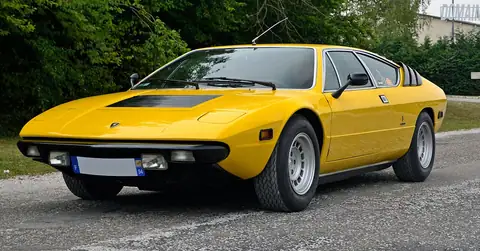
Lamborghini
Urraco P111
21 Built
-
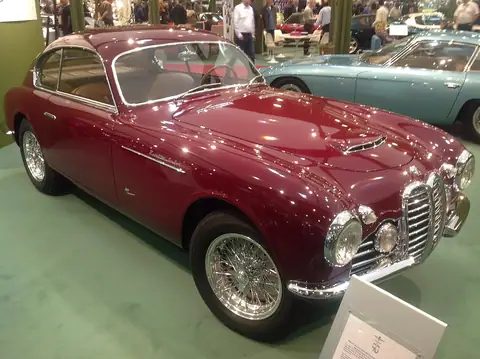
Maserati
A6G 2000 (1950-1953)
Production not yet verified
-
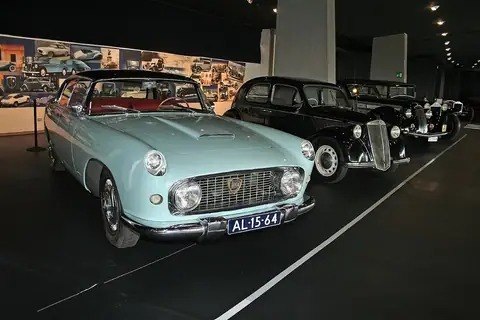
Lancia
Florida (Pininfarina, 1955)
Production not yet verified
-
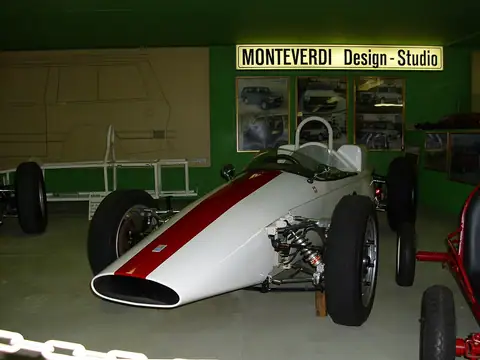
MBM
Formel 1
Production not yet verified
62 other makes from ItalyAbarthACM AutomobiliAres DesignATSAuto Avio CostruzioniAutobianchiAznomB EngineeringBandiniBertoneBizzarriniBrixia-ZüstCagivaCarrozzeria Touring SuperleggeraCeiranoChiribiriCisitaliaCizetaColoniCoviniDallaraDe TomasoDiattoF.I.A.L. LegnanoFerrariFervesFiatFissoreFlorentiaGhiaInnocentiIntermeccanicaIsoIsotta FraschiniItalaItaldesignLaffiteLamborghiniLanciaMaseratiAll makes →