Makes › Alfa Romeo › Giulia › Giulia TZ (Tubolare Zagato) · Coachbuilt · 1963–1967 Extremely Rare
Alfa Romeo
Giulia TZ (Tubolare Zagato)
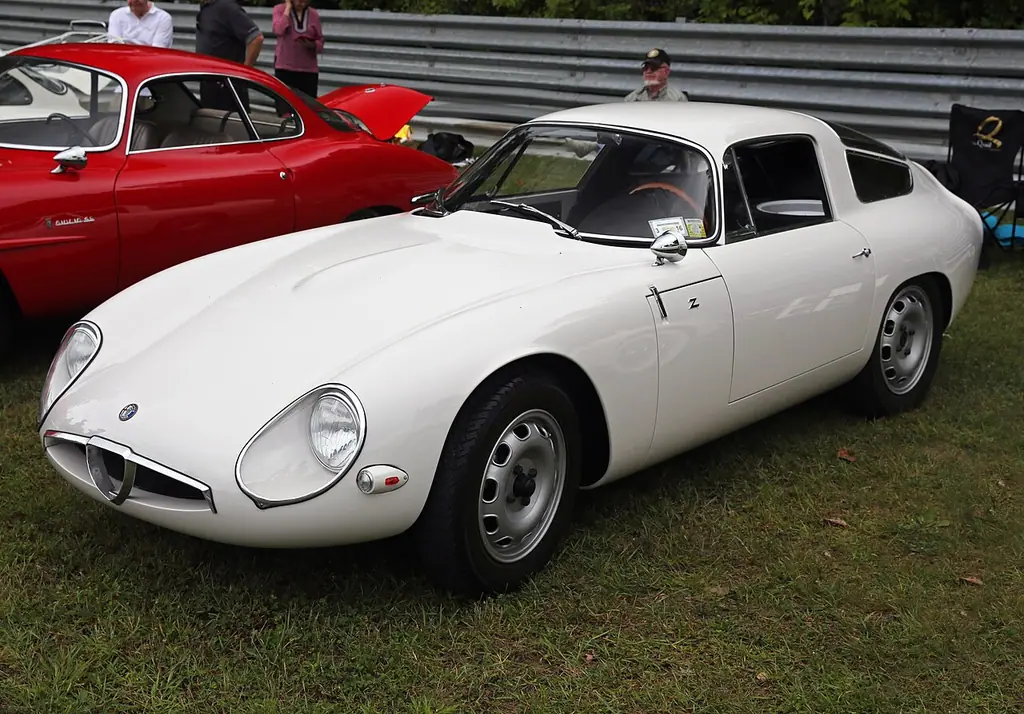
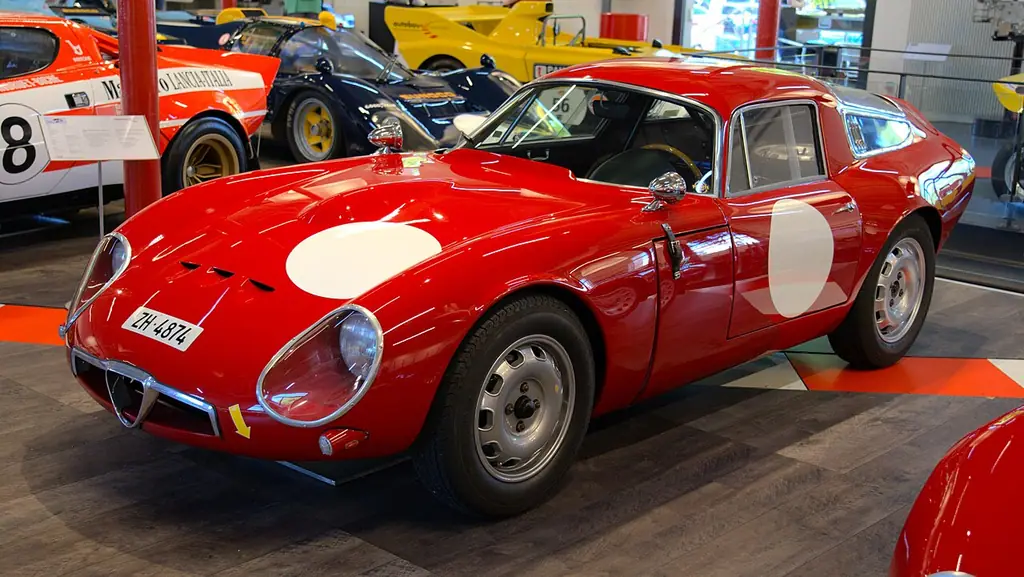
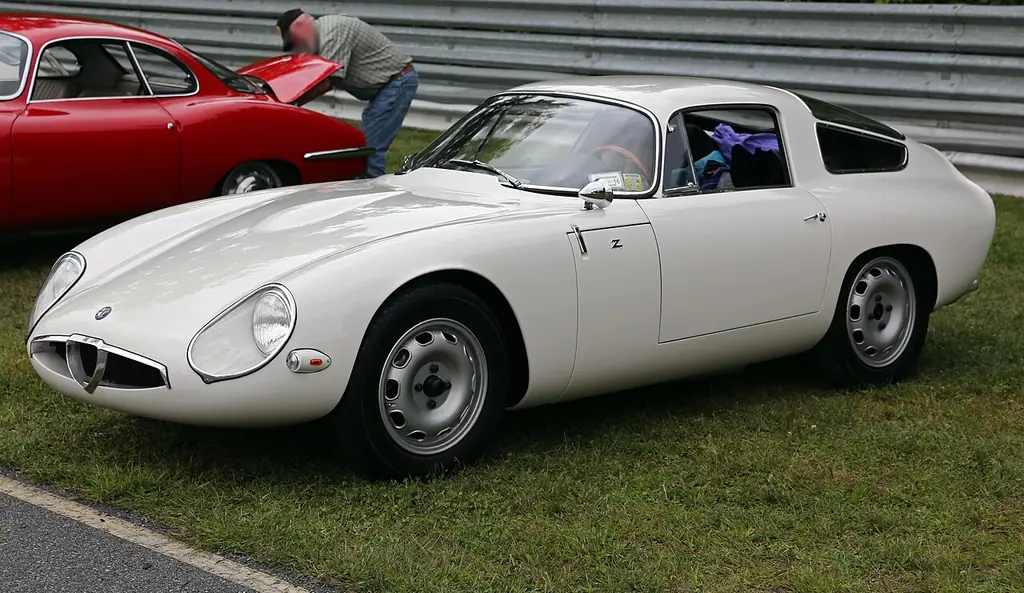
Alfa Romeo tubular spaceframe chassis with Zagato aluminium body; built for GT racing
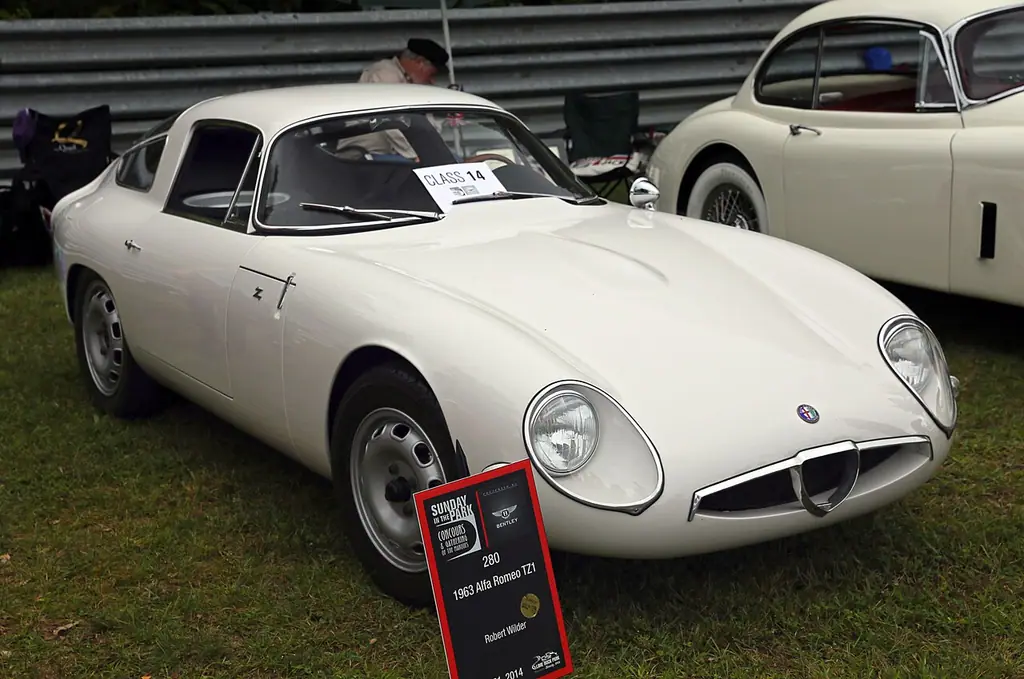
Photo: Vetatur Fumare · CC BY-SA 2.0
Contents
01Overview
At a glance
- Built
- 117 Built
- Years
- 1963–1967
- Engine
- 1,570 cc / 1.6 LFactory: 1,570 cc
- Power
- 83.1 kW / 113 PSFactory: 113 PS
- Top speed
- 214 km/hFactory: 133 mph · converted
- Body
- Zagato
- Designer
- Carrozzeria Zagato
- In this archive
- Not yet verified
- Surviving
- Not yet verified
Sources and any conflicting figures are in the sections below.
Why it matters
The Tubolare Zagato was Alfa Romeo's first Giulia designed from the start for racing, with a lightweight tubular spaceframe, an aluminium Zagato body with a low-drag nose and Kamm tail, independent rear suspension and disc brakes all round. RM Sotheby's compares its standing to Ferrari's GTO and calls it the most collectable post-war four-cylinder Alfa.
How rare is it?
Six separate kinds of rarity – never combined into one number.
Each kind of rarity is rated separately and never combined.
Photos
Exterior, interior and detail photos with their licences.
 Alfa Romeo Giulia TZ (Tubolare Zagato) (Wikimedia Commons: Alfa Romeo Giulia TZ)
Photo: Vetatur Fumare · CC BY-SA 2.0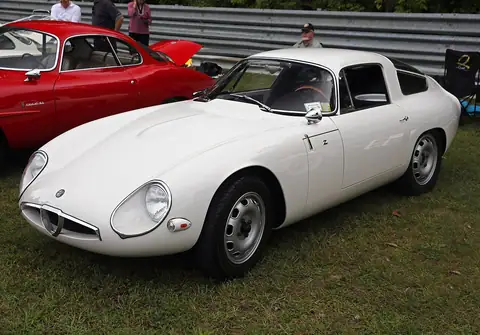 Alfa Romeo Giulia TZ (Tubolare Zagato) (Wikimedia Commons: Alfa Romeo Giulia TZ)
Photo: Vetatur Fumare · CC BY-SA 2.0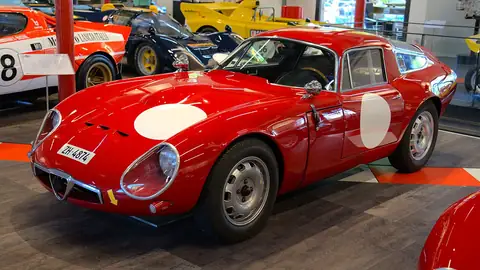 Alfa Romeo Giulia TZ (Tubolare Zagato) (Wikimedia Commons: Alfa Romeo Giulia TZ)
Photo: MrWalkr · CC BY-SA 4.0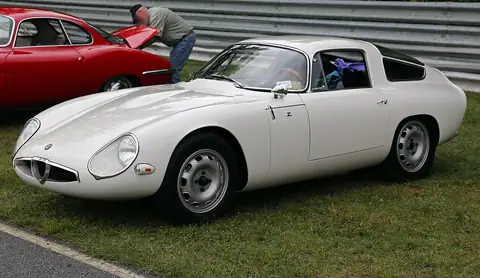 Alfa Romeo Giulia TZ (Tubolare Zagato) (Wikimedia Commons: Alfa Romeo Giulia TZ)
Photo: Mr.choppers · CC BY-SA 3.0


02Production & history
Production
Every figure says what it counts.
| What is counted | Figure | Basis | Status |
|---|---|---|---|
| Total model productionGiulia TZ cars produced, as listed by the Museo Storico Alfa Romeo | 1171 | Manufacturer reported | Factory reported |
Independent counts (e.g. engine and colour) are never combined into a calculated figure. Surviving examples are never presented as original production.
History
The TZ appeared in competition in late 1963 and was FIA-homologated in 1964. That year TZs took class victories at Sebring, the Targa Florio, the Nürburgring 1000 km, Le Mans and the Tour de France, finished third and fourth at the Targa Florio behind two Porsche 904s, and one won the Alpine Rally outright. The cars were road-registrable and also sold to private racers in Europe and the United States.
Artcurial credits the design to a team under Giuseppe Busso and Orazio Satta, built to answer the Lotus Elite. Production figures differ between sources, from about 112 TZs plus 12 plastic-bodied TZ2s to 117 built through 1966; the museum lists 117.
Variants
How each version differs from the standard Giulia TZ (Tubolare Zagato).
No variants documented yet. Have a source? Contribute it.
03Specifications
Technical specifications
Engine
| Engine family | Not yet verified |
|---|---|
| Engine code | Not yet verified |
| Layout | Not yet verified |
| Cylinders | 41 |
| Displacement | 1,570 cc / 1.6 LFactory: 1,570 cc1 |
| Bore | 78 mmFactory: 78 mm1 |
| Stroke | 82 mmFactory: 82 mm1 |
| Compression ratio | Not yet verified |
| Valvetrain | 2 valves per cylinder, 2 overhead camshafts with double chain drive1 |
| Fuel system | 2 twin-choke carburettors1 |
| Power | 83.1 kW / 113 PSFactory: 113 PS1Rating: manufacturerStated as CV; museum figure for the standard single-ignition engine. RM Sotheby's gives 112 hp road and 170 hp racing tune; Artcurial about 165 hp for a twin-ignition engine. |
| Power at | 6,500 rpm1 |
| Torque | Not yet verified |
Transmission & drivetrain
| Gearbox | Not yet verified |
|---|---|
| Gears | 51 |
| Driven wheels | Rear1 |
Chassis, body & dimensions
| Chassis | Welded tubular lattice (spaceframe)1 |
|---|---|
| Front suspension | Independent, transverse arms, coil springs, hydraulic dampers, anti-roll bar1 |
| Rear suspension | Independent, transverse arm, oblique strut, coil springs, hydraulic dampers, anti-roll bar1 |
| Brakes | Hydraulic disc brakes with servo on all four wheels, rear brakes inboard1 |
| Steering | Not yet verified |
| Body construction | Not yet verified |
| Wheelbase | 2,500 mmFactory: 2,500 mm1,2 DisputedMuseum prints 2500 mm; the RM Sotheby's lot for chassis 750006 gives 2,200 mm. Unresolved. |
| Length | 3,950 mmFactory: 3,950 mm1 |
| Width | 1,510 mmFactory: 1,510 mm1 |
| Height | 1,200 mmFactory: 1,200 mm1 |
| Front track | Not yet verified |
| Rear track | Not yet verified |
| Kerb weight | 660 kgFactory: 660 kg1The museum does not say whether dry or kerb weight. |
| Dry weight | Not yet verified |
Performance
| Maximum speed | 214 km/hFactory: 133 mph · converted3 Independently researchedRM Sotheby's figure; the museum prints 215 without a unit. |
|---|---|
| 0–100 km/h | Not yet verified |
| Fuel tank | Not yet verified |
“Not yet verified” means no source has been checked for that value yet. Nothing is estimated to fill a gap.
04Colours & options
Factory colours & interiors
Original paint and trim, with the number of cars in each where a source gives it.
Not yet documented. Have a source? Contribute it.
Factory options & codes
Codes are shown exactly as written by the manufacturer.
Not yet documented. Have a source? Contribute it.
05Individual cars
Chassis register
Every documented car, with its colours, history and where it is now. Open a row for the full record. Known chassis are not automatically authenticated originals.
Not yet documented. Have a source? Contribute it.
Competition history
Every race result of the individual cars, in date order. Click a chassis number to open its full record in the register.
Not yet documented. Have a source? Contribute it.
Auction & sale history
Documented public sales of the individual cars. Click a chassis number to open its full record in the register.
Not yet documented. Have a source? Contribute it.
See one in person
Museums where an example of this car can be seen.
No example is documented on public display yet. Have a source? Contribute it.
06Reference
Identification guide
How to tell an original from a replica or later conversion.
TZ chassis numbers in the cited cars fall in the 750xxx series (750006, 750066, 750087, 750097, 750100). Genuine cars can be checked against the Alfa Romeo Centro Documentazione, the Alfa Romeo Zagato Register and the Registro Italiano Alfa Romeo, which issues certificates of authenticity. RM Sotheby's notes that factory records of the era did not record engine numbers, so engine originality is hard to prove; the Tipo 511 engine carries numbers such as 00034, and racing cars used a twin-plug cylinder head. Artcurial reports an internal manufacturing number (No 812) found on several panels and a distributor plate in the engine bay showing the chassis number.
Sources
Each number links to the exact facts it supports.
-
1
Giulia TZ Level A Museo Storico Alfa Romeo
- Vetture Prodotte 117
- 4 cilindri in linea (Dettagli vettura)
- 1570 cc (78x82 mm) (Dettagli vettura)
- 2 alberi a camme in testa con comando a doppia catena (Dettagli vettura)
- 2 carburatori doppio corpo (Dettagli vettura)
- 113 CV a 6500 giri/min. (Dettagli vettura)
- 5 marce + RM (Dettagli vettura)
- Trazione posteriore (Dettagli vettura)
- Traliccio di tubi saldati (Dettagli vettura)
- ruote indipendenti, bracci trasversali, molle elicoidali (Dettagli vettura)
- braccio trasversale, puntone obliquo (Dettagli vettura)
- a disco sulle 4 ruote, posteriori interni (Dettagli vettura)
- Passo: 2500 mm (Dettagli vettura)
- lunghezza: 3950 mm (Dettagli vettura)
- larghezza: 1510 mm (Dettagli vettura)
- altezza: 1200 mm (Dettagli vettura)
- Peso kg 660 (Dettagli vettura)
-
2
1964 Alfa Romeo Giulia TZ1 (chassis 750006) Level C RM Sotheby's
- Passo: 2.200 mm (86.6")
-
3
1965 Alfa Romeo Giulia TZ1 (chassis 750097), Monterey 2024 Level C RM Sotheby's
- impressive top speed of 133 mph
Keep exploring
More from Alfa Romeo
-
Alfa Romeo · 1988
164 ProCar
1 Built
-
Alfa Romeo · 1941
8C 2900B "Balena"
1 Built
-
Alfa Romeo · 1938
8C 2900B Le Mans Berlinetta (Touring)
1 Built
-
Alfa Romeo · 1968
Carabo (Bertone)
1 Built
See all 212 cars by Alfa Romeo →
More from Italy
-
Ferrari
SF90 XX Spider
Production not yet verified
-
F.I.A.L. Legnano
Type A 6/8 HP
Production not yet verified
-
Maserati · 1956–1958
450S (1956-1958)
Production not yet verified
-
Lancia · 1958–1967
Flaminia Coupé (Pinin Farina)
5,235 Built
62 other makes from ItalyAbarthACM AutomobiliAres DesignATSAuto Avio CostruzioniAutobianchiAznomB EngineeringBandiniBertoneBizzarriniBrixia-ZüstCagivaCarrozzeria Touring SuperleggeraCeiranoChiribiriCisitaliaCizetaColoniCoviniDallaraDe TomasoDiattoF.I.A.L. LegnanoFerrariFervesFiatFissoreFlorentiaGhiaInnocentiIntermeccanicaIsoIsotta FraschiniItalaItaldesignLaffiteLamborghiniLanciaMaseratiAll makes →