Makes › Citroën › BX › BX 4TC · Factory competition · 1985–1986 Extremely Rare
Citroën
BX 4TC
Group B homologation BX; most unsold cars were destroyed by Citroën.
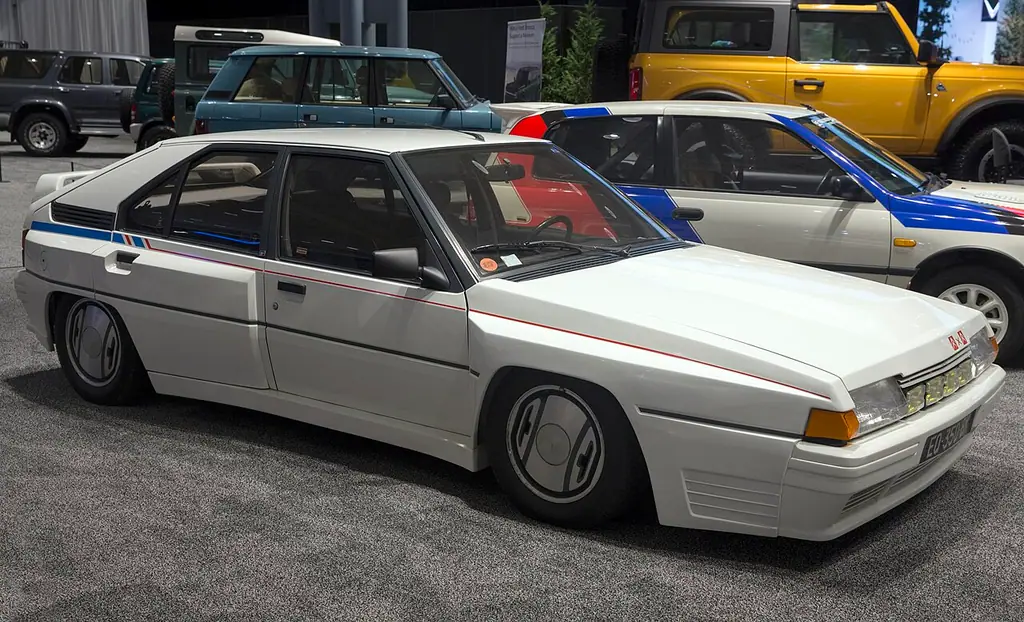
Photo: Mr.choppers · CC BY-SA 3.0
Contents
01Overview
At a glance
- Built
- 200 Built
- Years
- 1985–1986
- Engine
- Front, longitudinal, ahead of the front axle · 2,200 cc / 2.2 LFactory: 2.2 L
- Power
- 149 kW / 203 PSFactory: 200 hp · converted
- Top speed
- 220 km/hFactory: 137 mph · converted
- Body
- Not yet verified
- Designer
- Guy Verrier (Citroen Competition department); built by Heuliez
- In this archive
- Not yet verified
- Surviving
- 30 (independently researched)
Sources and any conflicting figures are in the sections below.
Why it matters
The BX 4TC "Serie 200" is the road-going homologation version of Citroën's only Group B rally car. Few were sold, Citroën reportedly bought some back to scrap them, and an estimated 30 survive.
How rare is it?
Six separate kinds of rarity – never combined into one number.
Each kind of rarity is rated separately and never combined.
Photos
Exterior, interior and detail photos with their licences.
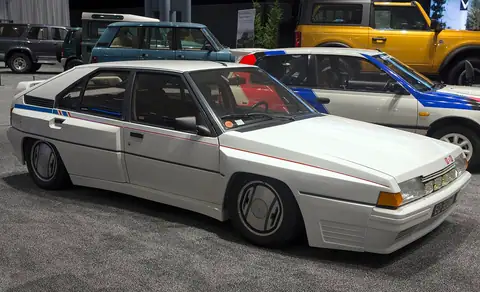 Citroën BX 4TC (Wikimedia Commons: Citroën BX 4TC)
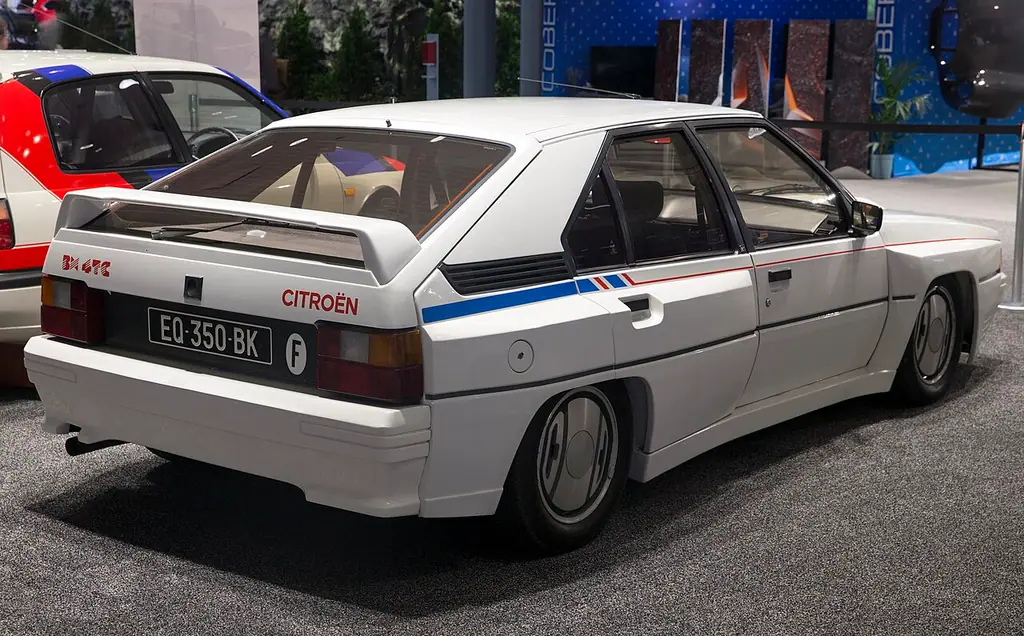
Photo: Mr.choppers · CC BY-SA 3.0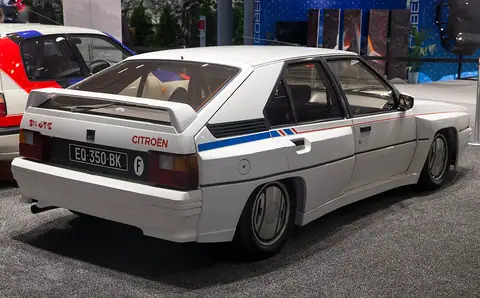 Citroën BX 4TC (Wikimedia Commons: Citroën BX 4TC)
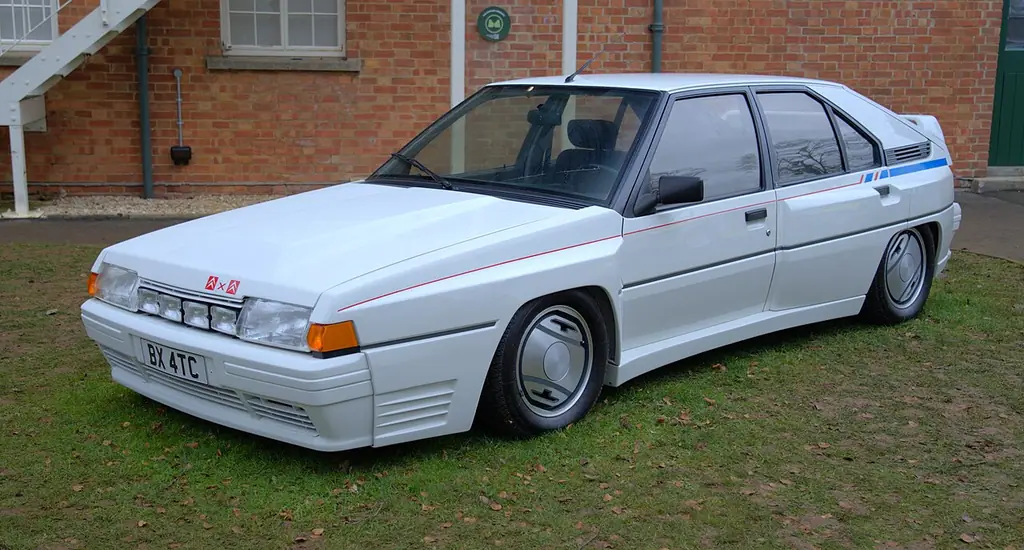
Photo: Mr.choppers · CC BY-SA 3.0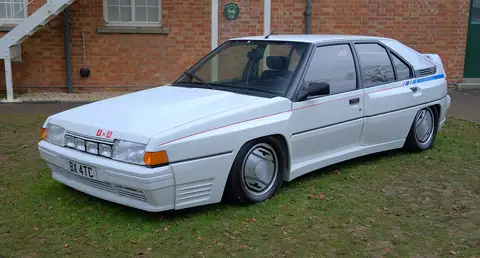 Citroën BX 4TC (Wikimedia Commons: Citroën BX 4TC)
Photo: MrWalkr · CC BY-SA 4.0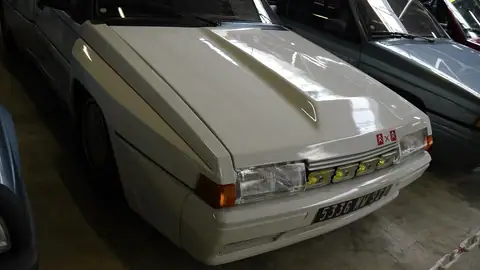 Citroën BX 4TC (Wikimedia Commons: Citroën BX 4TC)
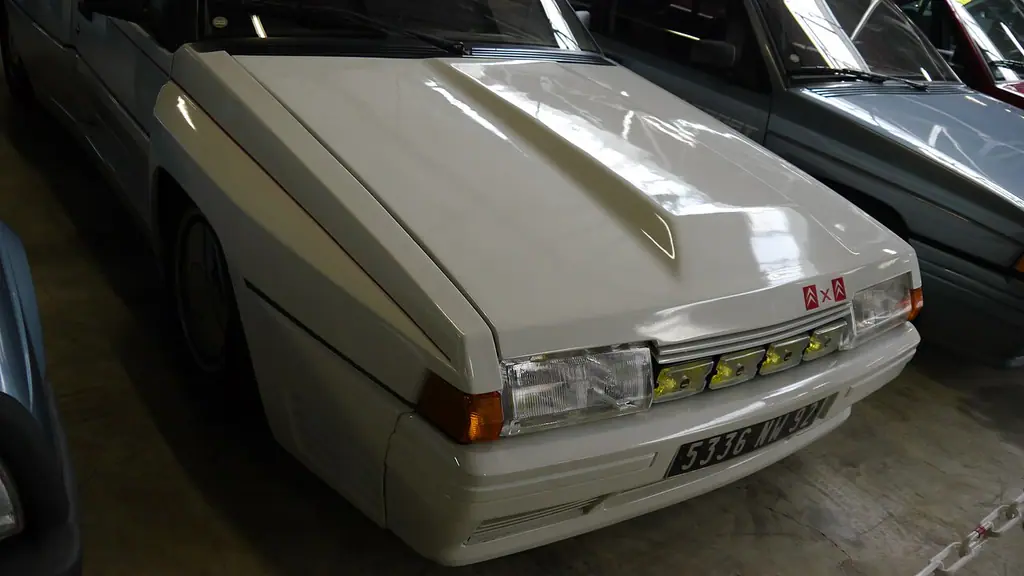
Photo: Klaus Nahr from Germany · CC BY-SA 2.0


02Production & history
Production
Every figure says what it counts.
| What is counted | Figure | Basis | Status |
|---|---|---|---|
| Total model productionBX 4TC "Serie 200" cars believed to still exist, per RM Sotheby's Monaco 2023 catalogue | 302 | Surviving examples | Independently researched |
| Total model productioncars built by Heuliez for homologation (86 sold, rest destroyed) | 2001 | Factory production | Independently researched |
Independent counts (e.g. engine and colour) are never combined into a calculated figure. Surviving examples are never presented as original production.
History
Citroën started the BX 4TC in 1983 under competition chief Guy Verrier, building on the production BX's steel monocoque and hydropneumatic suspension. A turbocharged 2.2-litre N9TE engine was fitted longitudinally to allow four-wheel drive. The road car was quoted at 200 hp against 380 hp for the Evolution competition car, and homologation came only on 1 January 1986.
RM Sotheby's says only 62 BX 4TCs are understood to have been sold, and The Drive also reports 62 road cars sold. The Serie 200 was built in two series, with chassis numbers beginning "XL00" in the first series and "XL30" in the second.
Variants
How each version differs from the standard BX 4TC.
No variants documented yet. Have a source? Contribute it.
03Specifications
Technical specifications
Engine
| Engine family | N9TE2 Independently researched |
|---|---|
| Engine code | Not yet verified |
| Layout | Front, longitudinal, ahead of the front axle3 Independently researched |
| Cylinders | 43 Independently researched |
| Displacement | 2,200 cc / 2.2 LFactory: 2.2 L2 Independently researched |
| Bore | Not yet verified |
| Stroke | Not yet verified |
| Compression ratio | Not yet verified |
| Valvetrain | SOHC, 8 valves4 Independently researchedDescribed for the 2142 cc Evolution engine; the road car shares the basic engine. |
| Fuel system | Not yet verified |
| Induction | Turbocharged, mounted longitudinally2 Independently researched |
| Power | 149 kW / 203 PSFactory: 200 hp · converted2 Independently researchedRating: manufacturer |
| Power at | Not yet verified |
| Torque | 300 NmFactory: 300 Nm3 Independently researched |
Transmission & drivetrain
| Gearbox | Manual3 Independently researched |
|---|---|
| Gears | 53 Independently researchedGearbox described as the Citroen SM unit. |
| Driven wheels | All four wheels2 Independently researched |
Chassis, body & dimensions
| Chassis | Steel monocoque of the production BX2 Independently researched |
|---|---|
| Front suspension | Hydropneumatic2 Independently researched |
| Rear suspension | Hydropneumatic2 Independently researched |
| Brakes | Not yet verified |
| Steering | Not yet verified |
| Body construction | Not yet verified |
| Wheelbase | Not yet verified |
| Length | Not yet verified |
| Width | Not yet verified |
| Height | Not yet verified |
| Front track | Not yet verified |
| Rear track | Not yet verified |
| Kerb weight | Not yet verified |
| Dry weight | Not yet verified |
Performance
| Maximum speed | 220 km/hFactory: 137 mph · converted3 Independently researchedSource says "around 137 mph". |
|---|---|
| 0–100 km/h | 7.5 s3 Independently researchedSource gives 0-62 mph in 7.5 s. |
| Fuel tank | Not yet verified |
“Not yet verified” means no source has been checked for that value yet. Nothing is estimated to fill a gap.
04Colours & options
Factory colours & interiors
Original paint and trim, with the number of cars in each where a source gives it.
Not yet documented. Have a source? Contribute it.
Factory options & codes
Codes are shown exactly as written by the manufacturer.
Not yet documented. Have a source? Contribute it.
05Individual cars
Chassis register
Every documented car, with its colours, history and where it is now. Open a row for the full record. Known chassis are not automatically authenticated originals.
Not yet documented. Have a source? Contribute it.
Competition history
Every race result of the individual cars, in date order. Click a chassis number to open its full record in the register.
Not yet documented. Have a source? Contribute it.
Auction & sale history
Documented public sales of the individual cars. Click a chassis number to open its full record in the register.
Not yet documented. Have a source? Contribute it.
See one in person
Museums where an example of this car can be seen.
No example is documented on public display yet. Have a source? Contribute it.
06Reference
Identification guide
How to tell an original from a replica or later conversion.
Serie 200 road cars carry chassis numbers beginning "XL00" (first series) or "XL30" (second series). A first-series car offered at Monaco in 2023 was chassis XL0069, described as the penultimate first-series car.
Sources
Each number links to the exact facts it supports.
-
1
L'Automobile Sportive – Citroën BX 4TC guide Level B
- 200 cars built by Heuliez for homologation (86 sold, rest destroyed)
-
2
1987 Citroën BX 4TC (Monaco 2023, lot 143) Level C RM Sotheby's
- only 30 believed to still exist
- turbocharged version of the 2.2-liter N9TE production engine
- 2.2-liter N9TE production engine
- turbocharged version ... mounted longitudinally to enable the fitment of four-wheel drive
- 200 horsepower for the homologated "Serie 200" road car
- longitudinally to enable the fitment of four-wheel drive
- production BX’s steel monocoque chassis
- hydropneumatic suspension systems were retained
-
3
Citroen BX 4TC Level C Secret Classics
- Longitudinal ... with the longer side in front of the front axle
- 2.1-liter four-cylinder turbo engine
- 147 kW/200 hp and a maximum torque of 300 Nm
- five-speed manual transmission
- five-speed manual transmission came from ... Citroen SM
- topspeed of around 137 mph
- 62 mph in 7.5 seconds
-
4
Rallying's Cyrano de Bergerac Level C Motor Sport Magazine, September 2009 · 2009-09-01
- single overhead camshaft and just eight valves
Keep exploring
More from Citroën
-
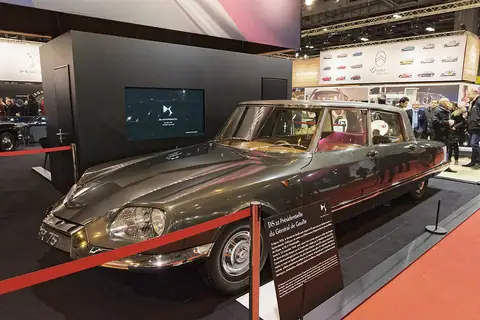
Citroën · 1964–1968
DS 21 Présidentielle (Chapron)
1 Built
-
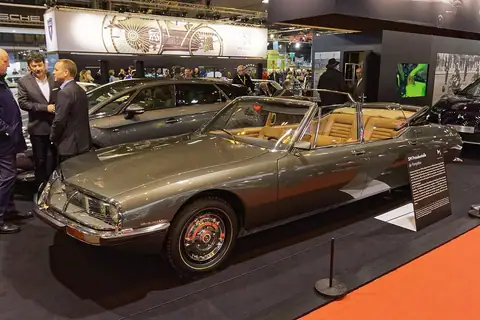
Citroën · 1972
SM Présidentielle (Chapron)
2 Built
-
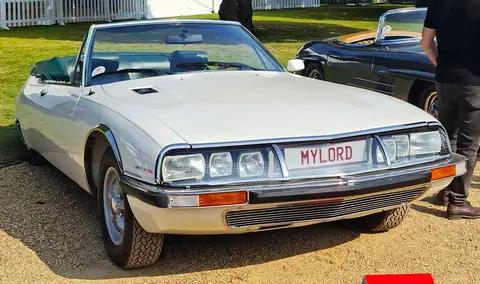
Citroën · 1971–1975
SM Mylord (Chapron)
5 Built
-
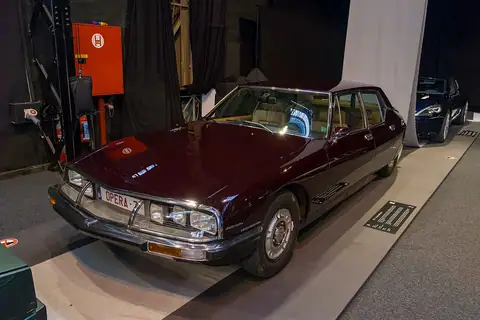
Citroën · 1972–1974
SM Opéra (Chapron)
8 Built
More from France
-
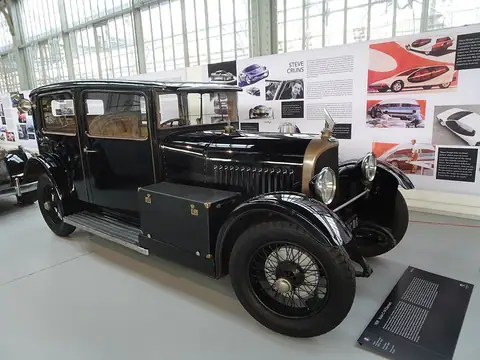
Avions Voisin
C14
Production not yet verified
-
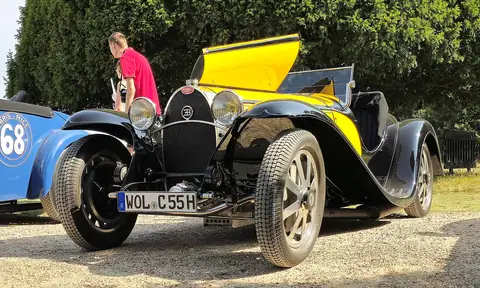
Bugatti · 1931–1935
Type 55
38 Built
-
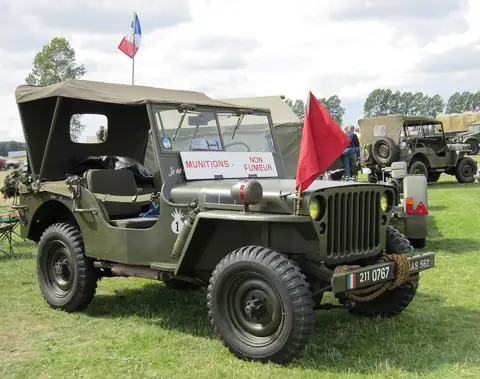
Hotchkiss · 1957–1966
M201
Production not yet verified
-
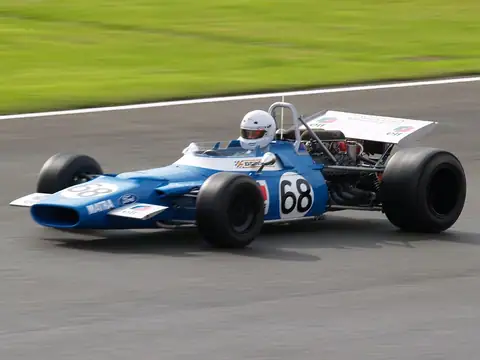
Matra · 1969
MS80
Production not yet verified
70 other makes from FranceACMAAixamAlcatelAlpineAmilcarArzensAvions VoisinBACBallotBerlietBolloreBuccialiBugattiCGCharron, Girardot et VoigtChenard-WalckerClément-PanhardDAMSDarracqDBDB (Deutsch-Bonnet)De DietrichDe Dion-BoutonDe Dion, Bouton et TrépardouxDe La ChapelleDelageDelahayeDelaunay-BellevilleDerbyDSExagonFacel VegaFarmanFord FranceGentyGordiniHommellHopiumHotchkissJimenezAll makes →