Makes › Ferrari › F40 · Rare production · 1987–1992 Rare
Ferrari
F40
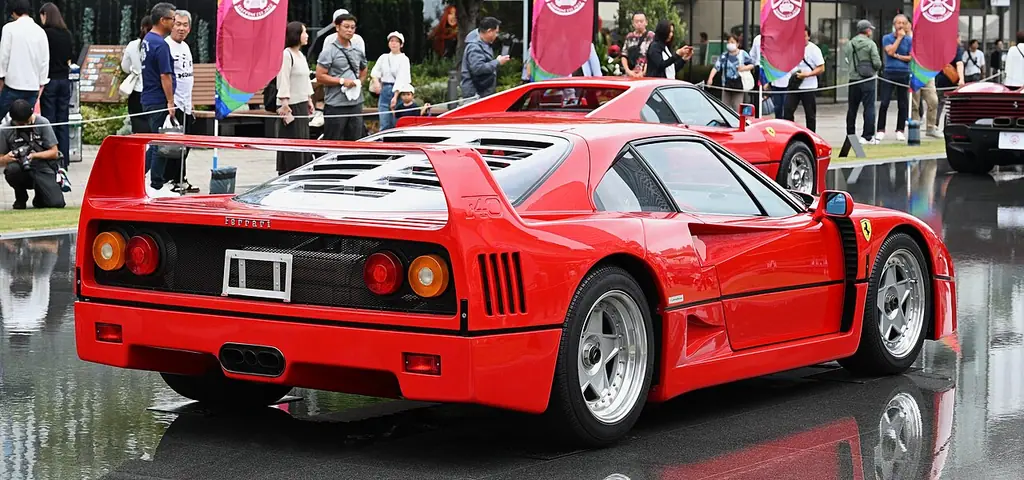
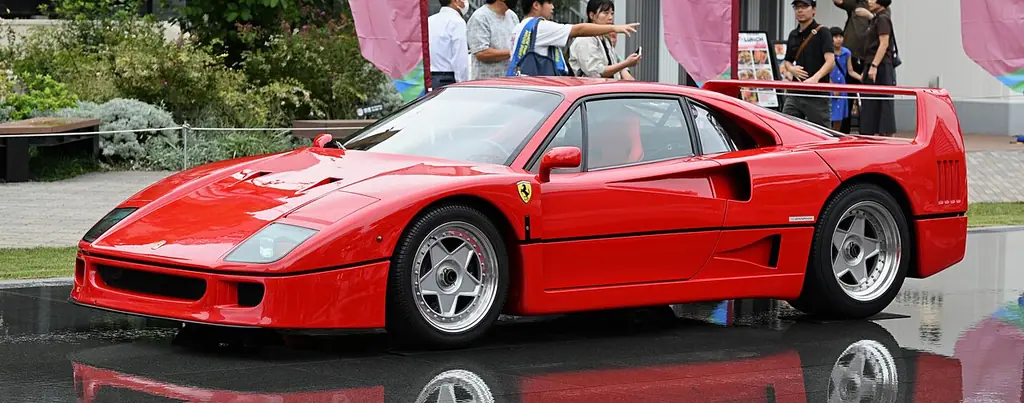
Ferrari F40, the twin-turbo V8 berlinetta; 1,311 were built against a planned 450.
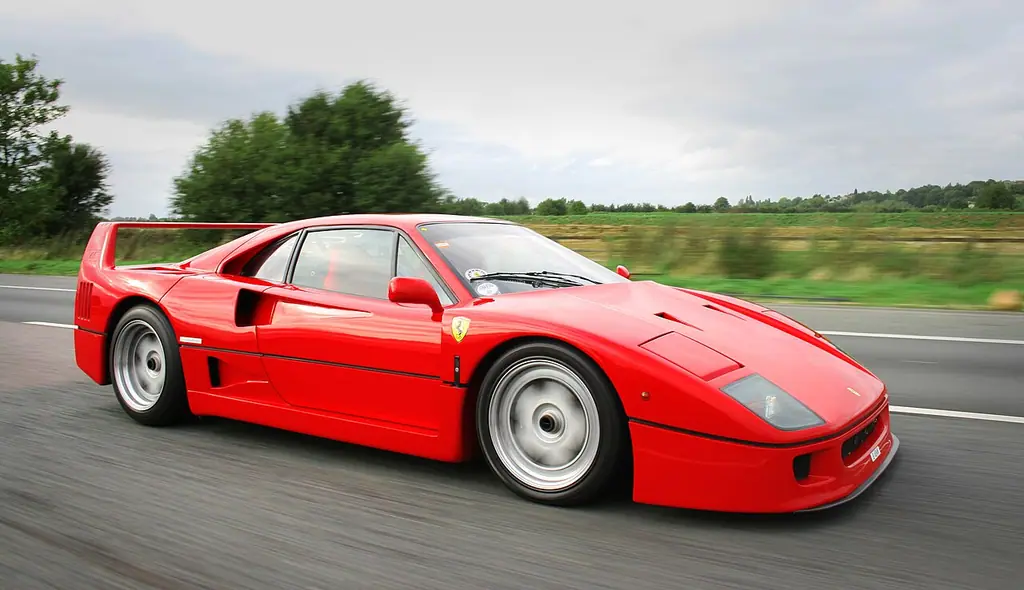
Photo: Will ainsworth · CC BY-SA 3.0
Contents
01Overview
At a glance
- Built
- 1,311 Built
- Years
- 1987–1992
- Engine
- rear longitudinal 90° V8, twin turbo · 2,936.25 cc / 2.9 LFactory: 2,936.25 cc
- Power
- 356 kW / 485 PSFactory: 478 hp · converted
- Top speed
- 323 km/hFactory: 201 mph · converted
- Body
- Not yet verified
- Designer
- Pininfarina
- In this archive
- Not yet verified
- Surviving
- Not yet verified
Sources and any conflicting figures are in the sections below.
Why it matters
The F40 was a road-legal car that looked and drove like a racer. Its production figure was nearly five times that of the GTO, and it was the last new car Enzo Ferrari presented.
How rare is it?
Six separate kinds of rarity – never combined into one number.
Each kind of rarity is rated separately and never combined.
Photos
Exterior, interior and detail photos with their licences.
 Ferrari F40 (Wikimedia Commons search)
Photo: Will ainsworth · CC BY-SA 3.0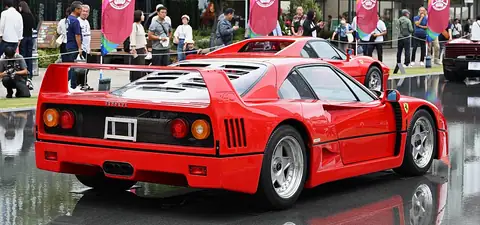 Ferrari F40 (Wikimedia Commons search)
Photo: TTTNIS · CC0 1.0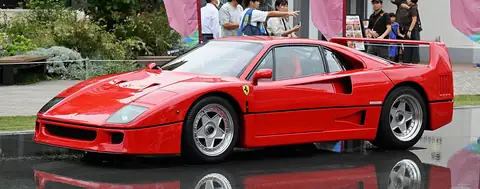 Ferrari F40 (Wikimedia Commons search)
Photo: TTTNIS · CC0 1.0


02Production & history
Production
Every figure says what it counts.
| What is counted | Figure | Basis | Status |
|---|---|---|---|
| Total model productionF40 built (planned run was 450) | 1,3111 | Factory production | Independently researched |
Independent counts (e.g. engine and colour) are never combined into a calculated figure. Surviving examples are never presented as original production.
History
The F40 was seen as a further development of the 288 GTO. Instead of the original 450 cars, 1,311 were built and sold before the first was made.
Variants
How each version differs from the standard F40.
No variants documented yet. Have a source? Contribute it.
03Specifications
Technical specifications
Engine
| Engine family | Not yet verified |
|---|---|
| Engine code | Not yet verified |
| Layout | rear longitudinal 90° V8, twin turbo2 |
| Displacement | 2,936.25 cc / 2.9 LFactory: 2,936.25 cc2 |
| Bore | 82 mmFactory: 82 mm2 |
| Stroke | 69.5 mmFactory: 69.5 mm2 |
| Compression ratio | 7.7:12 |
| Valvetrain | four valves per cylinder, twin overhead camshafts per bank3 |
| Fuel system | Weber-Marelli IAW combined ignition and fuel injection3 |
| Induction | twin IHI water-cooled turbochargers, Behr intercoolers, 1.1 bar3 |
| Power | 356 kW / 485 PSFactory: 478 hp · converted2 |
| Power at | 7,000 rpm2 |
| Torque | 577 NmFactory: 577 Nm2 |
Transmission & drivetrain
| Gearbox | rear-mounted five-speed, all synchromesh; non-synchromesh sports box optional3 |
|---|---|
| Gears | 52 |
| Driven wheels | Not yet verified |
Chassis, body & dimensions
| Chassis | tubular steel chassis frame with bonded composite body3 |
|---|---|
| Front suspension | independent, tubular steel wishbones, coil springs, hydraulic dampers, anti-roll bar3 |
| Rear suspension | independent, tubular steel wishbones, coil springs, hydraulic dampers, anti-roll bar3 |
| Brakes | large cross-drilled ventilated discs, twin hydraulic circuits, no servo3 |
| Steering | Not yet verified |
| Body construction | composite body panels bonded to the chassis; carbon-fibre doors and removable panels3,4 Independently researched |
| Wheelbase | 2,450 mmFactory: 2,450 mm3 |
| Length | Not yet verified |
| Width | Not yet verified |
| Height | Not yet verified |
| Front track | Not yet verified |
| Rear track | Not yet verified |
| Kerb weight | Not yet verified |
| Dry weight | Not yet verified |
Performance
| Maximum speed | 323 km/hFactory: 201 mph · converted4 Independently researched |
|---|---|
| 0–100 km/h | Not yet verified |
| Fuel tank | 120 LFactory: 120 L2 |
“Not yet verified” means no source has been checked for that value yet. Nothing is estimated to fill a gap.
04Colours & options
Factory colours & interiors
Original paint and trim, with the number of cars in each where a source gives it.
Not yet documented. Have a source? Contribute it.
Factory options & codes
Codes are shown exactly as written by the manufacturer.
Not yet documented. Have a source? Contribute it.
05Individual cars
Chassis register
Every documented car, with its colours, history and where it is now. Open a row for the full record. Known chassis are not automatically authenticated originals.
Not yet documented. Have a source? Contribute it.
Competition history
Every race result of the individual cars, in date order. Click a chassis number to open its full record in the register.
Not yet documented. Have a source? Contribute it.
Auction & sale history
Documented public sales of the individual cars. Click a chassis number to open its full record in the register.
Not yet documented. Have a source? Contribute it.
See one in person
Museums where an example of this car can be seen.
No example is documented on public display yet. Have a source? Contribute it.
06Reference
Identification guide
How to tell an original from a replica or later conversion.
Road cars run in the continuous chassis sequence starting at 75000, with production chassis numbers from 76624 to 95317. Catalytic-converter engines carry type F 120 D 040. US-market cars have a deep black chin spoiler and side marker lights in the body side indent.
Sources
Each number links to the exact facts it supports.
-
1
Ferrari F40 pocta commendatorovi (AUTO.CZ) Level C
- 1311 F40 built (planned run was 450)
-
2
Ferrari F40 Level A Ferrari S.p.A. (Classiche)
- rear, longitudinal, 90° V8
- Total displacement 2936.25 cc
- Bore/stroke 82 x 69.5 mm
- Compression ratio 7.7 : 1
- 351.5 kW (478 hp) at 7000 rpm
- at 7000 rpm
- 577 Nm (58.8 kgm) at 4000 rpm
- 5-speed + reverse
- Fuel tank capacity 120 litres
-
3
F40 (1987) Level C Ferrari S.p.A. Classiche (archived article)
- It had four valves per cylinder, twin overhead camshafts per bank
- Weber-Marelli IAW combined ignition/fuel injection system
- twin IHI water cooled turbochargers
- rear mounted five speed all synchromesh gearbox
- was available as option
- tubular steel chassis frame
- Independent suspension via tubular steel wishbones, coil springs, and hydraulic shock absorbers
- large cross drilled ventilated disc brakes with twin hydraulic circuits, without servo assistance
- to use mainly composite materials for its body panels
- a 2450mm wheelbase chassis
-
4
The ex-Nigel Mansell, Ferrari Classiche certified 1989 Ferrari F40 Berlinetta Level C Bonhams
- The doors, bonnet, boot lid and other removable panels were carbon fibre
- top speed of 201mph
Keep exploring
More from Ferrari
-
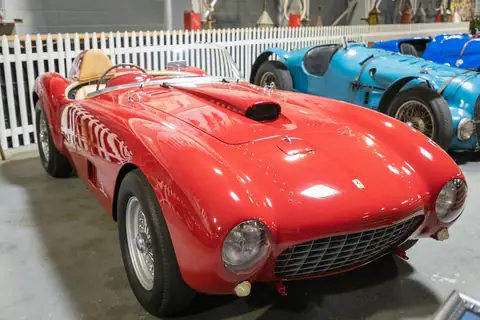
Ferrari · 1954
375 MM Spider by Pinin Farina ("Ingrid Bergman" car, 0456AM)
1 Built
-
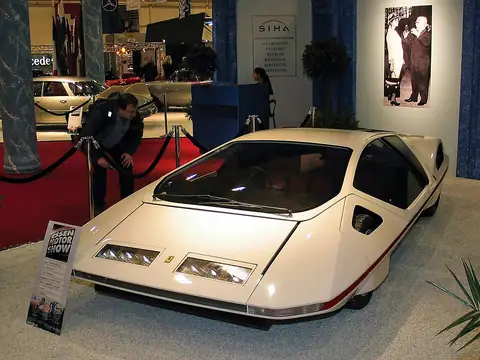
Ferrari · 1970
512 S Modulo (Pininfarina)
1 Built
-
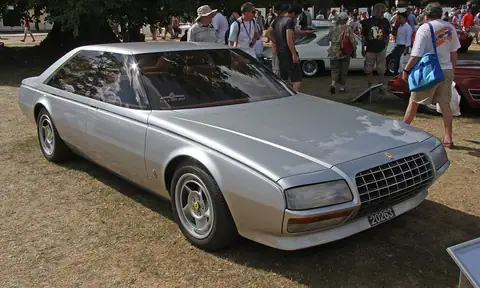
Ferrari · 1980
Pinin
1 Built
-
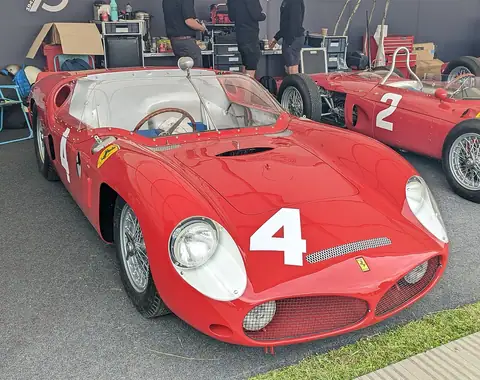
Ferrari
246 SP
2 Built
More from Italy
-
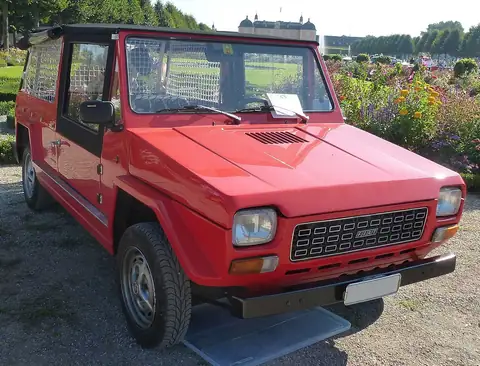
Fissore
Scout
Production not yet verified
-
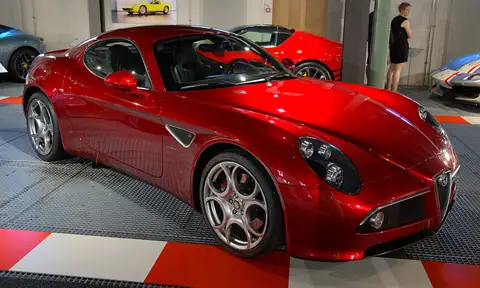
Alfa Romeo
8C Competizione
500 Built
-
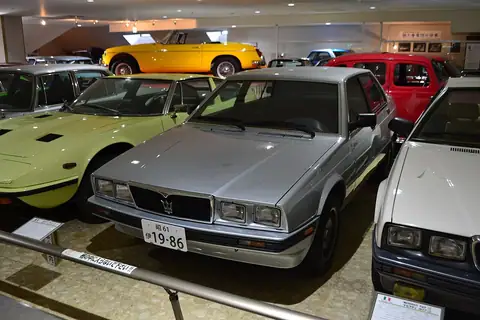
Maserati
Biturbo 425 (1983-1987)
Production not yet verified
-
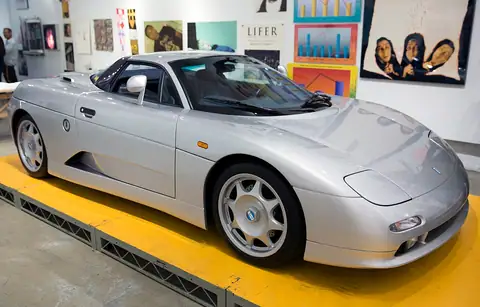
De Tomaso · 1993–2004
Guara Coupe
Production not yet verified
62 other makes from ItalyAbarthACM AutomobiliAlfa RomeoAres DesignATSAuto Avio CostruzioniAutobianchiAznomB EngineeringBandiniBertoneBizzarriniBrixia-ZüstCagivaCarrozzeria Touring SuperleggeraCeiranoChiribiriCisitaliaCizetaColoniCoviniDallaraDe TomasoDiattoF.I.A.L. LegnanoFervesFiatFissoreFlorentiaGhiaInnocentiIntermeccanicaIsoIsotta FraschiniItalaItaldesignLaffiteLamborghiniLanciaMaseratiAll makes →