Makes › Ferrari › F50 · Rare production · 1995–1998 Very Rare
Ferrari
F50
Limited-series V12 hypercar derived from F1 technology; 349 numbered cars, 55 to US specification
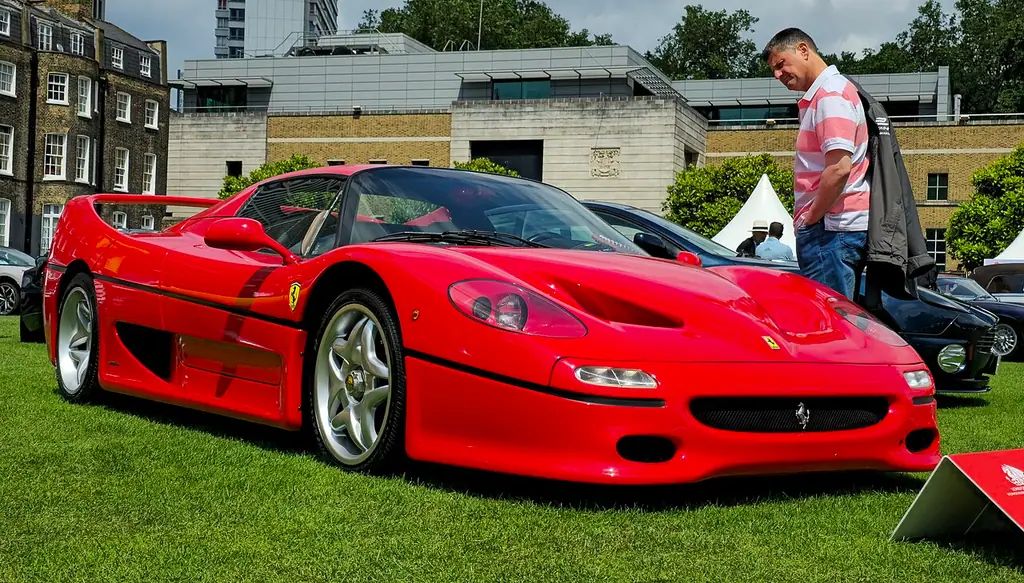
Photo: Calreyn88 · CC BY-SA 4.0
Contents
01Overview
At a glance
- Built
- 349 Built
- Years
- 1995–1998
- Engine
- rear, longitudinal 65° V12 · 4,698.5 cc / 4.7 LFactory: 4,698.5 cc
- Power
- 388 kW / 527 PSFactory: 520 hp · converted
- Top speed
- 325 km/hFactory: 325 km/h
- Body
- Not yet verified
- Designer
- Pininfarina
- In this archive
- Not yet verified
- Surviving
- Not yet verified
Sources and any conflicting figures are in the sections below.
Why it matters
The F50 was Ferrari's extreme road car of the 1990s and the successor to the F40. It marked fifty years of Ferrari as a car maker and, unlike the turbocharged V8 F40, used a normally aspirated V12 derived from Formula 1 practice. It was also built with a carbon-fibre monocoque and push-rod suspension, which made it a road-going interpretation of the company's grand prix technology.
How rare is it?
Six separate kinds of rarity – never combined into one number.
Each kind of rarity is rated separately and never combined.
Photos
Exterior, interior and detail photos with their licences.
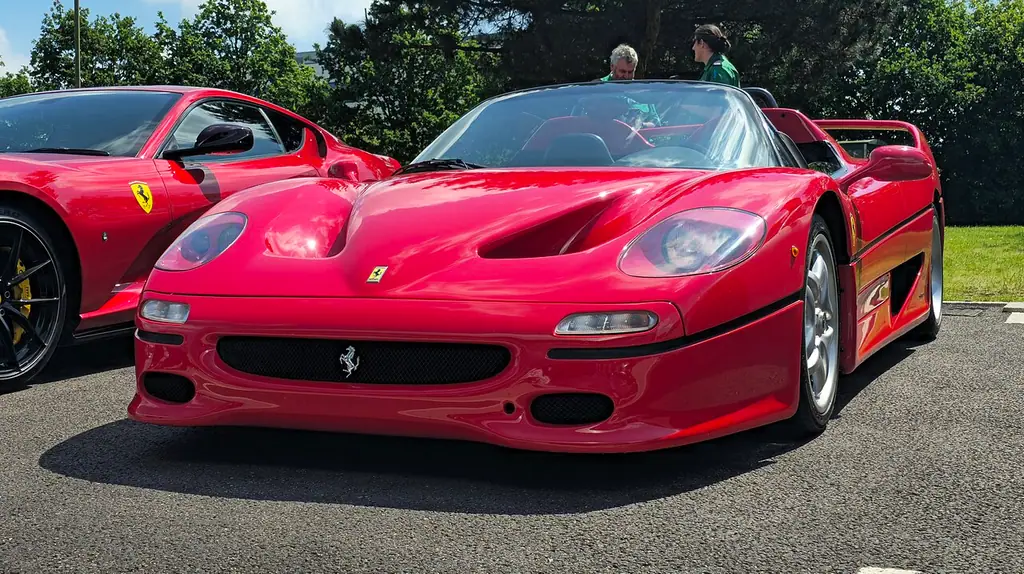
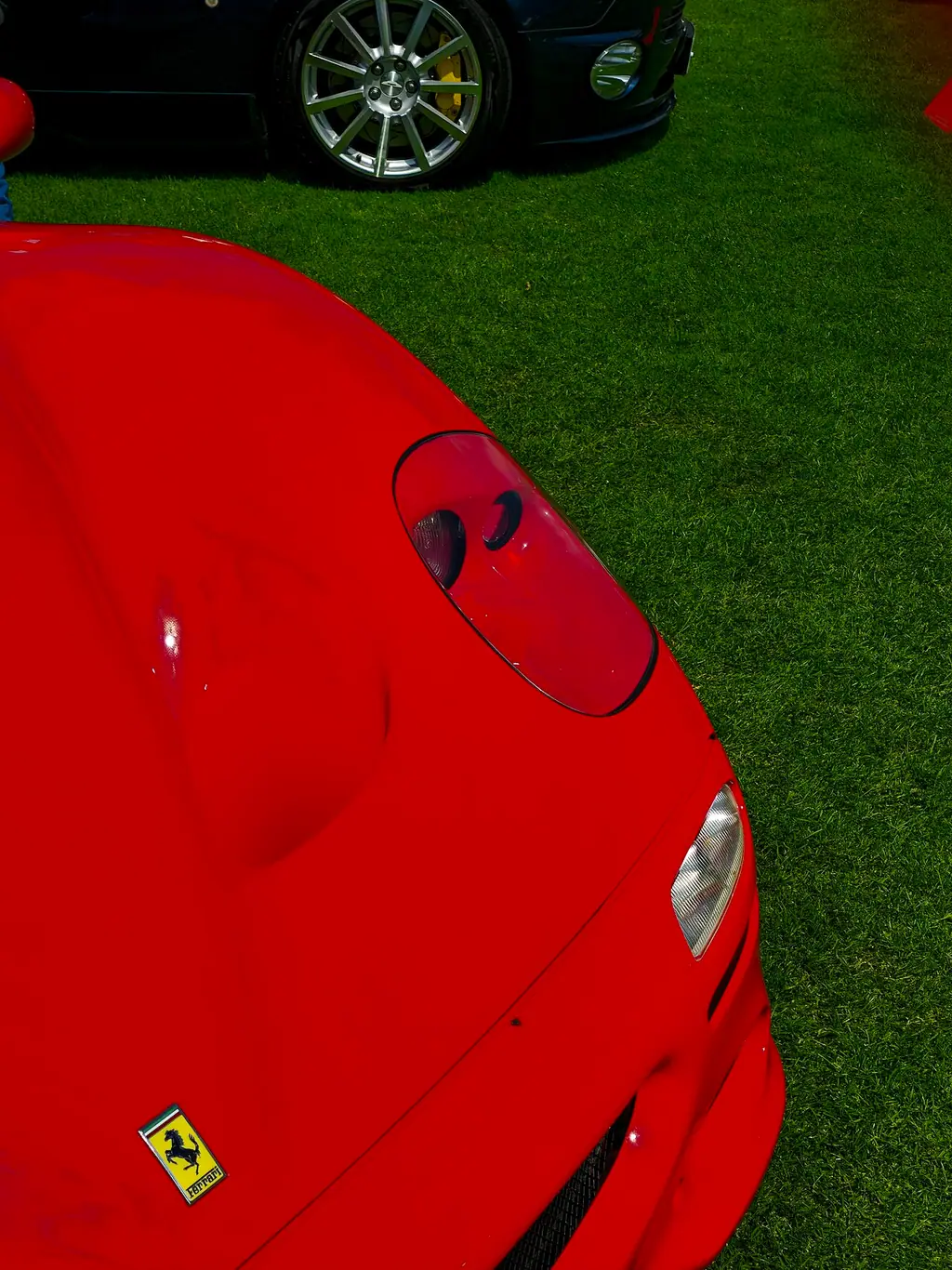
 Ferrari F50 (Wikimedia Commons: Ferrari F50)
Photo: Calreyn88 · CC BY-SA 4.0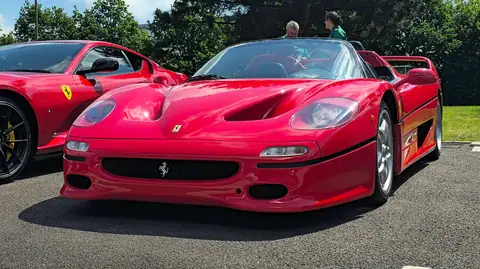 Ferrari F50 (Wikimedia Commons: Ferrari F50)
Photo: Calreyn88 · CC BY-SA 4.0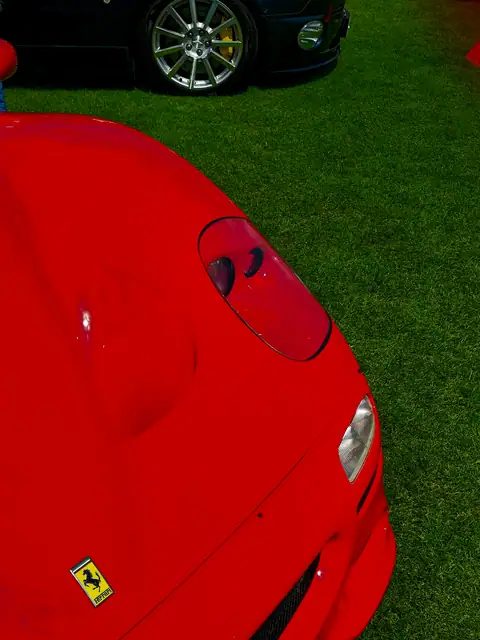 Ferrari F50 (Wikimedia Commons: Ferrari F50)
Photo: Calreyn88 · CC BY-SA 4.0


02Production & history
Production
Every figure says what it counts.
| What is counted | Figure | Basis | Status |
|---|---|---|---|
| Total model productionnumbered examples | 3491,2 | Factory production | Factory reported |
Independent counts (e.g. engine and colour) are never combined into a calculated figure. Surviving examples are never presented as original production.
History
Ferrari presented the F50 at the 1995 Geneva Salon as a celebration model for its fiftieth anniversary, which the company itself describes as slightly early. At the launch, Ferrari's president announced that only 349 cars would be built, one fewer than the company thought it could sell.
The car took its engine from Ferrari's Formula 1 experience: a 4.7-litre V12 with five valves per cylinder, linked to a longitudinal six-speed gearbox. Ferrari states that the car has no power steering, servo brake or ABS.
Variants
How each version differs from the standard F50.
No variants documented yet. Have a source? Contribute it.
03Specifications
Technical specifications
Engine
| Engine family | Not yet verified |
|---|---|
| Engine code | Tipo 1303 Independently researched |
| Layout | rear, longitudinal 65° V121 |
| Cylinders | 121 |
| Displacement | 4,698.5 cc / 4.7 LFactory: 4,698.5 cc1 |
| Bore | 85 mmFactory: 85 mm1 |
| Stroke | 69 mmFactory: 69 mm1 |
| Compression ratio | 11.3:11 |
| Valvetrain | twin overhead camshafts per bank, five valves per cylinder1 |
| Fuel system | Bosch Motronic M2.7 injection1 |
| Power | 388 kW / 527 PSFactory: 520 hp · converted1Rating: manufacturerFerrari also states 382 kW. |
| Power at | 8,500 rpm1 |
| Torque | 471 NmFactory: 471 Nm1 |
| Torque at | 6,500 rpm1 |
Transmission & drivetrain
| Gearbox | manual1 |
|---|---|
| Gears | 61 |
| Driven wheels | Not yet verified |
Chassis, body & dimensions
| Chassis | carbon-fibre monocoque1 |
|---|---|
| Front suspension | independent push-rod, unequal-length wishbones, coil springs, gas-filled telescopic shock absorbers1 |
| Rear suspension | independent push-rod, unequal-length wishbones, coil springs, gas-filled telescopic shock absorbers1 |
| Brakes | discs1 |
| Steering | rack-and-pinion1 |
| Body construction | Not yet verified |
| Wheelbase | 2,580 mmFactory: 2,580 mm1 |
| Length | 4,480 mmFactory: 4,480 mm1 |
| Width | 1,986 mmFactory: 1,986 mm1 |
| Height | 1,120 mmFactory: 1,120 mm1 |
| Front track | 1,620 mmFactory: 1,620 mm1 |
| Rear track | 1,602 mmFactory: 1,602 mm1 |
| Kerb weight | Not yet verified |
| Dry weight | 1,230 kgFactory: 1,230 kg1 |
Performance
| Maximum speed | 325 km/hFactory: 325 km/h1 |
|---|---|
| 0–100 km/h | 3.87 s1 |
| 0–60 mph | 3.8 s3 Independently researched |
| Standing ¼ mile | 12.1 s4 Independently researched |
| Fuel tank | 105 LFactory: 105 L1 |
“Not yet verified” means no source has been checked for that value yet. Nothing is estimated to fill a gap.
04Colours & options
Factory colours & interiors
Original paint and trim, with the number of cars in each where a source gives it.
Not yet documented. Have a source? Contribute it.
Factory options & codes
Codes are shown exactly as written by the manufacturer.
Not yet documented. Have a source? Contribute it.
05Individual cars
Chassis register
Every documented car, with its colours, history and where it is now. Open a row for the full record. Known chassis are not automatically authenticated originals.
Not yet documented. Have a source? Contribute it.
Competition history
Every race result of the individual cars, in date order. Click a chassis number to open its full record in the register.
Not yet documented. Have a source? Contribute it.
Auction & sale history
Documented public sales of the individual cars. Click a chassis number to open its full record in the register.
Not yet documented. Have a source? Contribute it.
See one in person
Museums where an example of this car can be seen.
No example is documented on public display yet. Have a source? Contribute it.
06Reference
Identification guide
How to tell an original from a replica or later conversion.
The F50 has an all-carbon-fibre tub with the V12 engine bolted directly to it as a stressed member and the rear suspension mounted on the engine and gearbox. The engine is the 4700 cc Tipo 130 V12 with five valves per cylinder, driving a longitudinally mounted six-speed manual gearbox. The body is an open two-seater with a lift-off roof panel and roll bars. Production was capped at 349 cars.
Sources
Each number links to the exact facts it supports.
-
1
Ferrari F50 (1995) Level A Ferrari S.p.A.
- only 349 examples would be produced
- Type rear, longitudinal 65° V12 (Scheda Tecnica)
- V12 (Scheda Tecnica)
- Total displacement 4698.50 cc (Scheda Tecnica)
- Bore/stroke 85 x 69 mm (Scheda Tecnica)
- Compression ratio 11.3 : 1 (Scheda Tecnica)
- twin overhead camshafts per bank, five valves per cylinder (Scheda Tecnica)
- Fuel feed Bosch Motronic M2.7 injection (Scheda Tecnica)
- Maximum power 382 kW (520 hp) at 8500 rpm (Scheda Tecnica)
- at 8500 rpm (Scheda Tecnica)
- Maximum torque 471 Nm (48 kgm) at 6500 rpm (Scheda Tecnica)
- at 6500 rpm (Scheda Tecnica)
- Transmission 6-speed + reverse (Scheda Tecnica)
- 6-speed + reverse (Scheda Tecnica)
- Chassis carbon-fibre monocoque (Scheda Tecnica)
- Front suspension independent push-rod (Scheda Tecnica)
- Rear suspension independent push-rod (Scheda Tecnica)
- Brakes discs (Scheda Tecnica)
- Steering rack-and-pinion (Scheda Tecnica)
- Wheelbase 2580 mm (Scheda Tecnica)
- Length 4480 mm (Scheda Tecnica)
- Width 1986 mm (Scheda Tecnica)
- Height 1120 mm (Scheda Tecnica)
- Front track 1620 mm (Scheda Tecnica)
- Rear track 1602 mm (Scheda Tecnica)
- Weight 1230 kg (dry) (Scheda Tecnica)
- Top speed 325 km/h (Scheda Tecnica)
- Acceleration 0-100 km/h 3.87 sec (Scheda Tecnica)
- Fuel tank capacity 105 litres (Scheda Tecnica)
- 2
-
3
Ferrari F50 Level C Autozine
- The Tipo 130 V12 engine
- Most found it took 3.8 seconds to do 0-60 mph
-
4
1995 Ferrari F50 Level C HowStuffWorks (web archive copy)
- 0-100 mph in 8 seconds and the quarter-mile in 12.1
Keep exploring
More from Ferrari
-
Ferrari · 1954
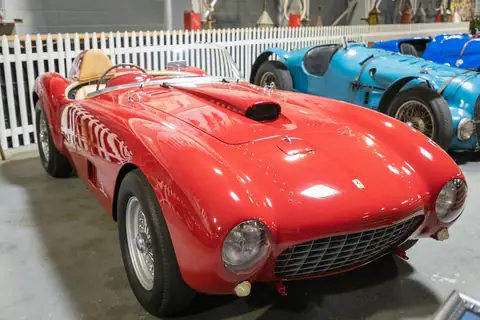
375 MM Spider by Pinin Farina ("Ingrid Bergman" car, 0456AM)
1 Built
-
Ferrari · 1970
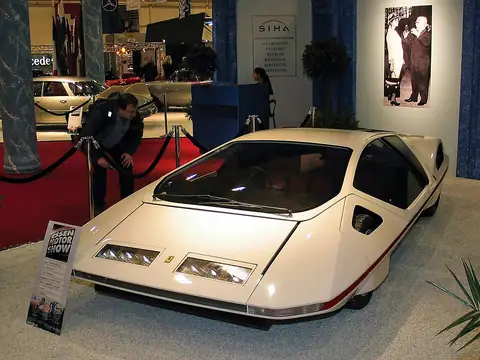
512 S Modulo (Pininfarina)
1 Built
-
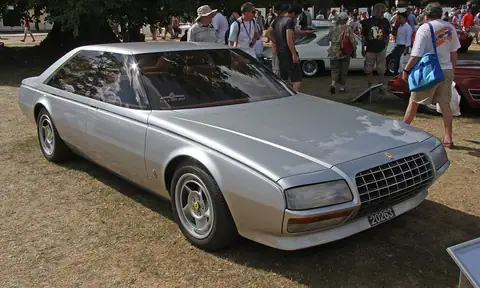
Ferrari · 1980
Pinin
1 Built
-
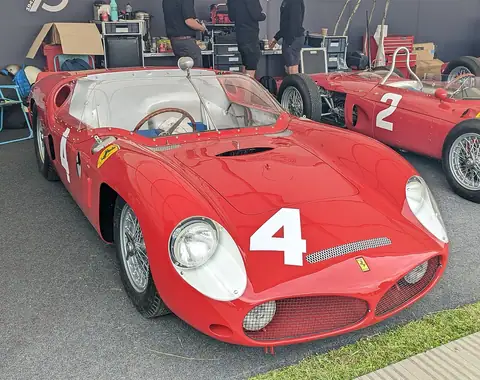
Ferrari
246 SP
2 Built
More from Italy
-
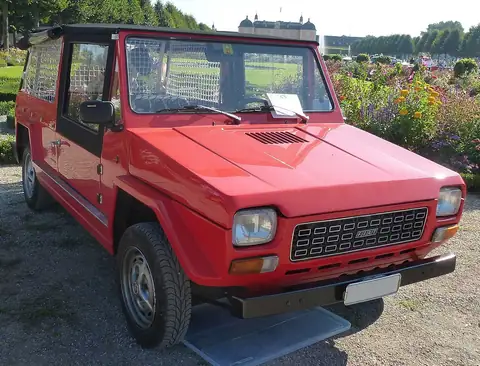
Fissore
Scout
Production not yet verified
-
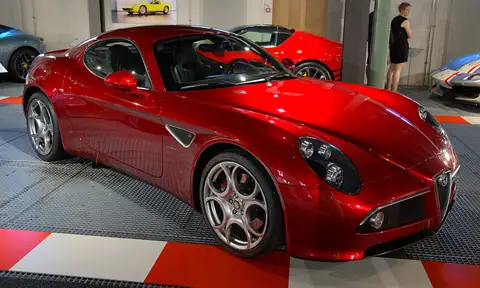
Alfa Romeo
8C Competizione
500 Built
-
Maserati
Biturbo 425 (1983-1987)
Production not yet verified
-
De Tomaso · 1993–2004
Guara Coupe
Production not yet verified
62 other makes from ItalyAbarthACM AutomobiliAlfa RomeoAres DesignATSAuto Avio CostruzioniAutobianchiAznomB EngineeringBandiniBertoneBizzarriniBrixia-ZüstCagivaCarrozzeria Touring SuperleggeraCeiranoChiribiriCisitaliaCizetaColoniCoviniDallaraDe TomasoDiattoF.I.A.L. LegnanoFervesFiatFissoreFlorentiaGhiaInnocentiIntermeccanicaIsoIsotta FraschiniItalaItaldesignLaffiteLamborghiniLanciaMaseratiAll makes →