Makes › Fiat › X1/9 Abarth (Group 4 prototypes) · Prototype Ultra Rare
Fiat
X1/9 Abarth (Group 4 prototypes)
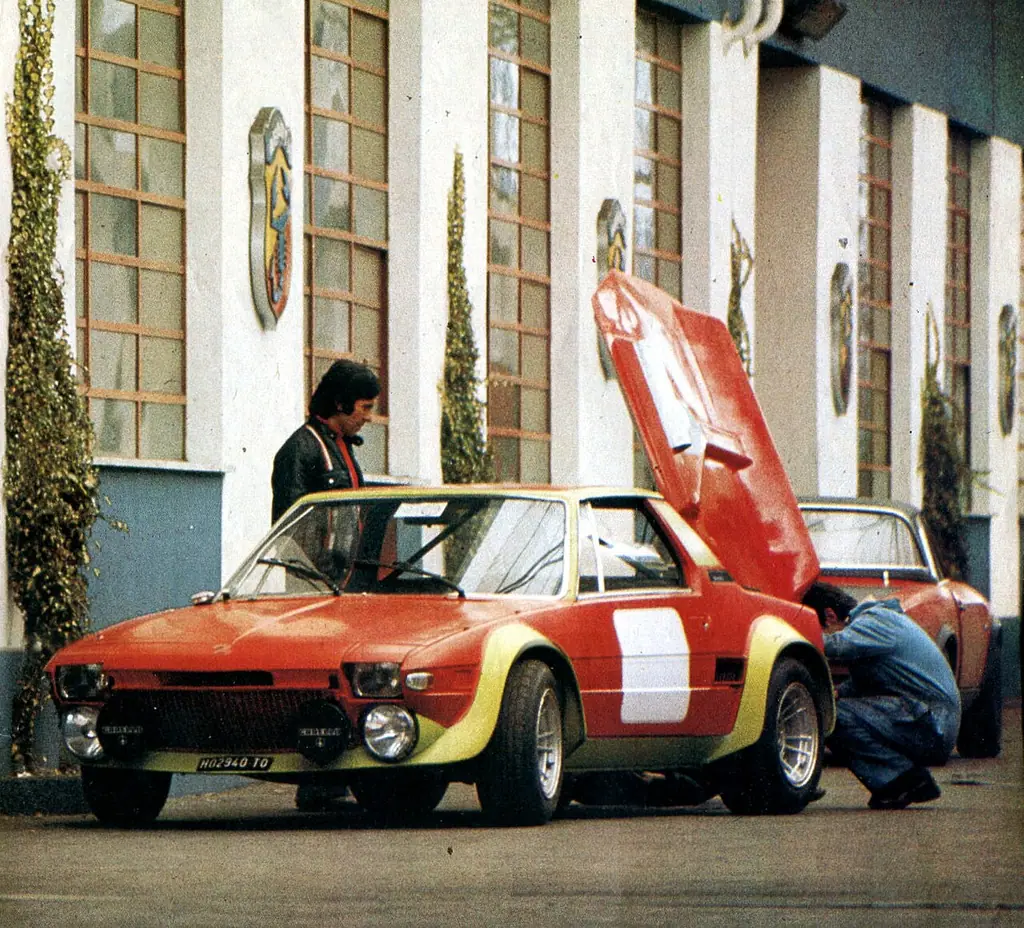
Abarth rally prototypes of the X1/9, abandoned in favour of the 131 Abarth; only a few built.
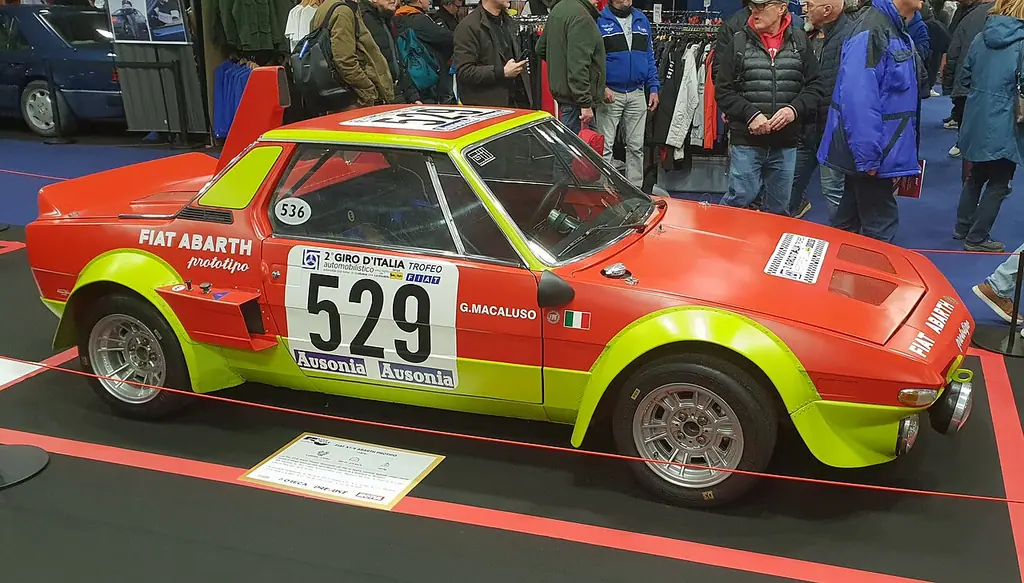
Photo: Andrew Bone from Weymouth, England · CC BY 4.0
Contents
01Overview
At a glance
- Built
- 5 Built
- Years
- Not yet verified
- Engine
- Lancia Beta twin-cam, close relative of the 124 Rally competition engine · 1,800 cc / 1.8 LFactory: 1,800 cc
- Power
- 154 kW / 210 PSFactory: 210 PS
- Top speed
- Not yet verified
- Body
- Not yet verified
- Designer
- Marcello Gandini (X 1/9 base design, Bertone); Abarth conversion by Mario Colucci
- In this archive
- Not yet verified
- Surviving
- Not yet verified
Sources and any conflicting figures are in the sections below.
Why it matters
The Abarth X 1/9 was Fiat's short-lived attempt to build a rally successor to the Fiat-Abarth 124 Rally on the mid-engined X 1/9. It stopped at prototype stage when management put its money into the Fiat 131 instead, which became the Abarth rally car.
How rare is it?
Six separate kinds of rarity – never combined into one number.
Each kind of rarity is rated separately and never combined.
Photos
Exterior, interior and detail photos with their licences.
 Fiat X1/9 Abarth (Group 4 prototypes) (Wikimedia Commons search)
Photo: Andrew Bone from Weymouth, England · CC BY 4.0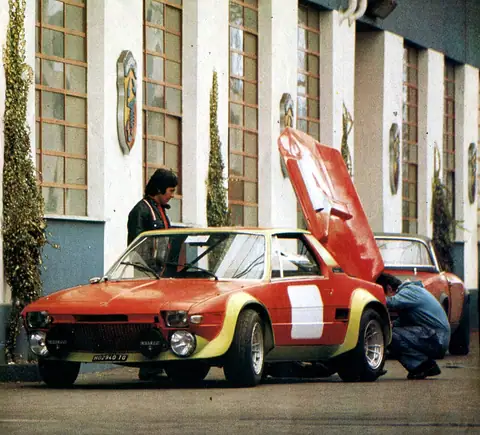 Fiat X1/9 Abarth (Group 4 prototypes) (Wikimedia Commons search)
Photo: Unknown authorUnknown author · Public domain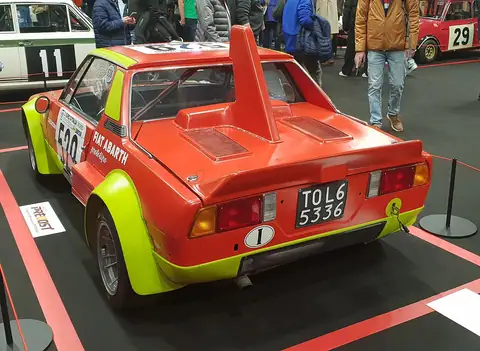 Fiat X1/9 Abarth (Group 4 prototypes) (Wikimedia Commons search)
Photo: Andrew Bone from Weymouth, England · CC BY 4.0


02Production & history
Production
Every figure says what it counts.
| What is counted | Figure | Basis | Status |
|---|---|---|---|
| Total model productionChassis prepared by Abarth in summer 1974 (128 AS 0023001 to 0023005); excludes the original 1973 prototipo | 51 | Factory production | Independently researched |
Independent counts (e.g. engine and colour) are never combined into a calculated figure. Surviving examples are never presented as original production.
History
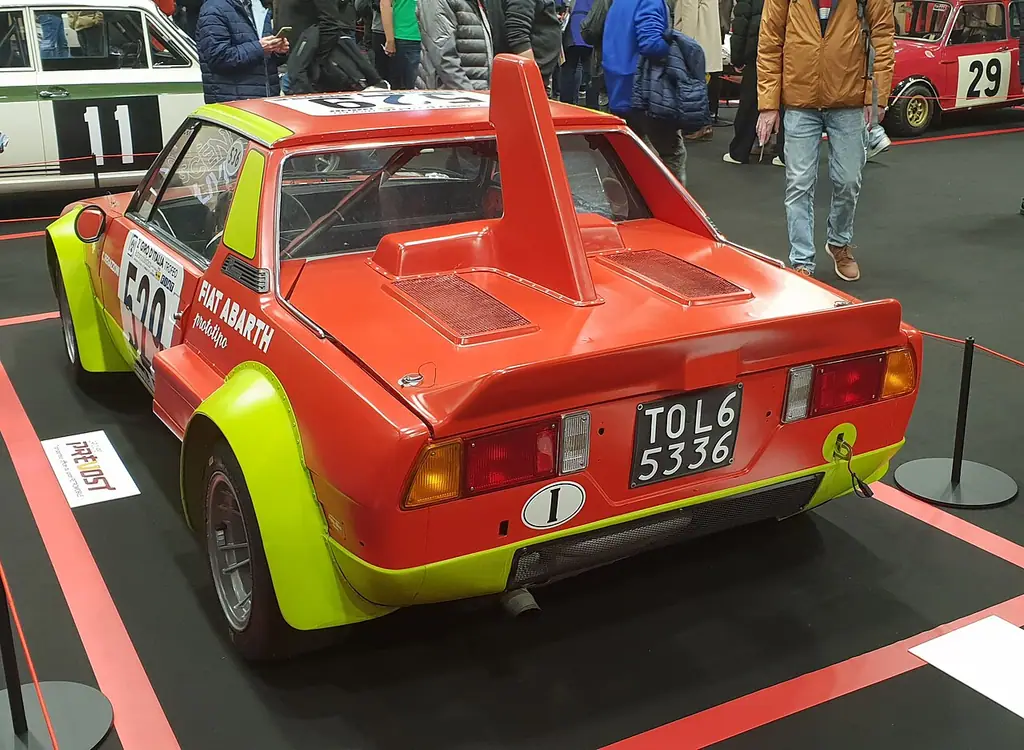
In 1974 Abarth engineer Mario Colucci modified one of the cars used at the Sicily presentation, swapping in an 1800 cc Lancia Beta twin-cam engine so that tested 124 Rally parts could be reused. The prototype had a rear spoiler, a periscope engine vent, widened tracks and striking wide wings, in the red, yellow and green livery of the 124 Rally that year.
Entered in Group 5 as the Fiat-Abarth X 1/9 Prototipo, it won the Rally of the Eastern Alps, the 100,000 Trabucchi and the Liburna Rally, and was less successful in the Tour de Corse and Giro d'Italia. Bertone was ready to build the 500 cars needed for Group 4, but Fiat chose to invest in the 131 body, ending the programme with the few prototypes made.
Variants
How each version differs from the standard X1/9 Abarth (Group 4 prototypes).
No variants documented yet. Have a source? Contribute it.
03Specifications
Technical specifications
Engine
| Engine family | Lancia Beta twin-cam, close relative of the 124 Rally competition engine2Applies to the 1974 Abarth prototype described on the page (a modified presentation car), not specifically to the five Group 4 chassis. |
|---|---|
| Engine code | Not yet verified |
| Layout | Not yet verified |
| Displacement | 1,800 cc / 1.8 LFactory: 1,800 cc2Applies to the 1974 Abarth prototype described on the page (a modified presentation car), not specifically to the five Group 4 chassis. |
| Bore | 86 mmFactory: 86 mm3 Independently researchedPrototype engine derived from the 124 Abarth Rally. |
| Stroke | 79.2 mmFactory: 79.2 mm3 Independently researched |
| Compression ratio | 11.4:13 Independently researched |
| Valvetrain | DOHC, 2 or 4 valves per cylinder3 Independently researched |
| Fuel system | 2 Weber 44 IDF (232) or 48 IDF (232 G), or Kugelfischer injection3 Independently researched |
| Power | 154 kW / 210 PSFactory: 210 PS3 Independently researchedAbarth 232 G engine of 1,840 cc; the 232 engine of 1,756 cc gave less. |
| Power at | 7,800 rpm3 Independently researched |
| Torque | 206 NmFactory: 206 Nm3 Independently researched |
| Torque at | 6,200 rpm3 Independently researched |
Transmission & drivetrain
| Gearbox | Not yet verified |
|---|---|
| Gears | 53 Independently researched |
| Driven wheels | Not yet verified |
Chassis, body & dimensions
| Chassis | Widened stock chassis with fender flares and front spoiler3 Independently researched |
|---|---|
| Front suspension | Not yet verified |
| Rear suspension | Not yet verified |
| Brakes | Not yet verified |
| Steering | Not yet verified |
| Body construction | Not yet verified |
| Wheelbase | 2,202 mmFactory: 2,202 mm3 Independently researched |
| Length | 3,810 mmFactory: 3,810 mm3 Independently researched |
| Width | 1,690 mmFactory: 1,690 mm3 Independently researched |
| Height | 1,180 mmFactory: 1,180 mm3 Independently researched |
| Front track | Not yet verified |
| Rear track | Not yet verified |
| Kerb weight | Not yet verified |
| Dry weight | Not yet verified |
Performance
| Maximum speed | Not yet verified |
|---|---|
| 0–100 km/h | 6.8 s3 Independently researched |
| Fuel tank | 80 LFactory: 80 L3 Independently researched |
“Not yet verified” means no source has been checked for that value yet. Nothing is estimated to fill a gap.
04Colours & options
Factory colours & interiors
Original paint and trim, with the number of cars in each where a source gives it.
Not yet documented. Have a source? Contribute it.
Factory options & codes
Codes are shown exactly as written by the manufacturer.
Not yet documented. Have a source? Contribute it.
05Individual cars
Chassis register
Every documented car, with its colours, history and where it is now. Open a row for the full record. Known chassis are not automatically authenticated originals.
Not yet documented. Have a source? Contribute it.
Competition history
Every race result of the individual cars, in date order. Click a chassis number to open its full record in the register.
Not yet documented. Have a source? Contribute it.
Auction & sale history
Documented public sales of the individual cars. Click a chassis number to open its full record in the register.
Not yet documented. Have a source? Contribute it.
See one in person
Museums where an example of this car can be seen.
No example is documented on public display yet. Have a source? Contribute it.
06Reference
Identification guide
How to tell an original from a replica or later conversion.
The page lists these distinguishing features of the prototype: 1800 cc Lancia Beta twin-cam engine, rear spoiler, periscope vent for the central engine, widened tracks, flared wings and the red-yellow-green livery.
Sources
Each number links to the exact facts it supports.
-
1
VeloceToday – Fiat Abarth X1/9 Prototipo Level C
- 5 Chassis prepared by Abarth in summer 1974 (128 AS 0023001 to 0023005); excludes the original 1973 prototipo
-
2
Fiat X 1/9 - The little Targa that won over America Level B FCA Heritage (Stellantis Europe)
- twin-cam close relative of the 124 Rally competition engine
- replacing the engine with an 1800-cc model from a Lancia Beta
-
3
Technical data of the Fiat X1/9 Abarth Prototipo Level B x19world.de
- Bore x stroke: 86 x 79,2 mm
- Compression ratio: 11,4
- 2 or 4 valves, DOHC (Abarth)
- 2 Weber 44 IDF (232) or 48 IDF (232 G) or Kugelfischer-injection
- Power: 210 PS at 7800 1/min (232 G)
- 210 PS at 7800 1/min (232 G)
- Torque: 21 mkg / 206 Nm at 6200 1/min (232 G)
- 206 Nm at 6200 1/min
- manual 5-speed-gearbox ... with limited-slip differential
- Widened stock chassis with fender flares, front spoiler
- Wheelbase: 2202 mm
- 3810 x 1690 x 1180 mm (without snorkel)
- 3810 x 1690 x 1180 mm
- Acceleration 0 - 100 km/h 6,8 s
- 80-Liter-fuel tank in the front trunk
Keep exploring
More from Fiat
-
Fiat · 1907
130 HP Grand Prix
1 Built
-
Fiat
B.500 MAI TROPPO by Bvlgari (500e one-off)
1 Built
-
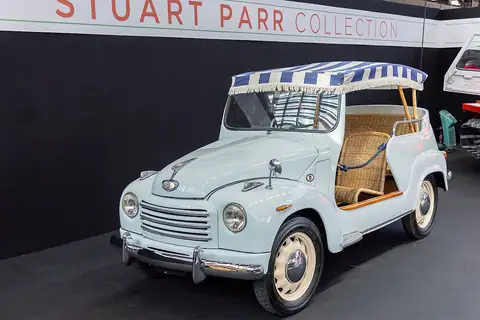
Fiat · 1958
500 Spiaggina (Boano)
2 Built
-
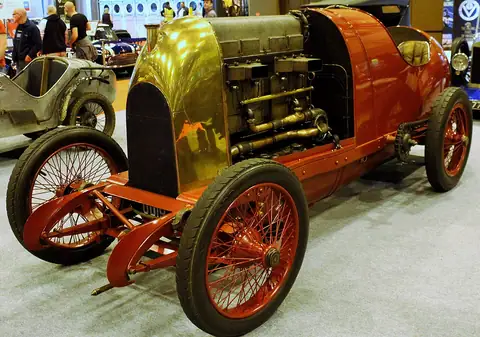
Fiat · 1910–1911
S76 "Beast of Turin"
2 Built
More from Italy
-
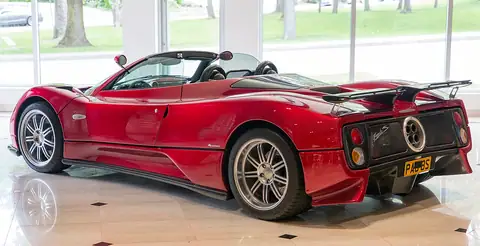
Pagani
Zonda C12 S 7.3 Roadster
Production not yet verified
-
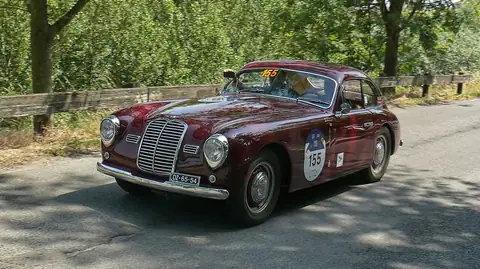
Maserati
A6 (1947-1953)
Production not yet verified
-
Ferrari · 1969
312 P
Production not yet verified
-
Alfa Romeo
147 Ducati Corse
Production not yet verified
61 other makes from ItalyACM AutomobiliAlfa RomeoAres DesignATSAuto Avio CostruzioniAutobianchiAznomB EngineeringBandiniBertoneBizzarriniBrixia-ZüstCagivaCarrozzeria Touring SuperleggeraCeiranoChiribiriCisitaliaCizetaColoniCoviniDallaraDe TomasoDiattoF.I.A.L. LegnanoFerrariFervesFissoreFlorentiaGhiaInnocentiIntermeccanicaIsoIsotta FraschiniItalaItaldesignLaffiteLamborghiniLanciaMaseratiMazzantiAll makes →