Makes › Hofstetter › Turbo · Specialist manufacturer · 1986–1990 Ultra Rare
Hofstetter
Turbo
Gull-wing wedge-shaped Brazilian supercar; about 20 built
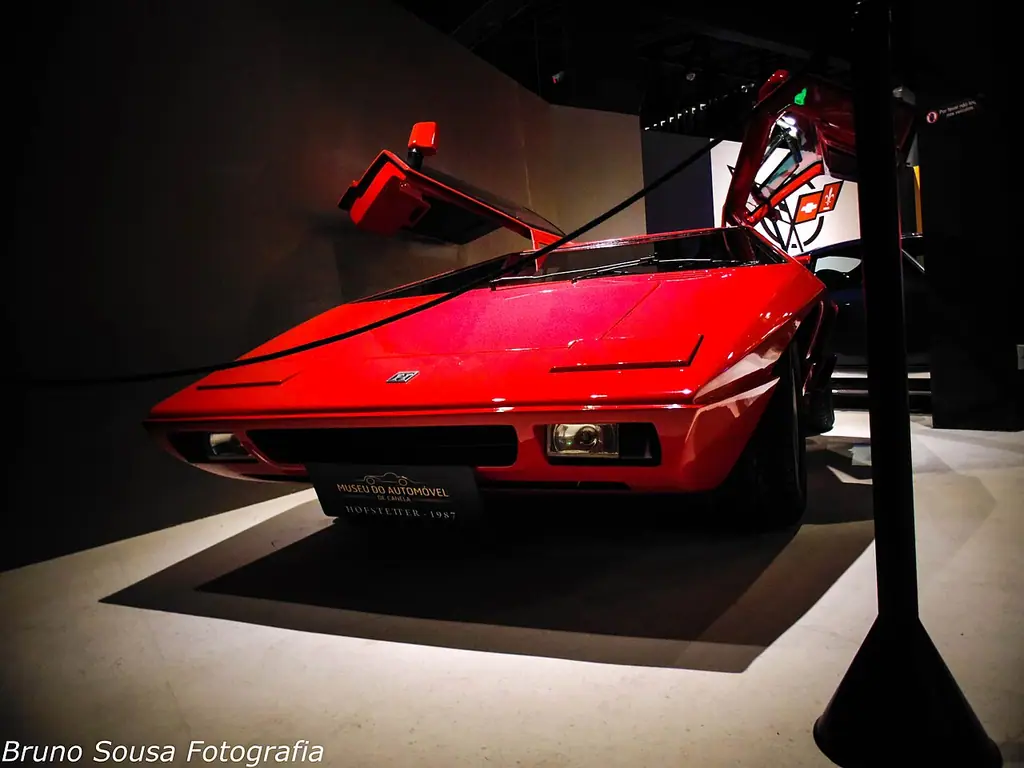
Photo: Bruno Sousa · CC BY 2.0
Contents
01Overview
At a glance
- Built
- 20 Built
- Years
- 1986–1990
- Engine
- VW AP 1.8 (as fitted to the Gol GT) · 1,800 cc / 1.8 LFactory: 1.8 L
- Power
- 115 kW / 157 PSFactory: 157 PS
- Top speed
- 237 km/hFactory: 237 km/h
- Body
- Not yet verified
- Designer
- Mario Richard Hofstetter
- In this archive
- Not yet verified
- Surviving
- Not yet verified
Sources and any conflicting figures are in the sections below.
Why it matters
The Hofstetter Turbo was a Brazilian gullwing sports car built by hand by Mario Richard Hofstetter at a time when car imports to Brazil were heavily restricted. It combined Volkswagen turbocharged engines with a tubular backbone chassis and fibreglass body, and about 18 were built.
How rare is it?
Six separate kinds of rarity – never combined into one number.
Each kind of rarity is rated separately and never combined.
Photos
Exterior, interior and detail photos with their licences.
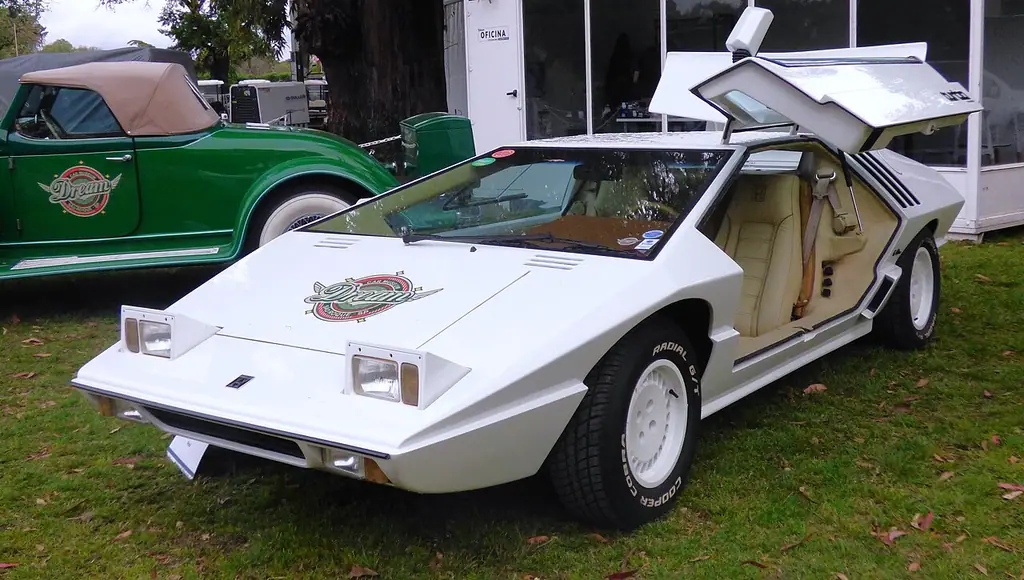
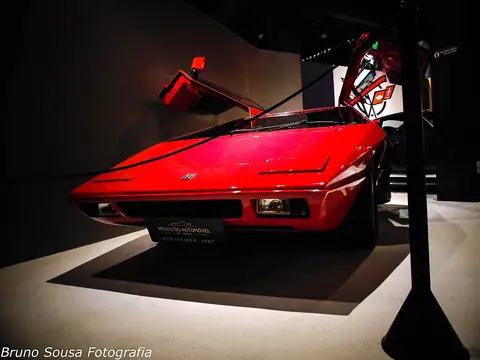 Hofstetter Turbo (Wikimedia Commons: Hofstetter Turbo)
Photo: Bruno Sousa · CC BY 2.0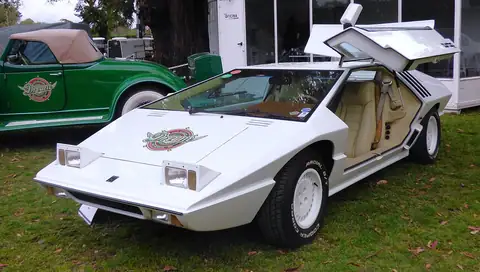 Hofstetter Turbo (Wikimedia Commons: Hofstetter Turbo)
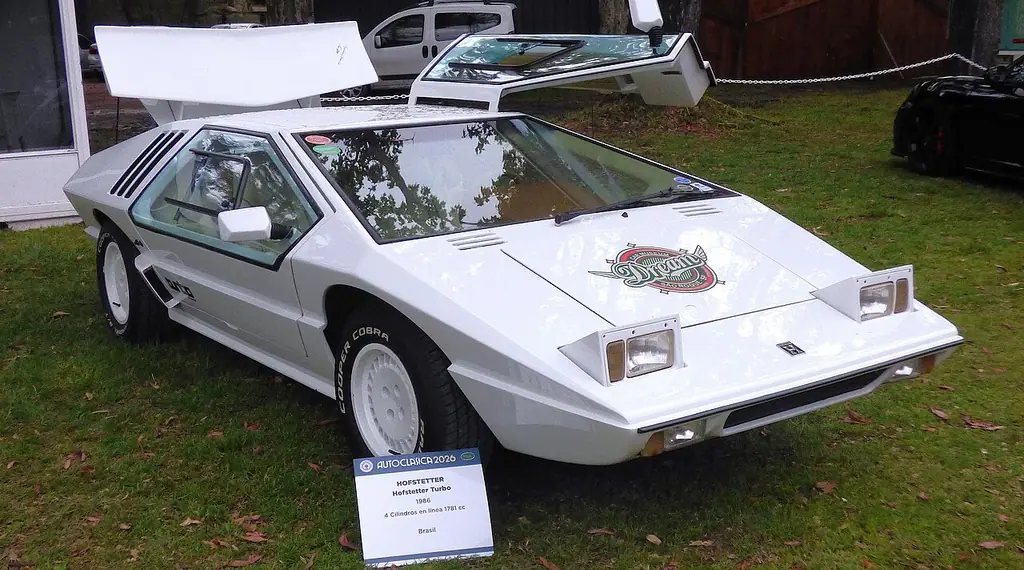
Photo: Just a Man · CC BY 4.0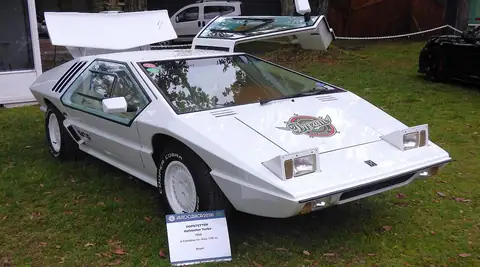 Hofstetter Turbo (Wikimedia Commons: Hofstetter Turbo)
Photo: Just a Man · CC BY 4.0
02Production & history
Production
Every figure says what it counts.
| What is counted | Figure | Basis | Status |
|---|---|---|---|
| Total model production'cerca de 20 exemplares' | 201 | Factory production | Independently researched |
Independent counts (e.g. engine and colour) are never combined into a calculated figure. Surviving examples are never presented as original production.
History
Hofstetter, then 27, showed the first two cars at the 1984 São Paulo motor show. The first prototype used a Hart Formula 2 engine and Hewland gearbox, which proved unsuitable for the road, so he built a tubular backbone chassis and used the 1.8-litre AP engine from the Gol GT with a Garrett turbocharger, giving 157 cavalos. Later cars used the 2.0-litre Santana engine with 175 cavalos.
Production ended in 1991 because of the hand-built cost (about $70,000 for the second last car, according to Hofstetter) and the lack of a sales network. A September 1986 test by Quatro Rodas recorded nearly 200 km/h and 0-100 km/h in 9.3 seconds.
Variants
How each version differs from the standard Turbo.
No variants documented yet. Have a source? Contribute it.
03Specifications
Technical specifications
Engine
| Engine family | VW AP 1.8 (as fitted to the Gol GT)2 Independently researchedSecond-phase car used the 2.0 engine from the Santana, rated 175 cavalos per S1. |
|---|---|
| Engine code | Not yet verified |
| Layout | Not yet verified |
| Displacement | 1,800 cc / 1.8 LFactory: 1.8 L2 Independently researchedFirst phase; later 2.0-litre Santana engine. |
| Bore | Not yet verified |
| Stroke | Not yet verified |
| Compression ratio | Not yet verified |
| Fuel system | Not yet verified |
| Induction | Turbocharged (Garrett)2 Independently researched |
| Power | 115 kW / 157 PSFactory: 157 PS2 Independently researchedBrazilian "cavalos"; 175 cavalos for the later 2.0-litre Santana engine. |
| Power at | Not yet verified |
| Torque | Not yet verified |
Transmission & drivetrain
| Manufacturer | Volkswagen2 Independently researched |
|---|---|
| Gearbox | Not yet verified |
| Gears | Not yet verified |
| Driven wheels | Not yet verified |
Chassis, body & dimensions
| Chassis | Tubular backbone chassis2 Independently researched |
|---|---|
| Front suspension | Chevette front suspension2 Independently researched |
| Rear suspension | McPherson (Passat front axle fitted reversed)2 Independently researched |
| Brakes | Not yet verified |
| Steering | Not yet verified |
| Body construction | Fibreglass2 Independently researched |
| Wheelbase | Not yet verified |
| Length | Not yet verified |
| Width | Not yet verified |
| Height | 1.08 mFactory: 1.08 m2 Independently researched |
| Front track | Not yet verified |
| Rear track | Not yet verified |
| Kerb weight | Not yet verified |
| Dry weight | Not yet verified |
Performance
| Maximum speed | 237 km/hFactory: 237 km/h2 Independently researchedClaim for the intercooled version; Quatro Rodas test recorded almost 200 km/h. |
|---|---|
| 0–100 km/h | 9.3 s2 Independently researched |
| Fuel tank | Not yet verified |
“Not yet verified” means no source has been checked for that value yet. Nothing is estimated to fill a gap.
04Colours & options
Factory colours & interiors
Original paint and trim, with the number of cars in each where a source gives it.
Not yet documented. Have a source? Contribute it.
Factory options & codes
Codes are shown exactly as written by the manufacturer.
Not yet documented. Have a source? Contribute it.
05Individual cars
Chassis register
Every documented car, with its colours, history and where it is now. Open a row for the full record. Known chassis are not automatically authenticated originals.
Not yet documented. Have a source? Contribute it.
Competition history
Every race result of the individual cars, in date order. Click a chassis number to open its full record in the register.
Not yet documented. Have a source? Contribute it.
Auction & sale history
Documented public sales of the individual cars. Click a chassis number to open its full record in the register.
Not yet documented. Have a source? Contribute it.
See one in person
Museums where an example of this car can be seen.
No example is documented on public display yet. Have a source? Contribute it.
06Reference
Identification guide
How to tell an original from a replica or later conversion.
The Hofstetter is a wedge-shaped fibreglass car with gullwing doors, about 1.08 m tall, a central roll-cage bar, black suede dashboard and non-opening windows with air-conditioning. Mechanical parts come from several Brazilian models: Chevette front suspension and steering, Passat front suspension reversed at the rear, Monza mirrors and Opala Stock Car tyres (225/55 VR Corsa). A small sliding window opening was missing on the earliest of the 18 cars.
Sources
Each number links to the exact facts it supports.
-
1
AutoPapo – Carros esportivos brasileiros: 11 modelos raros Level B
- 20 'cerca de 20 exemplares'
-
2
Grandes brasileiros: Hofstetter Level C Quatro Rodas
- adotou o motor AP 1.8 que equipava o Gol GT
- motor AP 1.8 que equipava o Gol GT
- Uma turbina Garrett
- total de 157 cavalos
- Além de motor e câmbio VW
- chassi tubular próprio, tipo espinha dorsal
- a suspensão dianteira ... era do Chevette
- A traseira, tipo McPherson, era a dianteira do Passat, montada de forma invertida
- experiência no trato com a fibra de vidro
- baixa altura do carro, de apenas 1,08 metro
- Uma versão ... com intercooler, chegava, segundo Hofstetter, a 237 km/h
- 0 a 100 em 9,3 segundos
Keep exploring
More from Hofstetter
This is the only Hofstetter documented so far.