Makes › Maserati › 8CTF · Factory competition · 1938 Ultra Rare
Maserati
8CTF
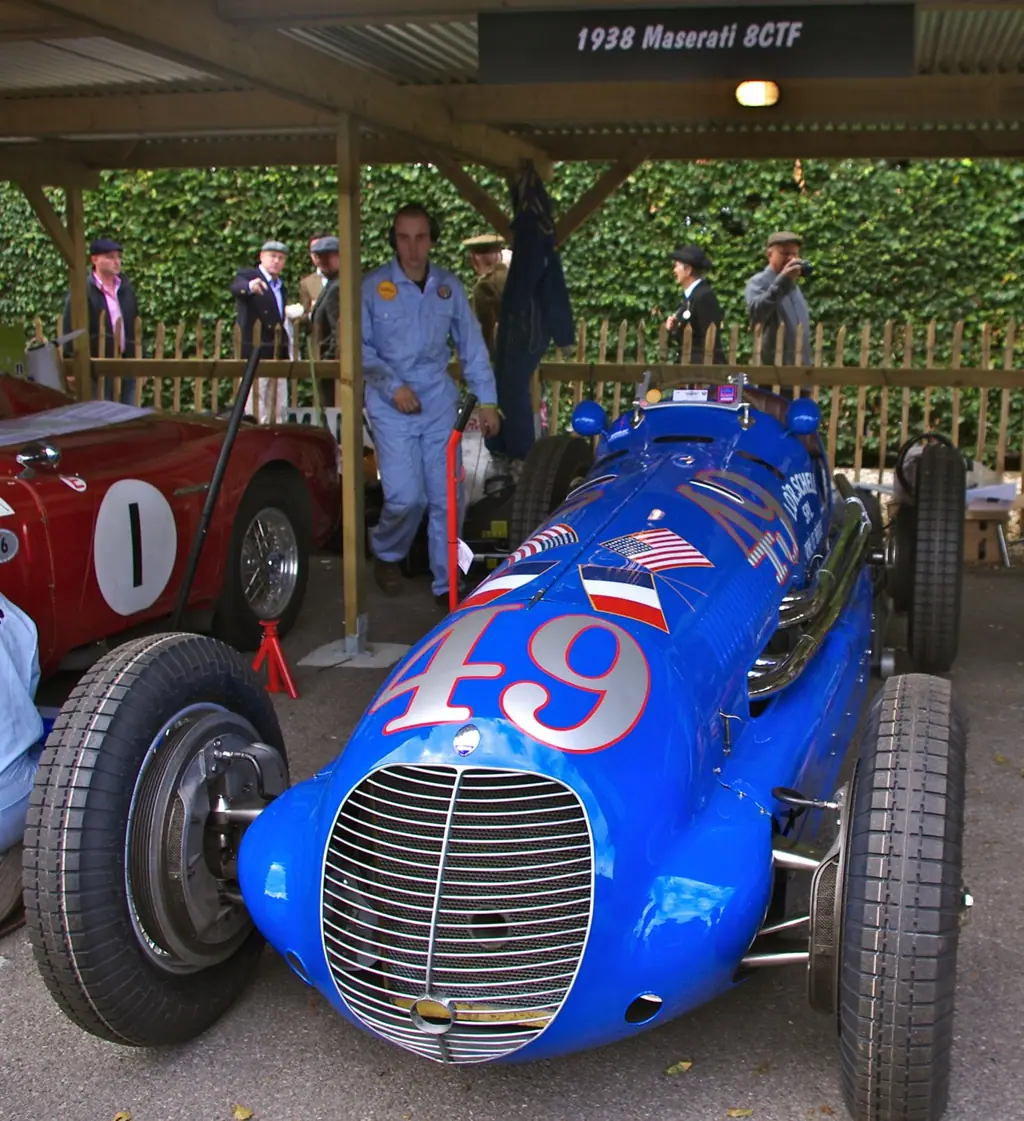
3-litre GP car; won Indianapolis 500 1939 and 1940 ("Boyle Special")
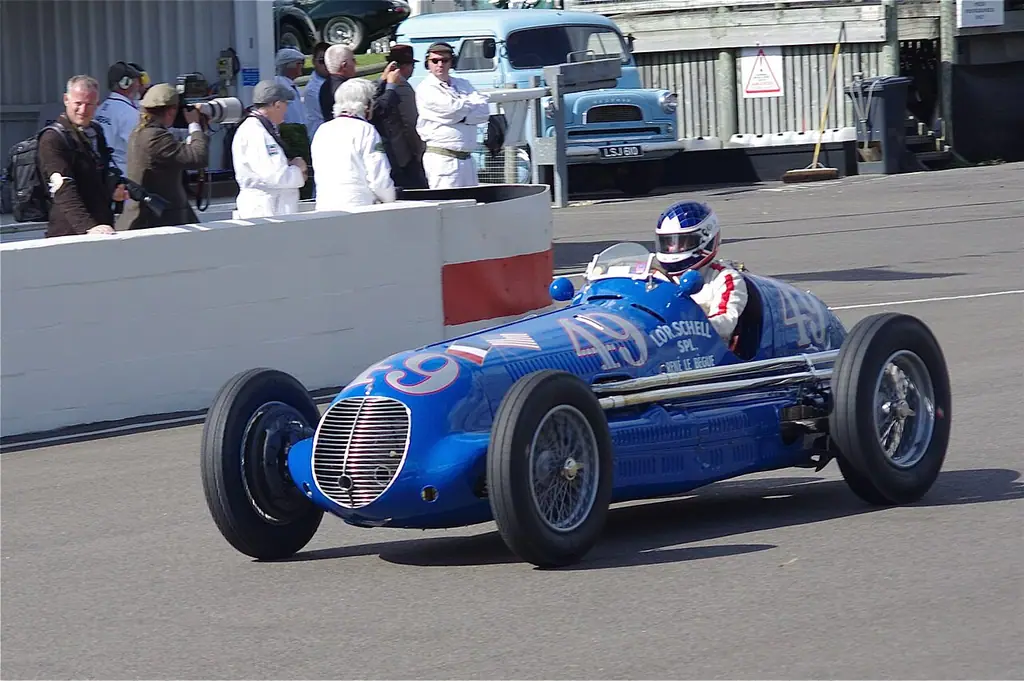
Photo: David Merrett · CC BY 2.0
Contents
01Overview
At a glance
- Built
- 3 Built
- Years
- 1938
- Engine
- Front-mounted, longitudinal twin-supercharged straight-eight · 2,991 cc / 3.0 LFactory: 2,991 cc
- Power
- 272 kW / 370 PSFactory: 365 hp · converted
- Top speed
- 290 km/hFactory: 290 km/h
- Body
- Not yet verified
- Designer
- Ernesto Maserati
- In this archive
- Not yet verified
- Surviving
- 3 (independently researched)
Sources and any conflicting figures are in the sections below.
Why it matters
The 8CTF was Maserati's 3-litre supercharged Grand Prix car for the 1938 formula. In the United States it won the Indianapolis 500 in 1939 and 1940 with Wilbur Shaw, the first Indy win for an Italian car.
How rare is it?
Six separate kinds of rarity – never combined into one number.
Each kind of rarity is rated separately and never combined.
Photos
Exterior, interior and detail photos with their licences.
 Maserati 8CTF (Wikimedia Commons search)
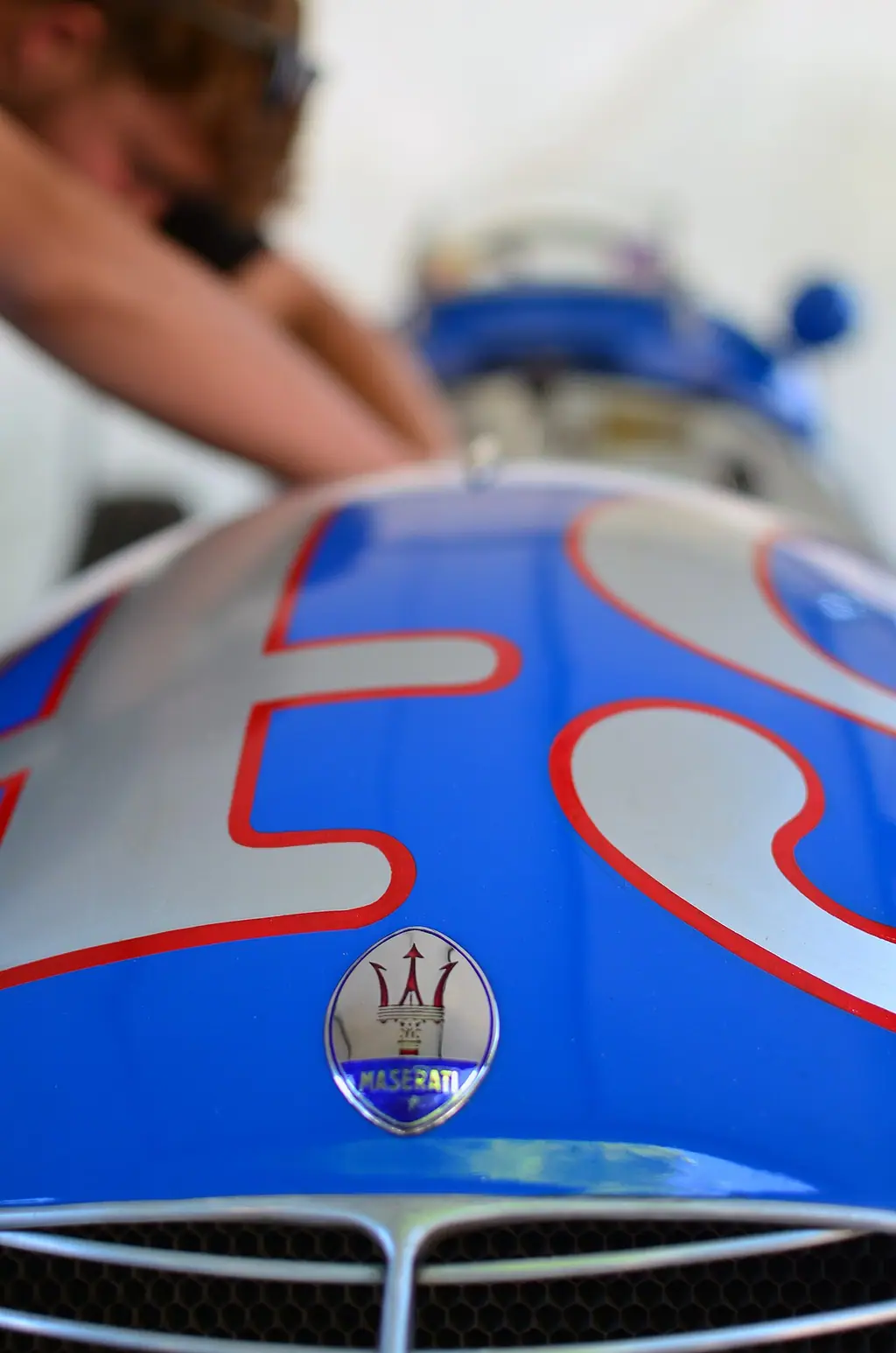
Photo: David Merrett · CC BY 2.0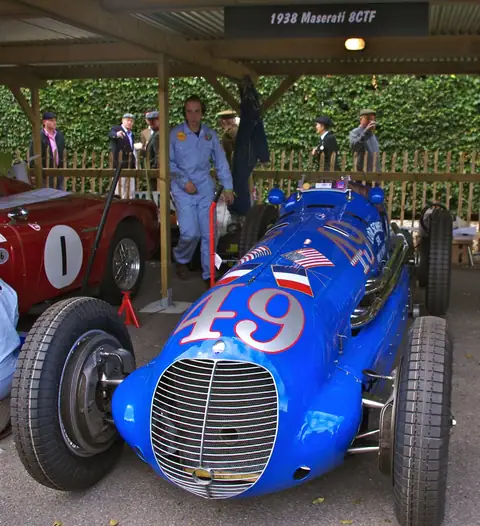 Maserati 8CTF (Wikimedia Commons search)
Photo: David Merrett from Daventry, England · CC BY 2.0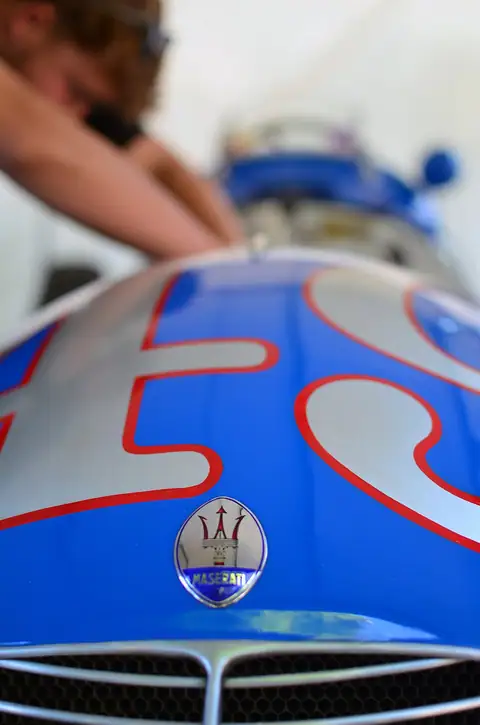 Maserati 8CTF (Wikimedia Commons search)
Photo: Neil · CC BY 4.0


02Production & history
Production
Every figure says what it counts.
| What is counted | Figure | Basis | Status |
|---|---|---|---|
| Total model productionall three cars survive per Ultimatecarpage (3032 in Indianapolis Motor Speedway Museum) | 32 | Surviving examples | Independently researched |
| Total model production"3 + 1 engine" | 31 | Factory production | Independently researched |
Independent counts (e.g. engine and colour) are never combined into a calculated figure. Surviving examples are never presented as original production.
History
Built in 1938 after Adolfo Orsi bought the company, the 8CTF used a fixed-head ('testa fissa') supercharged straight-eight, which gave the type its name, in a frame derived from the 6CM. In Europe it was fast but unreliable, though Paul Pietsch finished third in the German Grand Prix. Two cars were sold to Lucy O'Reilly Schell and taken to America, while Mike Boyle bought the third car and a spare engine for Wilbur Shaw, who won at Indianapolis in 1939 and 1940. Louis Unser won Pikes Peak in an 8CTF in 1946 and 1947, and the type was retired in 1954; car 3032 is displayed at the Indianapolis Motor Speedway Museum.
Variants
How each version differs from the standard 8CTF.
No variants documented yet. Have a source? Contribute it.
03Specifications
Technical specifications
Engine
| Engine family | Not yet verified |
|---|---|
| Engine code | Not yet verified |
| Layout | Front-mounted, longitudinal twin-supercharged straight-eight3 Independently researched |
| Displacement | 2,991 cc / 3.0 LFactory: 2,991 cc3 Independently researched |
| Bore | 69 mmFactory: 69 mm4 Independently researchedSupercars.net data table; Maserati page gives total displacement only. |
| Stroke | 100 mmFactory: 100 mm4 Independently researchedSupercars.net data table. |
| Compression ratio | Not yet verified |
| Valvetrain | Two valves per cylinder at 90 degrees, two overhead camshafts5 |
| Fuel system | Two Memini MA12 carburettors upstream of the superchargers5 |
| Induction | Forced induction by two Roots superchargers5 |
| Power | 272 kW / 370 PSFactory: 365 hp · converted3 Independently researchedSource states bhp. |
| Power at | Not yet verified |
| Torque | Not yet verified |
Transmission & drivetrain
| Gearbox | Four-speed manual3 Independently researched |
|---|---|
| Gears | Not yet verified |
| Driven wheels | Not yet verified |
Chassis, body & dimensions
| Chassis | Not yet verified |
|---|---|
| Front suspension | Independent wheels, torsion bars, friction dampers and anti-roll bar5 |
| Rear suspension | Leaf springs, friction and hydraulic dampers and anti-roll bar5 |
| Brakes | Hydraulic drums4 Independently researched |
| Steering | Not yet verified |
| Body construction | Aluminium body, similar to the 6CM with a longer nose4 Independently researched |
| Wheelbase | 2,720 mmFactory: 2,720 mm5 |
| Length | 4,100 mmFactory: 4,100 mm5 |
| Width | 1,520 mmFactory: 1,520 mm5 |
| Height | 1,100 mmFactory: 1,100 mm5 |
| Front track | 1,359 mmFactory: 1,359 mm4 Independently researchedListed for both axles. |
| Rear track | 1,359 mmFactory: 1,359 mm4 Independently researchedListed for both axles. |
| Kerb weight | Not yet verified |
| Dry weight | 780 kgFactory: 780 kg5 |
Performance
| Maximum speed | 290 km/hFactory: 290 km/h3 Independently researched |
|---|---|
| 0–100 km/h | Not yet verified |
| Fuel tank | Not yet verified |
“Not yet verified” means no source has been checked for that value yet. Nothing is estimated to fill a gap.
04Colours & options
Factory colours & interiors
Original paint and trim, with the number of cars in each where a source gives it.
Not yet documented. Have a source? Contribute it.
Factory options & codes
Codes are shown exactly as written by the manufacturer.
Not yet documented. Have a source? Contribute it.
05Individual cars
Chassis register
Every documented car, with its colours, history and where it is now. Open a row for the full record. Known chassis are not automatically authenticated originals.
Not yet documented. Have a source? Contribute it.
Competition history
Every race result of the individual cars, in date order. Click a chassis number to open its full record in the register.
Not yet documented. Have a source? Contribute it.
Auction & sale history
Documented public sales of the individual cars. Click a chassis number to open its full record in the register.
Not yet documented. Have a source? Contribute it.
See one in person
Museums where an example of this car can be seen.
No example is documented on public display yet. Have a source? Contribute it.
06Reference
Identification guide
How to tell an original from a replica or later conversion.
The name stands for "8 Cilindri Testa Fissa" (eight cylinders, fixed head). The engine is a three-litre supercharged eight with its cylinders cast in one block with a fixed head, fed by two Roots superchargers with a separate carburettor group for each bank of four cylinders. The car that won at Indianapolis in 1939 and 1940 raced as the Boyle Special and is displayed in the Indianapolis Motor Speedway Museum.
Sources
Each number links to the exact facts it supports.
-
1
1938 Maserati 8CTF Specifications - Ultimatecarpage.com Level C
- 3 "3 + 1 engine"
-
2
1938 Maserati 8CTF - Images, Specifications and Information Level C Wouter Melissen · Ultimatecarpage.com · 2011-05-26
- all three cars survive
-
3
1938 Maserati 8CTF Specifications Level C Wouter Melissen · Ultimatecarpage.com · 2011-05-26
- straight-eight, front, longitudinal; twin Roots-type superchargers
- 2,991 cc
- 365 bhp / 272 kW @ 6,300 rpm
- 4-speed manual, rear-wheel drive
- 290 km/h (180 mph)
-
4
1938 Maserati 8CTF Level C Supercars.net
- 69 mm / 100 mm
- front brakes Hydraulic Drums
- finished off with an aluminium body similar to that of the 6CM
- 1359 mm / 53.5 in
-
5
8CTF (heritage monoposto page, Italian) Level A Maserati
- due valvole per cilindro disposte a V di 90 gradi, due assi a camme in testa
- due carburatori Memini MA12 a monte dei compressori
- forzata con due compressori Roots
- a ruote indipendenti, barre di torsione, ammortizzatori a frizione e barra stabilizzatrice
- balestre, ammortizzatori a frizione e idraulici e barra stabilizzatrice
- Passo 2720 mm
- Lunghezza 4100 mm
- Larghezza 1520 mm
- Altezza 1100 mm
- Peso a secco 780 kg
Keep exploring
More from Maserati
-
Maserati · 1957
150 GT (1957)
1 Built
-
Maserati · 1971–1972
Boomerang (Italdesign)
1 Built
-
Maserati · 1932
8C 3000
2 Built
-
Maserati · 1950
8CLT
2 Built
See all 101 cars by Maserati →
More from Italy
-
Lancia
Beta Spider
Production not yet verified
-
Lamborghini
Huracan Evo GT Celebration
Production not yet verified
-
Bandini · 1947
Bandini 1100
Production not yet verified
-
Alfa Romeo
6C 1750 Gran Sport Testa Fissa (works)
6 Built
62 other makes from ItalyAbarthACM AutomobiliAlfa RomeoAres DesignATSAuto Avio CostruzioniAutobianchiAznomB EngineeringBandiniBertoneBizzarriniBrixia-ZüstCagivaCarrozzeria Touring SuperleggeraCeiranoChiribiriCisitaliaCizetaColoniCoviniDallaraDe TomasoDiattoF.I.A.L. LegnanoFerrariFervesFiatFissoreFlorentiaGhiaInnocentiIntermeccanicaIsoIsotta FraschiniItalaItaldesignLaffiteLamborghiniLanciaAll makes →