Makes › Maserati › Tipo › Tipo 26M (1930-1932) · Coachbuilt · 1930–1932 Ultra Rare
Maserati
Tipo 26M (1930-1932)
Grand Prix car, 13 units.
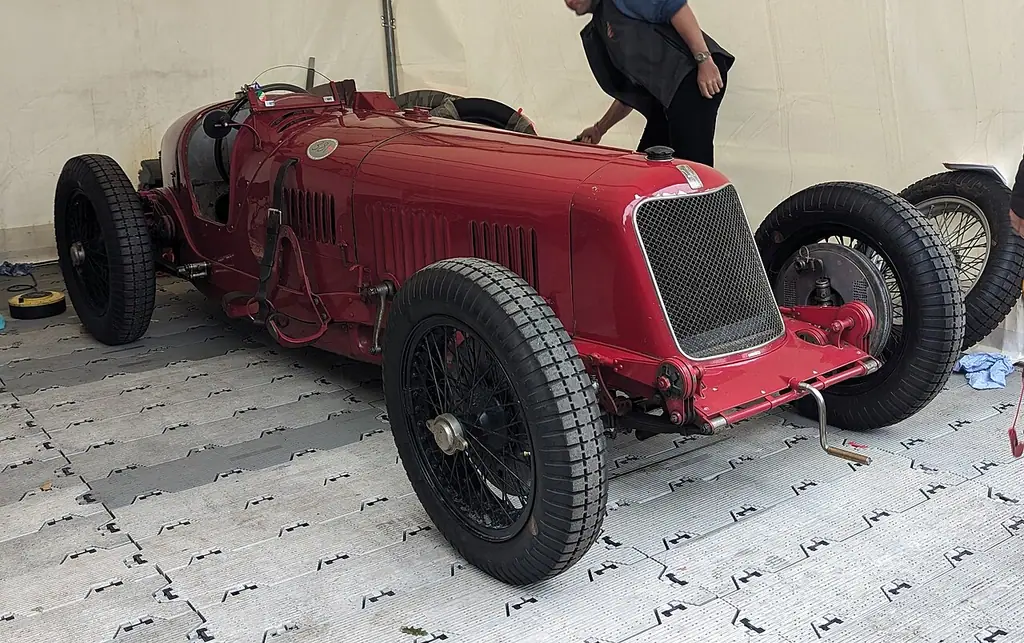
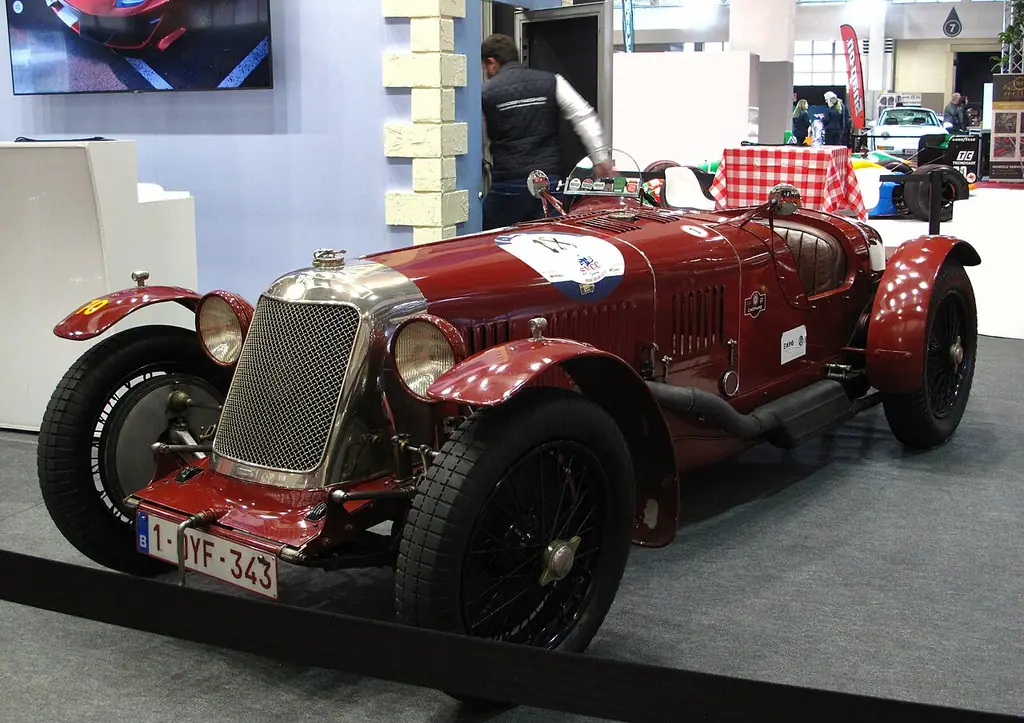
Photo: Calreyn88 · CC0 1.0
Contents
01Overview
At a glance
- Built
- 13 Built
- Years
- 1930–1932
- Engine
- Inline-8 · 2,495.4 cc / 2.5 LFactory: 2,495.4 cc
- Power
- 136 kW / 185 PSFactory: 185 PS
- Top speed
- Not yet verified
- Body
- Not yet verified
- Designer
- Alfieri Maserati
- In this archive
- Not yet verified
- Surviving
- Not yet verified
Sources and any conflicting figures are in the sections below.
Why it matters
The 26M was a single-seat racer with a new 2.5-litre straight-eight, designed by Alfieri Maserati. The factory regarded it as his masterpiece. It won races in 1930 until Alfa Romeo's 8C took most races in 1931.
How rare is it?
Six separate kinds of rarity – never combined into one number.
Each kind of rarity is rated separately and never combined.
Photos
Exterior, interior and detail photos with their licences.
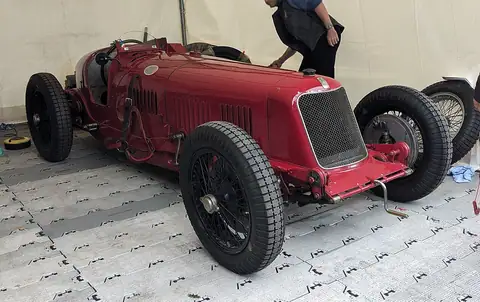 Maserati Tipo 26M (1930-1932) (Wikimedia Commons search)
Photo: Calreyn88 · CC0 1.0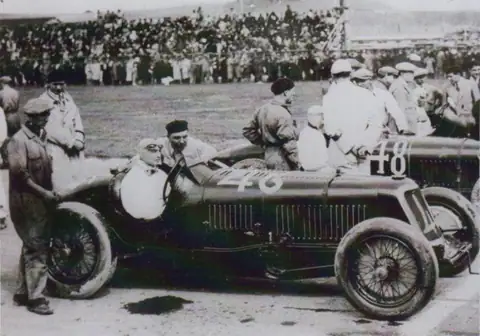 Maserati Tipo 26M (1930-1932) (Wikimedia Commons search)
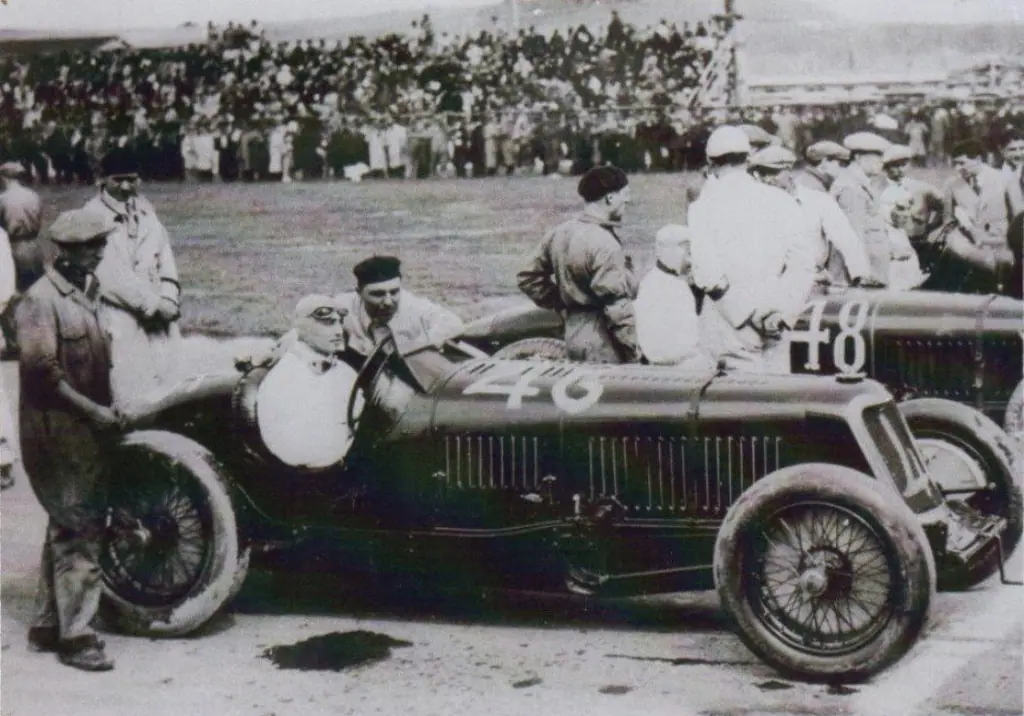
Photo: Unknown photographer · Public domain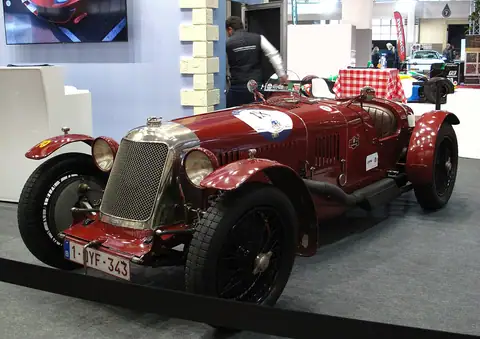 Maserati Tipo 26M (1930-1932) (Wikimedia Commons search)
Photo: Rutger van der Maar · CC BY 2.0


02Production & history
Production
Every figure says what it counts.
| What is counted | Figure | Basis | Status |
|---|---|---|---|
| Total model production26M series cars produced, including one longer-wheelbase T touring version | 131 | Factory production | Factory reported |
Independent counts (e.g. engine and colour) are never combined into a calculated figure. Surviving examples are never presented as original production.
History
The 26M was introduced in 1930 because the 26B had reached the largest bore its block could take. The new 2,495 cc engine had a 65 x 94 mm bore and stroke, an unusually long stroke for Maserati. It had twin overhead camshafts, five main bearings and dry-sump lubrication. Its first race was the Premio Reale di Roma on 25 May 1930.
The 26M was built as a monoposto and in Sport form, and the Sport had a slightly shorter wheelbase than the Corsa. A two-seat Gran Sport road version was shown at Milan in 1931, and Zagato built a light aluminium Sport. Production ended in 1932 after 13 cars, including a longer-wheelbase touring version.
Race results for 1930 and 1931 list 26M entries, including a 1930 win by Luigi Arcangeli.
Variants
How each version differs from the standard Tipo 26M (1930-1932).
No variants documented yet. Have a source? Contribute it.
03Specifications
Technical specifications
Engine
| Engine family | Not yet verified |
|---|---|
| Engine code | Not yet verified |
| Layout | Inline-82 Independently researched |
| Displacement | 2,495.4 cc / 2.5 LFactory: 2,495.4 cc1 |
| Bore | 65 mmFactory: 65 mm1 |
| Stroke | 94 mmFactory: 94 mm1 |
| Compression ratio | Not yet verified |
| Valvetrain | Twin overhead camshafts, two valves per cylinder in a 90° V1 |
| Fuel system | Not yet verified |
| Induction | Roots supercharger2 Independently researched |
| Power | 136 kW / 185 PSFactory: 185 PS1Factory page gives CV (metric horsepower), entered as PS, not converted. Snellman's page gives 185 BHP for the same figure; the unit differs. |
| Power at | 5,600 rpm1 |
| Torque | Not yet verified |
Transmission & drivetrain
| Gearbox | 4-speed manual2 Independently researched |
|---|---|
| Gears | 42 Independently researched |
| Driven wheels | Not yet verified |
Chassis, body & dimensions
| Chassis | Two longitudinal members with cross-members, pressed steel C-section1 |
|---|---|
| Front suspension | Leaf springs with friction dampers1 |
| Rear suspension | Leaf springs with friction dampers1 |
| Brakes | Mechanical drum brakes1 |
| Steering | Not yet verified |
| Body construction | Not yet verified |
| Wheelbase | 2,750 mmFactory: 2,750 mm1Factory figure is for the Sport version. Snellman gives 264 cm for the 750 kg Grand Prix racer. Not converted. |
| Length | 3,850 mmFactory: 3,850 mm1 |
| Width | 1,570 mmFactory: 1,570 mm1 |
| Height | 1,200 mmFactory: 1,200 mm1 |
| Front track | Not yet verified |
| Rear track | Not yet verified |
| Kerb weight | Not yet verified |
| Dry weight | 820 kgFactory: 820 kg1Snellman lists 800 kg for the 750 kg Grand Prix racer. |
Performance
| Maximum speed | Not yet verified |
|---|---|
| 0–100 km/h | Not yet verified |
| Fuel tank | Not yet verified |
“Not yet verified” means no source has been checked for that value yet. Nothing is estimated to fill a gap.
04Colours & options
Factory colours & interiors
Original paint and trim, with the number of cars in each where a source gives it.
Not yet documented. Have a source? Contribute it.
Factory options & codes
Codes are shown exactly as written by the manufacturer.
Not yet documented. Have a source? Contribute it.
05Individual cars
Chassis register
Every documented car, with its colours, history and where it is now. Open a row for the full record. Known chassis are not automatically authenticated originals.
Not yet documented. Have a source? Contribute it.
Competition history
Every race result of the individual cars, in date order. Click a chassis number to open its full record in the register.
Not yet documented. Have a source? Contribute it.
Auction & sale history
Documented public sales of the individual cars. Click a chassis number to open its full record in the register.
Not yet documented. Have a source? Contribute it.
See one in person
Museums where an example of this car can be seen.
No example is documented on public display yet. Have a source? Contribute it.
06Reference
Identification guide
How to tell an original from a replica or later conversion.
The Sport model has a slightly shorter wheelbase than the Corsa racing version. Its steel chassis has two longitudinal members with cross-members of pressed C-section steel. Road Gran Sport cars were two-seaters, and Zagato's Sport Tipo 1000 Miglia was an aluminium-bodied light spider. Six sports versions were built for endurance events.
Sources
Each number links to the exact facts it supports.
-
1
Maserati Heritage - Maserati 26M Sport Level A Maserati S.p.A. (maserati.it heritage) · 2010-01-22
- dopo tredici esemplari prodotti
- Cilindrata totale 2495,4 cc
- Alesaggio e corsa 65x94 mm
- due valvole per cilindro disposte a V di 90°, due assi a camme in testa
- Potenza massima | 185 CV a 5600 giri/min
- 185 CV a 5600 giri/min
- Telaio: due longheroni con traverse, profilati d'acciaio a sezione a C
- Sospensione anteriore | balestra e ammortizzatori a frizione
- Sospensione posteriore | balestra e ammortizzatori a frizione
- Freni | a tamburo sulle ruote con comando meccanico
- Passo | 2750 mm
- Lunghezza | 3850 mm
- Larghezza | 1570 mm
- Altezza | 1200 mm
- Peso a secco | 820 kg
-
2
Cars (Part 8) Level C Leif Snellman, kolumbus.fi
- Engine: 8 cyl in-line 65 * 94mm 2495cc
- Roots supercharger, 185 BHP
- Transmission: 4 speed gearbox
Keep exploring
More from Maserati
-
Maserati · 1957
150 GT (1957)
1 Built
-
Maserati · 1971–1972
Boomerang (Italdesign)
1 Built
-
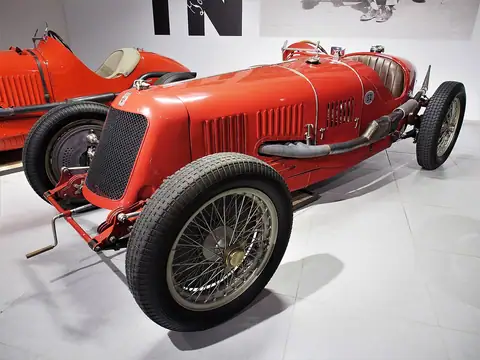
Maserati · 1932
8C 3000
2 Built
-
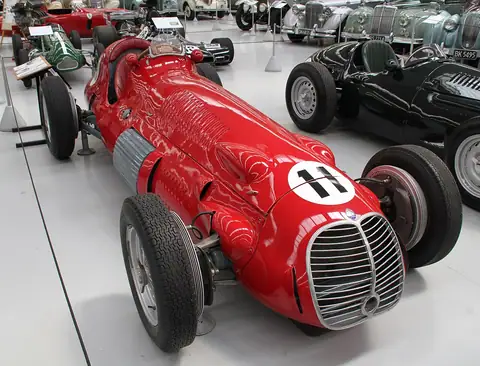
Maserati · 1950
8CLT
2 Built
See all 101 cars by Maserati →
More from Italy
-
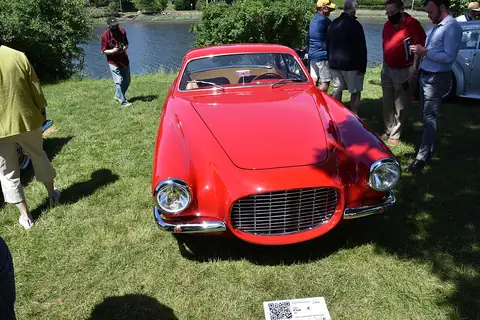
Fiat · 1953
8V Coupé (Mario Boano, 1953)
114 Built
-
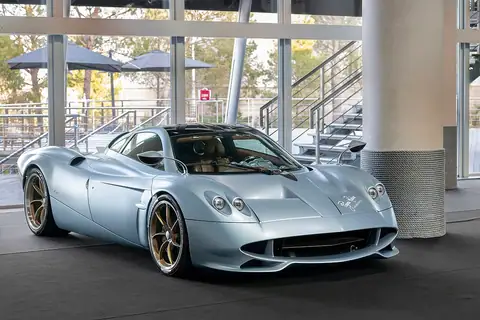
Pagani
Huayra Codalunga
5 Built
-
Ferrari
KC23
Production not yet verified
-
Lancia
Fulvia Coupé Monte-Carlo
4,440 Built
62 other makes from ItalyAbarthACM AutomobiliAlfa RomeoAres DesignATSAuto Avio CostruzioniAutobianchiAznomB EngineeringBandiniBertoneBizzarriniBrixia-ZüstCagivaCarrozzeria Touring SuperleggeraCeiranoChiribiriCisitaliaCizetaColoniCoviniDallaraDe TomasoDiattoF.I.A.L. LegnanoFerrariFervesFiatFissoreFlorentiaGhiaInnocentiIntermeccanicaIsoIsotta FraschiniItalaItaldesignLaffiteLamborghiniLanciaAll makes →