Makes › Opel › Speedster · Rare production · 2001–2005 Limited Production
Opel
Speedster
Lotus-built (Hethel) mid-engined two-seater; with the Vauxhall VX220 about 7,200 built.
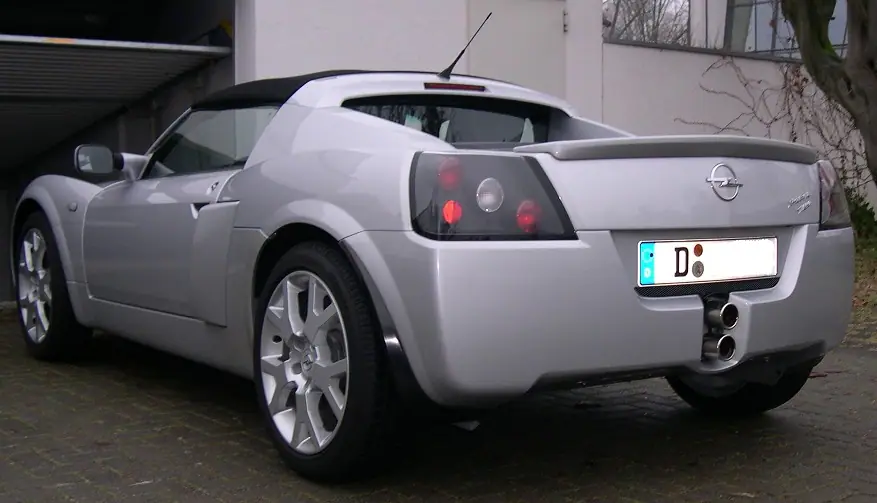
Photo: Unknown author · Public domain

Contents
01Overview
At a glance
- Built
- 7,207 Built
- Years
- 2001–2005
- Engine
- Mid-engined, four-cylinder, in-line · 2,200 cc / 2.2 LFactory: 2.2 L
- Power
- 110 kW / 149 PSFactory: 147 hp · converted
- Top speed
- 217 km/hFactory: 217 km/h
- Body
- Not yet verified
- Designer
- Opel Design (Hans Seer, Director of Design); chassis engineering with Lotus Engineering
- In this archive
- Not yet verified
- Surviving
- Not yet verified
Sources and any conflicting figures are in the sections below.
Why it matters
The Speedster was Opel's first mid-engined sports car and the first Opel to use an aluminium chassis and composite body, and it came out of a cooperation with Lotus Engineering based on the original Lotus Elise concept.
How rare is it?
Six separate kinds of rarity – never combined into one number.
Each kind of rarity is rated separately and never combined.
02Production & history
Production
Every figure says what it counts.
| What is counted | Figure | Basis | Status |
|---|---|---|---|
| Total model productionCombined Opel Speedster and Vauxhall VX220 production ('discontinued on July 22, 2005 after 7207 copies built') | 7,2071 | Factory production | Independently researched |
Independent counts (e.g. engine and colour) are never combined into a calculated figure. Surviving examples are never presented as original production.
History
The Speedster concept was shown at the Geneva Motor Show in 1999, and Opel decided to put the two-seater on sale quickly, cooperating with Lotus Engineering. The production car went on sale in Germany in March 2001 and is assembled by Group Lotus at Hethel, England, with Opel quality engineers working alongside Lotus staff.
Opel specified a 147 hp 2.2-litre ECOTEC engine, a kerb weight of 945 kg including the driver, 0-100 km/h in 5.9 seconds and a top speed of 217 km/h. About 800 dealerships were appointed to sell and service it across Europe.
Variants
How each version differs from the standard Speedster.
No variants documented yet. Have a source? Contribute it.
03Specifications
Technical specifications
Engine
| Engine family | ECOTEC (all-aluminium, with two counter-rotating balance shafts)2 |
|---|---|
| Engine code | Not yet verified |
| Layout | Mid-engined, four-cylinder, in-line2 |
| Cylinders | 42 |
| Displacement | 2,200 cc / 2.2 LFactory: 2.2 L2 |
| Bore | Not yet verified |
| Stroke | Not yet verified |
| Compression ratio | Not yet verified |
| Fuel system | Not yet verified |
| Power | 110 kW / 149 PSFactory: 147 hp · converted2Rating: manufacturerPress release also gives 108 kW; the "hp" is kept as stated by the manufacturer. |
| Power at | 5,800 rpm2 |
| Torque | 203 NmFactory: 203 Nm2 |
| Torque at | 4,000 rpm2 |
Transmission & drivetrain
| Gearbox | Five-speed manual, cable-operated shift, three-shaft design2 |
|---|---|
| Gears | 52 |
| Driven wheels | Not yet verified |
Chassis, body & dimensions
| Chassis | Bonded extruded aluminium sections2 |
|---|---|
| Front suspension | Double wishbones2 |
| Rear suspension | Double wishbones2 |
| Brakes | Four ventilated 288 mm discs, ABS standard2 |
| Steering | Unassisted2 |
| Body construction | Composite bodyshell of bonded glass-fibre reinforced panels2 |
| Wheelbase | 2,330 mmFactory: 2,330 mm2 |
| Length | 3,786 mmFactory: 3,786 mm2 |
| Width | 1,708 mmFactory: 1,708 mm2 |
| Height | 1,117 mmFactory: 1,117 mm2 |
| Front track | 1,450 mmFactory: 1,450 mm2 |
| Rear track | 1,488 mmFactory: 1,488 mm2 |
| Kerb weight | 945 kgFactory: 945 kg2Includes 75 kg for the driver. |
| Dry weight | Not yet verified |
Performance
| Maximum speed | 217 km/hFactory: 217 km/h2 |
|---|---|
| 0–100 km/h | 5.9 s2 |
| Fuel tank | Not yet verified |
“Not yet verified” means no source has been checked for that value yet. Nothing is estimated to fill a gap.
04Colours & options
Factory colours & interiors
Original paint and trim, with the number of cars in each where a source gives it.
Not yet documented. Have a source? Contribute it.
Factory options & codes
Codes are shown exactly as written by the manufacturer.
Not yet documented. Have a source? Contribute it.
05Individual cars
Chassis register
Every documented car, with its colours, history and where it is now. Open a row for the full record. Known chassis are not automatically authenticated originals.
Not yet documented. Have a source? Contribute it.
Competition history
Every race result of the individual cars, in date order. Click a chassis number to open its full record in the register.
Not yet documented. Have a source? Contribute it.
Auction & sale history
Documented public sales of the individual cars. Click a chassis number to open its full record in the register.
Not yet documented. Have a source? Contribute it.
See one in person
Museums where an example of this car can be seen.
No example is documented on public display yet. Have a source? Contribute it.
06Reference
Identification guide
How to tell an original from a replica or later conversion.
A plaque on the instrument panel carries the production number of each Speedster. The car has a visible aluminium chassis in the cabin, a composite body of bonded glass-fibre reinforced panels, large air intake ducts behind the doors, two vertically arranged exhaust pipes and 17-inch aluminium wheels with 175/55 front and 225/45 R17 rear Bridgestone Potenza tyres.
Sources
Each number links to the exact facts it supports.
-
1
Motor Car History – Vauxhall VX / Opel Speedster Level C
- 7207 Combined Opel Speedster and Vauxhall VX220 production ('discontinued on July 22, 2005 after 7207 copies built')
-
2
Opel Speedster - The Essence of Dynamic Driving Level A Opel / GM Media archive press release (archived 2015) · 2015-07-14
- first member of the all-new, aluminum ECOTEC engine generation
- mid-engined two-seater
- 2.2-liter, four-cylinder ECOTEC engine
- four-cylinder unit
- 108 kW/147 hp at 5800 rpm
- Maximum torque is 203 Nm at 4000 rpm
- 203 Nm at 4000 rpm
- five-speed gearbox with high-precision, cable-operated shift
- five-speed gearbox
- chassis made of bonded, extruded aluminum sections
- double wishbone suspension at all four wheels
- Four ventilated, 288-millimeter disc brakes
- unassisted steering
- composite bodyshell made of bonded panels reinforced with glass fiber
- wheelbase 2330 millimeters
- length, 3786 millimeters
- width of 1708 mm
- At 1117 millimeters, its roof
- front and rear tread of 1450 and 1488 mm
- 945 kilograms (including 75 kilograms for the driver)
- top speed of 217 km/h
- zero to 100 km/h in only 5.9 seconds
Keep exploring
More from Opel
-
Opel
Kadett A "Oliver" (Top Gear Botswana Special car)
1 Built
-
Opel · 1969
GT Aero
2 Built
-
Opel
Manta 400
245 Built
-
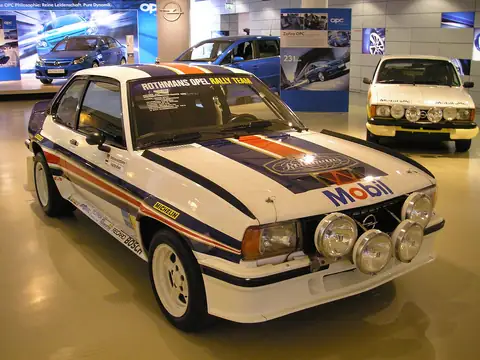
Opel · 1979–1982
Ascona 400
268 Built
More from Germany
-
Mercedes-Benz
250 SL (W113) (1966-1968)
Production not yet verified
-
Porsche · 1953–1956
550 Spyder
89 Built
-
NSU · 1967–1971
TTS (Prinz 1000 TTS)
2,400 Built
-
Horch · 1938–1939
855 Spezial-Roadster
Production not yet verified
77 other makes from Germany9ffAC SchnitzerAdlerAgria-WerkeAlbertAlpinaAMGAMOAmphicarApolloArtegaAudiAuto UnionAutomobili PininfarinaBayerische AutowerkeBenzBenz & Cie.BitterBMWBohseBoldmenBorgwardBovensiepenBrabusBrennaborBrütschCarlssonChampionDaimler-Motoren-GesellschaftDauerDKWFMR (Messerschmitt)FuldamobilGemballaGepardGlasGoggomobilGoliathGumpertGutbrodAll makes →