Makes › Stutz › Bearcat (Series A–4C) · Rare production · 1914–1919
Stutz
Bearcat (Series A–4C)
Mercer's great rival, "the car that made good in a day"
Still being researched: full specifications. Everything shown is checked against the cited sources. Know more? Send us a source.
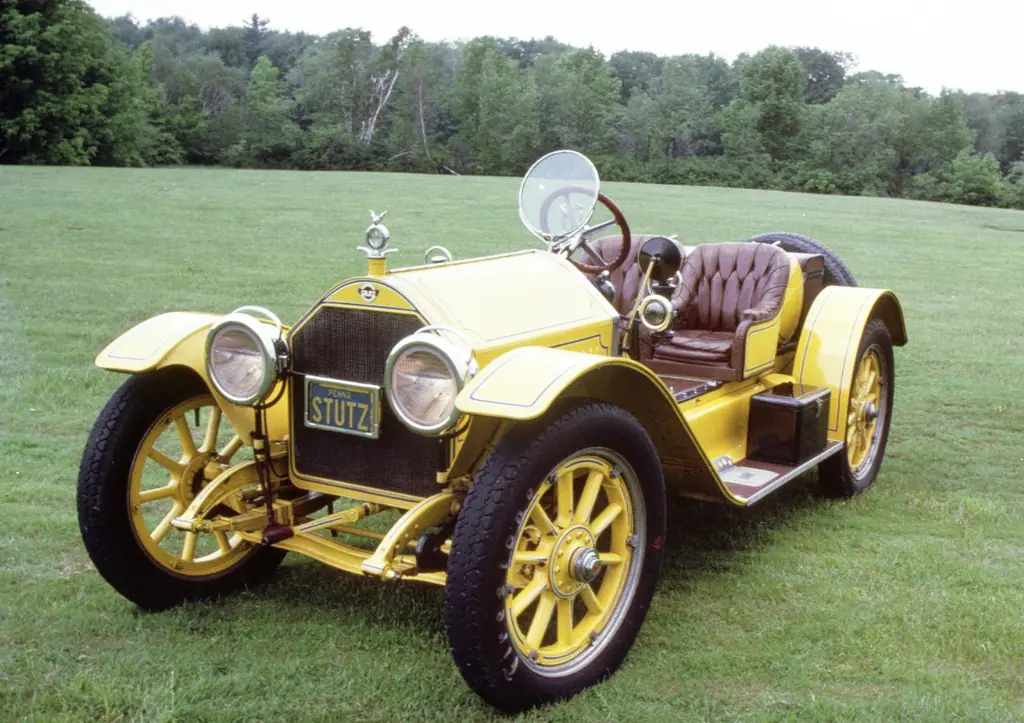
Photo: Autoworldmobilia · Public domain

Contents
01Overview
At a glance
- Built
- Not yet verified
- Years
- 1914–1919
- Engine
- T-head inline four, front-mounted · 5,920 cc / 5.9 LFactory: 361 cu in · converted
- Power
- 37.3 kW / 50.7 PSFactory: 50 hp · converted
- Top speed
- Not yet verified
- Body
- Not yet verified
- Designer
- Not yet verified
- In this archive
- Not yet verified
- Surviving
- Not yet verified
Sources and any conflicting figures are in the sections below.
Why it matters
The Bearcat became the best-known sports roadster of the early American motor industry. Harry C. Stutz built a racing car for the first Indianapolis 500 in 1911, turned it into the Ideal-built passenger roadster, and marketed it as "The Car That Made Good in a Day".
How rare is it?
Six separate kinds of rarity – never combined into one number.
Each kind of rarity is rated separately and never combined.
02Production & history
Production
Every figure says what it counts.
No production figures recorded yet.
History
Stutz entered a 390 cubic-inch T-head four in the first Indianapolis 500 on 30 May 1911; driven by Gil Anderson it finished eleventh. The Indianapolis-based Ideal Car Company then offered a road version in several body styles, the roadster being the forerunner of the Bearcat.
According to Autoswalk the Bearcat name was added to the line in 1914 as the roadster with a higher axle ratio, with an optional six-cylinder T-head of about 80 hp. The Stutz Club says the 361 cubic-inch T-head four powered the Bearcat through 1916, after which the company was reorganised.
Variants
How each version differs from the standard Bearcat (Series A–4C).
No variants documented yet. Have a source? Contribute it.
03Specifications
Technical specifications
Engine
| Engine family | Not yet verified |
|---|---|
| Engine code | Not yet verified |
| Layout | T-head inline four, front-mounted1 Independently researched |
| Cylinders | 42 Independently researched |
| Displacement | 5,920 cc / 5.9 LFactory: 361 cu in · converted1 Registry reportedAutoswalk gives 390 cu in for the 1911 Indianapolis racing car. |
| Bore | Not yet verified |
| Stroke | Not yet verified |
| Compression ratio | Not yet verified |
| Valvetrain | T-head (side valves, intake and exhaust on opposite sides), dual ignition2 Independently researched |
| Fuel system | Not yet verified |
| Power | 37.3 kW / 50.7 PSFactory: 50 hp · converted2 Independently researched |
| Power at | Not yet verified |
| Torque | Not yet verified |
Transmission & drivetrain
| Gearbox | Rear-mounted transaxle (gearbox with differential)2 Independently researched |
|---|---|
| Gears | Not yet verified |
| Driven wheels | Rear2 Independently researched |
Chassis, body & dimensions
| Chassis | Frame rear section 2.5 in higher than the front; six-inch taper at the front3 Independently researchedBearcat frame detail from the 1914 model description; the six-inch front taper is stated in the same passage. |
|---|---|
| Front suspension | Not yet verified |
| Rear suspension | Not yet verified |
| Brakes | Not yet verified |
| Steering | Not yet verified |
| Body construction | Not yet verified |
| Wheelbase | 3,050 mmFactory: 120 in · converted2 Independently researched |
| Length | Not yet verified |
| Width | Not yet verified |
| Height | Not yet verified |
| Front track | Not yet verified |
| Rear track | Not yet verified |
| Kerb weight | Not yet verified |
| Dry weight | Not yet verified |
Performance
| Maximum speed | Not yet verified |
|---|---|
| 0–100 km/h | Not yet verified |
| Fuel tank | Not yet verified |
“Not yet verified” means no source has been checked for that value yet. Nothing is estimated to fill a gap.
04Colours & options
Factory colours & interiors
Original paint and trim, with the number of cars in each where a source gives it.
Not yet documented. Have a source? Contribute it.
Factory options & codes
Codes are shown exactly as written by the manufacturer.
Not yet documented. Have a source? Contribute it.
05Individual cars
Chassis register
Every documented car, with its colours, history and where it is now. Open a row for the full record. Known chassis are not automatically authenticated originals.
Not yet documented. Have a source? Contribute it.
Competition history
Every race result of the individual cars, in date order. Click a chassis number to open its full record in the register.
Not yet documented. Have a source? Contribute it.
Auction & sale history
Documented public sales of the individual cars. Click a chassis number to open its full record in the register.
Not yet documented. Have a source? Contribute it.
See one in person
Museums where an example of this car can be seen.
No example is documented on public display yet. Have a source? Contribute it.
06Reference
Identification guide
How to tell an original from a replica or later conversion.
The early Bearcat is a minimal two-seat roadster with a 120-inch wheelbase, a T-head four-cylinder engine (361 cu in in the Stutz Club description) with dual ignition and aluminium pistons, and a rear-mounted gearbox combined with the differential (a transaxle) joined by a horizontal driveshaft. The frame is set 2.5 inches higher at the rear than the front. Wheels are 34 inches in diameter with 4.5-inch tyres.
Sources
Each number links to the exact facts it supports.
-
1
About Stutz - The Automobile Level B Stutz Club
- powerful T-head four-cylinder engine of 361 cubic inch capacity
- T-head four-cylinder engine of 361 cubic inch capacity
-
2
World's Greatest Cars: Stutz Bearcat Level D Jack Nerad · Autoswalk (Jack Nerad, Driving Today) · 2005-02-07
- option of a six-cylinder engine, using the same T-head technology
- T-head design with intake valves on one side of the cylinders and exhaust valves on the other
- standard trim ... churned out 50 horsepower
- rear gearbox cum differential
- transferred through a horizontal driveshaft to a rear gearbox cum differential
- wheelbase of 120 inches
-
3
Stutz Bearcat (World's Greatest Cars) Level C Autoswalk.com
- The rear of the frame was two and a half inches higher than the forward portion
Keep exploring
More from Stutz
-
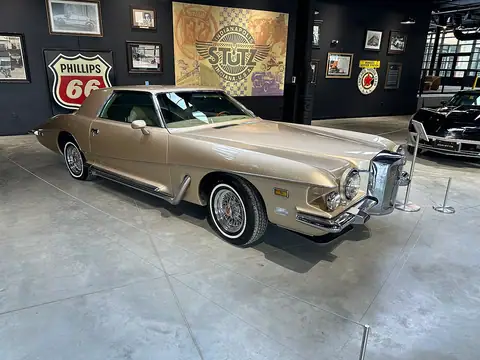
Stutz · 1972–1987
Blackhawk (1971-1987)
Production not yet verified
-
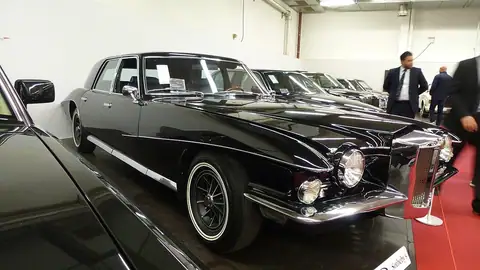
Stutz
Duplex (Coggiola one-off)
Production not yet verified
-
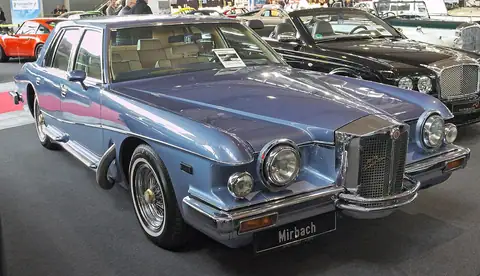
Stutz
IV-Porte
Production not yet verified
-
No licensed photo yet
Stutz
DV32 Super Bearcat
20 Built
More from United States
-
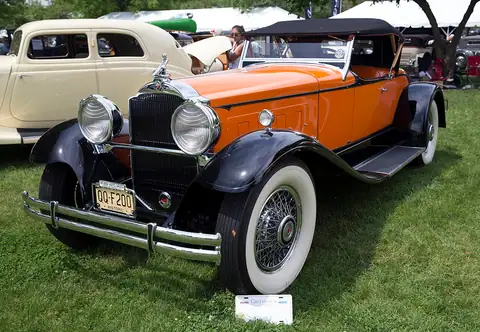
Packard · 1930
734 Speedster Eight
113 Built
-
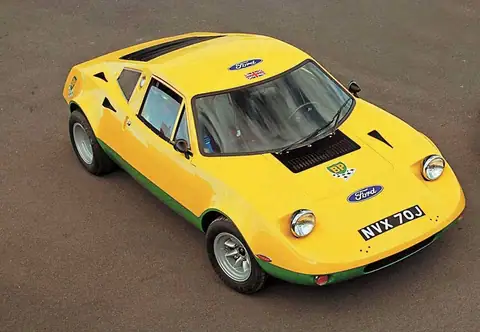
Ford
GT70
Production not yet verified
-
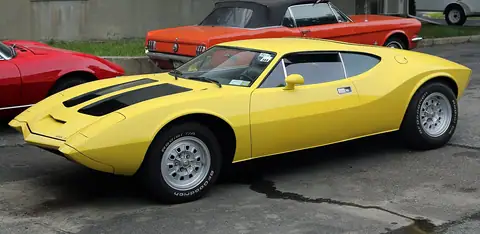
AMC · 1970
AMX/3
6 Built
-
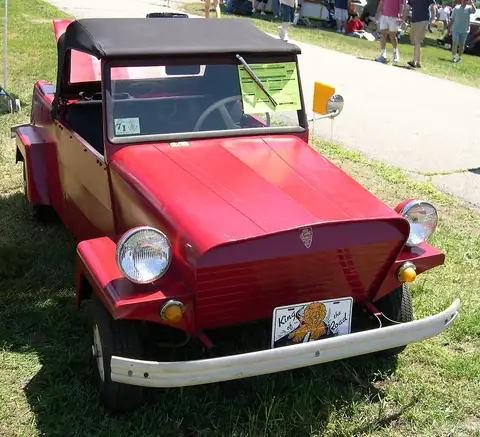
King Midget
King Midget
Production not yet verified
141 other makes from United StatesAC PropulsionAcuraAllstateAMCAmerican LaFranceAmerican MotorsAmerican UnderslungApteraArmstrongArnoltAuburnBaldwin-MotionBantamBarris KustomsBendixBerger ChevroletBill ThomasBollingerBremerBuckeyeBuffumBuickCadillacCallawayCastleCheckerChevroletChristieChryslerClenetCodaColumbiaConsulierCordCunninghamCzingerDana ChevroletDean JeffriesDeSotoDetroit ElectricAll makes →