Makes › Tatra › V570 prototype · Prototype · 1931–1933
Tatra
V570 prototype
Running streamlined rear-engined small-car prototype that led to the T77/T97; later returned to Tatra
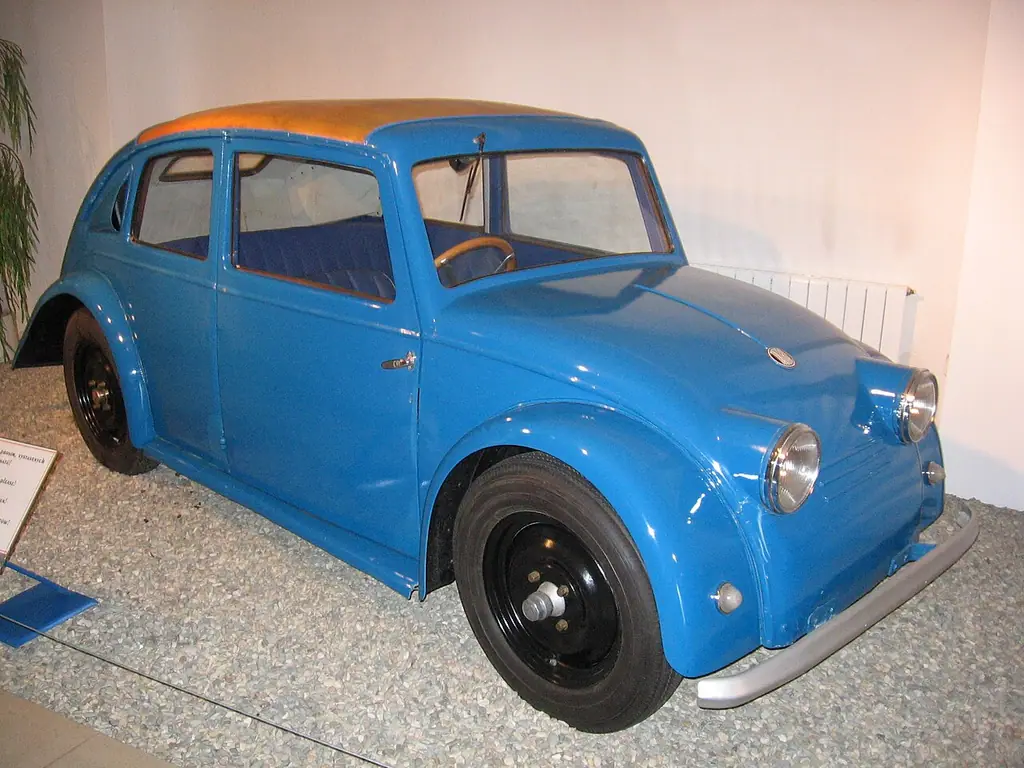
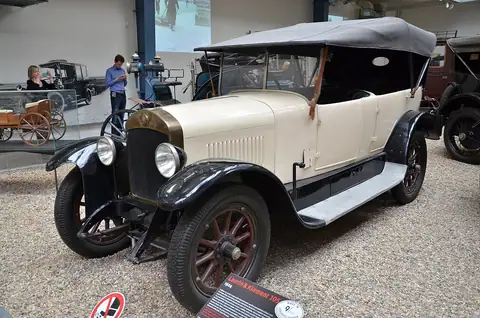
Photo: Dr. Killer · CC BY 2.5

Contents
01Overview
At a glance
- Built
- Not yet verified
- Years
- 1931–1933
- Engine
- Rear-mounted air-cooled flat two-cylinder · 854 cc / 0.9 LFactory: 854 cc
- Power
- Not yet verified
- Top speed
- 75 km/hFactory: 75 km/h
- Body
- Not yet verified
- Designer
- Hans Ledwinka's design team, using Paul Jaray streamlining patents
- In this archive
- Not yet verified
- Surviving
- 1 (independently researched)
Sources and any conflicting figures are in the sections below.
Why it matters
The V570 was Tatra's first rear-engined, air-cooled streamlined car design, built as a study model for a new direction in construction and styling. It applied the streamlining principles of Paul Jaray with a rear-mounted engine. It led directly to the T77, Tatra's luxury streamlined car.
How rare is it?
Six separate kinds of rarity – never combined into one number.
Each kind of rarity is rated separately and never combined.
02Production & history
Production
Every figure says what it counts.
| What is counted | Figure | Basis | Status |
|---|---|---|---|
| Total model productionThe 1933 V570 prototype, on permanent display at the Technical Museum Tatra in Kopřivnice | 12 | Surviving examples | Independently researched |
| Total model productionthe unique aerodynamic (second, 1933) V570 prototype that survives in Tatra's collection; a first V570 (1931) had a conventional T57 body | 11 | Surviving examples | Independently researched |
Independent counts (e.g. engine and colour) are never combined into a calculated figure. Surviving examples are never presented as original production.
History
The first V570 prototype of 1931 had a rear-mounted air-cooled two-cylinder engine of 854 cc and a top speed of 75 km/h, but its body was not particularly aerodynamic. A second prototype followed in 1933 with a similar flat two-cylinder engine in a beetle-shaped aerodynamic body.
After the two prototypes Tatra management decided that a new aerodynamic car would be a limited-production model aimed at the top of the market, and told Ledwinka's design team to stop work on the V570 and develop a larger, more luxurious car, which became the T77.
Variants
How each version differs from the standard V570 prototype.
No variants documented yet. Have a source? Contribute it.
03Specifications
Technical specifications
Engine
| Engine family | Not yet verified |
|---|---|
| Engine code | Not yet verified |
| Layout | Rear-mounted air-cooled flat two-cylinder3 Independently researched |
| Cylinders | 23 Independently researched |
| Displacement | 854 cc / 0.9 LFactory: 854 cc3 Independently researchedFirst (1931) prototype; the 1933 engine is described as similar. |
| Bore | 80 mmFactory: 80 mm2 Independently researched |
| Stroke | 85 mmFactory: 85 mm2 Independently researched |
| Compression ratio | 4,5:12 Independently researched |
| Valvetrain | OHV2 Independently researched |
| Fuel system | Zenith carburettor2 Independently researched |
| Power | Not yet verified |
| Power at | Not yet verified |
| Torque | Not yet verified |
| Redline | 3,500 rpm2 Independently researched |
Transmission & drivetrain
| Gearbox | mechanical 4-speed2 Independently researched |
|---|---|
| Gears | 42 Independently researched |
| Driven wheels | Not yet verified |
Chassis, body & dimensions
| Chassis | rear-engined air-cooled car on a backbone frame (development concept)2 Independently researchedThis describes the development programme the V570 came from; the page does not give a separate construction statement for the prototype. |
|---|---|
| Front suspension | swinging parallelogram front axle; two transverse leaf springs2 Independently researched |
| Rear suspension | swinging axles with transverse leaf spring2 Independently researched |
| Brakes | mechanical brakes all round2 Independently researched |
| Steering | Not yet verified |
| Body construction | Not yet verified |
| Wheelbase | 2,320 mmFactory: 2,320 mm2 Independently researched |
| Length | 3,800 mmFactory: 3,800 mm2 Independently researched |
| Width | 1,400 mmFactory: 1,400 mm2 Independently researched |
| Height | 1,440 mmFactory: 1,440 mm2 Independently researched |
| Front track | 1,120 mmFactory: 1,120 mm2 Independently researched |
| Rear track | 1,120 mmFactory: 1,120 mm2 Independently researched |
| Kerb weight | Not yet verified |
| Dry weight | Not yet verified |
Performance
| Maximum speed | 75 km/hFactory: 75 km/h3 Independently researchedFirst (1931) prototype. |
|---|---|
| 0–100 km/h | Not yet verified |
| Fuel tank | 35 LFactory: 35 L2 Independently researched1931 car: 32 l. |
“Not yet verified” means no source has been checked for that value yet. Nothing is estimated to fill a gap.
04Colours & options
Factory colours & interiors
Original paint and trim, with the number of cars in each where a source gives it.
Not yet documented. Have a source? Contribute it.
Factory options & codes
Codes are shown exactly as written by the manufacturer.
Not yet documented. Have a source? Contribute it.
05Individual cars
Chassis register
Every documented car, with its colours, history and where it is now. Open a row for the full record. Known chassis are not automatically authenticated originals.
Not yet documented. Have a source? Contribute it.
Competition history
Every race result of the individual cars, in date order. Click a chassis number to open its full record in the register.
Not yet documented. Have a source? Contribute it.
Auction & sale history
Documented public sales of the individual cars. Click a chassis number to open its full record in the register.
Not yet documented. Have a source? Contribute it.
See one in person
Museums where an example of this car can be seen.
No example is documented on public display yet. Have a source? Contribute it.
06Reference
Identification guide
How to tell an original from a replica or later conversion.
The first prototype (1931) is distinguished by a rear-mounted air-cooled two-cylinder engine and a body that was not especially streamlined. The second (1933) has the same style of engine in a fully aerodynamic, beetle-shaped body following Jaray's streamlining principles.
Sources
Each number links to the exact facts it supports.
-
1
Revs Institute – Tatra T77: the brilliant and influential Czech wonder Level B
- 1 the unique aerodynamic (second, 1933) V570 prototype that survives in Tatra's collection; a first V570 (1931) had a conventional T57 body
-
2
Cars & History: Start of the aerodynamic era (1931-1933), V570 technical specifications Level C International Streamlined Tatra Site (tatra.demon.nl), archived copy
- The 1933 V570 prototype is on permanent display at the Technick
- Bore x stroke: 80 x 85 mm (both prototypes)
- Compression ratio: 4,5:1 in the 1933 column (4,8:1 in 1931)
- Valve gear: OHV (1933 column)
- Carburettor: Zenith
- Maximal revolutions 3500 rpm
- Gearbox: mechanical 4-speed
- Number of gears: 4 + reverse
- a small people's car with a rear-mounted engine in a backbone frame
- Front axle: swinging parallelogram; front suspension: 2 transversal leafs
- Rear axle: swinging axles Tatra; rear suspension: transversal leaf
- Brakes: mechanical brakes all round
- Wheelbase: 2320 mm
- Overall length: 3800 mm (1933 column)
- Overall width: 1400 mm (1933 column)
- Overall heigth: 1440 mm (1933 column)
- Front track: 1120 mm
- Rear track: 1120 mm
- Petrol tank volume: 35 l
-
3
Tatra aerodynamic cars: V570 prototype Level C tatra.demon.nl (archived) · 2010-05-17
- rear-mounted air-cooled two-cylinder engine
- two-cylinder engine
- cylinder capacity of 854 cc
- top speed of 75 km/h
Keep exploring
More from Tatra
-
Tatra · 1991
MTX V8 (Metalex)
4 Built
-
Tatra · 1996–1999
700
29 Built
-
Tatra · 1936–1939
T97
508 Built
-
Tatra · 1936–1950
87
3,023 Built
More from Czech Republic
-
Škoda · 1984–1986
130 LR
200 Built
-
Aero
18
2,615 Built
-
Jawa
700 (1934)
Production not yet verified
-
Laurin & Klement
105
Production not yet verified
6 other makes from Czech RepublicAeroJawaLaurin & KlementMTXŠkodaZbrojovka Brno