Makes › Volvo › P1800 prototypes (Frua P958-X1/X2/X3 and Jensen X1PP–X3PP) · Prototype · 1957–1960 Ultra Rare
Volvo
P1800 prototypes (Frua P958-X1/X2/X3 and Jensen X1PP–X3PP)
Three Frua-built and three Jensen-built pre-production prototypes of the P1800 designed by Pelle Petterson; X-1 survives
Still being researched: full specifications. Everything shown is checked against the cited sources. Know more? Send us a source.
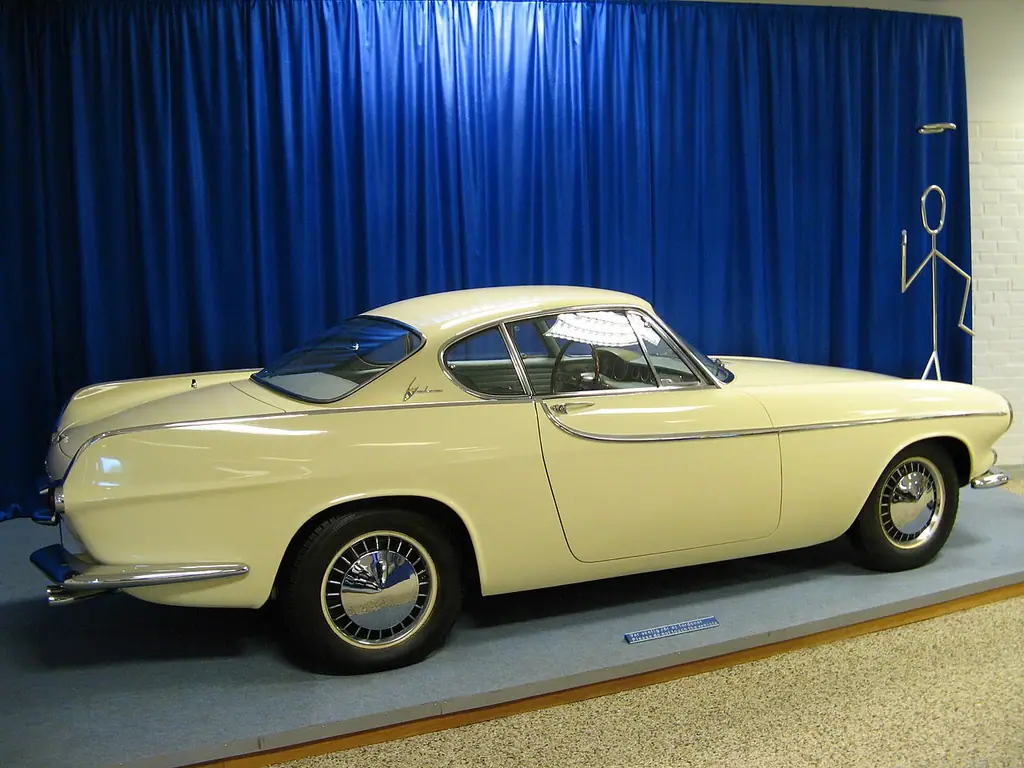
Photo: Kotasik · CC BY-SA 3.0

Contents
01Overview
At a glance
- Built
- 6 Built
- Years
- 1957–1960
- Engine
- Not yet verified
- Power
- Not yet verified
- Top speed
- 167 km/hFactory: 167 km/h
- Body
- Frua
- Designer
- Pelle Petterson (while working at Carrozzeria Frua, Turin)
- In this archive
- Not yet verified
- Surviving
- Not yet verified
Sources and any conflicting figures are in the sections below.
Why it matters
These six hand-built prototypes, three by Frua in Turin and three by Jensen in West Bromwich, defined the Volvo P1800 before series production began in 1961. They document how the design was developed and tested, and the Italian cars show details that never reached production.
How rare is it?
Six separate kinds of rarity – never combined into one number.
Each kind of rarity is rated separately and never combined.
02Production & history
Production
Every figure says what it counts.
| What is counted | Figure | Basis | Status |
|---|---|---|---|
| Total model productionprototypes (3 Frua, 3 Jensen) | 61Strongest evidence | Factory production | Independently researched |
| Prototypes and pre-series carsFrua-built P958 prototypes only (X1, X2, X3), built in Turin | 32 | Documented examples | Registry reported |
The 6 counts all prototypes (3 Frua, 3 Jensen); the 3 is the Frua-built subset.
Independent counts (e.g. engine and colour) are never combined into a calculated figure. Surviving examples are never presented as original production.
History
Project 958 was driven by consultant Helmer Petterson, and Pelle Petterson worked on the design at Frua, where the first three prototypes were built. P958-X1 was almost complete at the turn of 1957–58, X2 was finished in May 1958 and X3 in late spring 1958; all three received chassis numbers on 19 September 1958. Helmer Petterson took X1 to Karmann and tested it near Baden-Baden, and his letter of May 1958 helped revive the project after the board postponed it. Jensen then agreed to build three further prototypes, X1PP to X3PP, at £2,000 each, the first due in December 1959, based on the stripped-down X3.
X2 was de-registered in 1961 and is now in Volvo's historical collection; X3, decommissioned in 1970 after going missing on an American tour and being found in a South American port, is under complete renovation.
Variants
How each version differs from the standard P1800 prototypes (Frua P958-X1/X2/X3 and Jensen X1PP–X3PP).
No variants documented yet. Have a source? Contribute it.
03Specifications
Technical specifications
Engine
| Engine family | Not yet verified |
|---|---|
| Engine code | B16 (B16B in the top-speed test car)2 Independently researchedPlanned production basis was the American-version B16 with 88 hp (S1). |
| Layout | Not yet verified |
| Displacement | Not yet verified |
| Bore | Not yet verified |
| Stroke | Not yet verified |
| Compression ratio | Not yet verified |
| Fuel system | Not yet verified |
| Power | Not yet verified |
| Power at | Not yet verified |
| Torque | Not yet verified |
Transmission & drivetrain
| Gearbox | 4-speed manual (M4, built at Koping) planned2 Independently researchedApplies to the planned production car based on the Amazon. |
|---|---|
| Gears | Not yet verified |
| Driven wheels | Not yet verified |
Chassis, body & dimensions
| Chassis | Handmade Frua steel body over the Amazon-based underpinnings2 Independently researched |
|---|---|
| Front suspension | Not yet verified |
| Rear suspension | Not yet verified |
| Brakes | P958-X2: servo-assisted front disc brakes fitted during testing; prototype brakes judged poor at speed2 Independently researched |
| Steering | Not yet verified |
| Body construction | Not yet verified |
| Wheelbase | Not yet verified |
| Length | Not yet verified |
| Width | Not yet verified |
| Height | Not yet verified |
| Front track | Not yet verified |
| Rear track | Not yet verified |
| Kerb weight | Not yet verified |
| Dry weight | Not yet verified |
Performance
| Maximum speed | 167 km/hFactory: 167 km/h2 Independently researchedMeasured by Bosch timekeepers on P958-X1 in spring 1958 with a run-in engine; Petterson estimated 177-182 km/h for a fully tuned car. |
|---|---|
| 0–100 km/h | Not yet verified |
| Fuel tank | Not yet verified |
“Not yet verified” means no source has been checked for that value yet. Nothing is estimated to fill a gap.
04Colours & options
Factory colours & interiors
Original paint and trim, with the number of cars in each where a source gives it.
Not yet documented. Have a source? Contribute it.
Factory options & codes
Codes are shown exactly as written by the manufacturer.
Not yet documented. Have a source? Contribute it.
05Individual cars
Chassis register
Every documented car, with its colours, history and where it is now. Open a row for the full record. Known chassis are not automatically authenticated originals.
Not yet documented. Have a source? Contribute it.
Competition history
Every race result of the individual cars, in date order. Click a chassis number to open its full record in the register.
Not yet documented. Have a source? Contribute it.
Auction & sale history
Documented public sales of the individual cars. Click a chassis number to open its full record in the register.
Not yet documented. Have a source? Contribute it.
See one in person
Museums where an example of this car can be seen.
No example is documented on public display yet. Have a source? Contribute it.
06Reference
Identification guide
How to tell an original from a replica or later conversion.
The prototypes differ from production 1800s in several details: opening 'D' windows and Frua wheel trims on the Italian cars, hand-beaten panels into which standard panels cannot be fitted, and a differently shaped air inlet. The Jensen cars had a different gearbox remote, a shorter gear lever and tailpipes exiting at the sides of the rear; one had cowhorn bumpers and two lamps above the number plate. Wire wheels and a wood-rimmed wheel seen on prototypes later became production options.
Sources
Each number links to the exact facts it supports.
-
1
Volvo Enthusiasts Club archive – P1800 Prototype Level B
- 6 prototypes (3 Frua, 3 Jensen)
-
2
Project P-958 (Prototype to Production) Level B Volvo 1800 registry (volvo1800pictures.com), via Wayback Machine
- the third and final prototype produced at Frua's factory in Turin
- sports car and B16B engine as well as 4.56:1 or 4.1:1 rear axle
- the 4-speed box M4 made in Köping
- It was handmade at Frua
- based on the Amazon undercarriage
- servo-assisted brake system with disc brakes was mounted in the front
- clocked a few times at about 163-167 km/h
Keep exploring
More from Volvo
-
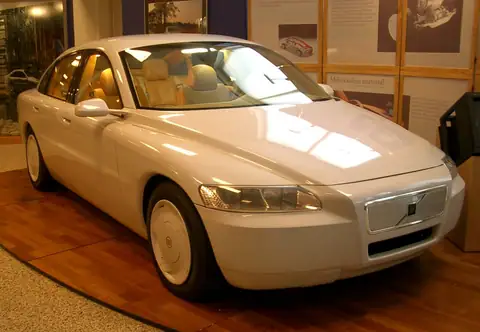
Volvo · 1992
ECC (Environmental Concept Car)
1 Built
-
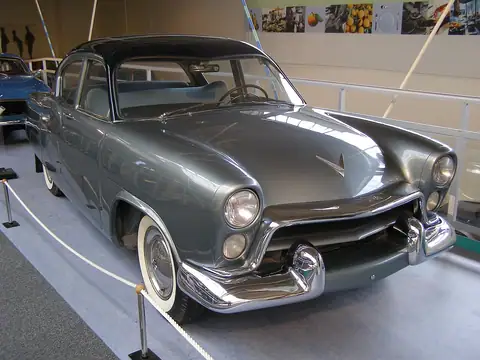
Volvo · 1952
Philip prototype
1 Built
-
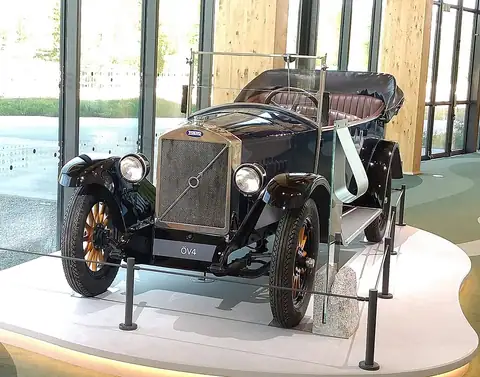
Volvo · 1927–1929
ÖV4
275 Built
-
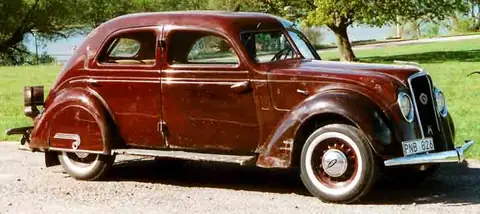
Volvo · 1935–1938
PV36 Carioca
500 Built
More from Sweden
-
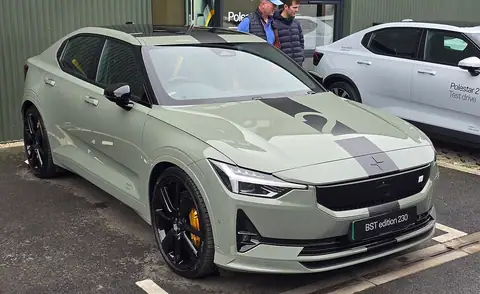
Polestar
2 BST Edition 230 (2022)
Production not yet verified
-
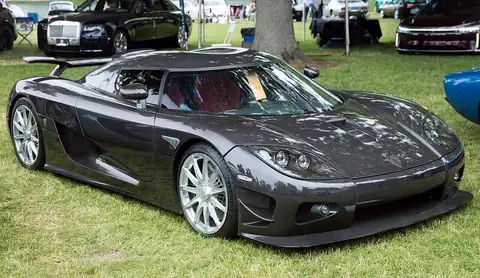
Koenigsegg · 2008
CCX Edition
2 Built
-
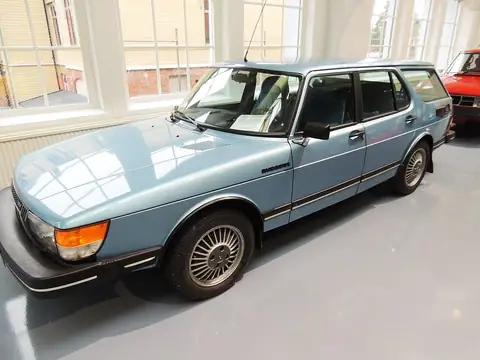
Saab · 1981
900 Safari (Nilssons estate)
2 Built
-
Snow Trac · 1957–1980
Snow Trac
Production not yet verified
7 other makes from SwedenJosse CarKoenigseggLeopardOBCPolestarSaabSnow Trac