Makes › Alfa Romeo › 6C › 6C 3000 CM · Factory competition · 1953 Ultra Rare
Alfa Romeo
6C 3000 CM
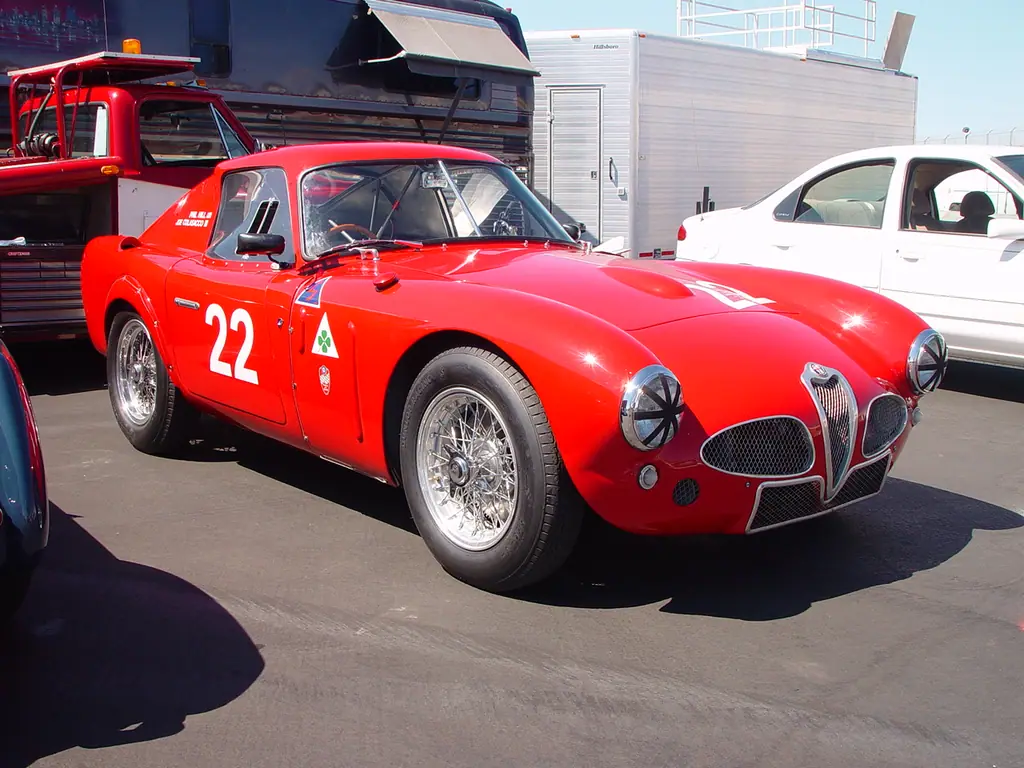
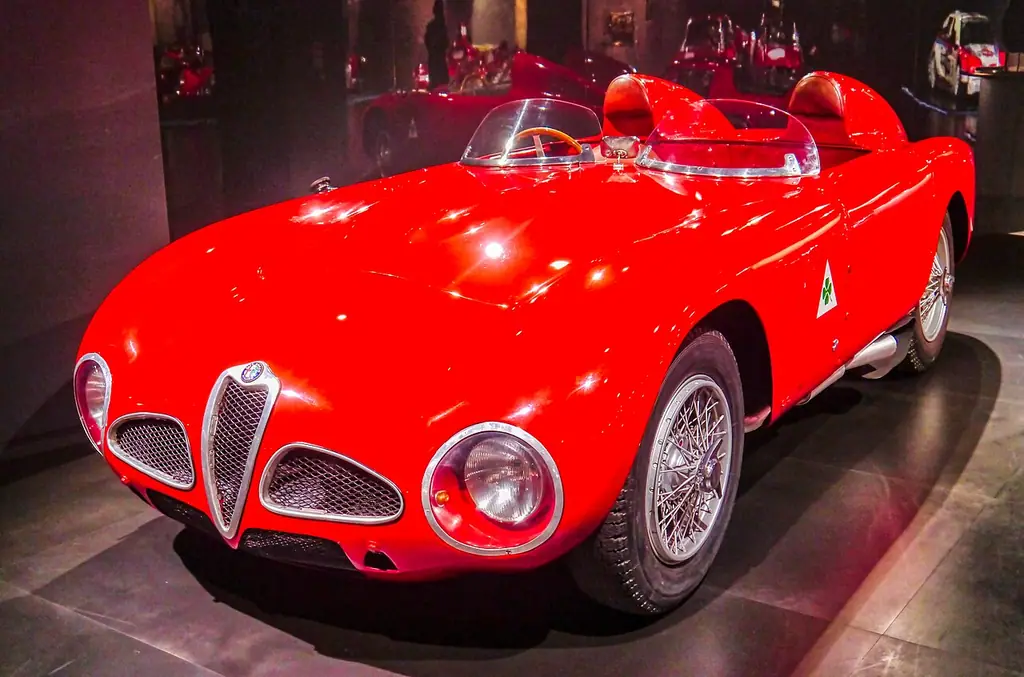
3.5-litre six sports racers (Colli/Zagato bodies) for the 1953 season.
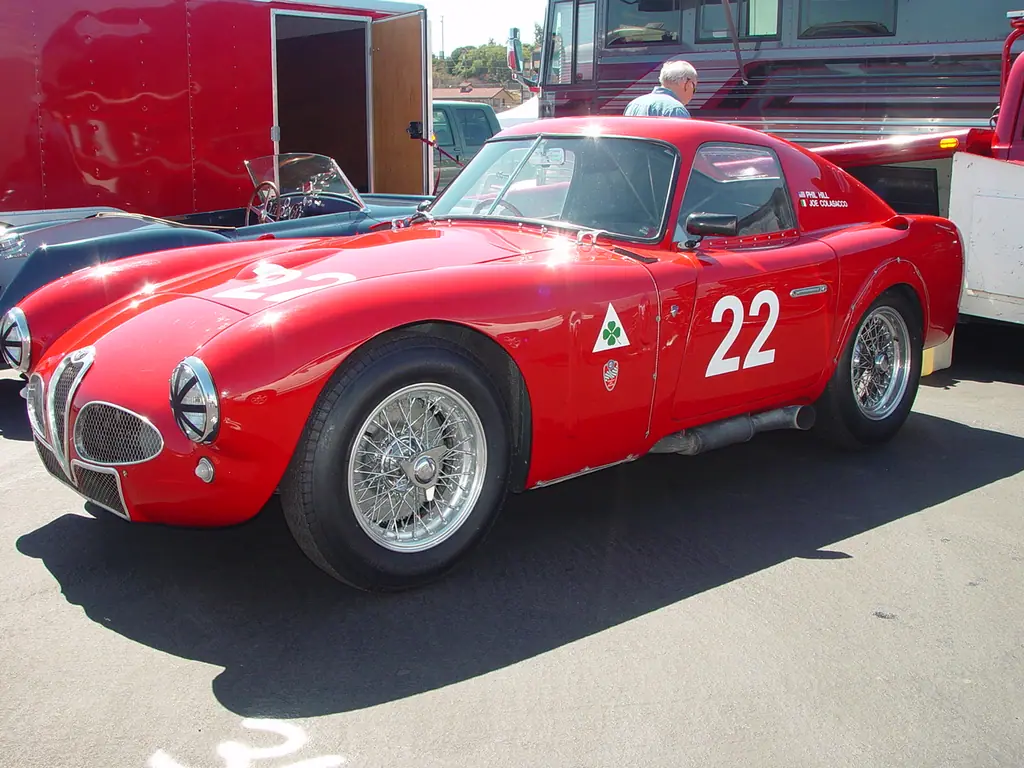
Photo: Craig Howell · CC BY 2.0
Contents
01Overview
At a glance
- Built
- 6 Built
- Years
- 1953
- Engine
- Front, longitudinal, inline six-cylinder; cast-iron monobloc, light-alloy head · 3,495 cc / 3.5 LFactory: 3,495 cc
- Power
- 202 kW / 275 PSFactory: 275 PS
- Top speed
- 250 km/hFactory: 250 km/h
- Body
- Not yet verified
- Designer
- Giuseppe Busso (engineering); bodies by Carrozzeria Colli, Milan
- In this archive
- Not yet verified
- Surviving
- Not yet verified
Sources and any conflicting figures are in the sections below.
Why it matters
The 6C 3000 CM was Alfa Romeo's last works sports-racing car before the company withdrew from factory racing at the end of 1953 to concentrate on the Giulietta. CM stands for Competizione Maggiorata. It combined a tubular central-backbone chassis, independent front suspension and a De Dion rear axle with a 3.5-litre six of about 275 horsepower, and only a handful were built.
How rare is it?
Six separate kinds of rarity – never combined into one number.
Each kind of rarity is rated separately and never combined.
Photos
Exterior, interior and detail photos with their licences.
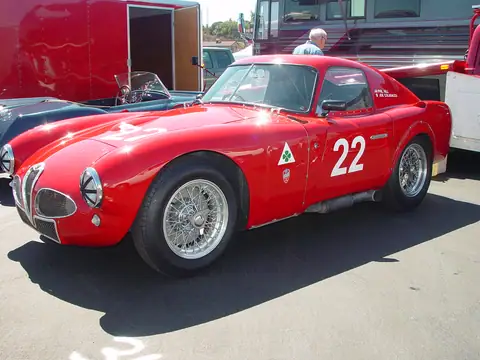 Alfa Romeo 6C 3000 CM (Wikimedia Commons search)
Photo: Craig Howell · CC BY 2.0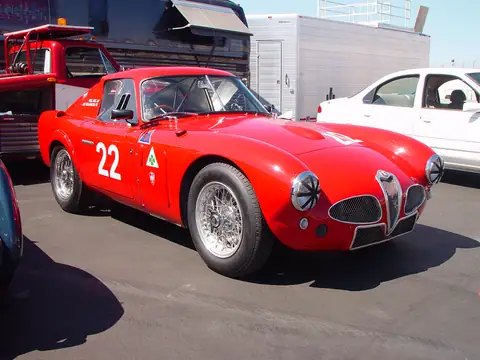 Alfa Romeo 6C 3000 CM (Wikimedia Commons search)
Photo: Craig Howell · CC BY 2.0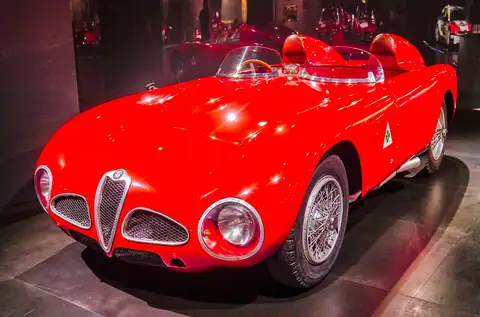 Alfa Romeo 6C 3000 CM (Wikimedia Commons search)
Photo: Zairon · CC BY-SA 4.0


02Production & history
Production
Every figure says what it counts.
| What is counted | Figure | Basis | Status |
|---|---|---|---|
| Total model production6C 3000 CM built | 61,2 | Factory production | Factory reported |
Independent counts (e.g. engine and colour) are never combined into a calculated figure. Surviving examples are never presented as original production.
History
Giuseppe Busso developed the car from the earlier 6C 3000 engine and the 6C 2500 Competizione. In 1953 Juan Manuel Fangio drove a Berlinetta to second place in the Mille Miglia, the Alfas recorded the fastest speeds on the Mulsanne straight at Le Mans, and Fangio won the Gran Premio Supercortemaggiore in September. Bodies, both Berlinetta and Spider, were by Colli of Milan.
Some cars were sold to customers after the season. Chassis 00125 went to Jo Bonnier and was rebuilt by Zagato, and chassis 00126 went to the Argentine president with Boano coachwork. Chassis 00128 became a Pinin Farina show car, shown from 1956 to 1960 in successive forms (Superflow, Superflow II, a spider in 1959 and finally the Superflow IV).
Variants
How each version differs from the standard 6C 3000 CM.
No variants documented yet. Have a source? Contribute it.
03Specifications
Technical specifications
Engine
| Engine family | Not yet verified |
|---|---|
| Engine code | Not yet verified |
| Layout | Front, longitudinal, inline six-cylinder; cast-iron monobloc, light-alloy head1 |
| Cylinders | 61 |
| Displacement | 3,495 cc / 3.5 LFactory: 3,495 cc1 |
| Bore | 87 mmFactory: 87 mm1 |
| Stroke | 98 mmFactory: 98 mm1 |
| Compression ratio | Not yet verified |
| Valvetrain | 2 valves per cylinder, 2 overhead camshafts driven by double chain1 |
| Fuel system | Six single-barrel carburettors (Weber 48DOM per Gooding), dry-sump lubrication1 |
| Power | 202 kW / 275 PSFactory: 275 PS1Rating: manufacturerMuseum writes CV. Gooding (S2) and conceptcarz (S3) give 275 BHP/horsepower at 6,500 rpm. |
| Power at | 6,500 rpm1 |
| Torque | Not yet verified |
Transmission & drivetrain
| Gearbox | Not yet verified |
|---|---|
| Gears | 51 |
| Driven wheels | Rear1 |
Chassis, body & dimensions
| Chassis | Tubular central backbone1 |
|---|---|
| Front suspension | Independent, transverse wishbones, coil springs, anti-roll bar, hydraulic dampers1 |
| Rear suspension | De Dion axle, stabilisers and converging struts, coil springs, hydraulic dampers1 |
| Brakes | Hydraulic drums on all four wheels, rear brakes inboard1 |
| Steering | Not yet verified |
| Body construction | Barchetta (museum car); Berlinetta and Spider bodies by Colli per conceptcarz1 |
| Wheelbase | 2,250 mmFactory: 2,250 mm1 |
| Length | 3,834 mmFactory: 3,834 mm1 |
| Width | 1,616 mmFactory: 1,616 mm1 |
| Height | 1,140 mmFactory: 1,140 mm1 |
| Front track | Not yet verified |
| Rear track | Not yet verified |
| Kerb weight | Not yet verified |
| Dry weight | Not yet verified |
Performance
| Maximum speed | 250 km/hFactory: 250 km/h1 |
|---|---|
| 0–100 km/h | Not yet verified |
| Fuel tank | Not yet verified |
“Not yet verified” means no source has been checked for that value yet. Nothing is estimated to fill a gap.
04Colours & options
Factory colours & interiors
Original paint and trim, with the number of cars in each where a source gives it.
Not yet documented. Have a source? Contribute it.
Factory options & codes
Codes are shown exactly as written by the manufacturer.
Not yet documented. Have a source? Contribute it.
05Individual cars
Chassis register
Every documented car, with its colours, history and where it is now. Open a row for the full record. Known chassis are not automatically authenticated originals.
Not yet documented. Have a source? Contribute it.
Competition history
Every race result of the individual cars, in date order. Click a chassis number to open its full record in the register.
Not yet documented. Have a source? Contribute it.
Auction & sale history
Documented public sales of the individual cars. Click a chassis number to open its full record in the register.
Not yet documented. Have a source? Contribute it.
See one in person
Museums where an example of this car can be seen.
No example is documented on public display yet. Have a source? Contribute it.
06Reference
Identification guide
How to tell an original from a replica or later conversion.
Chassis and engine numbers follow an AR1361.00xxx / AR1311.00xxx style: the Gooding car is chassis AR1361.00128 with engine AR1311.00508 and is titled AR300000128. Other chassis named in the cached texts are 00125 and 00126. Counts differ (the museum lists six, 2 spiders and 4 coupes; conceptcarz mentions eight cars). Replicas exist around the surviving cars: conceptcarz reports that while chassis 00128 wore a Colli-style spider body at a German museum, that body was a replica, and a replica chassis was later built for the Colli-style body when the Pinin Farina body was reunited with the original chassis.
Sources
Each number links to the exact facts it supports.
-
1
Museo Storico Alfa Romeo, collection: 6C 3000 CM Level A Museo Storico Alfa Romeo (Arese)
- Vetture Prodotte 6 (2 spider + 4 coupé)
- 6 cilindri in linea, monoblocco in ghisa, testa in lega leggera (Dettagli vettura)
- 6 cilindri in linea (Dettagli vettura)
- 3495 cc (87x98 mm) (Dettagli vettura)
- 2 alberi a camme in testa con comando a doppia catena (Dettagli vettura)
- 6 carburatori monocorpo ... lubrificazione a carter secco (Dettagli vettura)
- 275 CV a 6500 giri/min. (Dettagli vettura)
- 5 marce + RM (Dettagli vettura)
- Trazione posteriore (Dettagli vettura)
- Telaio Tubolare a trave centrale (Dettagli vettura)
- quadrilatero trasversale, molle elicoidali, barra stabilizzatrice (Dettagli vettura)
- assale De Dion, stabilizzatori e puntoni convergenti (Dettagli vettura)
- Idraulici, a tamburo sulle 4 ruote, posteriori in board (Dettagli vettura)
- Carrozzeria Barchetta (Dettagli vettura)
- Passo: 2250 mm (Dettagli vettura)
- lunghezza: 3834 mm (Dettagli vettura)
- larghezza: 1616 mm (Dettagli vettura)
- altezza: 1140 mm (Dettagli vettura)
- Massima velocità 250 km/h (Dettagli vettura)
- 2
Keep exploring
More from Alfa Romeo
-
Alfa Romeo · 1988
164 ProCar
1 Built
-
Alfa Romeo · 1941
8C 2900B "Balena"
1 Built
-
Alfa Romeo · 1938
8C 2900B Le Mans Berlinetta (Touring)
1 Built
-
Alfa Romeo · 1968
Carabo (Bertone)
1 Built
See all 212 cars by Alfa Romeo →
More from Italy
-
Ferrari
LaFerrari
499 Built
-
Maserati
Quattroporte III
Production not yet verified
-
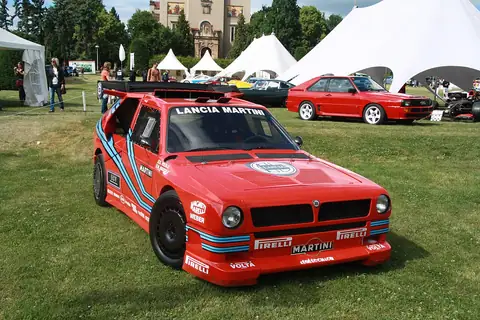
Lancia · 1986
ECV (Group S prototype)
1 Built
-
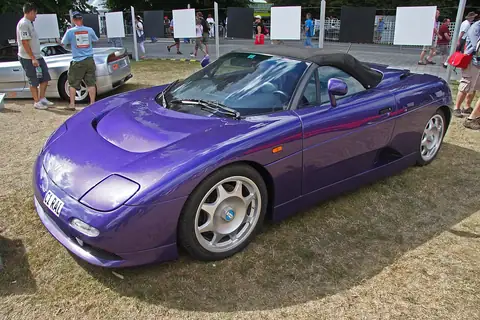
De Tomaso
Guara Spider
Production not yet verified
62 other makes from ItalyAbarthACM AutomobiliAres DesignATSAuto Avio CostruzioniAutobianchiAznomB EngineeringBandiniBertoneBizzarriniBrixia-ZüstCagivaCarrozzeria Touring SuperleggeraCeiranoChiribiriCisitaliaCizetaColoniCoviniDallaraDe TomasoDiattoF.I.A.L. LegnanoFerrariFervesFiatFissoreFlorentiaGhiaInnocentiIntermeccanicaIsoIsotta FraschiniItalaItaldesignLaffiteLamborghiniLanciaMaseratiAll makes →