Makes › Aston Martin › DP215 · Factory competition · 1963 One-off
Aston Martin
DP215
One-off works GT prototype; first car officially over 300 km/h at Le Mans
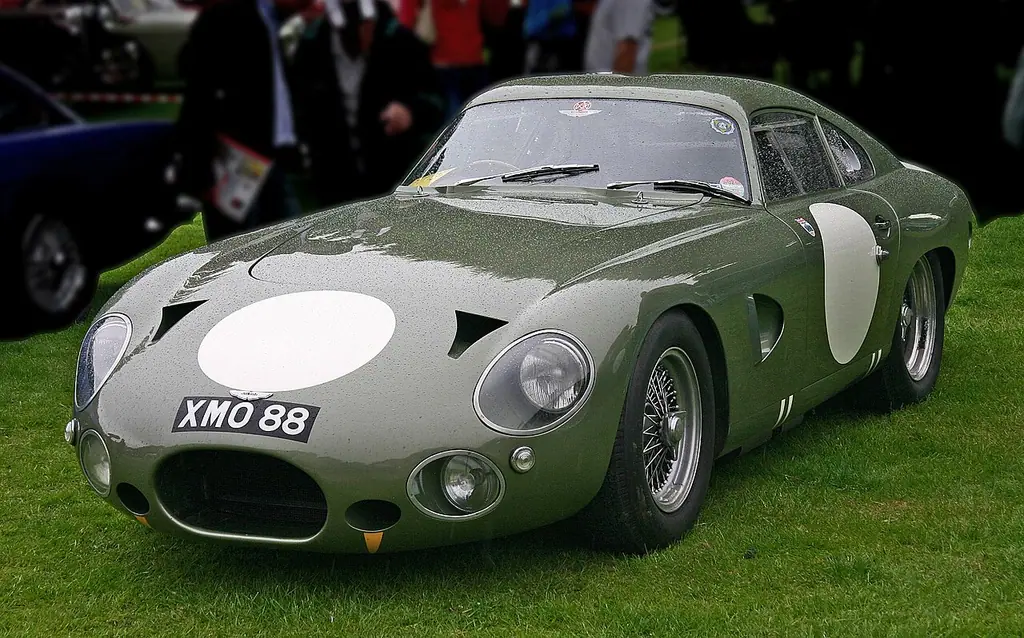
Photo: Redsimon · CC BY 3.0
Contents
01Overview
At a glance
- Built
- 1 Built
- Years
- 1963
- Engine
- Twin-plug six-cylinder, dry sump (four-litre DP212 derivative) · 4,000 cc / 4 LFactory: 4 L
- Power
- 243 kW / 331 PSFactory: 326 hp · converted
- Top speed
- 319.6 km/hFactory: 198.6 mph · converted
- Body
- Not yet verified
- Designer
- Ted Cutting
- In this archive
- Not yet verified
- Surviving
- 1 (independently researched)
Sources and any conflicting figures are in the sections below.
Why it matters
DP215 was Aston Martin's works entry in the 1963 Le Mans prototype class and the last racing car built by the factory under David Brown. It was timed at 198.6 mph on the Mulsanne Straight in 1963, a speed the source notes was not yet its maximum.
How rare is it?
Six separate kinds of rarity – never combined into one number.
Each kind of rarity is rated separately and never combined.
Photos
Exterior, interior and detail photos with their licences.
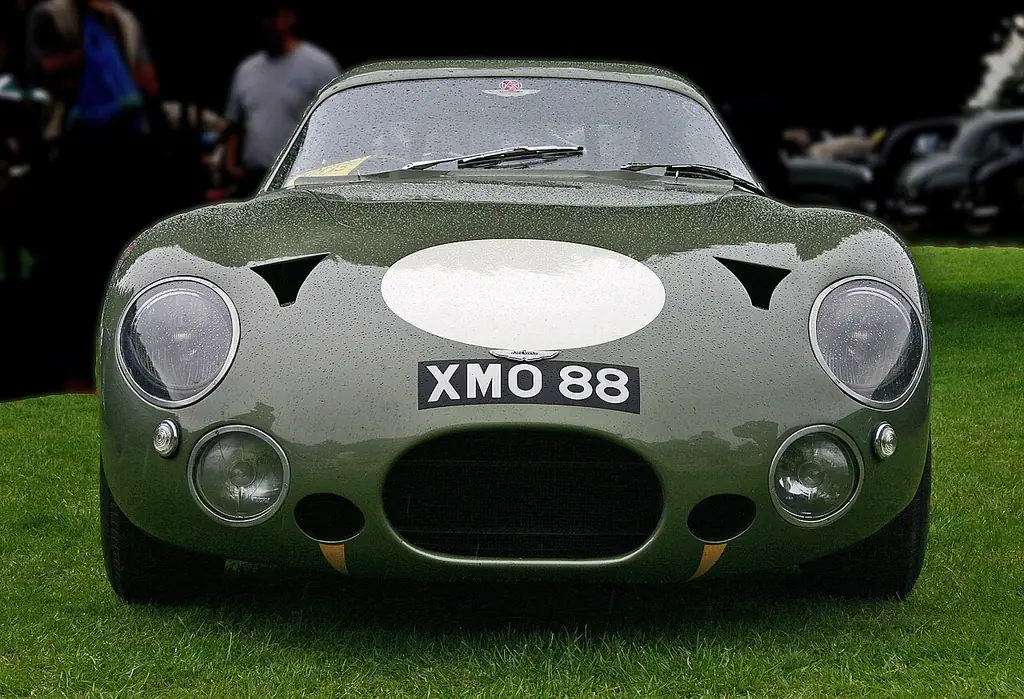
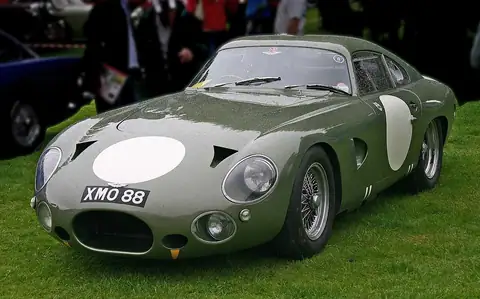 Aston Martin DP215 (Wikipedia article: Aston Martin DP215)
Photo: Redsimon · CC BY 3.0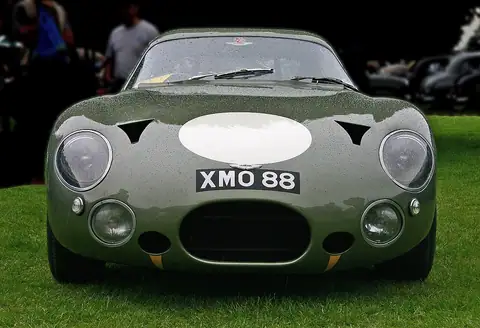 Aston Martin DP215 (Wikipedia article: Aston Martin DP215)
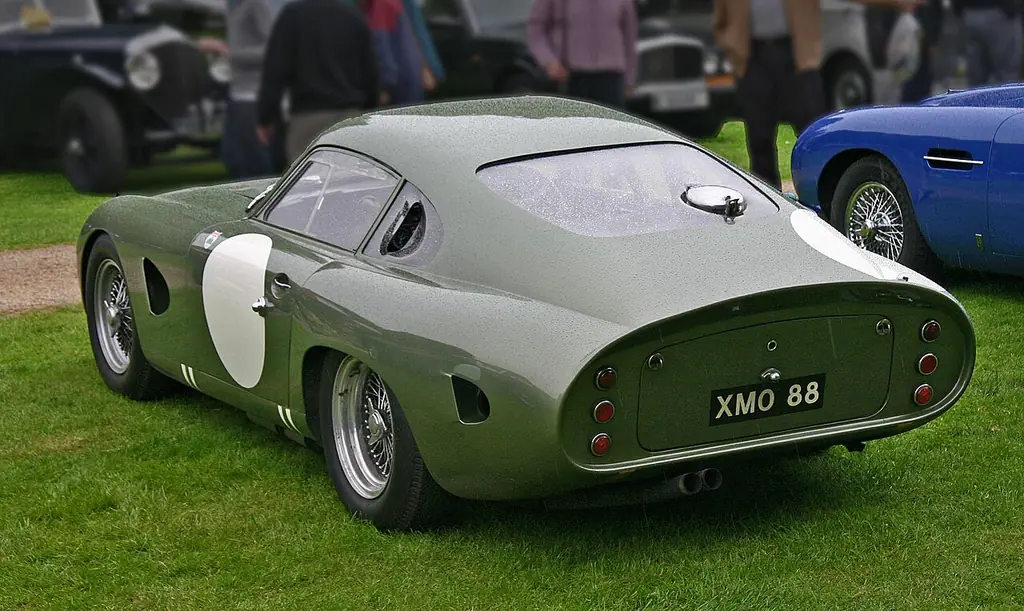
Photo: Redsimon · CC BY 3.0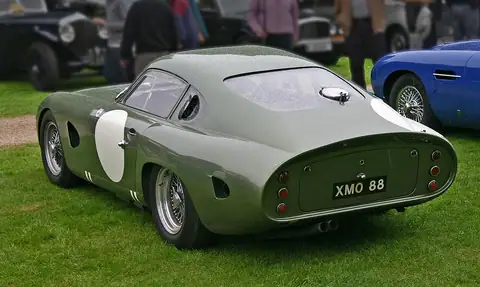 Aston Martin DP215 (Wikipedia article: Aston Martin DP215)
Photo: Redsimon · CC BY 3.0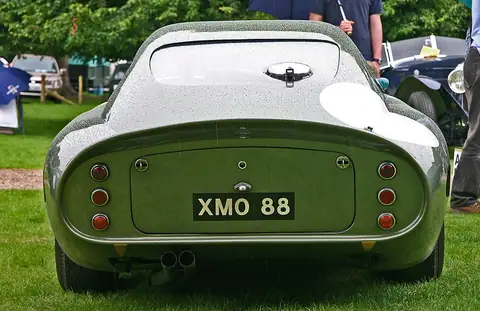 Aston Martin DP215 (Wikipedia article: Aston Martin DP215)
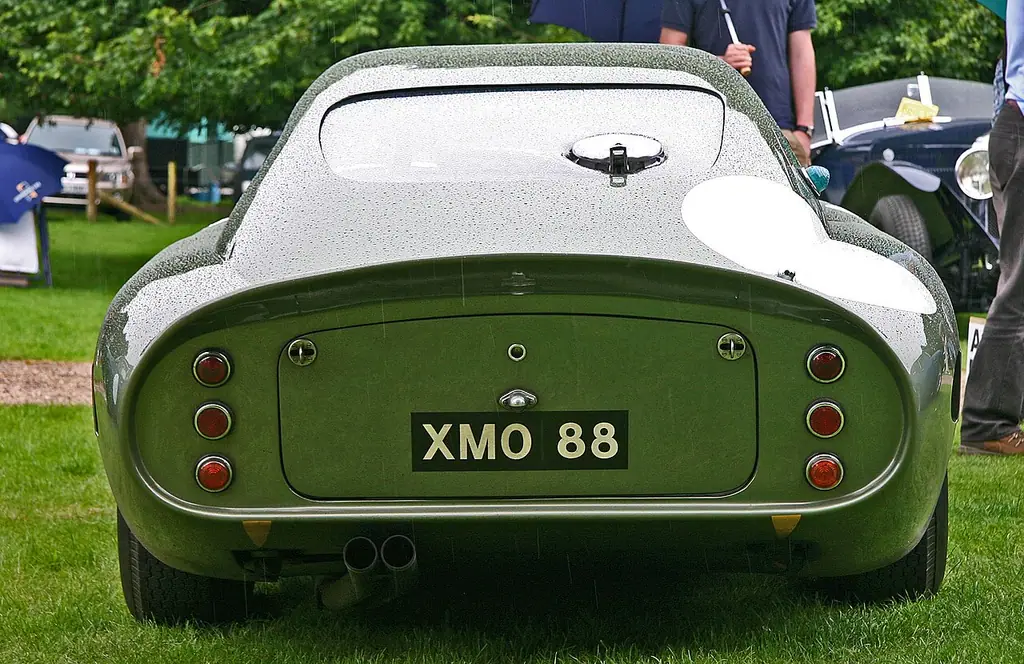
Photo: Redsimon · CC BY 3.0


02Production & history
Production
Every figure says what it counts.
| What is counted | Figure | Basis | Status |
|---|---|---|---|
| Total model productionDP215 is a single works car; it survives, restored with its original engine, and was sold at Monterey in 2018 | 13 | Surviving examples | Independently researched |
| Total model productionone-off works car | 11,2 | Factory production | Independently researched |
Independent counts (e.g. engine and colour) are never combined into a calculated figure. Surviving examples are never presented as original production.
History
Ordered by John Wyer and designed by Ted Cutting, DP215 used a four-litre version of the DP212 twin-plug six with dry-sump lubrication, giving 326 bhp in Le Mans testing. At Le Mans in 1963 Phil Hill and Lucien Bianchi retired after two hours when the DBR1-type CG537 gearbox failed under the engine's torque. Jo Schlesser then retired at Reims while leading after a missed gear, and tax regulations kept it out of the Guards Trophy at Brands Hatch.
Variants
How each version differs from the standard DP215.
No variants documented yet. Have a source? Contribute it.
03Specifications
Technical specifications
Engine
| Engine family | DP212-type four-litre six-cylinder twin-plug engine, dry sump3 Independently researched |
|---|---|
| Engine code | 400/215/013 Independently researched |
| Layout | Twin-plug six-cylinder, dry sump (four-litre DP212 derivative)3 Independently researched |
| Cylinders | 63 Independently researched |
| Displacement | 4,000 cc / 4 LFactory: 4 L3 Independently researched |
| Bore | Not yet verified |
| Stroke | Not yet verified |
| Compression ratio | Not yet verified |
| Fuel system | Three Weber 50 DCO carburettors3 Independently researchedDescribed for the restored car (fitted during restoration). |
| Power | 243 kW / 331 PSFactory: 326 hp · converted3 Independently researchedOriginal Le Mans test figure; restored engine gave 300 bhp on dyno. |
| Power at | Not yet verified |
| Torque | Not yet verified |
Transmission & drivetrain
| Transmission code | DBR1 transaxle (DP212 gearbox later refitted)4 Independently researchedThe transaxle failed at Le Mans and Reims; the DP212 gearbox was refitted before Brands Hatch. |
|---|---|
| Gearbox | DBR1-type CG537 gearbox (1963 Le Mans); S532 fitted later3 Independently researched |
| Gears | 53 Independently researchedDescribes the S532-type five-speed unit rebuilt for the restoration; the gear count of the DBR1-type CG537 box used at Le Mans in 1963 is not stated. |
| Driven wheels | Not yet verified |
Chassis, body & dimensions
| Chassis | Steel box-frame chassis3 Independently researched |
|---|---|
| Front suspension | Not yet verified |
| Rear suspension | Independent rear suspension3 Independently researched |
| Brakes | Not yet verified |
| Steering | Not yet verified |
| Body construction | DP212 bodywork reshaped after MIRA wind-tunnel tests: extended and lowered nose, Kamm tail with spoiler4 Independently researched |
| Wheelbase | Not yet verified |
| Length | Not yet verified |
| Width | Not yet verified |
| Height | Not yet verified |
| Front track | Not yet verified |
| Rear track | Not yet verified |
| Kerb weight | Not yet verified |
| Dry weight | Not yet verified |
Performance
| Maximum speed | 319.6 km/hFactory: 198.6 mph · converted3 Independently researchedSpeed recorded at Le Mans in 1963; the source says the car had not yet reached its top speed. |
|---|---|
| 0–100 km/h | Not yet verified |
| Fuel tank | Not yet verified |
“Not yet verified” means no source has been checked for that value yet. Nothing is estimated to fill a gap.
04Colours & options
Factory colours & interiors
Original paint and trim, with the number of cars in each where a source gives it.
Not yet documented. Have a source? Contribute it.
Factory options & codes
Codes are shown exactly as written by the manufacturer.
Not yet documented. Have a source? Contribute it.
05Individual cars
Chassis register
Every documented car, with its colours, history and where it is now. Open a row for the full record. Known chassis are not automatically authenticated originals.
Not yet documented. Have a source? Contribute it.
Competition history
Every race result of the individual cars, in date order. Click a chassis number to open its full record in the register.
Not yet documented. Have a source? Contribute it.
Auction & sale history
Documented public sales of the individual cars. Click a chassis number to open its full record in the register.
Not yet documented. Have a source? Contribute it.
See one in person
Museums where an example of this car can be seen.
No example is documented on public display yet. Have a source? Contribute it.
06Reference
Identification guide
How to tell an original from a replica or later conversion.
The car is chassis DP215 with engine 400/215/1 and a 1963 works-built Hiduminium body.
Sources
Each number links to the exact facts it supports.
-
1
1963 Aston Martin DP214 - Images, Specifications and Information Level B ultimatecarpage.com
- the sole DP215 for overall victories
-
2
RM Sotheby's lot catalogue: 1963 Aston Martin DP215 (Monterey 2018) Level B
- 1 one-off works car
-
3
1963 Aston Martin DP215 Grand Touring Competition Prototype, Monterey 2018 lot Level C RM Sotheby's · 2018-08-24
- now reunited with its original engine, DP215
- four-liter version of the DP212 six-cylinder twin plug engine
- Engine No. 400/215/01
- a four-liter version of the DP212 six-cylinder twin plug engine
- three original sandcast 50 DCO Weber carburetors were added
- 326 bhp
- the DBR1-type CG537 gearbox failed due to the high torque
- new synchro, in-line, five-speed gearbox
- Modifications to the steel box-frame chassis
- as well as independent rear suspension
- recorded at 198.6 mph along the Mulsanne Straight
-
4
The rise of DP215 Level B Motor Sport magazine
- a transaxle from the DBR1
- nose was extended and lowered... spoiler was added to the chopped tail
Keep exploring
More from Aston Martin
-
Aston Martin · 1939–1940
Atom
1 Built
-
Aston Martin · 2013
DB9 Spyder Zagato Centennial
1 Built
-
Aston Martin · 1962
DP212
1 Built
-
Aston Martin · 2013
Rapide Bertone Jet 2+2
1 Built
See all 183 cars by Aston Martin →
More from United Kingdom
-
Vauxhall
30-98 OE Wensum
12 Built
-
Panther
Lima (1976-1982)
Production not yet verified
-
Bentley
Bentley 4.5 Litre
Production not yet verified
-
TVR · 1980–1987
Tasmin (1980-1987)
Production not yet verified
134 other makes from United KingdomACAiredaleAlan Mann RacingAllardAlvisArabArashArielArmstrong SiddeleyArrowsAscariAtalantaAtlantisAustinAustin-HealeyBedfordBentleyBerkeleyBluebirdBMCBondBrabhamBristolBritish LeylandBroadspeedBrookeBrough SuperiorCampbell-RailtonCaparoCaterhamChevronConnaughtCooperCrayfordDaimlerDavid BrownDawsonDeLoreanDuttonElvaAll makes →