Makes › Audi › 200 › 200 quattro Trans-Am · Factory competition · 1988 Ultra Rare
Audi
200 quattro Trans-Am
Works Trans-Am championship cars
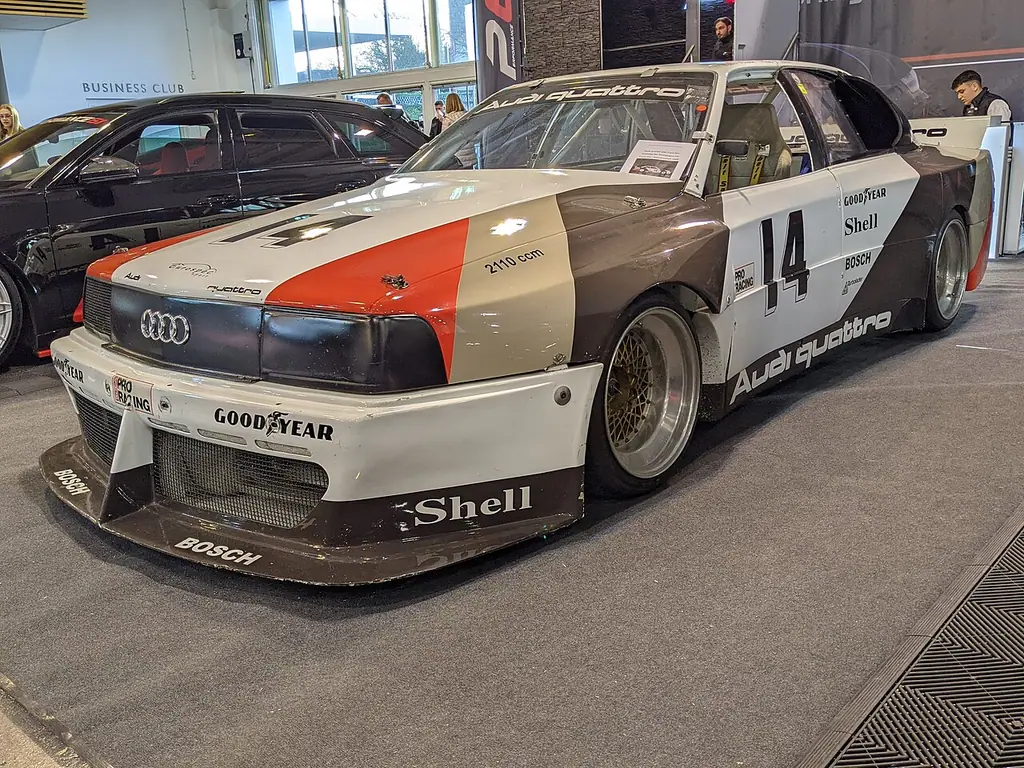
Photo: Thomas Vogt from Paderborn, Deutschland · CC BY 2.0
Contents
01Overview
At a glance
- Built
- 5 Built
- Years
- 1988
- Engine
- 2,110 cc / 2.1 LFactory: 2,110 cc
- Power
- 380 kW / 517 PSFactory: 510 hp · converted
- Top speed
- Not yet verified
- Body
- Not yet verified
- Designer
- Not yet verified
- In this archive
- Not yet verified
- Surviving
- Not yet verified
Sources and any conflicting figures are in the sections below.
Why it matters
Audi's factory entry in the 1988 SCCA Trans-Am series, built to restore the brand's image in the United States after the unintended-acceleration controversy. Audi and driver Hurley Haywood took both titles, winning eight of thirteen races.
How rare is it?
Six separate kinds of rarity – never combined into one number.
Each kind of rarity is rated separately and never combined.
Photos
Exterior, interior and detail photos with their licences.
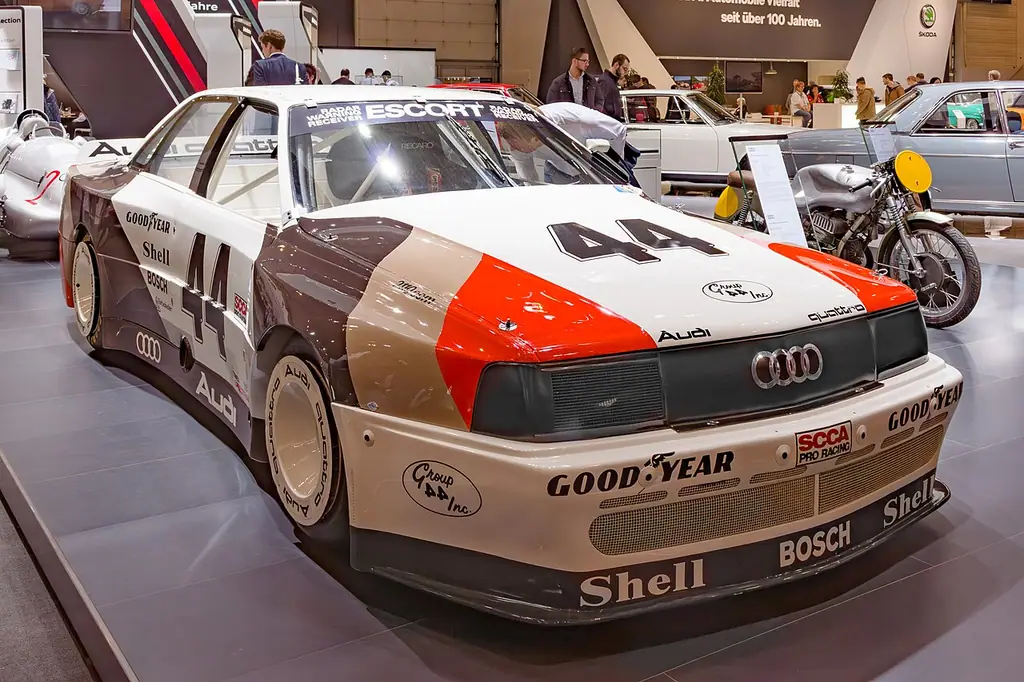
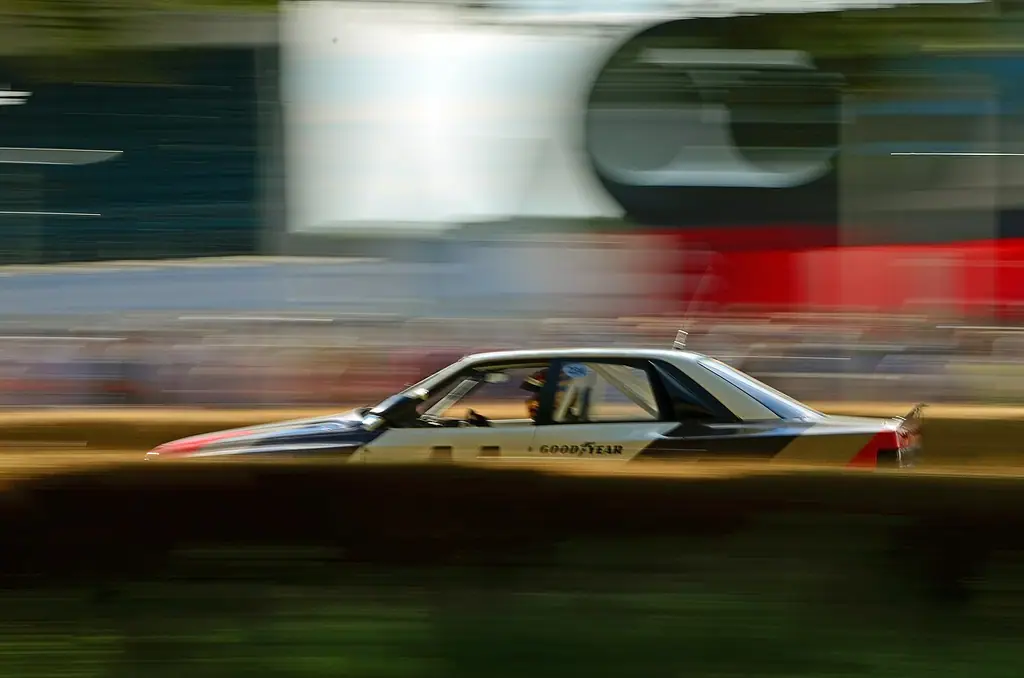
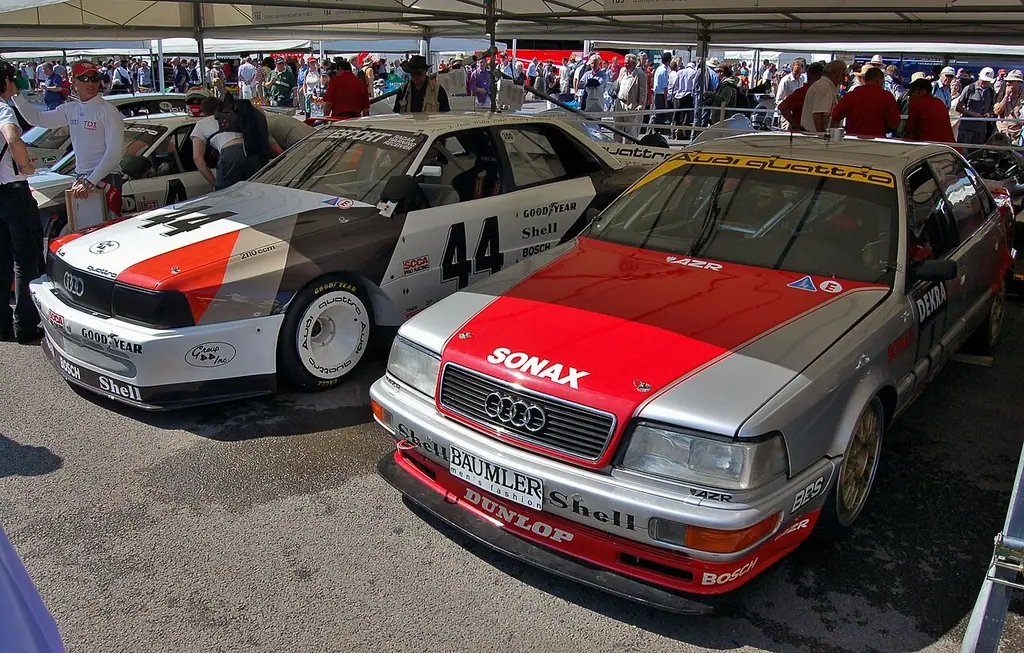
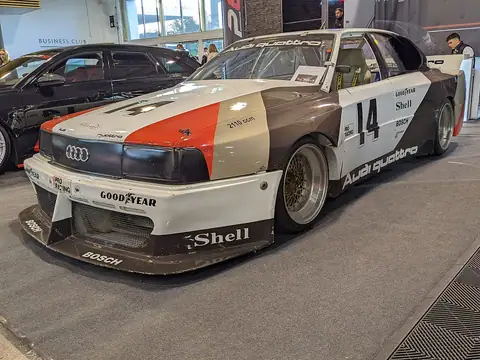 Audi 200 quattro Trans-Am (Wikimedia Commons: Audi 200 Quattro Trans Am)
Photo: Thomas Vogt from Paderborn, Deutschland · CC BY 2.0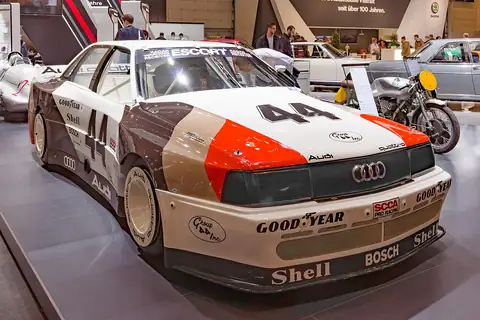 Audi 200 quattro Trans-Am (Wikimedia Commons: Audi 200 Quattro Trans Am)
Photo: Matti Blume · CC BY-SA 4.0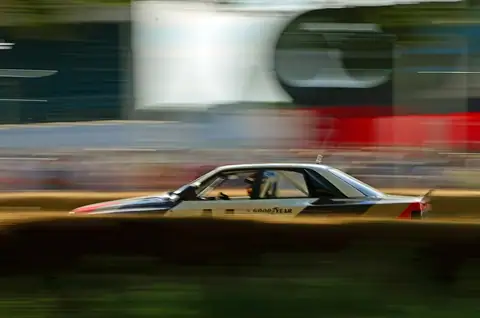 Audi 200 quattro Trans-Am (Wikimedia Commons: Audi 200 Quattro Trans Am)
Photo: Neil · CC BY 2.0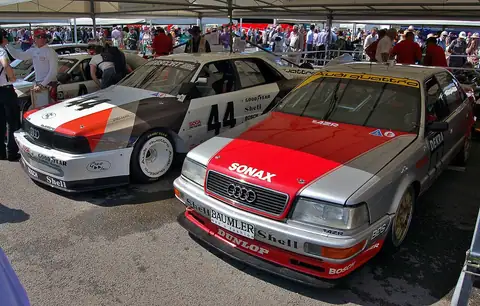 Audi 200 quattro Trans-Am (Wikimedia Commons: Audi 200 Quattro Trans Am)
Photo: Bahnfrend · CC BY-SA 4.0


02Production & history
Production
Every figure says what it counts.
| What is counted | Figure | Basis | Status |
|---|---|---|---|
| Total model productionAudi 200 quattro Trans-Am cars built for the 1988 SCCA season ("one of only five examples built") | 51 | Factory production | Independently researched |
Independent counts (e.g. engine and colour) are never combined into a calculated figure. Surviving examples are never presented as original production.
History
The Audi board approved the American racing programme in October 1987, and by 15 April 1988, the day before the opening round at Long Beach, Audi Sport had delivered three cars. Group 44 ran the team, and each event fielded two of the three Audi-built cars, with Hurley Haywood, Hans-Joachim Stuck and Walter Rohrl among the drivers.
The SCCA tightened weight, power and rim-width rules during the season by adding 200 lb of ballast, a 54 mm turbo inlet restrictor and narrower rims, yet Audi reported that power rose during the year. For 1989 Audi moved to the IMSA GTO category with the 90 quattro instead.
Variants
How each version differs from the standard 200 quattro Trans-Am.
No variants documented yet. Have a source? Contribute it.
03Specifications
Technical specifications
Engine
| Engine family | Not yet verified |
|---|---|
| Engine code | Not yet verified |
| Layout | Not yet verified |
| Displacement | 2,110 cc / 2.1 LFactory: 2,110 cc2 Independently researched |
| Bore | 79.5 mmFactory: 79.5 mm2 Independently researched |
| Stroke | 85 mmFactory: 85 mm2 Independently researched |
| Compression ratio | Not yet verified |
| Valvetrain | Single overhead camshaft, 2 valves per cylinder (10-valve)2 Independently researched |
| Fuel system | Motronic ignition and fuel management2 Independently researched |
| Induction | KKK intercooled turbocharger, 54 mm inlet restrictor2 Independently researched |
| Power | 380 kW / 517 PSFactory: 510 hp · converted2 Independently researchedEarly-1988 figure; the article reports an increase to 570 bhp by the end of the season. |
| Power at | 7,500 rpm2 Independently researched |
| Torque | 491 NmFactory: 362 lb-ft · converted2 Independently researched |
| Torque at | 4,500 rpm2 Independently researched |
Transmission & drivetrain
| Gearbox | Six-speed gearbox, permanent four-wheel drive (25% front / 75% rear basic bias)2 Independently researched |
|---|---|
| Gears | Not yet verified |
| Driven wheels | All four2 Independently researched |
Chassis, body & dimensions
| Chassis | Gutted and strengthened steel 200 body with Matter roll cage2 Independently researched |
|---|---|
| Front suspension | Strut suspension, Boge-damped2 Independently researched |
| Rear suspension | Not yet verified |
| Brakes | Ventilated discs, adjustable balance; front 13 in x 1.25 in2 Independently researched |
| Steering | Not yet verified |
| Body construction | Not yet verified |
| Materials | Steel underbody with lightweight plastic body panels2 Independently researched |
| Wheelbase | 2,670 mmFactory: 105 in · converted2 Independently researchedWithin 0.5 mm of standard. |
| Length | 4,897 mmFactory: 192.8 in · converted2 Independently researched |
| Width | 2,030 mmFactory: 80 in · converted2 Independently researchedApproximate ("some 80in"). |
| Height | 1,340 mmFactory: 52.7 in · converted2 Independently researched |
| Front track | 1,630 mmFactory: 64 in · converted2 Independently researchedApproximate, "nearly 64in"; front and rear not separated. |
| Rear track | Not yet verified |
| Kerb weight | 1,115 kgFactory: 1,115 kg2 Independently researchedQuoted race weight at end of 1988. |
| Dry weight | Not yet verified |
Performance
| Maximum speed | Not yet verified |
|---|---|
| 0–100 km/h | Not yet verified |
| Fuel tank | Not yet verified |
“Not yet verified” means no source has been checked for that value yet. Nothing is estimated to fill a gap.
04Colours & options
Factory colours & interiors
Original paint and trim, with the number of cars in each where a source gives it.
Not yet documented. Have a source? Contribute it.
Factory options & codes
Codes are shown exactly as written by the manufacturer.
Not yet documented. Have a source? Contribute it.
05Individual cars
Chassis register
Every documented car, with its colours, history and where it is now. Open a row for the full record. Known chassis are not automatically authenticated originals.
Not yet documented. Have a source? Contribute it.
Competition history
Every race result of the individual cars, in date order. Click a chassis number to open its full record in the register.
Not yet documented. Have a source? Contribute it.
Auction & sale history
Documented public sales of the individual cars. Click a chassis number to open its full record in the register.
Not yet documented. Have a source? Contribute it.
See one in person
Museums where an example of this car can be seen.
No example is documented on public display yet. Have a source? Contribute it.
06Reference
Identification guide
How to tell an original from a replica or later conversion.
Audi built the car itself, with roll-cage specialist Matter, on a gutted and strengthened steel 200 body rather than buying a tubular spaceframe. The body wore lightweight plastic panels, making it about 80 in wide against 71.4 in for the road car. It kept the front-mounted inline five, permanent four-wheel drive and a six-speed gearbox.
Sources
Each number links to the exact facts it supports.
-
1
Audi Club North America – Find of the Day: 1987 Audi 200 quattro Trans Am Prototype and Test Car Level B
- 5 Audi 200 quattro Trans-Am cars built for the 1988 SCCA season ("one of only five examples built")
-
2
Audi Sport in the USA (Motor Sport, February 1989) Level B Motor Sport Magazine · 1989-02-01
- 2110cc (79.5 x 85mm) unit (Motor Sport)
- 2110cc (79.5 x 85mm)
- only a single overhead camshaft is used
- Motronic ignition and fuel-management
- KKK intercooled turbocharging
- 510 bhp at 7500 rpm
- 362 lb ft of torque at 4500 revs
- 25% front and 75% rear mechanical bias
- permanent 4WD
- gutted and strengthened 200 steel chassis
- Boge-damped and strut-suspended
- fronts measured 13in diameter x 1.25in thick
- lightweight plastics used to clothe that steel underbody
- within 0.5mm of the standard 105in
- from 189.25in to 192.8in
- some 80in in place of 71.4in
- roofline height of 52.7in
- competing at nearly 64in
- 1115kg (2453 lb) at the end of the season
Keep exploring
More from Audi
-
Audi · 1989
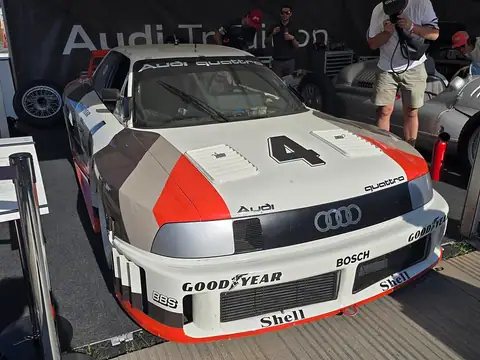
90 quattro IMSA GTO
6 Built
-
Audi · 2015–2016
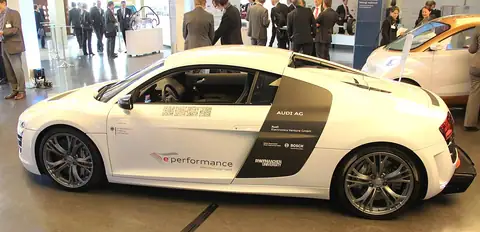
R8 e-tron (first generation)
100 Built
-
Audi · 2016
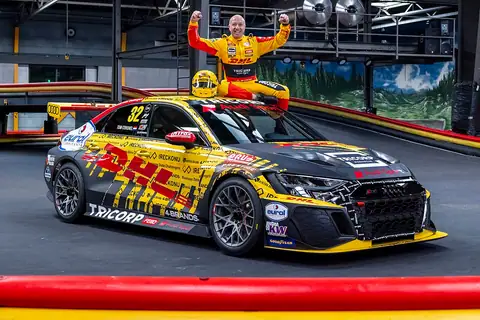
RS 3 LMS
180 Built
-
Audi · 1984
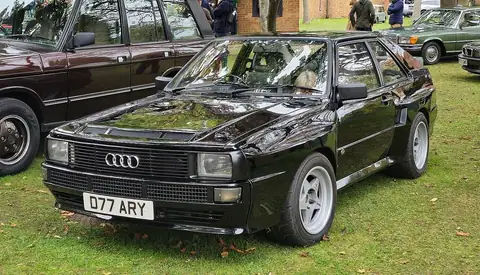
Sport quattro (short wheelbase)
214 Built
More from Germany
-
Mercedes-Benz
250 SL (W113) (1966-1968)
Production not yet verified
-
Porsche · 1976
934 Turbo RSR
31 Built
-
Isdera · 1983–1991
Imperator 108i
30 Built
-
Wanderer
Puppchen
Production not yet verified
75 other makes from Germany9ffAC SchnitzerAdlerAgria-WerkeAlbertAlpinaAMGAMOAmphicarApolloArtegaAutomobili PininfarinaBayerische AutowerkeBenzBenz & Cie.BitterBMWBohseBoldmenBorgwardBovensiepenBrabusBrennaborBrütschCarlssonChampionDaimler-Motoren-GesellschaftDauerDKWFMR (Messerschmitt)FuldamobilGemballaGepardGlasGoggomobilGoliathGumpertGutbrodHanomagHeinkelAll makes →