Makes › Bugatti › EB110 GT · Rare production · 1991–1995 Extremely Rare
Bugatti
EB110 GT
Campogalliano-built Bugatti revival supercar (SS already listed)
Still being researched: full specifications. Everything shown is checked against the cited sources. Know more? Send us a source.
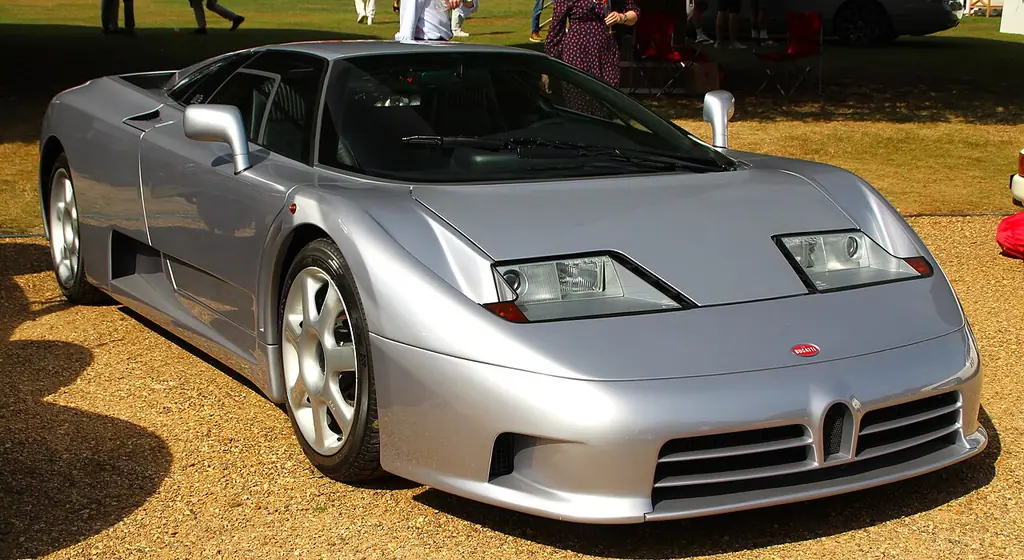
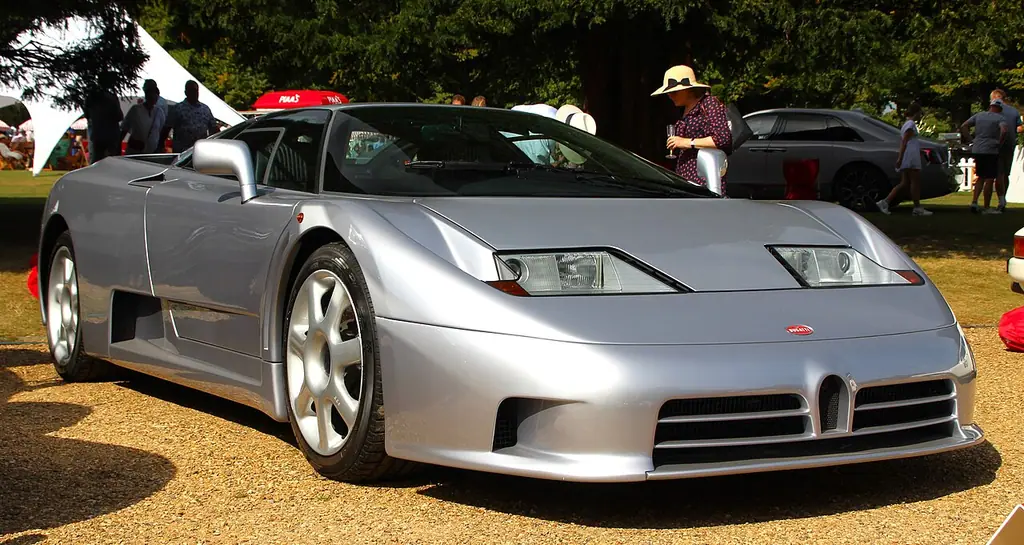
Photo: MrWalkr · CC BY-SA 4.0
Contents
01Overview
At a glance
- Built
- 96 Built
- Years
- 1991–1995
- Engine
- Mid-engine V12 · 3,500 cc / 3.5 LFactory: 3.5 L
- Power
- 412 kW / 561 PSFactory: 553 hp · converted
- Top speed
- 343 km/hFactory: 343 km/h
- Body
- Not yet verified
- Designer
- Marcello Gandini (original concept); Giampaolo Benedini (production refinements)
- In this archive
- Not yet verified
- Surviving
- Not yet verified
Sources and any conflicting figures are in the sections below.
Why it matters
The EB110 GT was the first model of the Bugatti Automobili revival led by Romano Artioli, named for the 110th anniversary of Ettore Bugatti's birth. It combined a carbon-fibre chassis built by Aerospatiale, a quad-turbocharged V12 and all-wheel drive, and was aimed at rivals such as the Ferrari F40, Porsche 959 and Lamborghini Diablo.
How rare is it?
Six separate kinds of rarity – never combined into one number.
Each kind of rarity is rated separately and never combined.
Photos
Exterior, interior and detail photos with their licences.
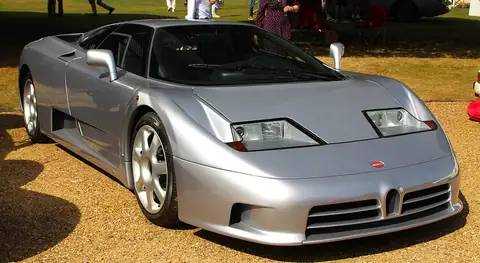 Bugatti EB110 GT (Wikimedia Commons search)
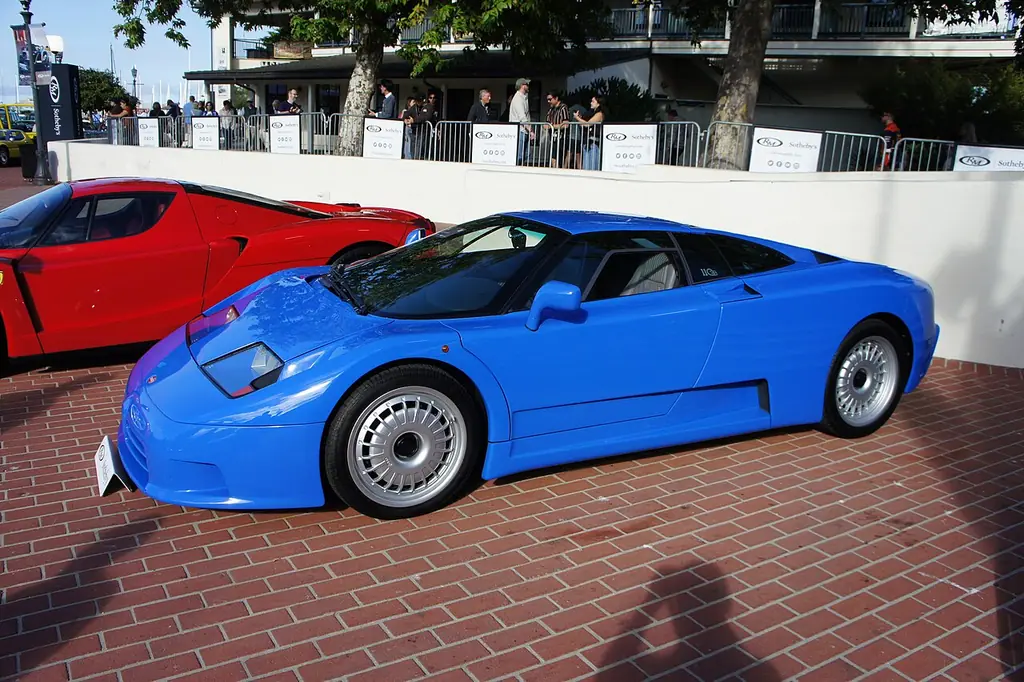
Photo: MrWalkr · CC BY-SA 4.0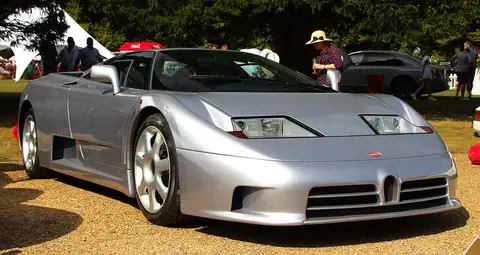 Bugatti EB110 GT (Wikimedia Commons search)
Photo: MrWalkr · CC BY-SA 4.0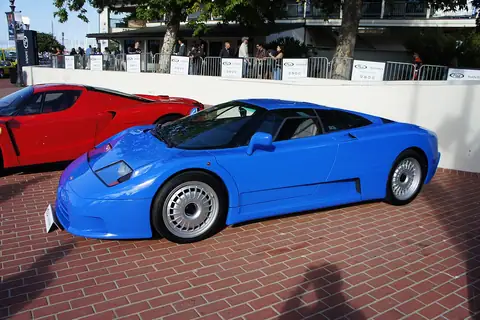 Bugatti EB110 GT (Wikimedia Commons search)
Photo: Lcaa9 · CC BY-SA 4.0


02Production & history
Production
Every figure says what it counts.
| What is counted | Figure | Basis | Status |
|---|---|---|---|
| Total model productionEB110 GT built at the Campogalliano factory by 1995 (approx.; plus 32 EB110 Super Sport) | 961 | Factory production | Independently researched |
Independent counts (e.g. engine and colour) are never combined into a calculated figure. Surviving examples are never presented as original production.
History
Artioli acquired the Bugatti trademarks in the late 1980s and built a new factory near Modena. The EB110 GT was launched in 1992 and the Super Sport followed six months later at the Geneva Salon. Early prototypes had aluminium chassis and carried an "A" chassis prefix; from 1991 a second series with carbon-fibre chassis (C prefix) was built until late 1992.
The chassis concept was first drawn in aluminium by Paolo Stanzani and later reworked in carbon fibre by Nicola Materazzi, with construction contracted to Aerospatiale. The bodywork developed from a Marcello Gandini concept with refinements by Giampaolo Benedini. Bugatti Automobili became insolvent in 1995 and production then passed briefly to Jochen Dauer.
Variants
How each version differs from the standard EB110 GT.
No variants documented yet. Have a source? Contribute it.
03Specifications
Technical specifications
Engine
| Engine family | Not yet verified |
|---|---|
| Engine code | Not yet verified |
| Layout | Mid-engine V122 Independently researched |
| Cylinders | 123 Independently researched |
| Displacement | 3,500 cc / 3.5 LFactory: 3.5 L3 Independently researched |
| Bore | Not yet verified |
| Stroke | Not yet verified |
| Compression ratio | Not yet verified |
| Valvetrain | 60 valves (5 per cylinder)3 Independently researchedFive per cylinder derived from 60 valves on 12 cylinders. |
| Fuel system | Not yet verified |
| Induction | Four turbochargers3 Independently researched |
| Power | 412 kW / 561 PSFactory: 553 hp · converted4 Independently researchedAuction-house figure for the GT; unit and rating standard not stated. |
| Power at | Not yet verified |
| Torque | Not yet verified |
Transmission & drivetrain
| Gearbox | Six-speed manual2 Independently researched |
|---|---|
| Gears | 62 Independently researched |
| Driven wheels | All-wheel drive4 Independently researched |
Chassis, body & dimensions
| Chassis | Carbon-fibre chassis built by Aerospatiale4 Independently researchedChassis concept first drawn in aluminium; carbon fibre chosen because aluminium honeycomb was too flexible. |
|---|---|
| Front suspension | Not yet verified |
| Rear suspension | Not yet verified |
| Brakes | Not yet verified |
| Steering | Not yet verified |
| Body construction | Not yet verified |
| Wheelbase | Not yet verified |
| Length | Not yet verified |
| Width | Not yet verified |
| Height | Not yet verified |
| Front track | Not yet verified |
| Rear track | Not yet verified |
| Kerb weight | Not yet verified |
| Dry weight | Not yet verified |
Performance
| Maximum speed | 343 km/hFactory: 343 km/h2 Independently researchedStated as "over 343 km/h" in the catalogue. |
|---|---|
| 0–100 km/h | Not yet verified |
| Fuel tank | Not yet verified |
“Not yet verified” means no source has been checked for that value yet. Nothing is estimated to fill a gap.
04Colours & options
Factory colours & interiors
Original paint and trim, with the number of cars in each where a source gives it.
Not yet documented. Have a source? Contribute it.
Factory options & codes
Codes are shown exactly as written by the manufacturer.
Not yet documented. Have a source? Contribute it.
05Individual cars
Chassis register
Every documented car, with its colours, history and where it is now. Open a row for the full record. Known chassis are not automatically authenticated originals.
Not yet documented. Have a source? Contribute it.
Competition history
Every race result of the individual cars, in date order. Click a chassis number to open its full record in the register.
Not yet documented. Have a source? Contribute it.
Auction & sale history
Documented public sales of the individual cars. Click a chassis number to open its full record in the register.
Not yet documented. Have a source? Contribute it.
See one in person
Museums where an example of this car can be seen.
No example is documented on public display yet. Have a source? Contribute it.
06Reference
Identification guide
How to tell an original from a replica or later conversion.
Second-series development prototypes carry a C-prefix chassis number and an Aerospatiale frame number; one catalogued example is chassis 39012 on Aerospatiale frame number 12. Production cars use chassis numbers in the 39xxx range, with VINs beginning ZA9AB01E. The GT has a GT-style front bumper, whereas the Super Sport has aerodynamic "mustaches" at the bottom of its bumper.
Sources
Each number links to the exact facts it supports.
-
1
Bugatti Newsroom – Bugatti history: the blue factory in Campogalliano Level A
- 96 EB110 GT built at the Campogalliano factory by 1995 (approx.; plus 32 EB110 Super Sport)
-
2
1994 Bugatti EB110 GT, Auction 2016 Level C RM Sotheby's
- mid-engined 3.5-litre quad-turbo V-12
- connected to a six-speed manual transmission
- six-speed manual transmission
- top speed of over 343 km/h
-
3
1994 Bugatti EB110 Super Sport, Las Vegas 2023 Level C RM Sotheby's
- 3.5-liter quad-turbocharged 60-valve V-12
- 60-valve V-12 engine
- quad-turbocharged
-
4
1994 Bugatti EB110 GT Prototype, 2022 Level C RM Sotheby's
- tame the V-12's 553 horsepower
- finely tuned all-wheel drive system
- construction of the frame contracted to Aerospatiale
Keep exploring
More from Bugatti
-
Bugatti
Brouillard
1 Built
-
Bugatti · 2022
Chiron Profilée
1 Built
-
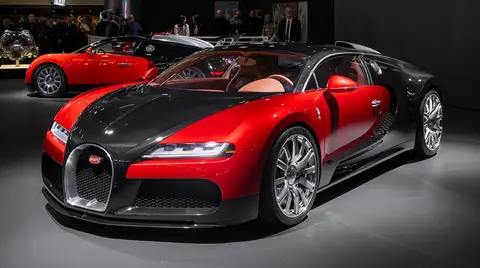
Bugatti
F.K.P. Hommage
1 Built
-
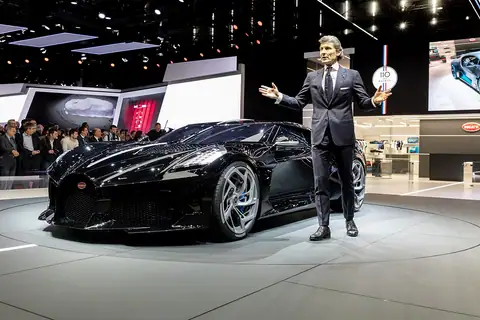
Bugatti · 2019
La Voiture Noire
1 Built
More from France
-
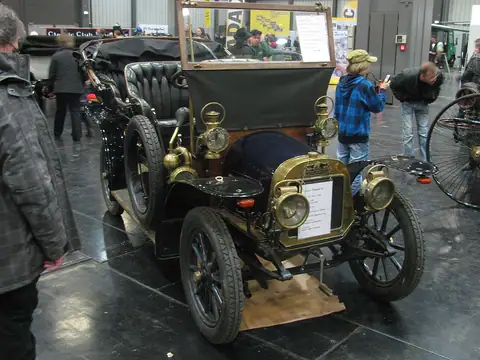
Lion-Peugeot · 1910–1912
Type V2C2
Production not yet verified
-
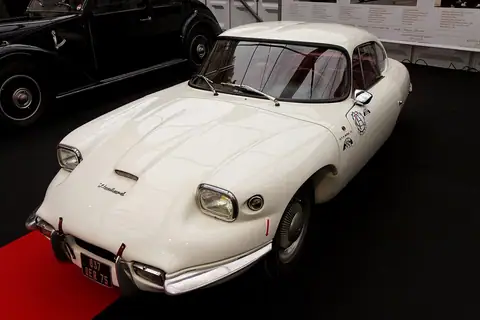
Panhard · 1962
CD (Le Mans 1962)
4 Built
-
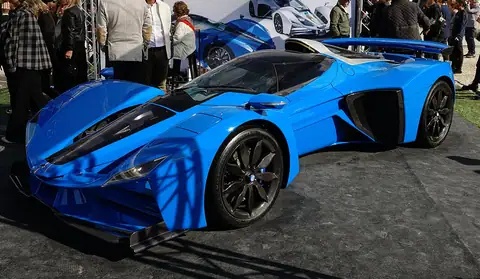
Delage
D12 (2019 revival)
Production not yet verified
-
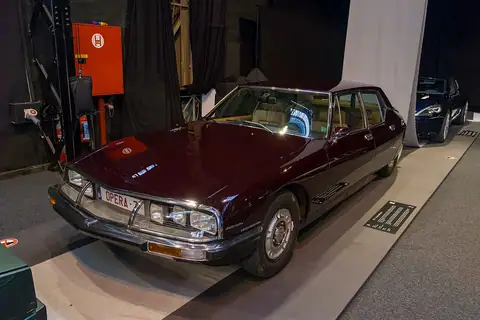
Citroën · 1972–1974
SM Opéra (Chapron)
8 Built
70 other makes from FranceACMAAixamAlcatelAlpineAmilcarArzensAvions VoisinBACBallotBerlietBolloreBuccialiCGCharron, Girardot et VoigtChenard-WalckerCitroënClément-PanhardDAMSDarracqDBDB (Deutsch-Bonnet)De DietrichDe Dion-BoutonDe Dion, Bouton et TrépardouxDe La ChapelleDelageDelahayeDelaunay-BellevilleDerbyDSExagonFacel VegaFarmanFord FranceGentyGordiniHommellHopiumHotchkissJimenezAll makes →