Contents
01Overview
At a glance
- Built
- 401 Built
- Years
- 1967–1971
- Engine
- Mid-engined, longitudinally mounted V8 · 4,728 cc / 4.7 LFactory: 4,728 cc
- Power
- 228 kW / 310 PSFactory: 306 hp · converted
- Top speed
- 250 km/hFactory: 250 km/h
- Body
- Not yet verified
- Designer
- Giorgetto Giugiaro (body)
- In this archive
- Not yet verified
- Surviving
- 200 (independently researched)
Sources and any conflicting figures are in the sections below.
Why it matters
The Mangusta was the second car built under the De Tomaso name and the first the company made in any numbers: 401 were built between 1967 and 1971, against only 53 Vallelungas. It paired a cast-iron Ford V8 with a steel backbone chassis and a Giugiaro-designed body.
How rare is it?
Six separate kinds of rarity – never combined into one number.
Each kind of rarity is rated separately and never combined.
Photos
Exterior, interior and detail photos with their licences.
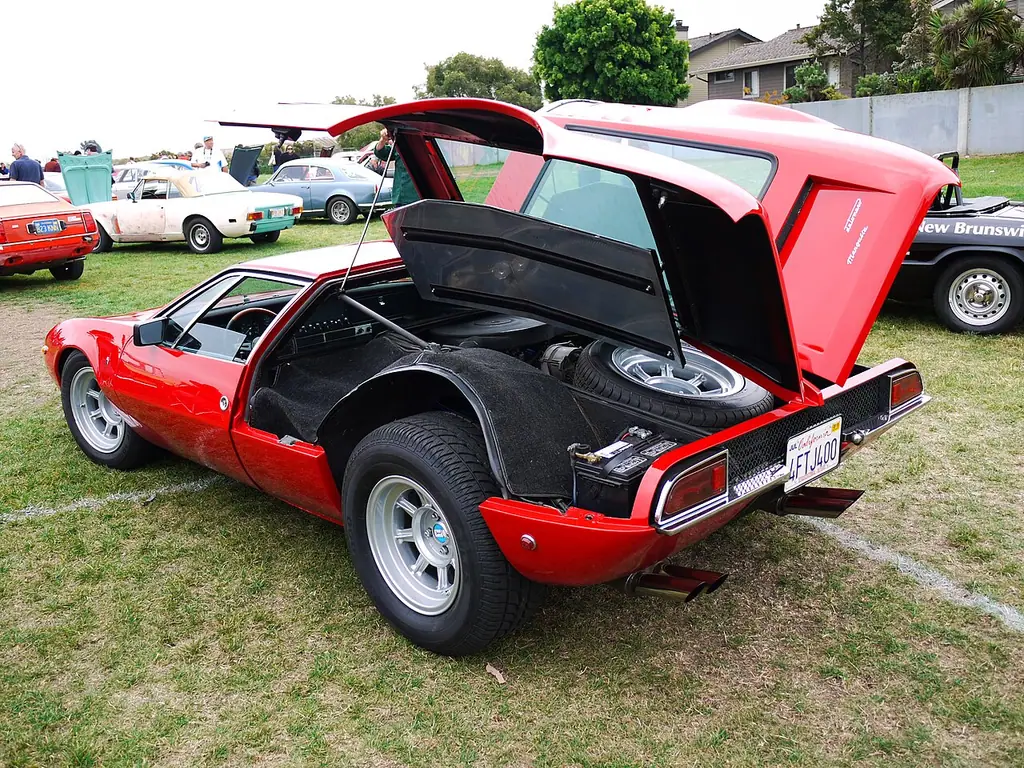
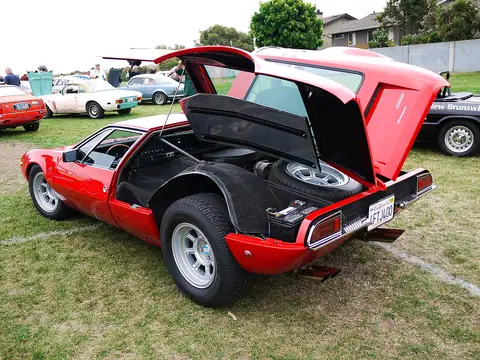 De Tomaso Mangusta (Wikipedia article: De Tomaso Mangusta)
Photo: Craig Howell · CC BY 2.0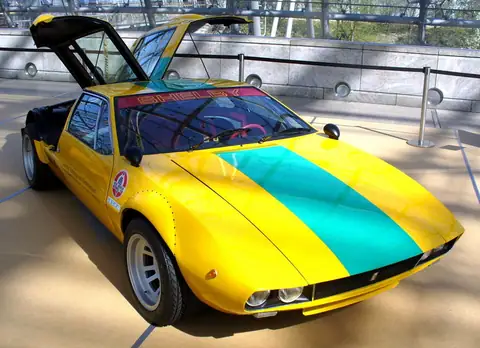 De Tomaso Mangusta (Wikipedia article: De Tomaso Mangusta)
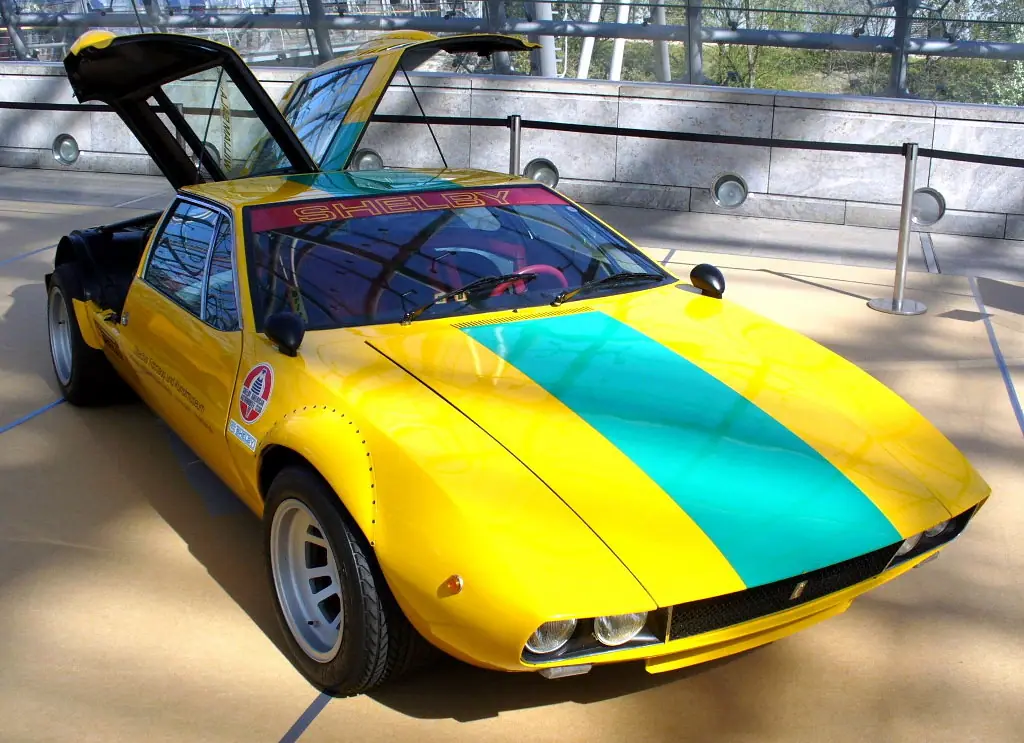
Photo: Thomas doerfer · CC BY-SA 3.0


02Production & history
Production
Every figure says what it counts.
| What is counted | Figure | Basis | Status |
|---|---|---|---|
| Total model production"about half" of the 401 cars produced are said to survive; value is an approximation of that statement | 2001 | Surviving examples | Independently researched |
| Total model productiontotal Mangustas produced 1967–1971 | 4011,2 | Factory production | Registry reported |
Independent counts (e.g. engine and colour) are never combined into a calculated figure. Surviving examples are never presented as original production.
History
The Mangusta grew from the Vallelunga, with a Ford V8 and the five-speed ZF gearbox also used in the GT40. Its chassis was derived from that of the De Tomaso P70 sports racer, a project cancelled when Carroll Shelby left to run Ford's GT40 effort. The name, Italian for mongoose, a hunter of cobras, was not lost on Shelby.
Cars imported to the United States in 1969 arrived under federal exemption without seatbelts and with headlights lower than the US rules allowed. When the exemption ended, the front was redesigned with pop-up headlights worked by a lever-and-cable system. About half of the 401 cars are said to survive.
Variants
How each version differs from the standard Mangusta.
No variants documented yet. Have a source? Contribute it.
03Specifications
Technical specifications
Engine
| Engine manufacturer | Ford (cast-iron V8)1 Independently researched |
|---|---|
| Engine family | Not yet verified |
| Engine code | Not yet verified |
| Layout | Mid-engined, longitudinally mounted V83 Independently researched |
| Cylinders | 83 Independently researched |
| Displacement | 4,728 cc / 4.7 LFactory: 4,728 cc3 Independently researched |
| Bore | Not yet verified |
| Stroke | Not yet verified |
| Compression ratio | Not yet verified |
| Valvetrain | Two valves per cylinder3 Independently researched |
| Fuel system | Weber carburettors3 Independently researched |
| Induction | Naturally aspirated3 Independently researched |
| Power | 228 kW / 310 PSFactory: 306 hp · converted3 Independently researchedSource writes "306 bhp"; rating standard not stated. |
| Power at | 6,100 rpm3 Independently researched |
| Torque | Not yet verified |
| Redline | 6,800 rpm3 Independently researched |
Transmission & drivetrain
| Manufacturer | ZF1 Independently researched |
|---|---|
| Gearbox | Manual transaxle with limited-slip differential3 Independently researched |
| Gears | 51 Independently researched |
| Driven wheels | Rear3 Independently researched |
Chassis, body & dimensions
| Chassis | Steel backbone chassis; 32/68 front/rear weight distribution1 Independently researched |
|---|---|
| Front suspension | Double wishbones, coil springs, telescopic shock absorbers3 Independently researched |
| Rear suspension | Lower wishbones, top links, twin trailing arms, coil springs, telescopic shock absorbers3 Independently researched |
| Brakes | Four-wheel power-assisted discs3 Independently researched |
| Steering | Not yet verified |
| Body construction | Steel and alloy body3 Independently researched |
| Wheelbase | 2,500 mmFactory: 2,500 mm3 Independently researched |
| Length | 4,275 mmFactory: 4,275 mm3 Independently researched |
| Width | 1,834 mmFactory: 1,834 mm3 Independently researched |
| Height | 1,100 mmFactory: 1,100 mm3 Independently researched |
| Front track | 1,394 mmFactory: 1,394 mm3 Independently researched |
| Rear track | 1,450 mmFactory: 1,450 mm3 Independently researched |
| Kerb weight | 1,300 kgFactory: 1,300 kg3 Independently researchedWeight type not stated in the source. |
| Dry weight | Not yet verified |
Performance
| Maximum speed | 250 km/hFactory: 250 km/h3 Independently researched |
|---|---|
| 0–100 km/h | Not yet verified |
| Fuel tank | 60 LFactory: 60 L3 Independently researched |
“Not yet verified” means no source has been checked for that value yet. Nothing is estimated to fill a gap.
04Colours & options
Factory colours & interiors
Original paint and trim, with the number of cars in each where a source gives it.
Not yet documented. Have a source? Contribute it.
Factory options & codes
Codes are shown exactly as written by the manufacturer.
Not yet documented. Have a source? Contribute it.
05Individual cars
Chassis register
Every documented car, with its colours, history and where it is now. Open a row for the full record. Known chassis are not automatically authenticated originals.
Not yet documented. Have a source? Contribute it.
Competition history
Every race result of the individual cars, in date order. Click a chassis number to open its full record in the register.
Not yet documented. Have a source? Contribute it.
Auction & sale history
Documented public sales of the individual cars. Click a chassis number to open its full record in the register.
Not yet documented. Have a source? Contribute it.
See one in person
Museums where an example of this car can be seen.
No example is documented on public display yet. Have a source? Contribute it.
06Reference
Identification guide
How to tell an original from a replica or later conversion.
Early US-market cars (1969) have low fixed headlights and no seatbelts. After the exemption ended, a redesigned front with pop-up headlights worked by a cable linkage was fitted; the original quad-headlight look is considered the better looking. The car has a steel backbone chassis and rear-biased 32/68 weight distribution.
Sources
Each number links to the exact facts it supports.
-
1
The De Tomaso Mangusta, An Alternative Vision Level B Petrolicious
- only 401 were produced between 1967 and 1971
- only about half of these mongooses survive
- a good ol’ American Ford V8 engine
- 5 speed ZF box used in the GT40
- a steel backbone chassis ... a 32/68 rearward-biased weight distribution
-
2
Petrolicious – De Tomaso Mangusta Level C
- 401 total Mangustas produced 1967–1971
-
3
Mangusta Level C De Tomaso Automobili (revived brand site, archived 2021) · 2021-12-06
- Mid-engined, longitudinally mounted
- Ford V8 engine (4,728 cc)
- Two valves per cylinder
- Two valves per cylinder w/ Weber Carburettors
- Aspiration: Naturally Aspirated
- Power Output: 306 bhp @ 6,100 rpm
- 306 bhp @ 6,100 rpm
- Redline 6,800 rpm
- ZF 5-speed transaxle with a limited slip differential
- Mid engine, rear wheel drive layout
- Front suspension: double wishbones, coil springs, telescopic shock absorbers
- Rear suspension: Lower wishbones, top links, twin trailing arms
- four-wheel power-assisted disc brakes
- Steel and alloy body on steel backbone chassis
- Wheelbase / Track: 2,500 mm
- Length / Width / Height: 4,275 mm
- 4,275 mm / 1,834 mm / 1,100 mm
- Track: 1,394 mm (54.9 in) / 1,450 mm
- Track: 1,394 mm (54.9 in) / 1,450 mm (57.1 in)
- Weight: 1,300 kilo / 2,866 lbs
- Top Speed: 250 km/h (155 mph)
- Fuel capacity: 60 Litre
Keep exploring
More from De Tomaso
-
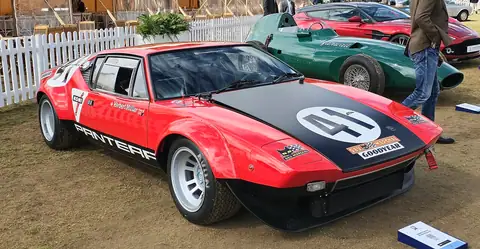
De Tomaso
Pantera Group 4 (1972)
8 Built
-
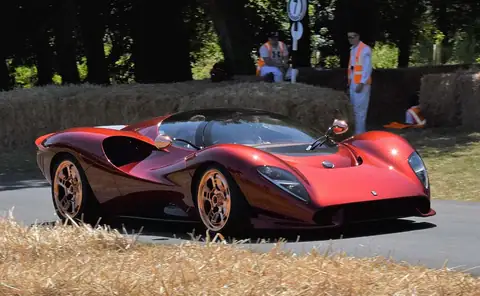
De Tomaso
P72
72 Built
-
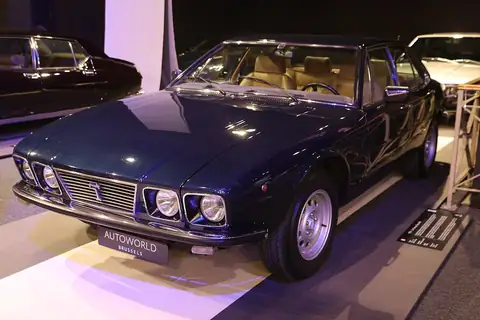
De Tomaso · 1970–1985
Deauville (1970-1988)
244 Built
-
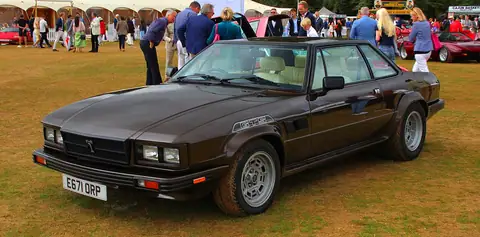
De Tomaso · 1972–1989
Longchamp (1972-1989)
409 Built
See all 20 cars by De Tomaso →
More from Italy
-
Ferrari
330 GTS
Production not yet verified
-
Lancia · 1967–1968
Flavia Super Sport (Zagato prototypes)
2 Built
-
Abarth
695 Edizione Maserati (2011)
Production not yet verified
-
Alfa Romeo
8C 2300 (chassis series)
Production not yet verified
62 other makes from ItalyAbarthACM AutomobiliAlfa RomeoAres DesignATSAuto Avio CostruzioniAutobianchiAznomB EngineeringBandiniBertoneBizzarriniBrixia-ZüstCagivaCarrozzeria Touring SuperleggeraCeiranoChiribiriCisitaliaCizetaColoniCoviniDallaraDiattoF.I.A.L. LegnanoFerrariFervesFiatFissoreFlorentiaGhiaInnocentiIntermeccanicaIsoIsotta FraschiniItalaItaldesignLaffiteLamborghiniLanciaMaseratiAll makes →