Makes › Duesenberg › 1921 French Grand Prix winner (Jimmy Murphy) · Historically significant
Duesenberg
1921 French Grand Prix winner (Jimmy Murphy)
First American car to win a Grand Prix in Europe
Still being researched: identification guide, full specifications. Everything shown is checked against the cited sources. Know more? Send us a source.
Contents
01Overview
At a glance
- Built
- Not yet verified
- Years
- Not yet verified
- Engine
- inline eight-cylinder · 2,980 cc / 3.0 LFactory: 2,980 cc
- Power
- 85.8 kW / 117 PSFactory: 115 hp · converted
- Top speed
- Not yet verified
- Body
- Not yet verified
- Designer
- Not yet verified
- In this archive
- Not yet verified
- Surviving
- Not yet verified
Sources and any conflicting figures are in the sections below.
Why it matters
Jimmy Murphy's win in the 1921 French Grand Prix at Le Mans was the first victory of an American car in the event, and the first post-war international Grand Prix. It is also named as the first Grand Prix start with hydraulic brakes.
How rare is it?
Six separate kinds of rarity – never combined into one number.
Each kind of rarity is rated separately and never combined.
02Production & history
Production
Every figure says what it counts.
No production figures recorded yet.
History
The Automobile Club de France revived its Grand Prix for 1921 under a 3-litre (183 cubic inch) limit with a minimum weight of 800 kg. Duesenberg entered four Indianapolis-derived straight-eight cars for Jimmy Murphy, Joe Boyer, Albert Guyot and Andre Dubonnet, managed by George Robertson, with August Duesenberg as chief engineer. Murphy crashed in practice avoiding a horse but was released from hospital to race, and the team trimmed the front brake linings to balance the braking.
The 30-lap race over 517.86 km at Le Mans on 25 July 1921 was won by Murphy in 4 hours 7 minutes 11 seconds, 78.22 mph. He led laps 2 to 11 and 18 to 30, lapped the field of eight survivors, and Ralph De Palma's Ballot was second. Dubonnet was fourth and Guyot sixth. Murphy later bought the car, and supercars.net says it was re-engined with a Miller to become the Murphy Special that won the 1922 Indianapolis 500.
Variants
How each version differs from the standard 1921 French Grand Prix winner (Jimmy Murphy).
No variants documented yet. Have a source? Contribute it.
03Specifications
Technical specifications
Engine
| Engine family | Not yet verified |
|---|---|
| Engine code | Not yet verified |
| Layout | inline eight-cylinder1 Independently researched |
| Displacement | 2,980 cc / 3.0 LFactory: 2,980 cc1 Independently researchedThe Grand Prix limit was 183 cu in (3 litres). |
| Bore | 63 mmFactory: 63 mm1 Independently researched |
| Stroke | 117 mmFactory: 117 mm1 Independently researched |
| Compression ratio | Not yet verified |
| Fuel system | Not yet verified |
| Power | 85.8 kW / 117 PSFactory: 115 hp · converted1 Independently researchedSource states bhp. |
| Power at | 4,250 rpm1 Independently researched |
| Torque | Not yet verified |
Transmission & drivetrain
| Gearbox | Not yet verified |
|---|---|
| Gears | Not yet verified |
| Driven wheels | Not yet verified |
Chassis, body & dimensions
| Chassis | Not yet verified |
|---|---|
| Front suspension | Not yet verified |
| Rear suspension | Not yet verified |
| Brakes | four-wheel hydraulic, same-size drums all round2 Independently researched |
| Steering | Not yet verified |
| Body construction | Not yet verified |
| Wheelbase | 2,680 mmFactory: 105.5 in · converted1 Independently researched |
| Length | Not yet verified |
| Width | Not yet verified |
| Height | Not yet verified |
| Front track | 1,300 mmFactory: 51 in · converted1 Independently researched |
| Rear track | 1,300 mmFactory: 51 in · converted1 Independently researched |
| Kerb weight | Not yet verified |
| Dry weight | 908 kgFactory: 2,001.8 lb · converted1 Independently researched |
Performance
| Maximum speed | Not yet verified |
|---|---|
| 0–100 km/h | Not yet verified |
| Fuel tank | Not yet verified |
“Not yet verified” means no source has been checked for that value yet. Nothing is estimated to fill a gap.
04Colours & options
Factory colours & interiors
Original paint and trim, with the number of cars in each where a source gives it.
Not yet documented. Have a source? Contribute it.
Factory options & codes
Codes are shown exactly as written by the manufacturer.
Not yet documented. Have a source? Contribute it.
05Individual cars
Chassis register
Every documented car, with its colours, history and where it is now. Open a row for the full record. Known chassis are not automatically authenticated originals.
Not yet documented. Have a source? Contribute it.
Competition history
Every race result of the individual cars, in date order. Click a chassis number to open its full record in the register.
Not yet documented. Have a source? Contribute it.
Auction & sale history
Documented public sales of the individual cars. Click a chassis number to open its full record in the register.
Not yet documented. Have a source? Contribute it.
See one in person
Museums where an example of this car can be seen.
No example is documented on public display yet. Have a source? Contribute it.
06Reference
Identification guide
How to tell an original from a replica or later conversion.
Not yet documented. Have a source? Contribute it.
Sources
Each number links to the exact facts it supports.
-
1
Duesenberg 1921 GP Level B Supercars.net
- Engine: 8-Cylinder In-line
- Capacity: 2,980 cc
- Bore X Stroke: 63 mm X 117 mm
- Power: 115 bhp at 4,250 rpm
- Wheelbase: 105.5 inches
- Track: 51 inches front, 51 inches rear
- Weight: 2,001.8 lbs
-
2
1921: the year America first conquered Le Mans Level B Motor Sport Magazine · 2021-07-01
- The Duesenbergs were unique in using hydraulic brakes instead of rod and cable
Keep exploring
More from Duesenberg
-
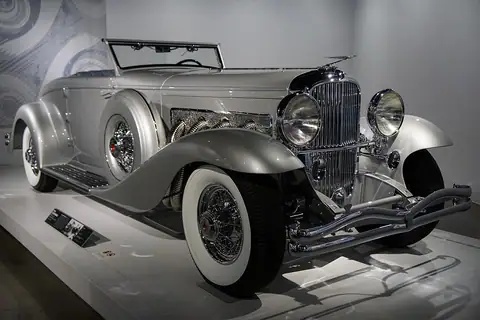
Duesenberg
Model SJ
36 Built
-
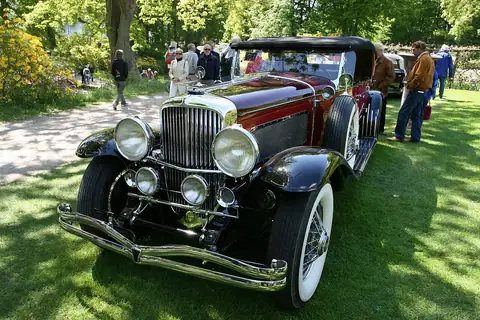
Duesenberg
Model J Tourster by Derham
Production not yet verified
-
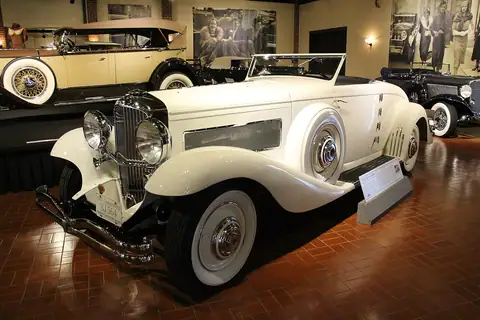
Duesenberg
Model JN (1935)
Production not yet verified
-
No licensed photo yet
Duesenberg · 1931
Model J Convertible Sedan by Franay (J-446, Queen Maria of Yugoslavia)
1 Built
See all 23 cars by Duesenberg →
More from United States
-
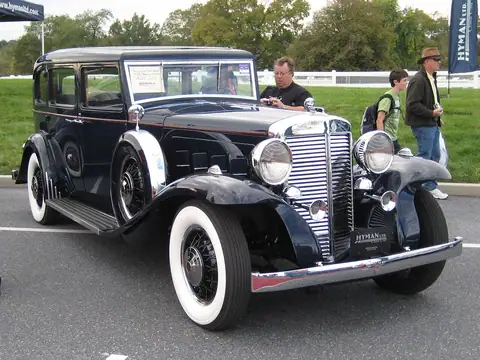
Marmon · 1931–1933
Sixteen
375 Built
-
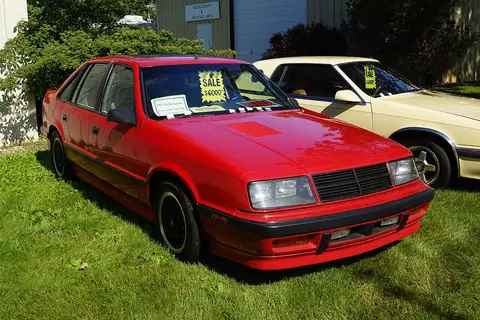
Dodge · 1987
Shelby Lancer (Whittier-built)
800 Built
-
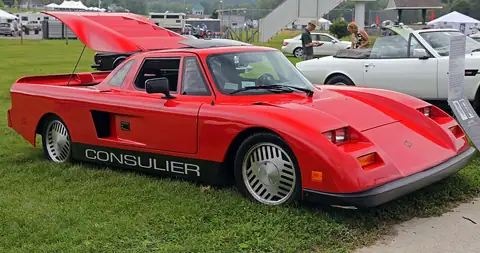
Consulier · 1990
GTP
Production not yet verified
-
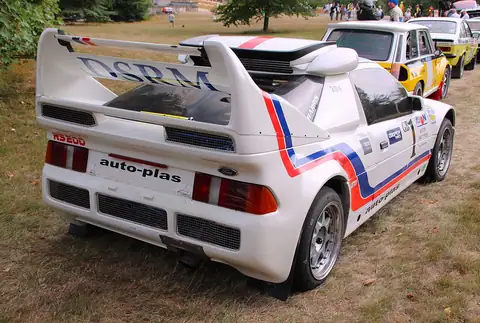
Ford
RS200 Evolution
24 Built
141 other makes from United StatesAC PropulsionAcuraAllstateAMCAmerican LaFranceAmerican MotorsAmerican UnderslungApteraArmstrongArnoltAuburnBaldwin-MotionBantamBarris KustomsBendixBerger ChevroletBill ThomasBollingerBremerBuckeyeBuffumBuickCadillacCallawayCastleCheckerChevroletChristieChryslerClenetCodaColumbiaConsulierCordCunninghamCzingerDana ChevroletDean JeffriesDeSotoDetroit ElectricAll makes →