Makes › Elcat › Cityvan · Rare production · 1990–2002
Elcat
Cityvan
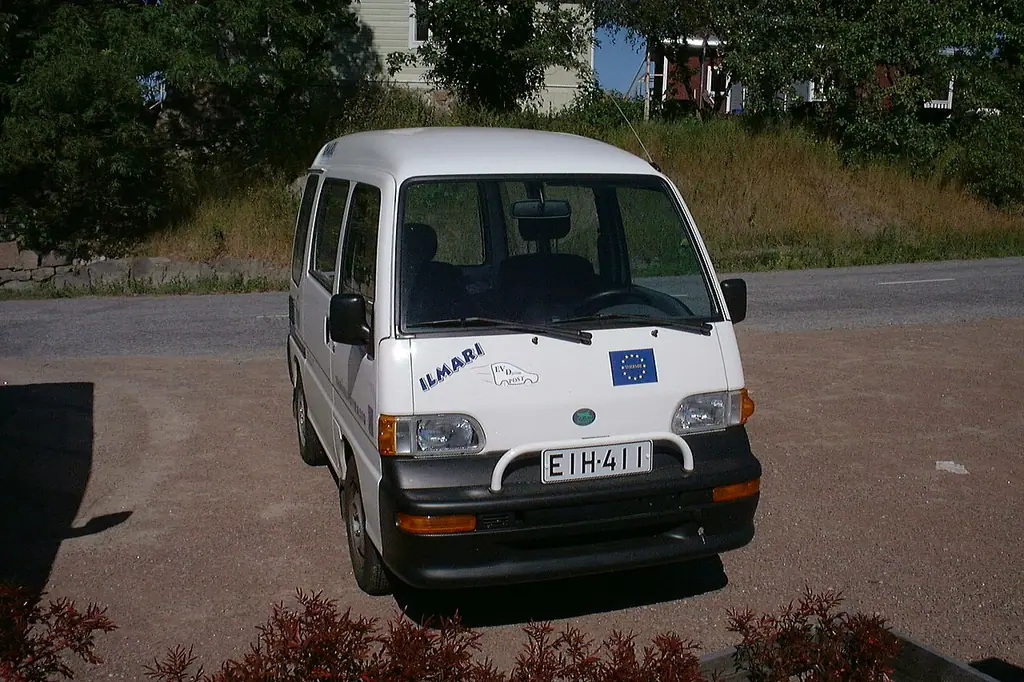
Finnish electric van converted from the Subaru light van by Elcat of Järvenpää, an Imatran Voima–Neste project; it was the first series-built electric vehicle the Finnish Post put into delivery service.
Still being researched: full specifications. Everything shown is checked against the cited sources. Know more? Send us a source.
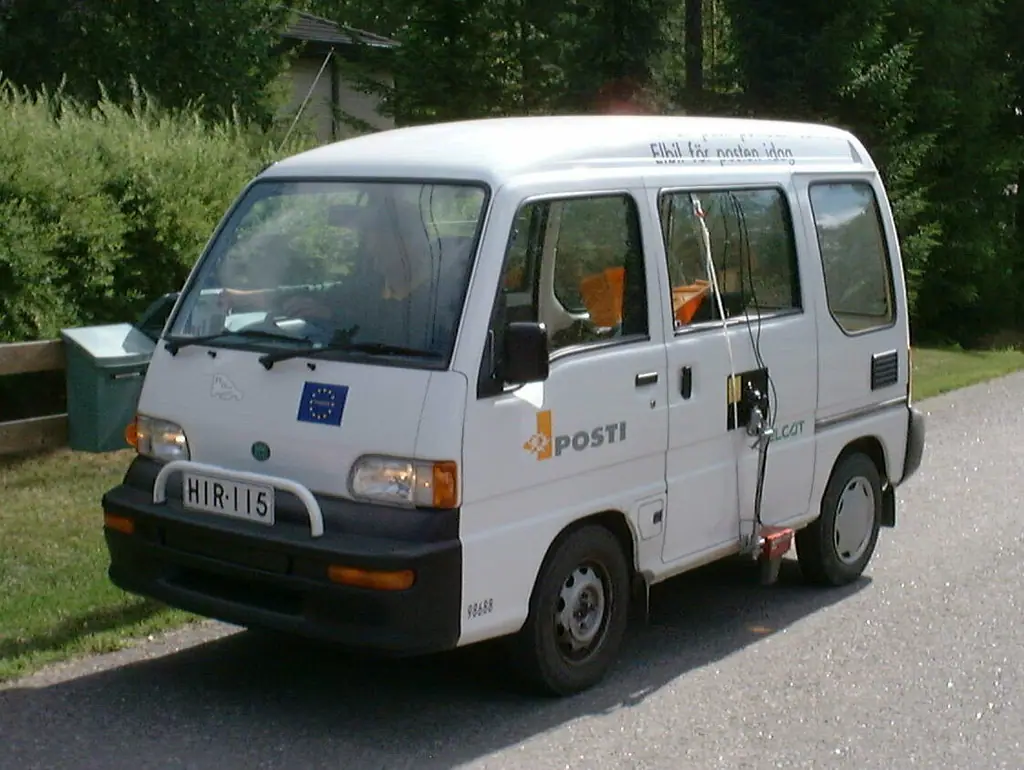
Photo: LHOON (Flickr User) · CC BY-SA 2.0
Contents
01Overview
At a glance
- Built
- Not yet verified
- Years
- 1990–2002
- Engine
- Electric motor replacing the Subaru petrol engine; lead-acid battery pack under the rear floor
- Power
- Not yet verified
- Top speed
- 80 km/hFactory: 80 km/h
- Body
- Not yet verified
- Designer
- Not yet verified
- In this archive
- Not yet verified
- Surviving
- Not yet verified
Sources and any conflicting figures are in the sections below.
Why it matters
The Elcat Cityvan was a series-built Finnish electric vehicle of the 1990s, the outcome of a long electric-vehicle programme by Imatran Voima and Neste. It became the first series-built electric van the Finnish Post put into mail-delivery service.
How rare is it?
Six separate kinds of rarity – never combined into one number.
Each kind of rarity is rated separately and never combined.
Photos
Exterior, interior and detail photos with their licences.
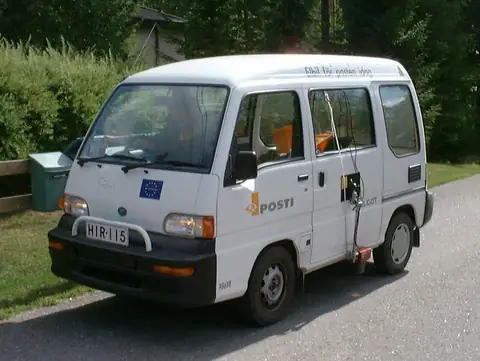 Elcat Cityvan (Wikimedia Commons search)
Photo: LHOON (Flickr User) · CC BY-SA 2.0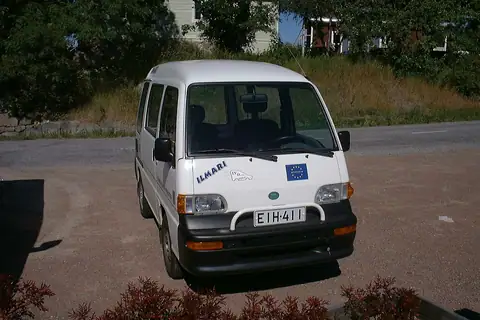 Elcat Cityvan (Wikimedia Commons search)
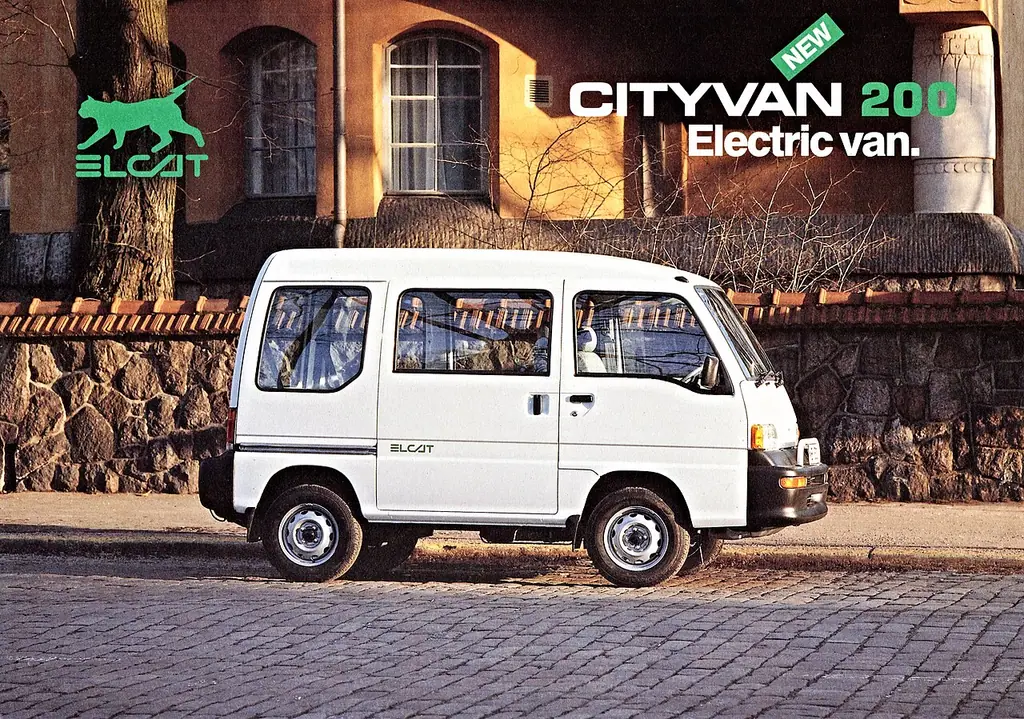
Photo: LHOON · CC BY-SA 2.0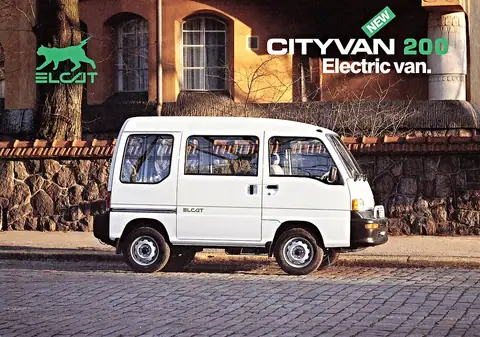 Elcat Cityvan (Wikimedia Commons search)
Photo: Alden Jewell · CC BY 2.0


02Production & history
Production
Every figure says what it counts.
No production figures recorded yet.
History
Imatran Voima and Neste had studied electric cars for Finnish conditions since the mid-1970s, and in 1985 they set up a project to develop a competitively priced electric vehicle for urban traffic. The result was built in Järvenpää by converting a Subaru light van: the petrol engine was removed in Finland and replaced by an electric motor and battery pack. The technology drew on the earlier Finnvan II prototype. In September 1990 the Cityvan won first prize in an international city-driving competition at La Rochelle.
The Finnish Post was the main customer, using the vans from the early 1990s; post-office versions carried a 'P' suffix and right-hand drive, and new Cityvan 202 models were handed over to the Post in 1999. Municipalities and similar users also bought them. Vans were built until 2002.
Variants
How each version differs from the standard Cityvan.
No variants documented yet. Have a source? Contribute it.
03Specifications
Technical specifications
Engine
| Engine family | Not yet verified |
|---|---|
| Engine code | Not yet verified |
| Layout | Electric motor replacing the Subaru petrol engine; lead-acid battery pack under the rear floor1,2 Independently researched |
| Displacement | Not yet verified |
| Bore | Not yet verified |
| Stroke | Not yet verified |
| Compression ratio | Not yet verified |
| Fuel system | Not yet verified |
| Power | Not yet verified |
| Power at | Not yet verified |
| Torque | Not yet verified |
Transmission & drivetrain
| Gearbox | Manual3 Independently researched |
|---|---|
| Gears | 53 Independently researched |
| Driven wheels | Not yet verified |
Chassis, body & dimensions
| Chassis | Not yet verified |
|---|---|
| Front suspension | Not yet verified |
| Rear suspension | Not yet verified |
| Brakes | Not yet verified |
| Steering | Not yet verified |
| Body construction | Converted Subaru (Domingo) van body3 Independently researched |
| Wheelbase | Not yet verified |
| Length | Not yet verified |
| Width | Not yet verified |
| Height | Not yet verified |
| Front track | Not yet verified |
| Rear track | Not yet verified |
| Kerb weight | 1,180 kgFactory: 1,180 kg1 Independently researchedWeight of the Postimuseo's preserved post van (PM-ES-4955). |
| Dry weight | Not yet verified |
Performance
| Maximum speed | 80 km/hFactory: 80 km/h3,2Cityvan 200; range 70 km. motor-car.net gives 90 km/h and 80 km for the Cityvan 202. |
|---|---|
| 0–100 km/h | Not yet verified |
| Fuel tank | Not yet verified |
“Not yet verified” means no source has been checked for that value yet. Nothing is estimated to fill a gap.
04Colours & options
Factory colours & interiors
Original paint and trim, with the number of cars in each where a source gives it.
Not yet documented. Have a source? Contribute it.
Factory options & codes
Codes are shown exactly as written by the manufacturer.
Not yet documented. Have a source? Contribute it.
05Individual cars
Chassis register
Every documented car, with its colours, history and where it is now. Open a row for the full record. Known chassis are not automatically authenticated originals.
Not yet documented. Have a source? Contribute it.
Competition history
Every race result of the individual cars, in date order. Click a chassis number to open its full record in the register.
Not yet documented. Have a source? Contribute it.
Auction & sale history
Documented public sales of the individual cars. Click a chassis number to open its full record in the register.
Not yet documented. Have a source? Contribute it.
See one in person
Museums where an example of this car can be seen.
No example is documented on public display yet. Have a source? Contribute it.
06Reference
Identification guide
How to tell an original from a replica or later conversion.
Being verified against factory or registry sources before it is published. Have a source? Contribute it.
Sources
Each number links to the exact facts it supports.
-
1
pakettiauto; jakeluauto sähköauto Cityvan (object PM-ES-4955) Level C Postimuseo (Finnish Postal Museum), via Finna
- tilalle asennettu sähkömoottori sekä akusto; takana lattian alla akusto
- paino: 1180 kg
-
2
Helsinki Weekend Edition – Elcat Cityvan, the electric Subaru van from Finland Level D Antti Kautonen · Hooniverse · 2013-05-18
- About 400 kg of lead-acid batteries
- Cityvan 200 badge indicates a top speed of 80 km/h
-
3
Muistatko postin käytössä olleet Elcatit? Level C Teppo Vesalainen · Moottori (Autoliitto) · 2026-05-31
- Viisivaihteinen manuaali
- Subaru Domingo -ikkunapakettiauto
- Huippunopeus: 80 km/h
Keep exploring
More from Elcat
This is the only Elcat documented so far.
More from Finland
-
Korvensuu · 1910–1913
Korvensuu
1 Built
-
Wihuri · 1957
Wiima
Production not yet verified
-
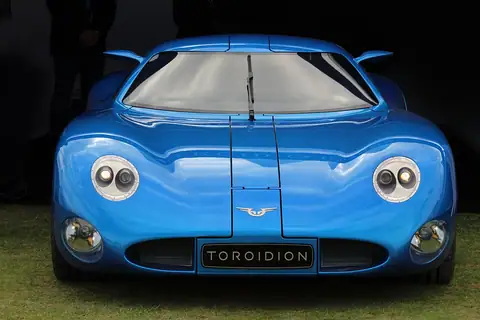
Toroidion · 2015
1MW Concept
Production not yet verified
-
No licensed photo yet
Finlandia · 1923
Finlandia (P. J. Heikkilä, Helsinki)
Production not yet verified
7 other makes from FinlandFinlandiaFinnvanKorvensuuTeijoToroidionValmetWihuri