Makes › Ferrari › 250 › 250 GT Cabriolet Series I (Pinin Farina) · Rare production · 1957–1958 Ultra Rare
Ferrari
250 GT Cabriolet Series I (Pinin Farina)
First series Pinin Farina 250 GT Cabriolet, essentially bespoke; 40 built (Gooding once says 41)
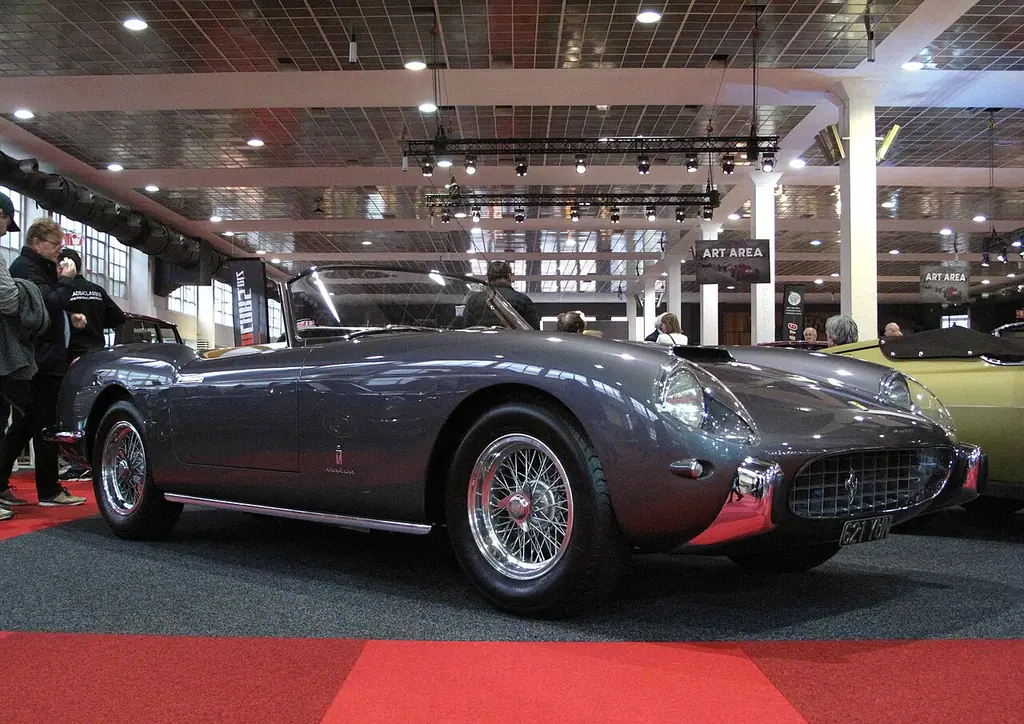
Photo: Rutger van der Maar · CC BY 2.0
Contents
01Overview
At a glance
- Built
- 40 Built
- Years
- 1957–1958
- Engine
- front, longitudinal 60° V12 · 2,953.21 cc / 3.0 LFactory: 2,953.21 cc
- Power
- 179 kW / 243 PSFactory: 240 hp · converted
- Top speed
- 252 km/hFactory: 252 km/h
- Body
- Pinin Farina
- Designer
- Pinin Farina
- In this archive
- Not yet verified
- Surviving
- Not yet verified
Sources and any conflicting figures are in the sections below.
Why it matters
The first-series 250 GT Cabriolet was Pinin Farina's open grand-touring Ferrari of the late 1950s, built in only 40 examples that RM Sotheby's describes as essentially bespoke. Because each car was finished to order, details such as headlamps, fender vents and taillights differ noticeably from one chassis to another.
How rare is it?
Six separate kinds of rarity – never combined into one number.
Each kind of rarity is rated separately and never combined.
Photos
Exterior, interior and detail photos with their licences.
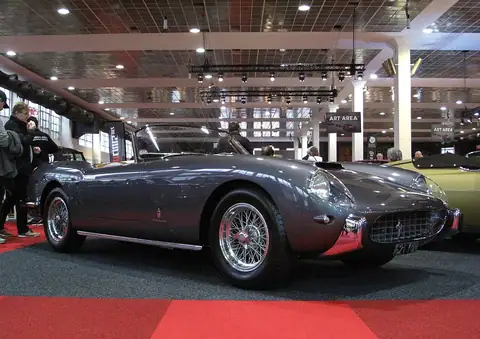 Ferrari 250 GT Cabriolet Series I (Pinin Farina) (Wikimedia Commons: Ferrari 250 GT Cabriolet Series I)
Photo: Rutger van der Maar · CC BY 2.0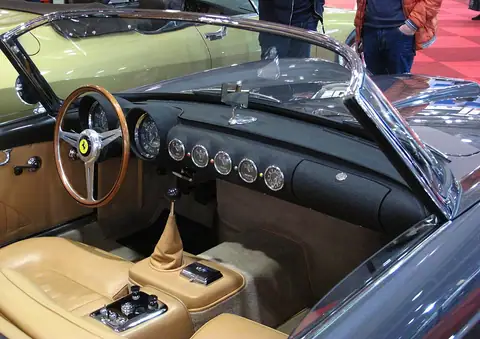 Ferrari 250 GT Cabriolet Series I (Pinin Farina) (Wikimedia Commons: Ferrari 250 GT Cabriolet Series I)
Photo: Rutger van der Maar · CC BY 2.0
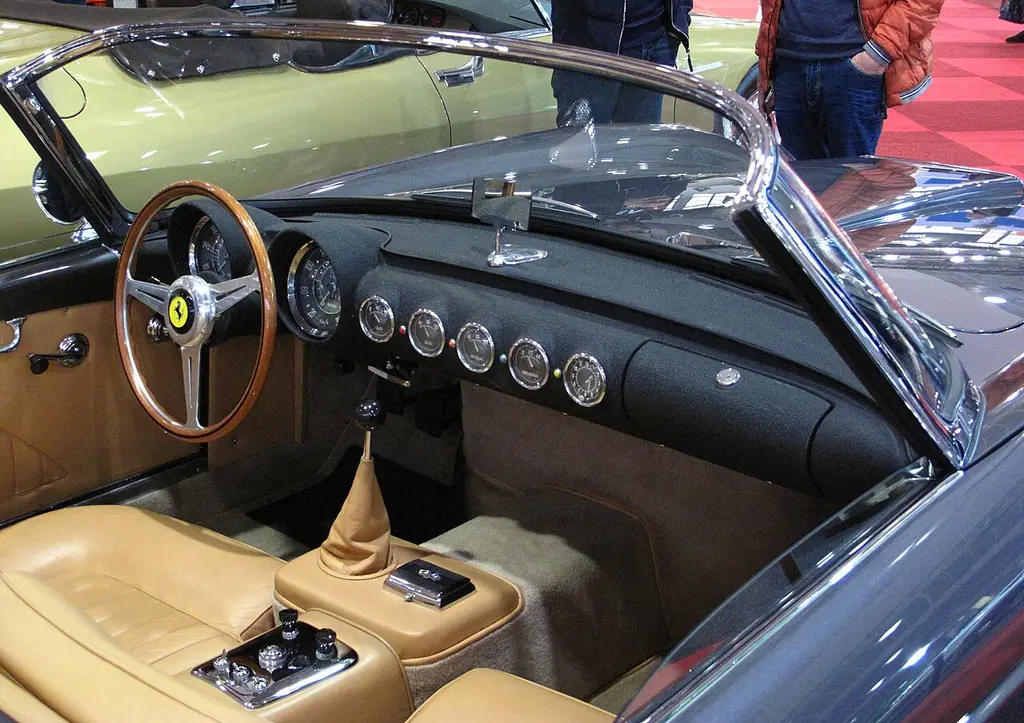


02Production & history
Production
Every figure says what it counts.
| What is counted | Figure | Basis | Status |
|---|---|---|---|
| Total model productionexamples produced | 401,2 | Factory production | Factory reported |
Independent counts (e.g. engine and colour) are never combined into a calculated figure. Surviving examples are never presented as original production.
History
Ferrari built 40 Series I Cabriolets with Pinin Farina coachwork. Chassis 0809 GT, the 18th, was completed in early 1958 and displayed at the New York International Automobile Show that April. Some cars, including this one, received competition-style covered headlights and bumperettes, and RM notes that its lack of front fender vents and its smaller taillights closely follow the final prototype, chassis 0709 GT.
Variants
How each version differs from the standard 250 GT Cabriolet Series I (Pinin Farina).
No variants documented yet. Have a source? Contribute it.
03Specifications
Technical specifications
Engine
| Engine family | Not yet verified |
|---|---|
| Engine code | Not yet verified |
| Layout | front, longitudinal 60° V121Same single-camshaft 3-litre V12 (type 128C) as the concurrent coupes. |
| Displacement | 2,953.21 cc / 3.0 LFactory: 2,953.21 cc1 |
| Bore | 73 mmFactory: 73 mm1 |
| Stroke | 58.8 mmFactory: 58.8 mm1 |
| Compression ratio | 8.5:11 |
| Valvetrain | single overhead camshaft per bank, two valves per cylinder1 |
| Fuel system | three twin-choke downdraught Weber 36 DCL3 carburettors1 |
| Power | 179 kW / 243 PSFactory: 240 hp · converted1Rating: manufacturerPage gives 176 kW (240 hp). |
| Power at | 7,000 rpm1 |
| Torque | Not yet verified |
Transmission & drivetrain
| Gearbox | 4-speed + reverse1 |
|---|---|
| Gears | 41 |
| Driven wheels | Not yet verified |
Chassis, body & dimensions
| Chassis | tubular steel1 |
|---|---|
| Front suspension | independent, unequal-length wishbones, coil springs, hydraulic shock absorbers1 |
| Rear suspension | live axle, semi-elliptic springs, hydraulic shock absorbers1 |
| Brakes | drums1 |
| Steering | worm and sector1 |
| Body construction | Not yet verified |
| Wheelbase | 2,600 mmFactory: 2,600 mm1 |
| Length | Not yet verified |
| Width | Not yet verified |
| Height | Not yet verified |
| Front track | 1,354 mmFactory: 1,354 mm1 |
| Rear track | 1,349 mmFactory: 1,349 mm1 |
| Kerb weight | Not yet verified |
| Dry weight | 1,050 kgFactory: 1,050 kg1 |
Performance
| Maximum speed | 252 km/hFactory: 252 km/h1 |
|---|---|
| 0–100 km/h | Not yet verified |
| Fuel tank | 100 LFactory: 100 L1 |
“Not yet verified” means no source has been checked for that value yet. Nothing is estimated to fill a gap.
04Colours & options
Factory colours & interiors
Original paint and trim, with the number of cars in each where a source gives it.
Not yet documented. Have a source? Contribute it.
Factory options & codes
Codes are shown exactly as written by the manufacturer.
Not yet documented. Have a source? Contribute it.
05Individual cars
Chassis register
Every documented car, with its colours, history and where it is now. Open a row for the full record. Known chassis are not automatically authenticated originals.
Not yet documented. Have a source? Contribute it.
Competition history
Every race result of the individual cars, in date order. Click a chassis number to open its full record in the register.
Not yet documented. Have a source? Contribute it.
Auction & sale history
Documented public sales of the individual cars. Click a chassis number to open its full record in the register.
Not yet documented. Have a source? Contribute it.
See one in person
Museums where an example of this car can be seen.
No example is documented on public display yet. Have a source? Contribute it.
06Reference
Identification guide
How to tell an original from a replica or later conversion.
As the cars were essentially bespoke, specification varies by chassis: covered headlights with bumperettes, the presence or absence of front fender vents, and taillight size all differ. Originality is established by matching chassis, engine, gearbox and rear-axle numbers, with chassis numbers carrying the GT suffix (for example 0809 GT).
Sources
Each number links to the exact facts it supports.
-
1
Ferrari 250 GT Cabriolet (1957) - Ferrari.com Level A Ferrari S.p.A. (ferrari.com) · 2026-01-01
- A total of forty examples were built including the prototypes
- Type front, longitudinal 60° V12 (Technical Details)
- Total displacement 2953.21 cc (Technical Details)
- Bore/stroke 73 x 58.8 mm (Technical Details)
- Compression ratio 8.5 : 1 (Technical Details)
- Valve actuation single overhead camshaft per bank, two valves per cylinder (Technical Details)
- Fuel feed three twin-choke downdraught Weber 36 DCL3 carburettors (Technical Details)
- Maximum power 176 kW (240 hp) at 7000 rpm (Technical Details)
- Transmission 4-speed + reverse (Technical Details)
- Frame tubular steel (Technical Details)
- Front suspension independent, unequal-length wishbones, coil springs, hydraul (Technical Details)
- Rear suspension live axle, semi-elliptic springs, hydraulic shock absorbers (Technical Details)
- Brakes drums (Technical Details)
- Steering worm and sector (Technical Details)
- Wheelbase 2600 mm (Technical Details)
- Front track 1354 mm (Technical Details)
- Rear track 1349 mm (Technical Details)
- Weight 1050 kg (dry) (Technical Details)
- Top speed 252 km/h (Technical Details)
- Fuel tank capacity 100 litres (Technical Details)
-
2
RM Sotheby's Monterey 2026 – 1958 Ferrari 250 GT Cabriolet Series I by Pinin Farina Level B
- 40 examples produced
Keep exploring
More from Ferrari
-
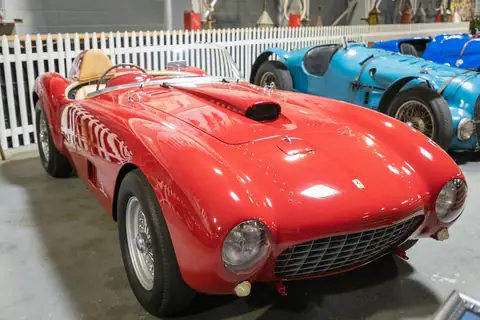
Ferrari · 1954
375 MM Spider by Pinin Farina ("Ingrid Bergman" car, 0456AM)
1 Built
-
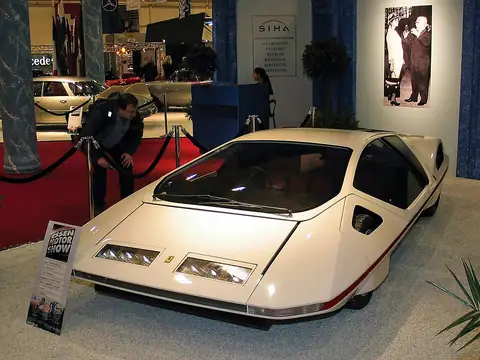
Ferrari · 1970
512 S Modulo (Pininfarina)
1 Built
-
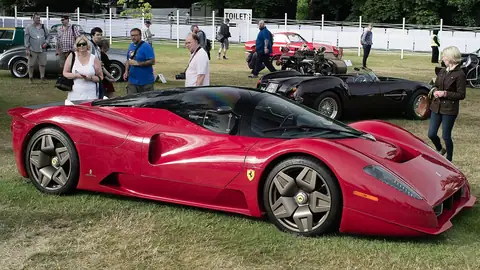
Ferrari · 2005–2006
P4/5 by Pininfarina (2006)
1 Built
-
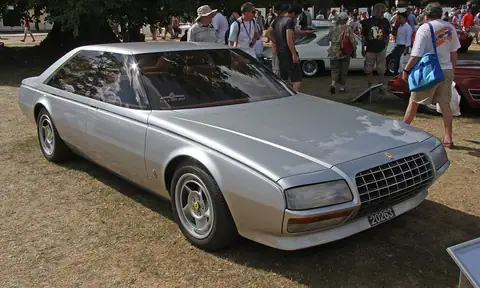
Ferrari · 1980
Pinin
1 Built
More from Italy
-
Pagani
Zonda Tricolore
Production not yet verified
-
Alfa Romeo · 1938–1939
6C 2300 B Mille Miglia
106 Built
-
Maserati
Quattroporte I (Tipo 107)
Production not yet verified
-
Lancia
2000 Coupe / HF Coupe
Production not yet verified
62 other makes from ItalyAbarthACM AutomobiliAlfa RomeoAres DesignATSAuto Avio CostruzioniAutobianchiAznomB EngineeringBandiniBertoneBizzarriniBrixia-ZüstCagivaCarrozzeria Touring SuperleggeraCeiranoChiribiriCisitaliaCizetaColoniCoviniDallaraDe TomasoDiattoF.I.A.L. LegnanoFervesFiatFissoreFlorentiaGhiaInnocentiIntermeccanicaIsoIsotta FraschiniItalaItaldesignLaffiteLamborghiniLanciaMaseratiAll makes →