Makes › Ferrari › 250 › 250 Testa Rossa · Factory competition · 1957–1961 Ultra Rare
Ferrari
250 Testa Rossa
Customer and works sports-racers that won Le Mans 1958, 1960, 1961; pontoon-fender bodies.
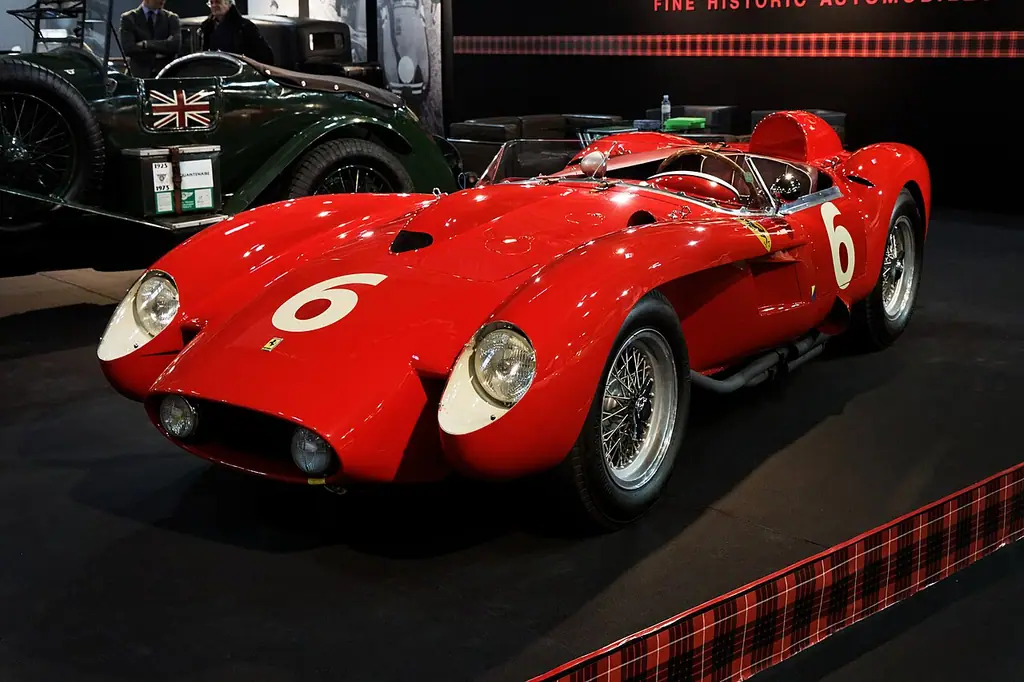
Photo: Thesupermat · CC BY-SA 3.0
Contents
01Overview
At a glance
- Built
- 33 Built
- Years
- 1957–1961
- Engine
- front, longitudinal 60° V12 · 2,953.21 cc / 3.0 LFactory: 2,953.21 cc
- Power
- 224 kW / 304 PSFactory: 300 hp · converted
- Top speed
- 270 km/hFactory: 270 km/h
- Body
- Not yet verified
- Designer
- Scaglietti (coachwork)
- In this archive
- Not yet verified
- Surviving
- Not yet verified
Sources and any conflicting figures are in the sections below.
Why it matters
The 250 Testa Rossa gave customers already racing the 500 TRC a far more powerful car on a similar chassis. Anticipating a 3-litre limit for prototypes, Ferrari fitted the road-car 250 V12 in a radically tuned form. It won the 1958 Manufacturers' World Championship.
How rare is it?
Six separate kinds of rarity – never combined into one number.
Each kind of rarity is rated separately and never combined.
Photos
Exterior, interior and detail photos with their licences.
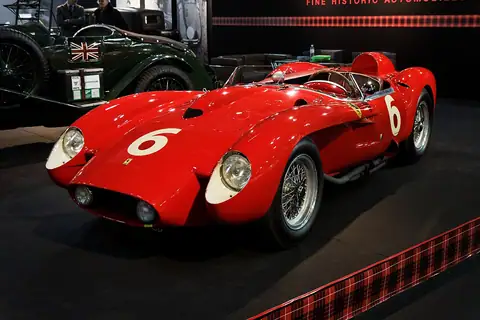 Ferrari 250 Testa Rossa (Wikimedia Commons: Category:1957 Ferrari 250 Testa Rossa s/n 0716TR)
Photo: Thesupermat · CC BY-SA 3.0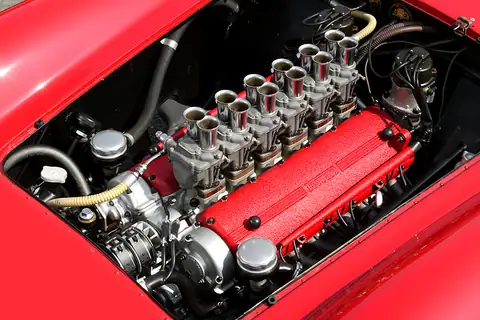 Ferrari 250 Testa Rossa (Wikipedia article: Ferrari 250 Testa Rossa)
Photo: Tennen-Gas · CC BY-SA 3.0


02Production & history
Production
Every figure says what it counts.
| What is counted | Figure | Basis | Status |
|---|---|---|---|
| Total model productionAll 250 TR types, customer and works, 1957–1962. As stated: “A total of 33 examples of all 250 TR types were built between 1957 and 1962 including 19 built for privateers and independent racing teams” | 331 | Factory production | Independently researched |
Independent counts (e.g. engine and colour) are never combined into a calculated figure. Surviving examples are never presented as original production.
History
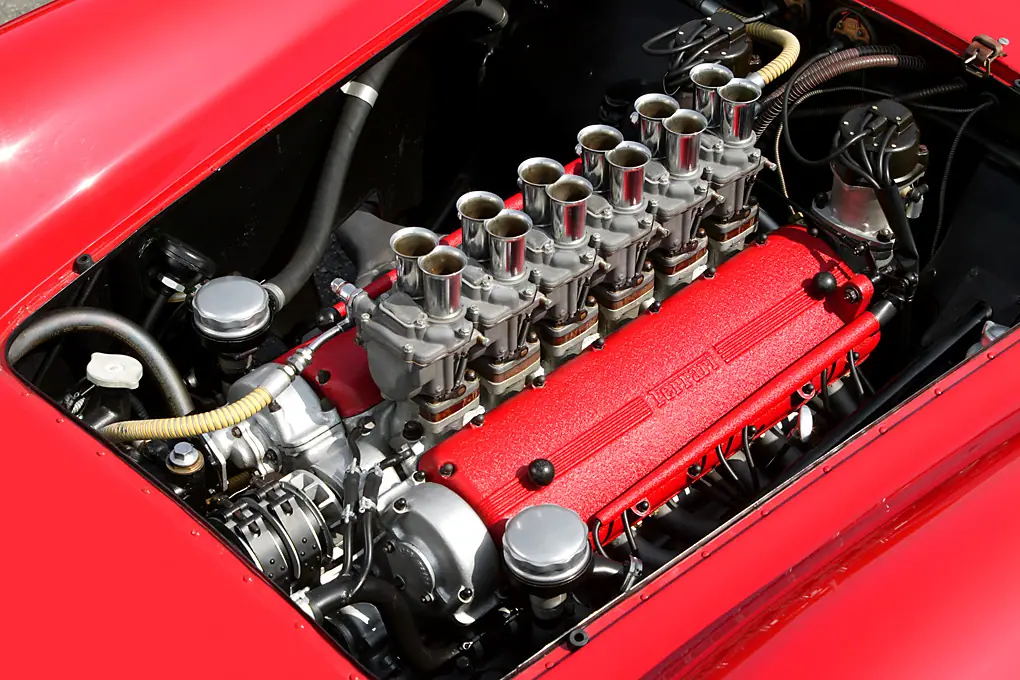
The car was conceived for customers who raced the 500 TRC and wanted much more power with the same handling. A rumoured FIA three-litre limit for prototypes proved correct, so the engine from the 250 Gran Turismo was used with six twin-choke carburettors and heavy tuning. Compared with the 500 TRC, the visible difference was that only the valve covers were painted red, but the Testa Rossa name was kept.
Variants
How each version differs from the standard 250 Testa Rossa.
No variants documented yet. Have a source? Contribute it.
03Specifications
Technical specifications
Engine
| Engine family | Not yet verified |
|---|---|
| Engine code | Tipo 128 LM2 Independently researchedStated for the prototype chassis 0666 TR; later cars may differ. |
| Layout | front, longitudinal 60° V123 |
| Displacement | 2,953.21 cc / 3.0 LFactory: 2,953.21 cc3 |
| Bore | 73 mmFactory: 73 mm3 |
| Stroke | 58.8 mmFactory: 58.8 mm3 |
| Compression ratio | 9.8:13 |
| Valvetrain | twin overhead camshafts per bank, two valves per cylinder3 |
| Fuel system | six Weber 38 DCN carburettors3 |
| Power | 224 kW / 304 PSFactory: 300 hp · converted3Rating: manufacturerPage gives 221 kW (300 hp). |
| Power at | 7,200 rpm3 |
| Torque | Not yet verified |
Transmission & drivetrain
| Gearbox | 4-speed + reverse3 |
|---|---|
| Gears | 43 |
| Driven wheels | Not yet verified |
Chassis, body & dimensions
| Chassis | tubular steel3 |
|---|---|
| Front suspension | independent, unequal-length wishbones, coil springs, hydraulic shock absorbers3 |
| Rear suspension | live axle, radius arms, coil springs, hydraulic shock absorbers3 |
| Brakes | drums3 |
| Steering | worm and sector3 |
| Body construction | Not yet verified |
| Wheelbase | 2,350 mmFactory: 2,350 mm3 |
| Length | Not yet verified |
| Width | Not yet verified |
| Height | Not yet verified |
| Front track | 1,308 mmFactory: 1,308 mm3 |
| Rear track | 1,300 mmFactory: 1,300 mm3 |
| Kerb weight | Not yet verified |
| Dry weight | 800 kgFactory: 800 kg3 |
Performance
| Maximum speed | 270 km/hFactory: 270 km/h3 |
|---|---|
| 0–100 km/h | Not yet verified |
| Fuel tank | 140 LFactory: 140 L3 |
“Not yet verified” means no source has been checked for that value yet. Nothing is estimated to fill a gap.
04Colours & options
Factory colours & interiors
Original paint and trim, with the number of cars in each where a source gives it.
Not yet documented. Have a source? Contribute it.
Factory options & codes
Codes are shown exactly as written by the manufacturer.
Not yet documented. Have a source? Contribute it.
05Individual cars
Chassis register
Every documented car, with its colours, history and where it is now. Open a row for the full record. Known chassis are not automatically authenticated originals.
Not yet documented. Have a source? Contribute it.
Competition history
Every race result of the individual cars, in date order. Click a chassis number to open its full record in the register.
Not yet documented. Have a source? Contribute it.
Auction & sale history
Documented public sales of the individual cars. Click a chassis number to open its full record in the register.
Not yet documented. Have a source? Contribute it.
See one in person
Museums where an example of this car can be seen.
No example is documented on public display yet. Have a source? Contribute it.
06Reference
Identification guide
How to tell an original from a replica or later conversion.
The lot catalogued as the first 250 Testa Rossa, a Scuderia Ferrari team car with Scaglietti coachwork, carries chassis 0666 TR and engine number 0666 TR (internal number GES N 6), with Ferrari Classiche certification. It has the Tipo 128 LM engine with six Weber carburettors, drum brakes and a De Dion rear axle. Only this one car is described, so the figures are those of an early works example rather than a model-wide statement.
Sources
Each number links to the exact facts it supports.
-
1
Conceptcarz – Ferrari 250 TR59/60 Level C
- 33 All 250 TR types, customer and works, 1957–1962. As stated: “A total of 33 examples of all 250 TR types were built between 1957 and 1962 including 19 built for privateers and independent racing teams” (Top Gear gives 34)
-
2
1957 Ferrari 250 Testa Rossa, chassis 0666 TR Level C Gooding & Company (Wayback capture)
- 2,953 CC Tipo 128 LM SOHC V-12 Engine
-
3
Ferrari 250 Testa Rossa (1957) - Ferrari.com Level A Ferrari S.p.A. (ferrari.com) · 2026-01-01
- Type front, longitudinal 60° V12 (Technical Details)
- Total displacement 2953.21 cc (Technical Details)
- Bore/stroke 73 x 58.8 mm (Technical Details)
- Compression ratio 9.8 : 1 (Technical Details)
- Valve actuation twin overhead camshafts per bank, two valves per cylinder (Technical Details)
- Fuel feed six Weber 38 DCN carburettors (Technical Details)
- Maximum power 221 kW (300 hp) at 7200 rpm (Technical Details)
- Transmission 4-speed + reverse (Technical Details)
- Frame tubular steel (Technical Details)
- Front suspension independent, unequal-length wishbones, coil springs, hydraul (Technical Details)
- Rear suspension live axle, radius arms, coil springs, hydraulic shock absorb (Technical Details)
- Brakes drums (Technical Details)
- Steering worm and sector (Technical Details)
- Wheelbase 2350 mm (Technical Details)
- Front track 1308 mm (Technical Details)
- Rear track 1300 mm (Technical Details)
- Weight 800 kg (dry) (Technical Details)
- Top speed 270 km/h (Technical Details)
- Fuel tank capacity 140 litres (Technical Details)
Keep exploring
More from Ferrari
-
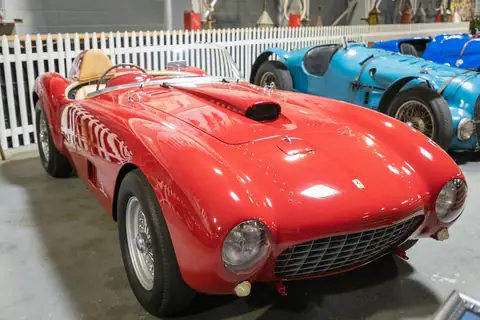
Ferrari · 1954
375 MM Spider by Pinin Farina ("Ingrid Bergman" car, 0456AM)
1 Built
-
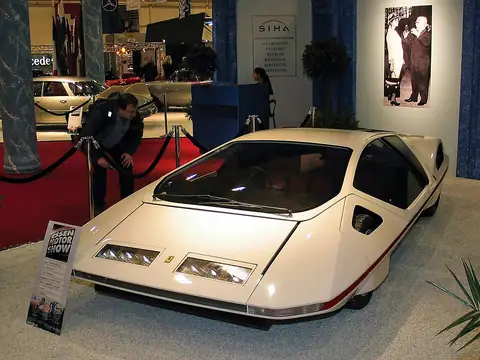
Ferrari · 1970
512 S Modulo (Pininfarina)
1 Built
-
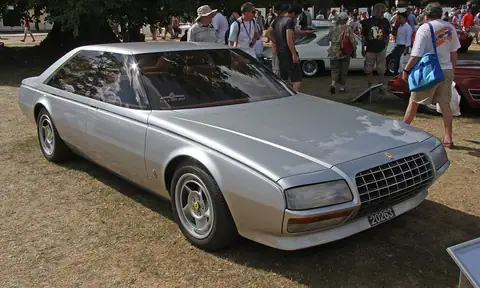
Ferrari · 1980
Pinin
1 Built
-
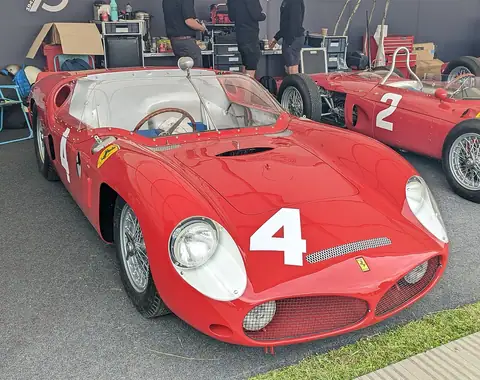
Ferrari
246 SP
2 Built
More from Italy
-
Lamborghini
Diablo GTR (1999-2000)
32 Built
-
Alfa Romeo
8C 2900B (Touring Berlinetta/Spider)
32 Built
-
Lancia · 1958–1967
Flaminia Coupé (Pinin Farina)
5,235 Built
-
Maserati · 1959
5000 GT
34 Built
62 other makes from ItalyAbarthACM AutomobiliAlfa RomeoAres DesignATSAuto Avio CostruzioniAutobianchiAznomB EngineeringBandiniBertoneBizzarriniBrixia-ZüstCagivaCarrozzeria Touring SuperleggeraCeiranoChiribiriCisitaliaCizetaColoniCoviniDallaraDe TomasoDiattoF.I.A.L. LegnanoFervesFiatFissoreFlorentiaGhiaInnocentiIntermeccanicaIsoIsotta FraschiniItalaItaldesignLaffiteLamborghiniLanciaMaseratiAll makes →