Makes › Ferrari › Dino › Dino 206 GT · Rare production · 1968–1969 Extremely Rare
Ferrari
Dino 206 GT
First production mid-engined road Dino, aluminium-bodied 2.0-litre predecessor of the 246 GT
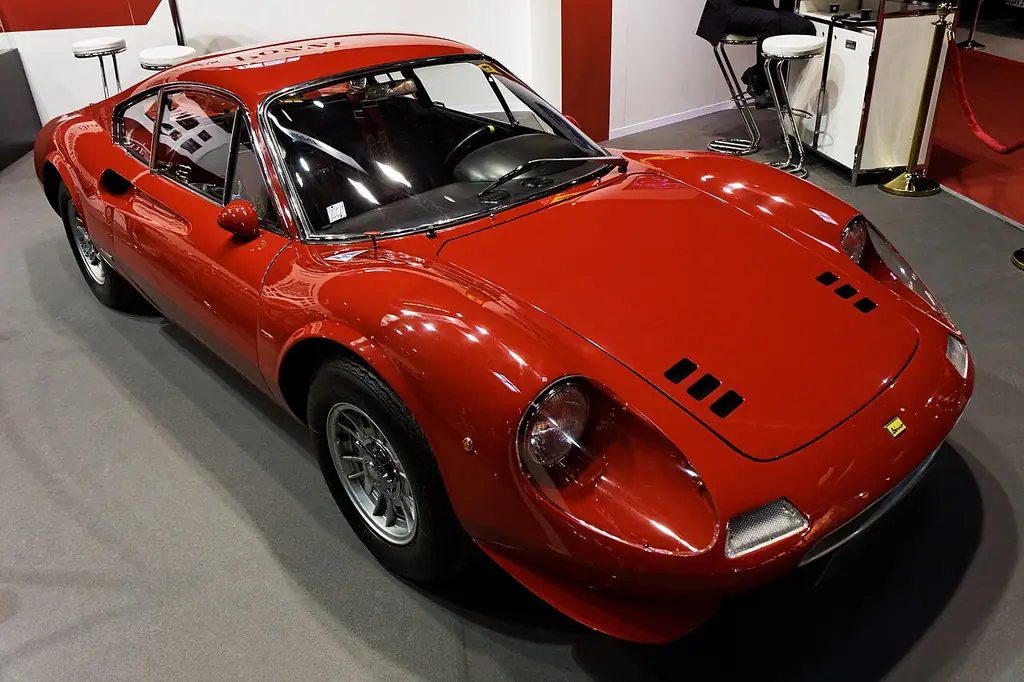
Photo: Thesupermat · CC BY-SA 3.0
Contents
01Overview
At a glance
- Built
- 152 Built
- Years
- 1968–1969
- Engine
- Transverse-mounted V6 (aluminium block) · 2,000 cc / 2 LFactory: 2 L
- Power
- 119 kW / 162 PSFactory: 160 hp · converted
- Top speed
- 225 km/hFactory: 140 mph · converted
- Body
- Not yet verified
- Designer
- Leonardo Fioravanti (Pininfarina); body built by Scaglietti
- In this archive
- Not yet verified
- Surviving
- Not yet verified
Sources and any conflicting figures are in the sections below.
Why it matters
The Dino 206 GT opened Ferrari's Dino road-car line and was built as a tribute to Enzo Ferrari's son Alfredino. It was the first Ferrari with electronic ignition and direct rack-and-pinion steering, and only 152 were made in 1968 and 1969 before the steel-bodied 246 GT took over.
How rare is it?
Six separate kinds of rarity – never combined into one number.
Each kind of rarity is rated separately and never combined.
Photos
Exterior, interior and detail photos with their licences.
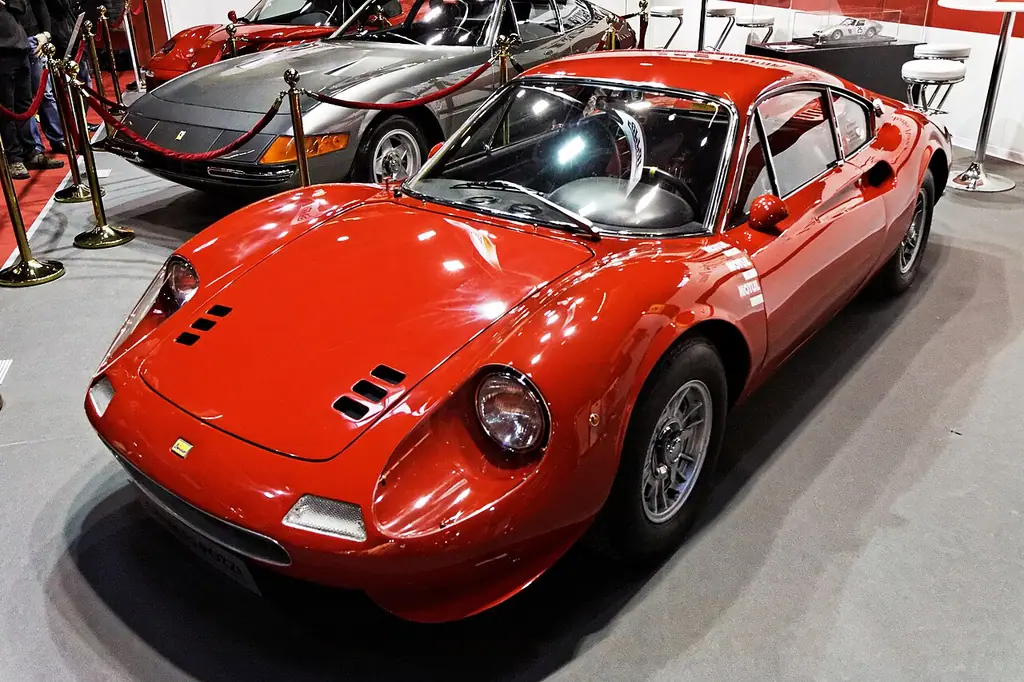
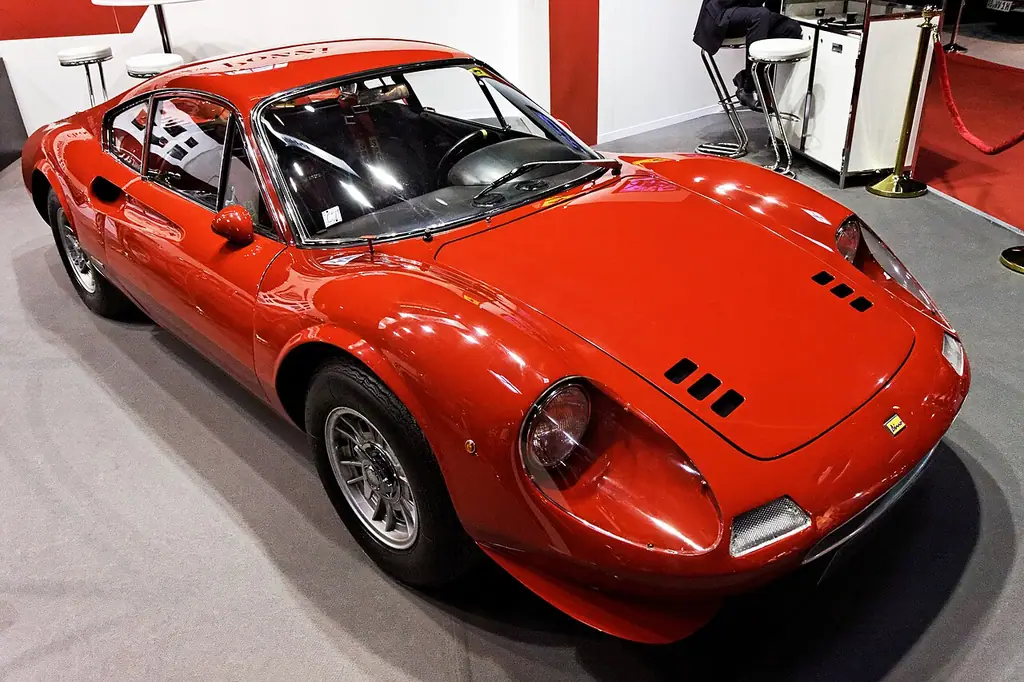
 Ferrari Dino 206 GT (Wikimedia Commons: 1967 Ferrari Dino 206 GT s/n 00374)
Photo: Thesupermat · CC BY-SA 3.0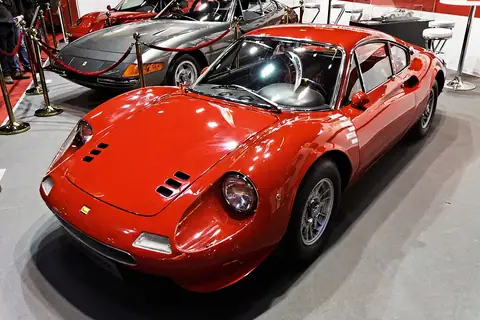 Ferrari Dino 206 GT (Wikimedia Commons: 1967 Ferrari Dino 206 GT s/n 00374)
Photo: Thesupermat · CC BY-SA 3.0 Ferrari Dino 206 GT (Wikimedia Commons: 1967 Ferrari Dino 206 GT s/n 00374)
Photo: Thesupermat · CC BY-SA 3.0


02Production & history
Production
Every figure says what it counts.
| What is counted | Figure | Basis | Status |
|---|---|---|---|
| Total model productionDino 206 GT production run 1968-1969 (Ferrari itself says 'around 150' were built) | 1521,2Strongest evidence | Factory production | Independently researched |
Independent counts (e.g. engine and colour) are never combined into a calculated figure. Surviving examples are never presented as original production.
History
Designed by Leonardo Fioravanti at Pininfarina and bodied by Scaglietti, the 206 GT used a transverse-mounted two-litre aluminium-block V6 of 160 hp driving through a five-speed manual transaxle. A lightweight alloy body, fully independent suspension and ventilated discs on all four wheels gave it a top speed of around 140 mph. After 152 cars it was replaced by the 246 GT, which looked nearly identical but was heavier, with a steel body and cast-iron engine block.
Variants
How each version differs from the standard Dino 206 GT.
No variants documented yet. Have a source? Contribute it.
03Specifications
Technical specifications
Engine
| Engine family | Not yet verified |
|---|---|
| Engine code | Not yet verified |
| Layout | Transverse-mounted V6 (aluminium block)3 Independently researched |
| Displacement | 2,000 cc / 2 LFactory: 2 L3 Independently researched |
| Bore | 86 mmFactory: 86 mm2 |
| Stroke | 57 mmFactory: 57 mm2 |
| Compression ratio | 9:12 |
| Valvetrain | twin overhead camshaft per bank, two valves per cylinder2 |
| Fuel system | three Weber 40 DCN F/1 carburettors2 |
| Power | 119 kW / 162 PSFactory: 160 hp · converted3 Independently researched |
| Power at | 8,000 rpm2 |
| Torque | Not yet verified |
Transmission & drivetrain
| Gearbox | Five-speed manual transaxle3 Independently researched |
|---|---|
| Gears | 52 |
| Driven wheels | Not yet verified |
Chassis, body & dimensions
| Chassis | tubular steel2 |
|---|---|
| Front suspension | independent, unequal-length wishbones, coil springs, telescopic shock absorbers, anti-roll bar2 |
| Rear suspension | independent, unequal-length wishbones, coil springs, telescopic shock absorbers, anti-roll bar2 |
| Brakes | discs2 |
| Steering | rack-and-pinion2 |
| Body construction | Not yet verified |
| Wheelbase | 2,280 mmFactory: 2,280 mm2 |
| Length | 4,150 mmFactory: 4,150 mm2 |
| Width | 1,700 mmFactory: 1,700 mm2 |
| Height | 1,115 mmFactory: 1,115 mm2 |
| Front track | 1,425 mmFactory: 1,425 mm2 |
| Rear track | 1,400 mmFactory: 1,400 mm2 |
| Kerb weight | Not yet verified |
| Dry weight | 900 kgFactory: 900 kg2 |
Performance
| Maximum speed | 225 km/hFactory: 140 mph · converted3 Independently researched |
|---|---|
| 0–100 km/h | Not yet verified |
| Fuel tank | 65 LFactory: 65 L2 |
“Not yet verified” means no source has been checked for that value yet. Nothing is estimated to fill a gap.
04Colours & options
Factory colours & interiors
Original paint and trim, with the number of cars in each where a source gives it.
Not yet documented. Have a source? Contribute it.
Factory options & codes
Codes are shown exactly as written by the manufacturer.
Not yet documented. Have a source? Contribute it.
05Individual cars
Chassis register
Every documented car, with its colours, history and where it is now. Open a row for the full record. Known chassis are not automatically authenticated originals.
Not yet documented. Have a source? Contribute it.
Competition history
Every race result of the individual cars, in date order. Click a chassis number to open its full record in the register.
Not yet documented. Have a source? Contribute it.
Auction & sale history
Documented public sales of the individual cars. Click a chassis number to open its full record in the register.
Not yet documented. Have a source? Contribute it.
See one in person
Museums where an example of this car can be seen.
No example is documented on public display yet. Have a source? Contribute it.
06Reference
Identification guide
How to tell an original from a replica or later conversion.
The 206 GT has an aluminium alloy body and an aluminium-block 2.0-litre V6, whereas the visually near-identical 246 GT has a steel body and a cast-iron block.
Sources
Each number links to the exact facts it supports.
-
1
RM Sotheby's Monterey 2018 – 1968 Ferrari Dino 206 GT by Scaglietti Level B
- 152 production run
-
2
Ferrari Dino 206 GT (1967) - Ferrari.com Level A Ferrari S.p.A. (ferrari.com) · 2026-01-01
- around 150 examples of the Dino 206 GT were built
- Bore/stroke 86 x 57 mm (Technical Details)
- Compression ratio 9 : 1 (Technical Details)
- Valve actuation twin overhead camshaft per bank, two valves per cylinder (Technical Details)
- Fuel feed three Weber 40 DCN F/1 carburettors (Technical Details)
- Maximum power 132 kW (180 hp) at 8000 rpm (Technical Details)
- Transmission 5-speed + reverse (Technical Details)
- Frame tubular steel (Technical Details)
- Front suspension independent, unequal-length wishbones, coil springs, telesco (Technical Details)
- Rear suspension independent, unequal-length wishbones, coil springs, telesco (Technical Details)
- Brakes discs (Technical Details)
- Steering rack-and-pinion (Technical Details)
- Wheelbase 2280 mm (Technical Details)
- Length 4150 mm (Technical Details)
- Width 1700 mm (Technical Details)
- Height 1115 mm (Technical Details)
- Front track 1425 mm (Technical Details)
- Rear track 1400 mm (Technical Details)
- Weight 900 kg (dry) (Technical Details)
- Fuel tank capacity 65 litres (Technical Details)
-
3
1968 Ferrari Dino 206 GT by Scaglietti – Monterey 2018 Level B RM Sotheby's
- transverse-mounted two-liter V-6 aluminum block engine
- poured out 160 hp
- Complemented with a five-speed manual transaxle
- provided a swift ascent to 140 mph
Keep exploring
More from Ferrari
-
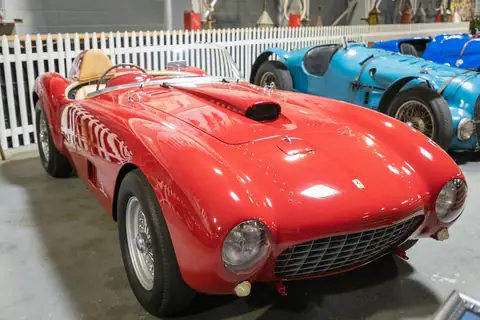
Ferrari · 1954
375 MM Spider by Pinin Farina ("Ingrid Bergman" car, 0456AM)
1 Built
-
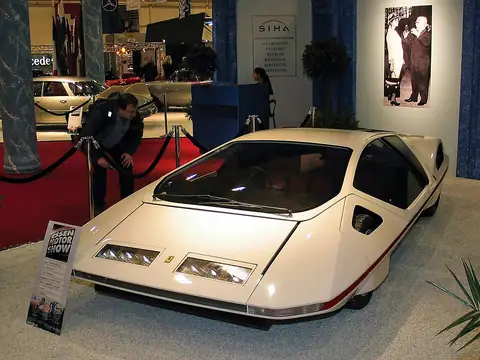
Ferrari · 1970
512 S Modulo (Pininfarina)
1 Built
-
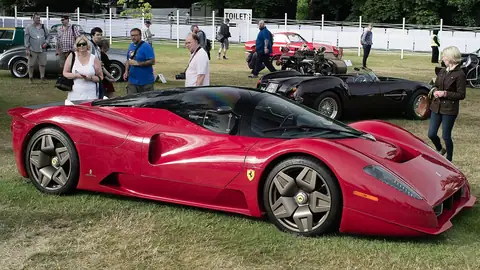
Ferrari · 2005–2006
P4/5 by Pininfarina (2006)
1 Built
-
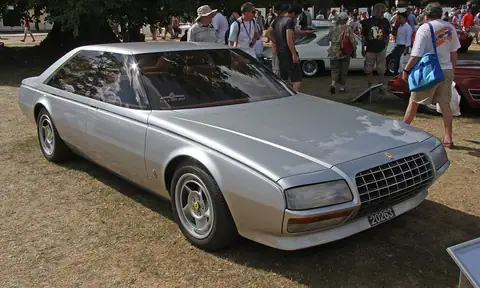
Ferrari · 1980
Pinin
1 Built
More from Italy
-
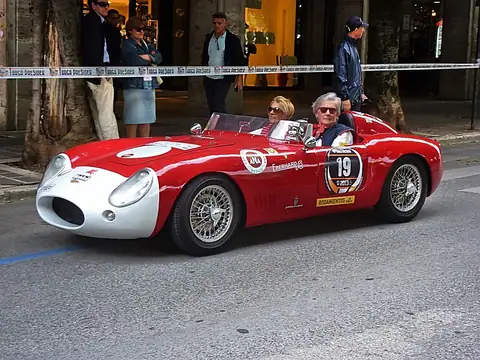
Fiat · 1951
Patriarca 1100 Sport (1951)
Production not yet verified
-
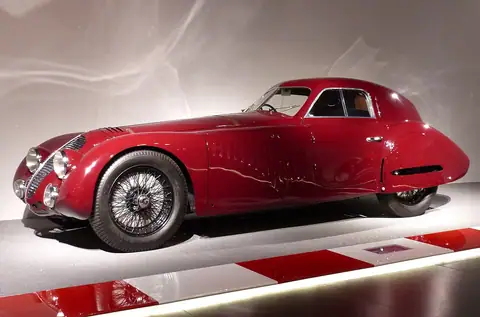
Alfa Romeo · 1938
8C 2900B Le Mans Berlinetta (Touring)
1 Built
-
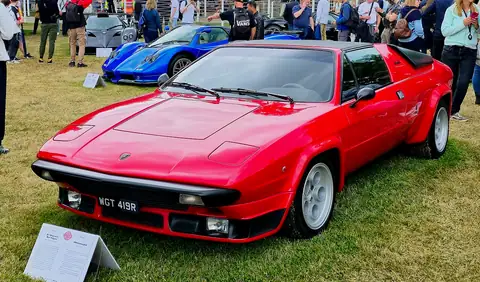
Lamborghini
Silhouette
52 Built
-
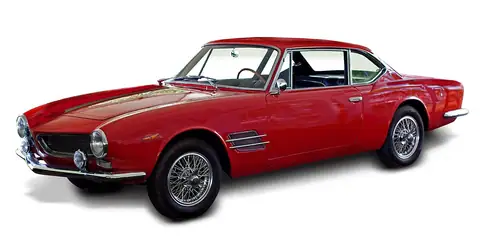
Moretti
Moretti 2500 SS
Production not yet verified
62 other makes from ItalyAbarthACM AutomobiliAlfa RomeoAres DesignATSAuto Avio CostruzioniAutobianchiAznomB EngineeringBandiniBertoneBizzarriniBrixia-ZüstCagivaCarrozzeria Touring SuperleggeraCeiranoChiribiriCisitaliaCizetaColoniCoviniDallaraDe TomasoDiattoF.I.A.L. LegnanoFervesFiatFissoreFlorentiaGhiaInnocentiIntermeccanicaIsoIsotta FraschiniItalaItaldesignLaffiteLamborghiniLanciaMaseratiAll makes →