Makes › Lotus › 25 · Coachbuilt
Lotus
25
Monocoque F1 car, seven built.
Still being researched: full specifications. Everything shown is checked against the cited sources. Know more? Send us a source.
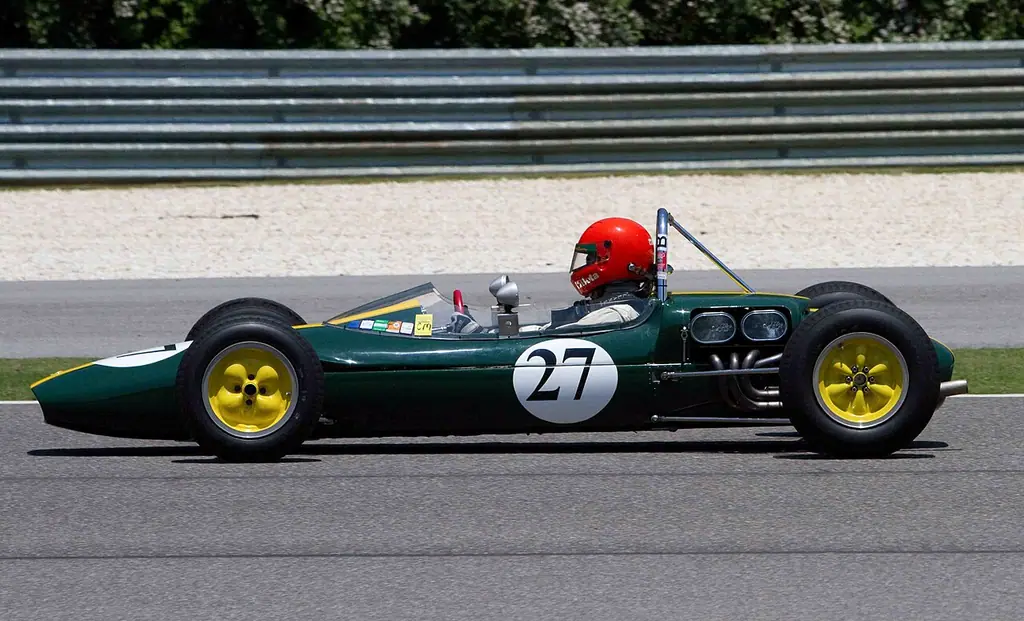
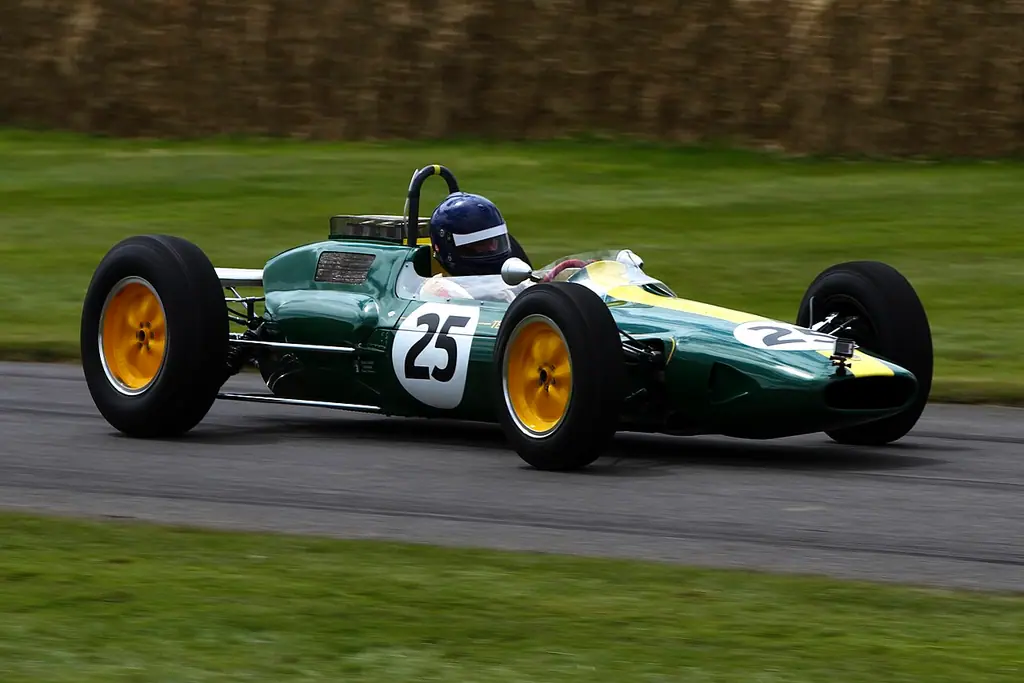
Photo: Legends Of Motorsports · CC BY-SA 2.0
Contents
01Overview
At a glance
- Built
- Not yet verified
- Years
- Not yet verified
- Engine
- V8 · 1,500 cc / 1.5 LFactory: 1.5 L
- Power
- Not yet verified
- Top speed
- Not yet verified
- Body
- Not yet verified
- Designer
- Colin Chapman
- In this archive
- Not yet verified
- Surviving
- Not yet verified
Sources and any conflicting figures are in the sections below.
Why it matters
The Lotus 25 is recognised as Formula One's first monocoque car. Its aluminium chassis was stiffer and lighter than the space frame it replaced, and it brought Team Lotus and Jim Clark their first championship titles in 1963.
How rare is it?
Six separate kinds of rarity – never combined into one number.
Each kind of rarity is rated separately and never combined.
Photos
Exterior, interior and detail photos with their licences.
 Lotus 25 (Wikimedia Commons search)
Photo: Legends Of Motorsports · CC BY-SA 2.0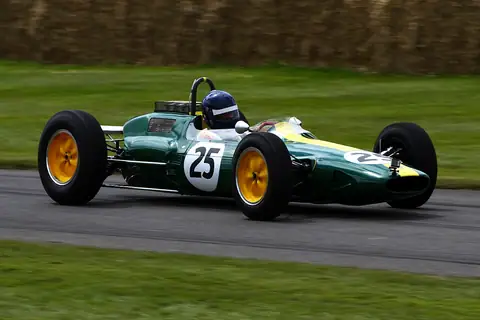 Lotus 25 (Wikimedia Commons search)
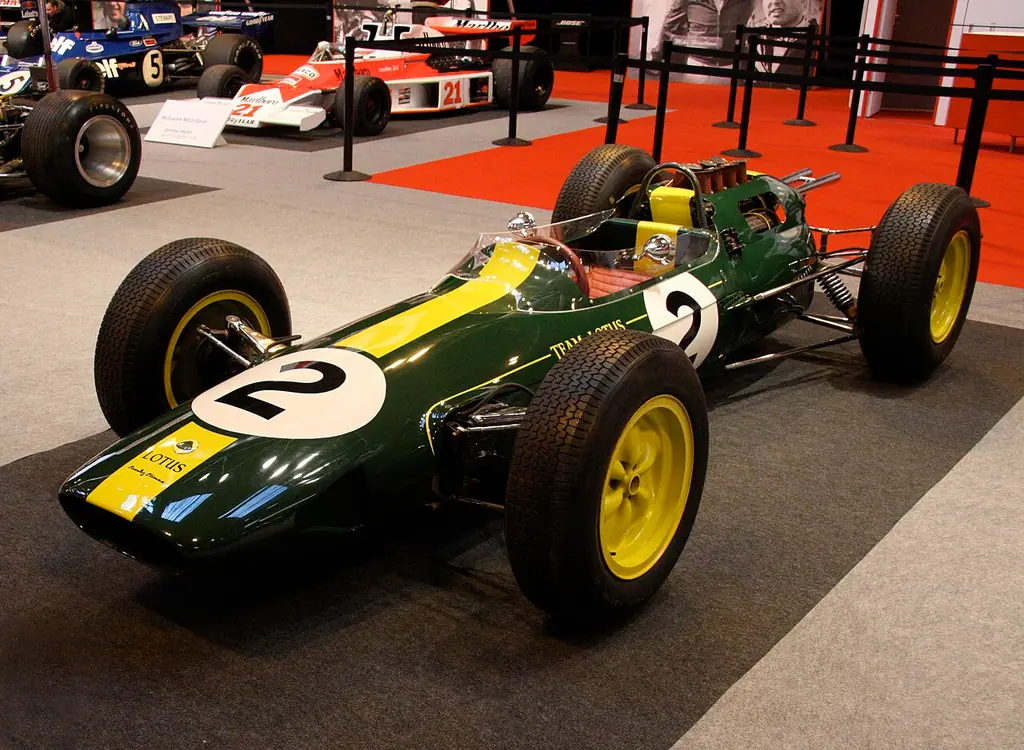
Photo: Darren · CC BY 2.0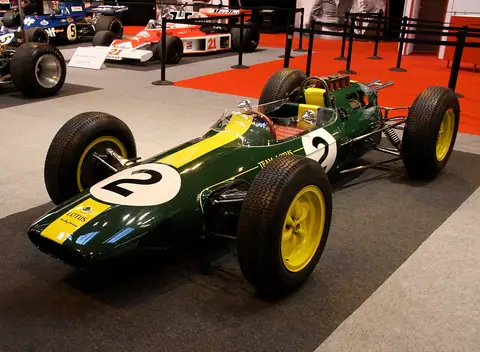 Lotus 25 (Wikimedia Commons search)
Photo: Brian Snelson from Hockley, Essex, England · CC BY 2.0


02Production & history
Production
Every figure says what it counts.
No production figures recorded yet.
History
Colin Chapman developed the 25 for the 1962 season to replace the space-frame cars. The chassis used boxed sections of aluminium alloy joined into a one-piece structure, with the fuel tanks in the side sections. The driver sat low in the car, which earned it the nickname 'Bathtub'. The space-frame Lotus 24 was kept as a backup.
The 25 made its debut at the 1962 Dutch Grand Prix at Zandvoort, driven by Jim Clark. Clark won his first race in the car at Spa. In 1963 the car won seven of the nine races after Monaco, giving Lotus its first Constructors' Championship and Clark the Drivers' title.
At least four of the seven original chassis were judged write-offs in 1962-65. The 25 was campaigned in several races in 1964 and 1965, alongside the improved Lotus 33, which used the same monocoque concept.
Variants
How each version differs from the standard 25.
No variants documented yet. Have a source? Contribute it.
03Specifications
Technical specifications
Engine
| Engine family | Coventry Climax FWMV (Mk II)1 Independently researched |
|---|---|
| Engine code | Not yet verified |
| Layout | V81 Independently researched |
| Displacement | 1,500 cc / 1.5 LFactory: 1.5 L1 Independently researched |
| Bore | Not yet verified |
| Stroke | Not yet verified |
| Compression ratio | Not yet verified |
| Fuel system | Not yet verified |
| Power | Not yet verified |
| Power at | Not yet verified |
| Torque | Not yet verified |
Transmission & drivetrain
| Gearbox | Not yet verified |
|---|---|
| Gears | Not yet verified |
| Driven wheels | Not yet verified |
Chassis, body & dimensions
| Chassis | Aluminium alloy monocoque of boxed L72 alloy sections1 Independently researched |
|---|---|
| Front suspension | Not yet verified |
| Rear suspension | Not yet verified |
| Brakes | Not yet verified |
| Steering | Not yet verified |
| Body construction | Not yet verified |
| Wheelbase | Not yet verified |
| Length | Not yet verified |
| Width | Not yet verified |
| Height | Not yet verified |
| Front track | Not yet verified |
| Rear track | Not yet verified |
| Kerb weight | Not yet verified |
| Dry weight | Not yet verified |
Performance
| Maximum speed | Not yet verified |
|---|---|
| 0–100 km/h | Not yet verified |
| Fuel tank | Not yet verified |
“Not yet verified” means no source has been checked for that value yet. Nothing is estimated to fill a gap.
04Colours & options
Factory colours & interiors
Original paint and trim, with the number of cars in each where a source gives it.
Not yet documented. Have a source? Contribute it.
Factory options & codes
Codes are shown exactly as written by the manufacturer.
Not yet documented. Have a source? Contribute it.
05Individual cars
Chassis register
Every documented car, with its colours, history and where it is now. Open a row for the full record. Known chassis are not automatically authenticated originals.
Not yet documented. Have a source? Contribute it.
Competition history
Every race result of the individual cars, in date order. Click a chassis number to open its full record in the register.
Not yet documented. Have a source? Contribute it.
Auction & sale history
Documented public sales of the individual cars. Click a chassis number to open its full record in the register.
Not yet documented. Have a source? Contribute it.
See one in person
Museums where an example of this car can be seen.
No example is documented on public display yet. Have a source? Contribute it.
06Reference
Identification guide
How to tell an original from a replica or later conversion.
The seven original 25 chassis are numbered R1 to R7. Early 25 tubs had cranked cockpit inner skins, running parallel from the seat back and then angling inward toward the front bulkhead. A tub with straight, uncranked inner skins is a later Type 33 Mark II tub, not an original 25 monocoque.
Sources
Each number links to the exact facts it supports.
-
1
Lotus 25: The Legendary Race Car That Changed Formula 1 Forever Level C autoevolution · 2023-08-09
- Mk II Coventry Climax FWMV 1.5-liter V8
- boxed sections of L72 aluminum alloy
Keep exploring
More from Lotus
-
Lotus · 1966–1967
43
2 Built
-
Lotus · 1990–1991
Esprit X180R
3 Built
-
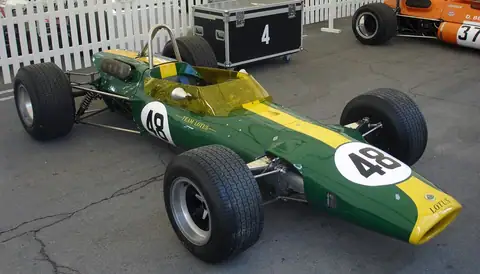
Lotus · 1967–1968
48
4 Built
-
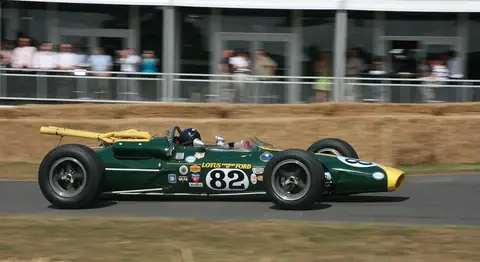
Lotus
38
8 Built
More from United Kingdom
-
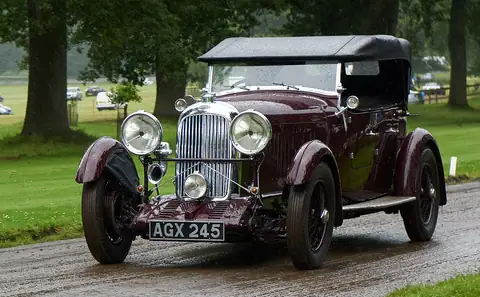
Lagonda
16/80 (1932-1934)
Production not yet verified
-
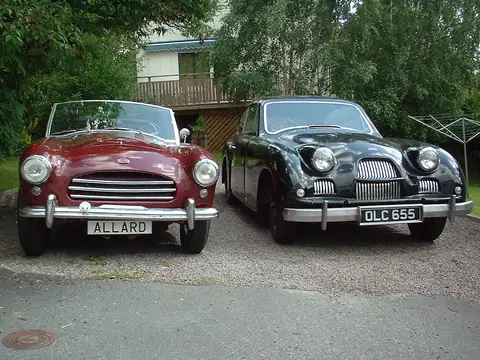
Allard
P2
Production not yet verified
-
Rover
10 (P2, postwar)
Production not yet verified
-
Daimler · 1959–1964
SP250 (1959-1964)
Production not yet verified
134 other makes from United KingdomACAiredaleAlan Mann RacingAllardAlvisArabArashArielArmstrong SiddeleyArrowsAscariAston MartinAtalantaAtlantisAustinAustin-HealeyBedfordBentleyBerkeleyBluebirdBMCBondBrabhamBristolBritish LeylandBroadspeedBrookeBrough SuperiorCampbell-RailtonCaparoCaterhamChevronConnaughtCooperCrayfordDaimlerDavid BrownDawsonDeLoreanDuttonAll makes →