Makes › Maserati › Tipo › Tipo 151 · Coachbuilt · 1962 Ultra Rare
Maserati
Tipo 151
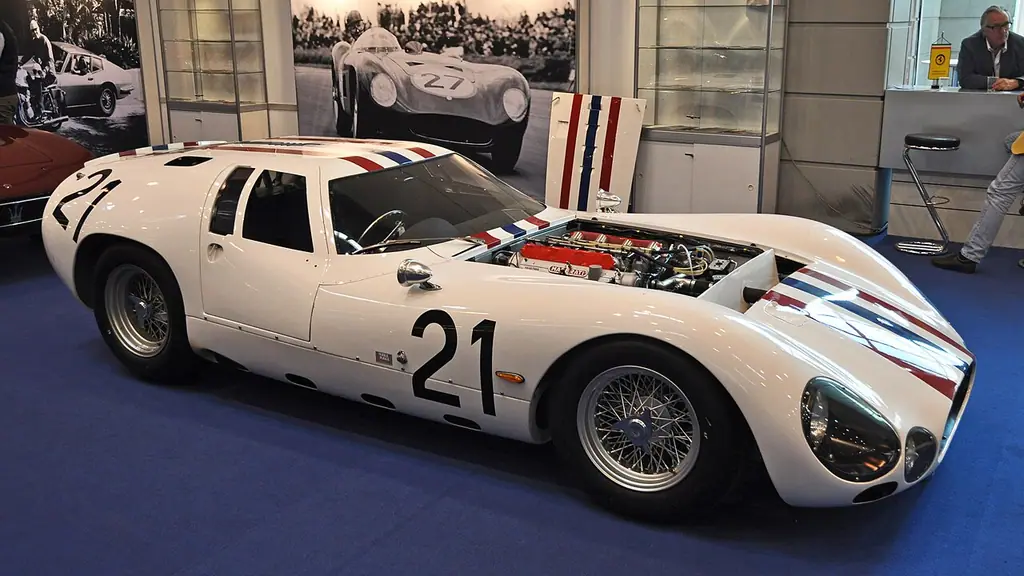
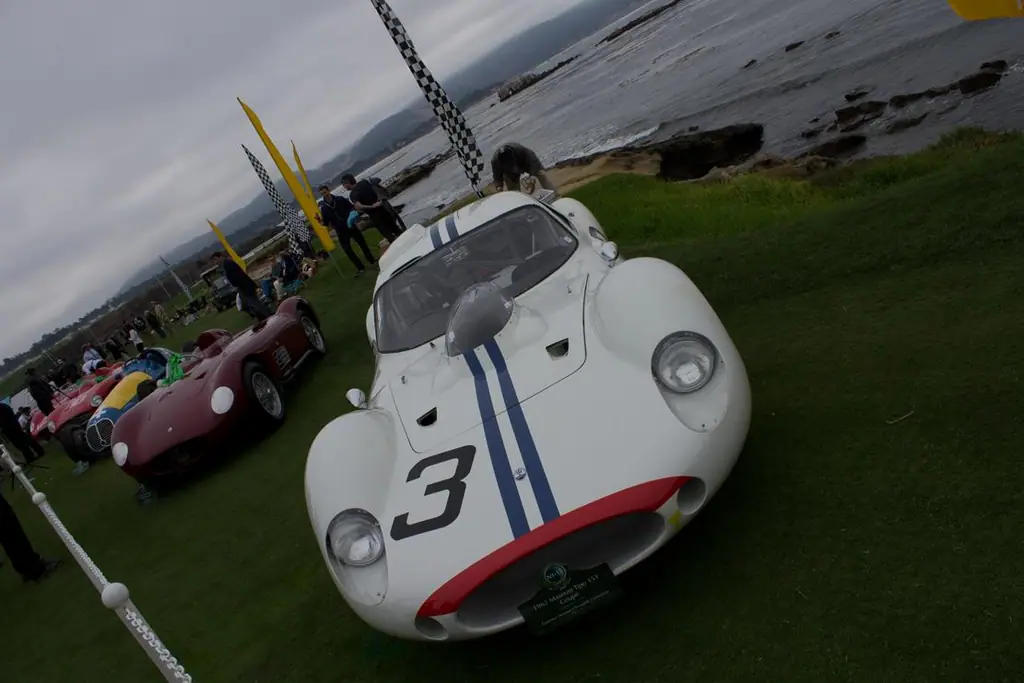
Le Mans coupe, three built
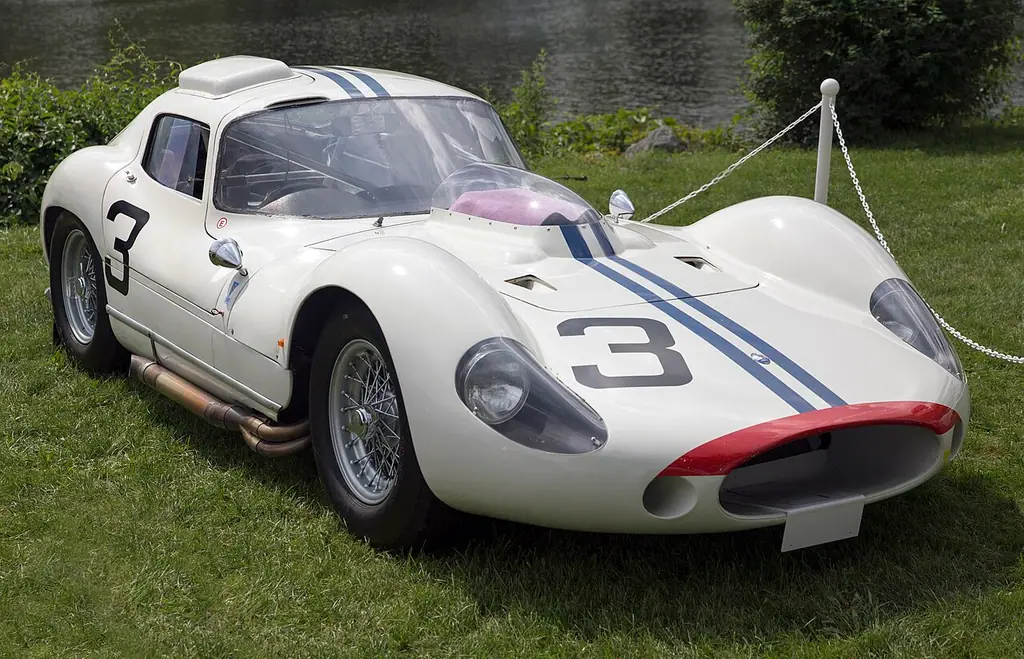
Photo: Mr.choppers · CC BY-SA 3.0
Contents
01Overview
At a glance
- Built
- 3 Built
- Years
- 1962
- Engine
- 90° V8, front longitudinal · 3,943 cc / 3.9 LFactory: 3,943 cc
- Power
- 268.5 kW / 365.1 PSFactory: 268.5 kW
- Top speed
- 330 km/hFactory: 330 km/h
- Body
- Not yet verified
- Designer
- Giulio Alfieri
- In this archive
- Not yet verified
- Surviving
- 1 (independently researched)
Sources and any conflicting figures are in the sections below.
Why it matters
The Tipo 151 was Maserati's 1962 Le Mans coupe, built after the open birdcage racers. It used a four-litre version of the quad-cam V8 from the Maserati 450 on a tubular steel frame. Only three were built, and one survives.
How rare is it?
Six separate kinds of rarity – never combined into one number.
Each kind of rarity is rated separately and never combined.
Photos
Exterior, interior and detail photos with their licences.
 Maserati Tipo 151 (Wikimedia Commons search)
Photo: Mr.choppers · CC BY-SA 3.0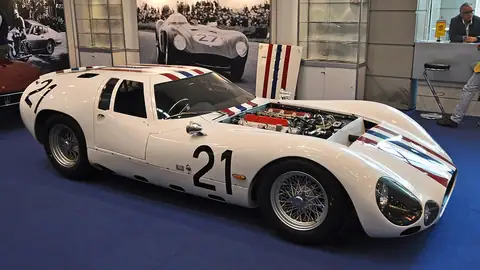 Maserati Tipo 151 (Wikimedia Commons search)
Photo: MPW57 · CC BY 3.0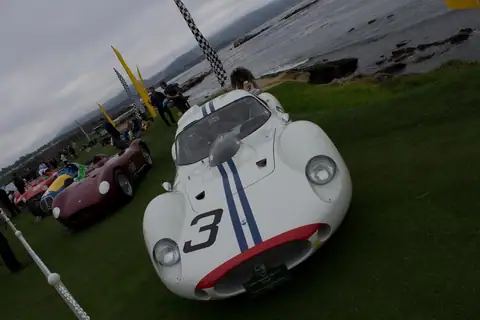 Maserati Tipo 151 (Wikimedia Commons search)
Photo: James Bond · CC BY 2.0


02Production & history
Production
Every figure says what it counts.
| What is counted | Figure | Basis | Status |
|---|---|---|---|
| Total model production1 of 3 built; the only surviving Tipo 151 (chassis 006) | 12,3 | Surviving examples | Independently researched |
| Total model productionTipo 151 cars built (1962) | 31 | Factory production | Independently researched |
Independent counts (e.g. engine and colour) are never combined into a calculated figure. Surviving examples are never presented as original production.
History
Chief engineer Giulio Alfieri shaped the coupe body and refined it in a wind tunnel at Milan University. It had a Kamm tail and a large front scoop to clear the engine. The first car was tested on public roads and at Monza, where it reached 195 mph (314 km/h).
Three cars were built: one for the Maserati France team and two for Briggs Cunningham's team. All three ran at the 1962 Le Mans 24 Hours, running third to fifth in the opening laps, and all three retired. One Cunningham car was wrecked at Daytona in early 1963.
The Maserati France car was modified over the next seasons with a five-litre engine (about 430 bhp, as 151/2), then a stretched chassis, new body and 450 bhp (as 151/3). It was destroyed in a fatal crash at Le Mans in 1965. The surviving Cunningham car was later restored to its Le Mans livery and was offered at Bonhams' Gstaad sale.
Variants
How each version differs from the standard Tipo 151.
No variants documented yet. Have a source? Contribute it.
03Specifications
Technical specifications
Engine
| Engine family | Not yet verified |
|---|---|
| Engine code | Not yet verified |
| Layout | 90° V8, front longitudinal2 Independently researched |
| Displacement | 3,943 cc / 3.9 LFactory: 3,943 cc2 Independently researched |
| Bore | 94 mmFactory: 94 mm2 Independently researched |
| Stroke | 89 mmFactory: 89 mm2 Independently researched |
| Compression ratio | 9.7:12 Independently researched |
| Valvetrain | DOHC, 2 valves per cylinder2 Independently researched |
| Fuel system | 4 Weber IDM carburettors2 Independently researched |
| Induction | Naturally aspirated2 Independently researched |
| Power | 268.5 kW / 365.1 PSFactory: 268.5 kW2 Independently researchedSame source also gives 360 bhp; the kW figure is entered as the primary value, not converted. |
| Power at | 7,000 rpm2 Independently researched |
| Torque | Not yet verified |
Transmission & drivetrain
| Gearbox | 5-speed manual2 Independently researched |
|---|---|
| Gears | 52 Independently researched |
| Driven wheels | Not yet verified |
Chassis, body & dimensions
| Chassis | Tubular steel frame2 Independently researchedThe article text calls the chassis a large oval tube frame and once a simple ladder frame. The spec table is used here. |
|---|---|
| Front suspension | Coil springs, telescopic shock absorbers2 Independently researched |
| Rear suspension | De Dion-type rear suspension with coil springs and telescopic shock absorbers2 Independently researched |
| Brakes | Disc brakes front and rear (Girling)2 Independently researched |
| Steering | Not yet verified |
| Body construction | Aluminium body2 Independently researched |
| Wheelbase | 2,300 mmFactory: 2,300 mm2 Independently researched |
| Length | Not yet verified |
| Width | Not yet verified |
| Height | Not yet verified |
| Front track | 1,250 mmFactory: 1,250 mm2 Independently researched |
| Rear track | 1,280 mmFactory: 1,280 mm2 Independently researched |
| Kerb weight | 895 kgFactory: 895 kg2 Independently researched |
| Dry weight | Not yet verified |
Performance
| Maximum speed | 330 km/hFactory: 330 km/h2 Independently researchedApproximate figure from the spec table. The article reports 195 mph (314 km/h) during testing at Monza. |
|---|---|
| 0–100 km/h | Not yet verified |
| Fuel tank | Not yet verified |
“Not yet verified” means no source has been checked for that value yet. Nothing is estimated to fill a gap.
04Colours & options
Factory colours & interiors
Original paint and trim, with the number of cars in each where a source gives it.
Not yet documented. Have a source? Contribute it.
Factory options & codes
Codes are shown exactly as written by the manufacturer.
Not yet documented. Have a source? Contribute it.
05Individual cars
Chassis register
Every documented car, with its colours, history and where it is now. Open a row for the full record. Known chassis are not automatically authenticated originals.
Not yet documented. Have a source? Contribute it.
Competition history
Every race result of the individual cars, in date order. Click a chassis number to open its full record in the register.
Not yet documented. Have a source? Contribute it.
Auction & sale history
Documented public sales of the individual cars. Click a chassis number to open its full record in the register.
Not yet documented. Have a source? Contribute it.
See one in person
Museums where an example of this car can be seen.
No example is documented on public display yet. Have a source? Contribute it.
06Reference
Identification guide
How to tell an original from a replica or later conversion.
Only three cars were built: chassis 151.002 (Maserati France), 151.004 and 151.006 (Briggs Cunningham team). Chassis 006 is the only surviving example. The body is aluminium over a tubular steel frame, with Girling disc brakes and 16-inch Borrani wire wheels. A replica of the 151/3 was built in 1980, so the chassis history should be checked against the factory numbers.
Sources
Each number links to the exact facts it supports.
- 1
-
2
1962 Maserati Tipo 151 Level C Supercars.net
- the only surviving Tipo 151 at their upcoming Ferrari & Maserati sale
- Twin Spark, 90 Degree V8; Front Longitudinal
- displacement | 3943 cc / 240.6 in³
- bore | 94 mm / 3.7 in
- stroke | 89 mm / 3.5 in
- compression | 9.7:1
- DOHC, 2 Valves per Cyl
- fuel feed | 4 Weber IDM Carburettors
- aspiration | Natrual
- power | 268.5 kw / 360 bhp @ 7000 rpm
- 268.5 kw / 360 bhp @ 7000 rpm
- 5-Speed Manual
- Aluminum Body over Tubular Steel Frame
- f suspension | Coil Springs, Telescopic Shock Absorbers
- a specially designed variant of the DeDion rear suspension
- r suspension | Coil Springs, Telescopic Shock Absorbers
- Girling disc brakes; front brakes | Discs
- wheelbase | 2300 mm / 90.6 in
- front track | 1250 mm / 49.2 in
- rear track | 1280 mm / 50.4 in
- curb weight | 895 kg / 1973 lbs
- top speed | ~330 kph / 205.1 mph
-
3
1962 Maserati Tipo 151 - Images, Specifications and Information Level C Ultimatecarpage.com
- only the third and final car constructed still exists in original condition
Keep exploring
More from Maserati
-
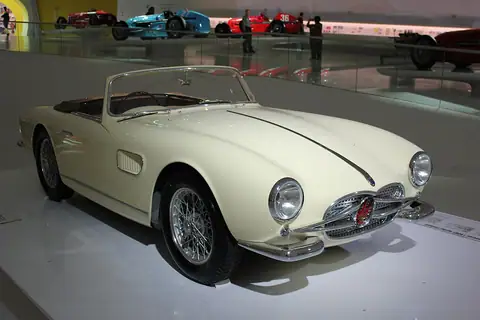
Maserati · 1957
150 GT (1957)
1 Built
-
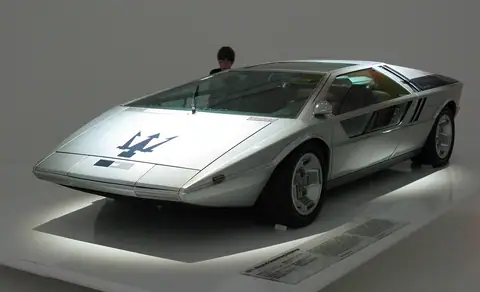
Maserati · 1971–1972
Boomerang (Italdesign)
1 Built
-
Maserati · 1932
8C 3000
2 Built
-
Maserati · 1950
8CLT
2 Built
See all 101 cars by Maserati →
More from Italy
-
Ferrari
SP48 Unica (F8 Tributo-based one-off)
Production not yet verified
-
Lamborghini
400 GT Interim
23 Built
-
Bizzarrini
P538
4 Built
-
Fiat · 1903–1905
24-32 HP
Production not yet verified
62 other makes from ItalyAbarthACM AutomobiliAlfa RomeoAres DesignATSAuto Avio CostruzioniAutobianchiAznomB EngineeringBandiniBertoneBizzarriniBrixia-ZüstCagivaCarrozzeria Touring SuperleggeraCeiranoChiribiriCisitaliaCizetaColoniCoviniDallaraDe TomasoDiattoF.I.A.L. LegnanoFerrariFervesFiatFissoreFlorentiaGhiaInnocentiIntermeccanicaIsoIsotta FraschiniItalaItaldesignLaffiteLamborghiniLanciaAll makes →