Makes › Mercedes-Benz › 300 SL and SLR › 300 SLR (W 196 S) "722" – 1955 Mille Miglia winner · Historically significant · 1955
Mercedes-Benz
300 SLR (W 196 S) "722" – 1955 Mille Miglia winner
Individual car in which Stirling Moss and Denis Jenkinson won the 1955 Mille Miglia (distinct from the existing Uhlenhaut Coupé entry)
Still being researched: full specifications. Everything shown is checked against the cited sources. Know more? Send us a source.
Contents
01Overview
At a glance
- Built
- 1 Built
- Years
- 1955
- Engine
- front-mounted inline eight, built as two four-cylinder blocks with centre output · 3,000 cc / 3 LFactory: 3 L
- Power
- 228 kW / 310 PSFactory: 306 hp · converted
- Top speed
- Not yet verified
- Body
- Not yet verified
- Designer
- Not yet verified
- In this archive
- Not yet verified
- Surviving
- Not yet verified
Sources and any conflicting figures are in the sections below.
Why it matters
This is the 300 SLR (W 196 S) that won the 1955 Mille Miglia with Stirling Moss and co-driver Denis Jenkinson, running with start number 722. The 300 SLR was the sports-car counterpart of the W 196 R Grand Prix car, with the engine enlarged to three litres, and it carried Mercedes-Benz to the 1955 Sports Car World Championship. The Mille Miglia average of 157.65 km/h was never surpassed in the race.
How rare is it?
Six separate kinds of rarity – never combined into one number.
Each kind of rarity is rated separately and never combined.
02Production & history
Production
Every figure says what it counts.
| What is counted | Figure | Basis | Status |
|---|---|---|---|
| Total model productionIndividual car: “the Silver Arrow with which Stirling Moss and Denis Jenkinson won the Mille Miglia” (Mercedes-Benz Classic press text, 70th anniversary) | 11 | Factory production | Independently researched |
Independent counts (e.g. engine and colour) are never combined into a calculated figure. Surviving examples are never presented as original production.
History
The 300 SLR was developed from autumn 1953 in parallel with the W 196 R Formula 1 car. Work on it was paused in spring 1954 so that the racing department could concentrate on Formula 1, and it received its finishing touches in late summer 1954. Drivers preferred an open car to the originally planned coupé, so only the roadster started in 1955, and its racing debut was the 1955 Mille Miglia.
Moss and Jenkinson won the 1000-mile race in 10 hours, 7 minutes and 48 seconds, at an average of 157.65 km/h. Juan Manuel Fangio, who drove without a co-driver, was second with start number 658. The type went on to win the Eifel race, the Swedish Grand Prix, the Tourist Trophy and the Targa Florio, and the 1955 season ended with the Le Mans accident involving Pierre Levegh's 300 SLR. Daimler-Benz announced its withdrawal from racing on 22 October 1955.
Variants
How each version differs from the standard 300 SLR (W 196 S) "722" – 1955 Mille Miglia winner.
No variants documented yet. Have a source? Contribute it.
03Specifications
Technical specifications
Engine
| Engine family | Not yet verified |
|---|---|
| Engine code | Not yet verified |
| Layout | front-mounted inline eight, built as two four-cylinder blocks with centre output2Type-level data for the W 196 S, not read from this individual car. |
| Displacement | 3,000 cc / 3 LFactory: 3 L2Stated as "three-litre" for the W 196 S type. |
| Bore | Not yet verified |
| Stroke | Not yet verified |
| Compression ratio | Not yet verified |
| Fuel system | Not yet verified |
| Power | 228 kW / 310 PSFactory: 306 hp · converted2Rating: manufacturerThe archive also gives 225 kW. Type-level figure for the W 196 S. |
| Power at | 7,500 rpm2 |
| Torque | Not yet verified |
Transmission & drivetrain
| Gearbox | Not yet verified |
|---|---|
| Gears | Not yet verified |
| Driven wheels | Not yet verified |
Chassis, body & dimensions
| Chassis | tubular frame, about 60 kg, torsionally rigid2 |
|---|---|
| Front suspension | double wishbone (trapezoidal links of different lengths) with torsion bar springs2 |
| Rear suspension | single-joint swing axle2 |
| Brakes | inboard drum brakes (large, to reduce unsprung mass)2 |
| Steering | Not yet verified |
| Body construction | Not yet verified |
| Wheelbase | Not yet verified |
| Length | Not yet verified |
| Width | Not yet verified |
| Height | Not yet verified |
| Front track | Not yet verified |
| Rear track | Not yet verified |
| Kerb weight | Not yet verified |
| Dry weight | Not yet verified |
Performance
| Maximum speed | Not yet verified |
|---|---|
| 0–100 km/h | Not yet verified |
| Fuel tank | Not yet verified |
“Not yet verified” means no source has been checked for that value yet. Nothing is estimated to fill a gap.
04Colours & options
Factory colours & interiors
Original paint and trim, with the number of cars in each where a source gives it.
Not yet documented. Have a source? Contribute it.
Factory options & codes
Codes are shown exactly as written by the manufacturer.
Not yet documented. Have a source? Contribute it.
05Individual cars
Chassis register
Every documented car, with its colours, history and where it is now. Open a row for the full record. Known chassis are not automatically authenticated originals.
Not yet documented. Have a source? Contribute it.
Competition history
Every race result of the individual cars, in date order. Click a chassis number to open its full record in the register.
Not yet documented. Have a source? Contribute it.
Auction & sale history
Documented public sales of the individual cars. Click a chassis number to open its full record in the register.
Not yet documented. Have a source? Contribute it.
See one in person
Museums where an example of this car can be seen.
No example is documented on public display yet. Have a source? Contribute it.
06Reference
Identification guide
How to tell an original from a replica or later conversion.
The archive page does not give a chassis number for the Mille Miglia winner, so identification rests on the race record and the type's specification. The car ran with start number 722 and was the open two-seater version. Type-level features given by the archive are a three-litre straight-eight made of two four-cylinder blocks with centre output and light-metal blocks, rated 306 hp (225 kW) at 7500 rpm and running on normal premium petrol, a tubular frame of about 60 kg, a double-wishbone front axle with torsion-bar springs, a single-joint swing axle at the rear, large inboard drum brakes, and a wheelbase 20 mm longer than the W 196 R. The archive adds that an air brake flap was fitted to the cars for Le Mans and the Swedish Grand Prix.
Sources
Each number links to the exact facts it supports.
-
1
Sports Car Digest – Mercedes-Benz 300 SLR racing sports car "722" (Mercedes-Benz Classic Communications) Level C
- 1 Individual car: “the Silver Arrow with which Stirling Moss and Denis Jenkinson won the Mille Miglia” (Mercedes-Benz Classic press text, 70th anniversary)
-
2
Mercedes-Benz 300 SLR (W 196 S), 1955 Level A Mercedes-Benz Public Archive (Classic M@RS)
- two separate four-cylinder blocks with a centre output
- three-litre version of the in-line eight-cylinder engine
- 306 hp/225 kW at 7500 rpm
- extremely light but at the same time very torsionally rigid tubular frame
- The double wishbone front axle featured the tried-and-tested combination of trapezoidal links
- a single-joint swing axle served as the rear axle
- The inboard brake drums
Keep exploring
More from Mercedes-Benz
-
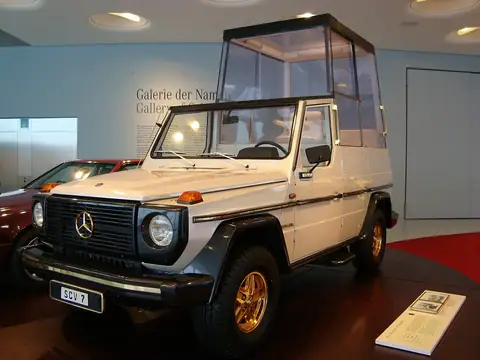
Mercedes-Benz · 1980
230 G Popemobile (W 460)
1 Built
-
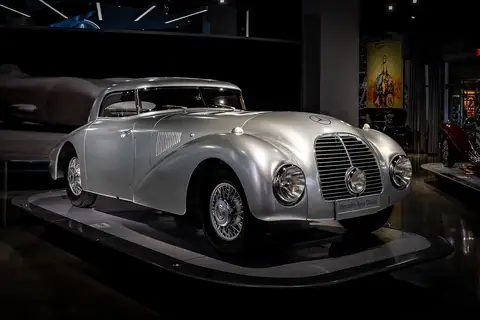
Mercedes-Benz · 1938
540 K Stromlinienwagen (Streamliner)
1 Built
-
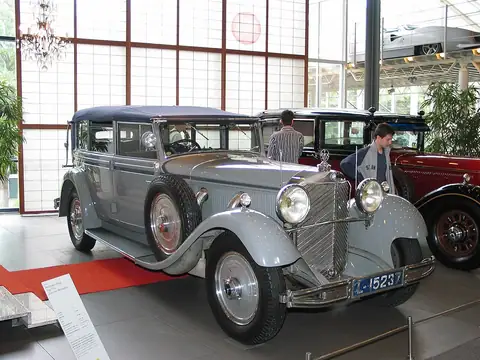
Mercedes-Benz · 1932
770 (W 07) Cabriolet F of Kaiser Wilhelm II
1 Built
-
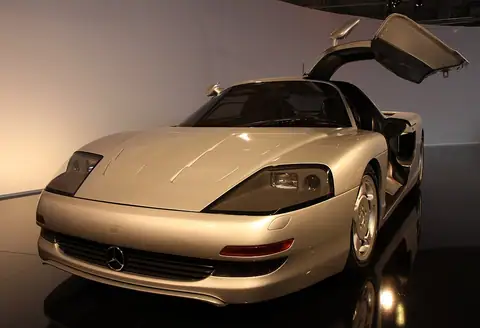
Mercedes-Benz · 1991
C 112
1 Built
See all 212 cars by Mercedes-Benz →
More from Germany
-
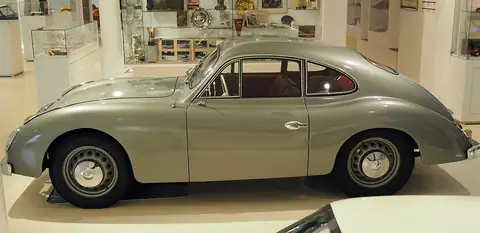
Goliath
GP700 Sport
Production not yet verified
-
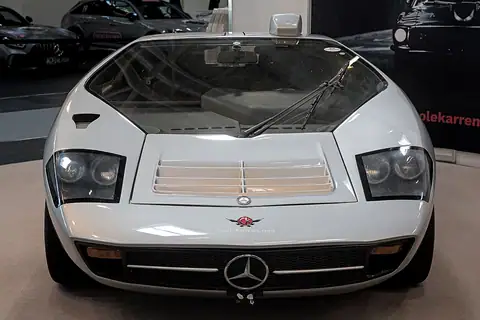
Isdera · 1983–1991
Imperator 108i
30 Built
-
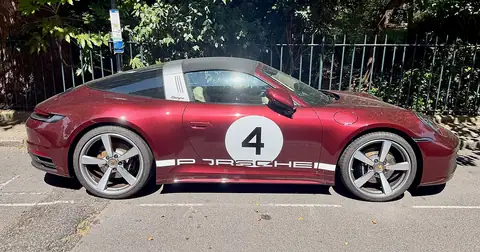
Porsche
911 Targa 4S Heritage Design Edition
992 Built
-
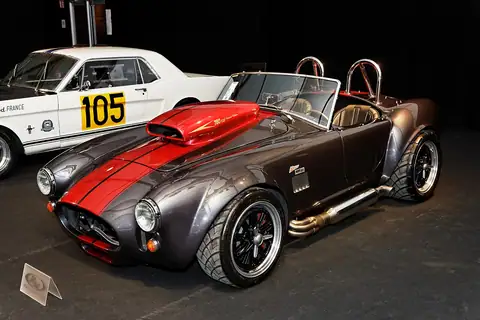
Weineck
Cobra Limited Edition
15 Built
71 other makes from Germany9ffAC SchnitzerAdlerAgria-WerkeAlbertAlpinaAMOAmphicarApolloArtegaAudiAuto UnionAutomobili PininfarinaBayerische AutowerkeBitterBMWBohseBoldmenBorgwardBovensiepenBrennaborBrütschChampionDauerDKWFMR (Messerschmitt)FuldamobilGemballaGepardGlasGoggomobilGoliathGumpertGutbrodHanomagHeinkelHorchHyundaiIFAIrmscherAll makes →