Makes › Mercedes-Benz › SSKL – 1931 Mille Miglia winner (Caracciola / Sebastian) · Historically significant · 1931
Mercedes-Benz
SSKL – 1931 Mille Miglia winner (Caracciola / Sebastian)
First non-Italian Mille Miglia victory (April 1931)
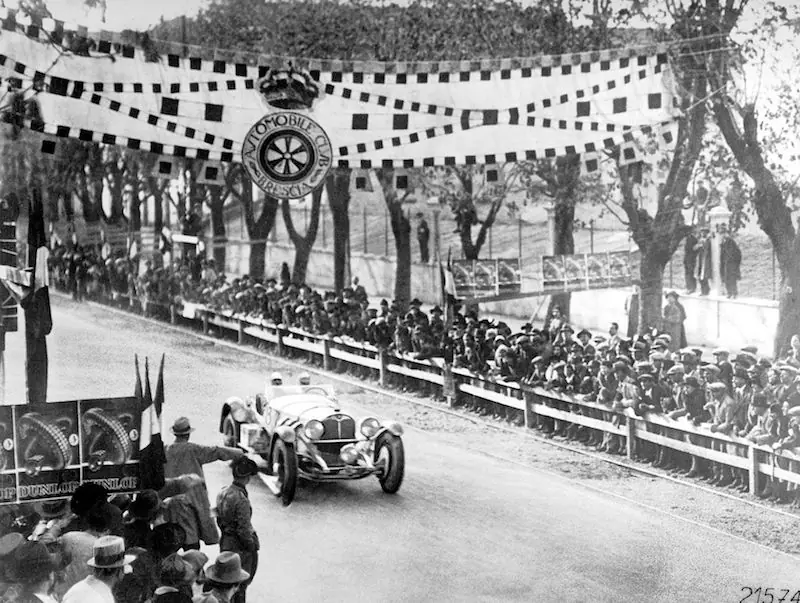
Photo: Unknown photographer · Public domain

Contents
01Overview
At a glance
- Built
- 1 Built
- Years
- 1931
- Engine
- 6-cylinder in-line; front, longitudinal; vertical · 7,065 cc / 7.1 LFactory: 7,065 cc
- Power
- 224 kW / 304 PSFactory: 300 hp · converted
- Top speed
- 235 km/hFactory: 235 km/h
- Body
- Not yet verified
- Designer
- Hans Nibel (head of development); engine by Albert Heess
- In this archive
- Not yet verified
- Surviving
- Not yet verified
Sources and any conflicting figures are in the sections below.
Why it matters
Rudolf Caracciola and co-driver Wilhelm Sebastian won the 1931 Mille Miglia in an SSKL, the first overall victory in the race by a non-Italian driver. The win came on the lightweight SSKL's first outing and was achieved with a private team that the factory could only support, because the economic crisis had ended Daimler-Benz's own racing department for 1931.
How rare is it?
Six separate kinds of rarity – never combined into one number.
Each kind of rarity is rated separately and never combined.
02Production & history
Production
Every figure says what it counts.
| What is counted | Figure | Basis | Status |
|---|---|---|---|
| Total model productionthe individual SSKL in which Caracciola/Sebastian won the 1931 Mille Miglia | 11 | Factory production | Independently researched |
Independent counts (e.g. engine and colour) are never combined into a calculated figure. Surviving examples are never presented as original production.
History
Mercedes-Benz's media article gives the winning date as 13 April 1931 and an average of 101.1 km/h, a record for the race at that time. The archive says the sensational result came on the SSKL's first outing and notes that Caracciola beat strong local drivers and marques. The race had been run since 1927 and covered a route from Brescia to Rome and back.
The SSKL itself was a weight-reduced development of the SSK; the archive says four were built and that they were recorded in the order books as "SSK, 1931 Model". The cached pages do not identify which of the four cars won the Mille Miglia or give its chassis number.
Variants
How each version differs from the standard SSKL – 1931 Mille Miglia winner (Caracciola / Sebastian).
No variants documented yet. Have a source? Contribute it.
03Specifications
Technical specifications
Engine
| Engine family | Not yet verified |
|---|---|
| Engine code | M 06 RS2Figure is for the SSKL type as documented by the archive; the individual Mille Miglia car is not separately documented. |
| Layout | 6-cylinder in-line; front, longitudinal; vertical2Figure is for the SSKL type as documented by the archive; the individual Mille Miglia car is not separately documented. |
| Cylinders | 62Figure is for the SSKL type as documented by the archive; the individual Mille Miglia car is not separately documented. |
| Displacement | 7,065 cc / 7.1 LFactory: 7,065 cc2Archive gives a tax classification figure of 7020 cc. Figure is for the SSKL type as documented by the archive; the individual Mille Miglia car is not separately documented. |
| Bore | 100 mmFactory: 100 mm2Figure is for the SSKL type as documented by the archive; the individual Mille Miglia car is not separately documented. |
| Stroke | 150 mmFactory: 150 mm2Figure is for the SSKL type as documented by the archive; the individual Mille Miglia car is not separately documented. |
| Compression ratio | 7.0:12Figure is for the SSKL type as documented by the archive; the individual Mille Miglia car is not separately documented. |
| Valvetrain | 1 intake, 1 exhaust / vertical, overhead; 1 overhead camshaft; camshaft drive: vertical shaft2Figure is for the SSKL type as documented by the archive; the individual Mille Miglia car is not separately documented. |
| Fuel system | 2 Mercedes-Benz updraught annular-float carburettors2Figure is for the SSKL type as documented by the archive; the individual Mille Miglia car is not separately documented. |
| Power | 224 kW / 304 PSFactory: 300 hp · converted2,3Rating: manufacturerOutput with the supercharger engaged; 240 hp / 177 kW at 2900 rpm without. SSKL type figure, not separately documented for this car. |
| Power at | 3,400 rpm2Supercharged output; 2900 rpm without supercharger (archive model text). |
| Torque | 688 Nm / 70.2 kgmFactory: 70.2 kgm2Archive states the value as "mkg" (kilogram-metres). Figure is for the SSKL type as documented by the archive; the individual Mille Miglia car is not separately documented. |
| Torque at | 2,000 rpm2Figure is for the SSKL type as documented by the archive; the individual Mille Miglia car is not separately documented. |
Transmission & drivetrain
| Gearbox | 4-speed manual transmission; change-speed gear2Figure is for the SSKL type as documented by the archive; the individual Mille Miglia car is not separately documented. |
|---|---|
| Gears | 42Figure is for the SSKL type as documented by the archive; the individual Mille Miglia car is not separately documented. |
| Driven wheels | rear2Figure is for the SSKL type as documented by the archive; the individual Mille Miglia car is not separately documented. |
Chassis, body & dimensions
| Chassis | Not yet verified |
|---|---|
| Front suspension | Not yet verified |
| Rear suspension | Not yet verified |
| Brakes | Not yet verified |
| Steering | Not yet verified |
| Body construction | Not yet verified |
| Wheelbase | 2,950 mmFactory: 2,950 mm2Figure is for the SSKL type as documented by the archive; the individual Mille Miglia car is not separately documented. |
| Length | Not yet verified |
| Width | Not yet verified |
| Height | Not yet verified |
| Front track | Not yet verified |
| Rear track | Not yet verified |
| Kerb weight | Not yet verified |
| Dry weight | Not yet verified |
Performance
| Maximum speed | 235 km/hFactory: 235 km/h2Figure is for the SSKL type as documented by the archive; the individual Mille Miglia car is not separately documented. |
|---|---|
| 0–100 km/h | Not yet verified |
| Fuel tank | Not yet verified |
“Not yet verified” means no source has been checked for that value yet. Nothing is estimated to fill a gap.
04Colours & options
Factory colours & interiors
Original paint and trim, with the number of cars in each where a source gives it.
Not yet documented. Have a source? Contribute it.
Factory options & codes
Codes are shown exactly as written by the manufacturer.
Not yet documented. Have a source? Contribute it.
05Individual cars
Chassis register
Every documented car, with its colours, history and where it is now. Open a row for the full record. Known chassis are not automatically authenticated originals.
Not yet documented. Have a source? Contribute it.
Competition history
Every race result of the individual cars, in date order. Click a chassis number to open its full record in the register.
Not yet documented. Have a source? Contribute it.
Auction & sale history
Documented public sales of the individual cars. Click a chassis number to open its full record in the register.
Not yet documented. Have a source? Contribute it.
See one in person
Museums where an example of this car can be seen.
No example is documented on public display yet. Have a source? Contribute it.
06Reference
Identification guide
How to tell an original from a replica or later conversion.
The archive describes the SSKL by its many weight-reducing holes drilled in the chassis, body substructure and detachable body parts, and by a lighter, thinner U-section frame that gave a ready-to-drive weight of 1352 kg against 1520 kg for the latest SSK. The engine has larger intake and exhaust valves (56 mm), a revised crankshaft and a supercharger drive that runs continuously until disengaged by a lever below the steering wheel. These are general SSKL features; the cached pages give no identification details for the Mille Miglia car itself.
Sources
Each number links to the exact facts it supports.
-
1
Sports Car Digest – 1931 Mille Miglia race profile Level C
- 1 the individual SSKL in which Caracciola/Sebastian won the 1931 Mille Miglia
-
2
SSKL 27/240/300 hp / W 06 RS, 1931 (Classic M@RS) Level A Mercedes-Benz Group AG (Classic M@RS, Mercedes-Benz Public Archive)
- Engine type : M 06 RS (Technical data)
- Number of cylinders / arrangement : 6 / in-line (Technical data)
- Total displacement : 7065 cc (tax classification: 7020 cc) (Technical data)
- Bore x Stroke : 100 x 150 mm (Technical data)
- Compression ratio : 7.0 (Technical data)
- Number of valves / arrangement : 1 intake, 1 exhaust / vertical, overhead (Technical data)
- Valve operation : 1 overhead camshaft (Technical data)
- Fuel system : 2 Mercedes-Benz updraught annular-float carburettors (Technical data)
- Rated output : 240 hp, with supercharger 300 hp at 3400 rpm
- with supercharger 300 hp at 3400 rpm
- Rated torque : 70.2 mkg at 2000 rpm (Technical data)
- Gearing : 4-speed manual transmission (Technical data)
- Driven wheels : rear wheels (Technical data)
- Wheelbase : 2950 mm (Technical data)
- Maximum speed : 235 km/h (Technical data)
-
3
Mercedes-Benz SSKL, 1931 (Classic M@RS, motorsport model text) Level A Mercedes-Benz Group AG (Classic M@RS, Mercedes-Benz Public Archive)
- 300 hp/221 kW at 3400 rpm with compressor
Keep exploring
More from Mercedes-Benz
-
Mercedes-Benz · 1980
230 G Popemobile (W 460)
1 Built
-
Mercedes-Benz · 1938
540 K Stromlinienwagen (Streamliner)
1 Built
-
Mercedes-Benz · 1932
770 (W 07) Cabriolet F of Kaiser Wilhelm II
1 Built
-
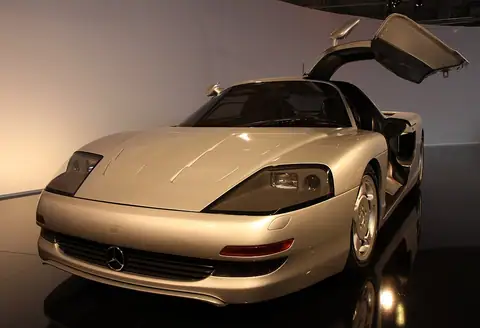
Mercedes-Benz · 1991
C 112
1 Built
See all 212 cars by Mercedes-Benz →
More from Germany
-
Porsche
911 Edition 50 Years Porsche Design
Production not yet verified
-
Walter
Standard S
Production not yet verified
-
Hanomag
Sturm (1938-1939)
Production not yet verified
-
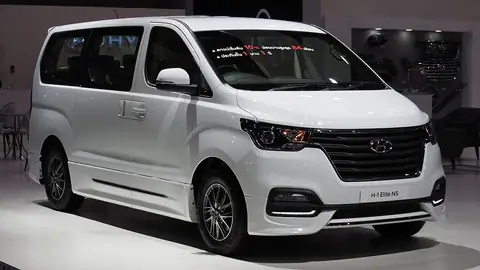
Hyundai
H-1 Elite NS (Libero/Starex)
Production not yet verified
71 other makes from Germany9ffAC SchnitzerAdlerAgria-WerkeAlbertAlpinaAMOAmphicarApolloArtegaAudiAuto UnionAutomobili PininfarinaBayerische AutowerkeBitterBMWBohseBoldmenBorgwardBovensiepenBrennaborBrütschChampionDauerDKWFMR (Messerschmitt)FuldamobilGemballaGepardGlasGoggomobilGoliathGumpertGutbrodHanomagHeinkelHorchHyundaiIFAIrmscherAll makes →