Makes › Mercedes-Benz › W 25 Grand Prix car · Factory competition · 1934–1936 Ultra Rare
Mercedes-Benz
W 25 Grand Prix car
First "Silver Arrow" GP car
Contents
01Overview
At a glance
- Built
- 6 Built
- Years
- 1934–1936
- Engine
- Front-mid supercharged inline eight-cylinder · 3,364 cc / 3.4 LFactory: 3,364 cc
- Power
- 264 kW / 359 PSFactory: 354 hp · converted
- Top speed
- Not yet verified
- Body
- Not yet verified
- Designer
- Hans Nibel (chief engineer) and his development team
- In this archive
- Not yet verified
- Surviving
- Not yet verified
Sources and any conflicting figures are in the sections below.
Why it matters
The W 25 was Mercedes-Benz's first car for the 750 kg Grand Prix formula and the first of the Silver Arrows. Designed under chief engineer Hans Nibel, it returned the company to the top of Grand Prix racing and took Rudolf Caracciola to the 1935 European Championship. Its supercharged straight-eight grew from 3.4 to 4.7 litres in three years, and its all-round independent suspension and hydraulic brakes were advanced for the period.
How rare is it?
Six separate kinds of rarity – never combined into one number.
Each kind of rarity is rated separately and never combined.
02Production & history
Production
Every figure says what it counts.
| What is counted | Figure | Basis | Status |
|---|---|---|---|
| Total model productionW 25s built for the 1934 season (races and record runs). The factory archive adds two more W 25s built for 1935 and six short-wheelbase W 25s for 1936 (separate archive pages) | 61,2 | Factory production | Factory reported |
Independent counts (e.g. engine and colour) are never combined into a calculated figure. Surviving examples are never presented as original production.
History
Development began in spring 1933 and test drives started in January 1934 near Milan. The first W 25 won the Eifel Race on 3 June 1934 with Manfred von Brauchitsch. Legend says the car was a kilogram over the weight limit and that its white paint was sanded off overnight, giving the Silver Arrows their name. Six W 25s were built for 1934, with M 25 A and M 25 B engines, and two more were built for 1935.
The engine was enlarged in steps: 3364 cc in 1934, 3718 cc and then 3992 cc in the M 25 B from August 1934, 4309 cc in the M 25 C from July 1935, and 4740 cc in the ME 25 for 1936. In 1935 the car dominated the first European Championship season. For 1936 it was rebuilt with a shorter 2505 mm wheelbase, a de Dion rear axle and a transverse gearbox. Six short cars were built, but Auto Union's V16 cars proved superior and the team withdrew after the Swiss Grand Prix. The W 125 followed in 1937.
Variants
How each version differs from the standard W 25 Grand Prix car.
No variants documented yet. Have a source? Contribute it.
03Specifications
Technical specifications
Engine
| Engine family | Not yet verified |
|---|---|
| Engine code | M 25 A (1934); later M 25 AB, M 25 B, M 25 C and ME 251 |
| Layout | Front-mid supercharged inline eight-cylinder1 |
| Cylinders | 81 |
| Displacement | 3,364 cc / 3.4 LFactory: 3,364 cc1M 25 A, 1934. Later stages: M 25 AB 3718 cc, M 25 B 3992 cc, M 25 C 4309 cc, ME 25 4740 cc. |
| Bore | 78 mmFactory: 78 mm1M 25 A. Bore 82 mm from M 25 AB, 86 mm in the ME 25. |
| Stroke | 88 mmFactory: 88 mm1M 25 A. 94.5 mm in the M 25 B, 102 mm in the M 25 C. |
| Compression ratio | Not yet verified |
| Valvetrain | Two overhead camshafts driven by gear cascade; two intake and two exhaust valves per cylinder; exhaust valves sodium-cooled1 |
| Fuel system | Two hermetically sealed updraught pressure carburettors fed from the Roots blower1 |
| Induction | Constantly engaged Roots blower (dry forced induction)1 |
| Power | 264 kW / 359 PSFactory: 354 hp · converted1Rating: manufacturerM 25 A test-stand range 314-354 hp depending on fuel. M 25 B 370-430 hp (1934-35), M 25 C 398-462 hp (1935), ME 25 494 hp (1936), all at 5800 rpm. |
| Power at | 5,800 rpm1 |
| Torque | Not yet verified |
Transmission & drivetrain
| Gearbox | 4-speed gearbox at the rear axle, driven by a propeller shaft at engine speed, bevel-gear drive to the differential11936 short-wheelbase car: gearbox transverse under the differential, spur-gear drive. |
|---|---|
| Gears | 41 |
| Driven wheels | Rear wheels1 |
Chassis, body & dimensions
| Chassis | Ladder frame with two cross-braced pressed-steel U-profile longitudinal members, drilled for lightness1 |
|---|---|
| Front suspension | Independent: two T-shaped transverse control arms per wheel, coil spring in the axle tube, friction shock absorbers1 |
| Rear suspension | Swing axle with quarter-elliptic spring and friction shock absorber (1934-35); de Dion axle on the 1936 car1,3 |
| Brakes | Hydraulically actuated internal-expanding shoe brakes with heavily ribbed drums on all wheels1 |
| Steering | Not yet verified |
| Body construction | Not yet verified |
| Wheelbase | 2,715 mmFactory: 2,715 mm31934 and 1935 cars. The 1936 short-wheelbase car has 2505 mm. |
| Length | Not yet verified |
| Width | Not yet verified |
| Height | Not yet verified |
| Front track | Not yet verified |
| Rear track | Not yet verified |
| Kerb weight | Not yet verified |
| Dry weight | 847 kgFactory: 847 kg3Weight as stated; the 750 kg formula limit excluded tyres, oil and coolant. Same weight for 1934 and 1935 cars. |
Performance
| Maximum speed | Not yet verified |
|---|---|
| 0–100 km/h | Not yet verified |
| Fuel tank | Not yet verified |
“Not yet verified” means no source has been checked for that value yet. Nothing is estimated to fill a gap.
04Colours & options
Factory colours & interiors
Original paint and trim, with the number of cars in each where a source gives it.
Not yet documented. Have a source? Contribute it.
Factory options & codes
Codes are shown exactly as written by the manufacturer.
Not yet documented. Have a source? Contribute it.
05Individual cars
Chassis register
Every documented car, with its colours, history and where it is now. Open a row for the full record. Known chassis are not automatically authenticated originals.
Not yet documented. Have a source? Contribute it.
Competition history
Every race result of the individual cars, in date order. Click a chassis number to open its full record in the register.
Not yet documented. Have a source? Contribute it.
Auction & sale history
Documented public sales of the individual cars. Click a chassis number to open its full record in the register.
Not yet documented. Have a source? Contribute it.
See one in person
Museums where an example of this car can be seen.
No example is documented on public display yet. Have a source? Contribute it.
06Reference
Identification guide
How to tell an original from a replica or later conversion.
The W 25 can be identified by its pressed-steel ladder frame with two cross-braced U-profile longitudinal members drilled with hundreds of lightening holes, a supercharged inline eight with the blower and two pressure carburettors at the front, and a four-speed gearbox at the rear axle driven by a propeller shaft running at engine speed. Wheelbase is 2715 mm on the 1934 and 1935 cars and 2505 mm on the 1936 short-wheelbase car. The 1934 and 1935 cars have a swing rear axle on quarter-elliptic springs; the 1936 car uses a de Dion axle. The front axle has two T-shaped control arms per wheel and a coil spring housed in the axle tube. Engines are marked M 25 A, AB, B, C or ME 25 according to the stage of development.
Sources
Each number links to the exact facts it supports.
-
1
Mercedes-Benz Grand-Prix racing car W 25, 1934 (Classic M@RS) Level A Mercedes-Benz Group AG (Classic M@RS, Mercedes-Benz Public Archive)
- a total of six W 25s were built
- first version of the eight-cylinder ... called the M 25 A
- supercharged inline eight-cylinder positioned as a front-mid engine
- supercharged inline eight-cylinder
- 78 mm x 88 mm and a total displacement of 3364 cc
- two intake and exhaust valves per cylinder ... exhaust valves were sodium-cooled
- Roots blower and the two hermetically sealed updraft carburettors
- constantly engaged Roots blower ... dry forced induction
- between 314 hp/231 kW and 354 hp/260 kW at 5800 rpm
- 354 hp/260 kW at 5800 rpm
- propeller shaft running at engine speed ... 4-speed gearbox
- 4-speed gearbox
- gearbox positioned on the rear axle and on to the differential
- two multiple cross-braced U-profile longitudinal members made of pressed steel
- Two T-shaped transverse control arms served as wheel control elements at the front
- a swing axle ... quarter elliptical spring and a friction shock absorber
- hydraulic actuation of the internal-expanding shoe brakes ... fitted all round
-
2
Mercedes-Benz Classic public archive: Mercedes-Benz Grand Prix racing car W 25, 1934 Level A
- 6 W 25s built for the 1934 season (races and record runs). The factory archive adds two more W 25s built for 1935 and six short-wheelbase W 25s for 1936 (separate archive pages)
-
3
Mercedes-Benz Grand-Prix racing car W 25 SWB, 1936 (Classic M@RS) Level A Mercedes-Benz Group AG (Classic M@RS, Mercedes-Benz Public Archive)
- a de Dion axle was now used
- previous wheelbase was shortened from 2715 mm to 2505 mm
- the W 25 weighed in at 847 kg
Keep exploring
More from Mercedes-Benz
-
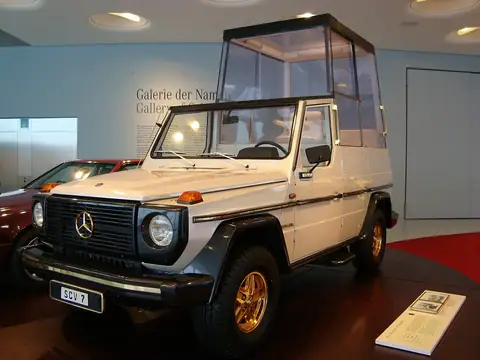
Mercedes-Benz · 1980
230 G Popemobile (W 460)
1 Built
-
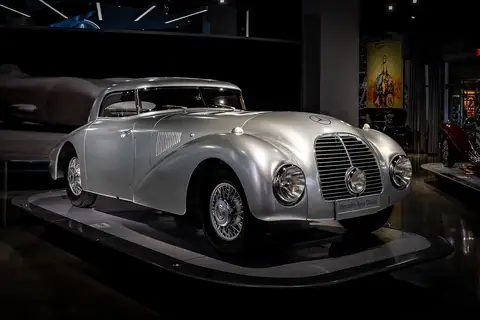
Mercedes-Benz · 1938
540 K Stromlinienwagen (Streamliner)
1 Built
-
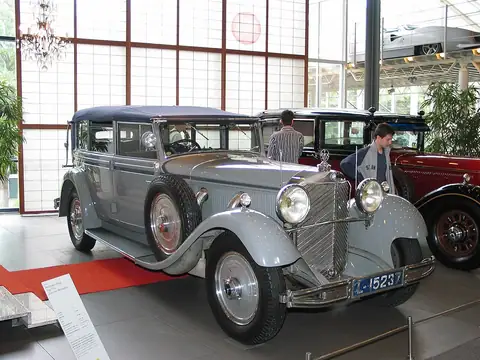
Mercedes-Benz · 1932
770 (W 07) Cabriolet F of Kaiser Wilhelm II
1 Built
-
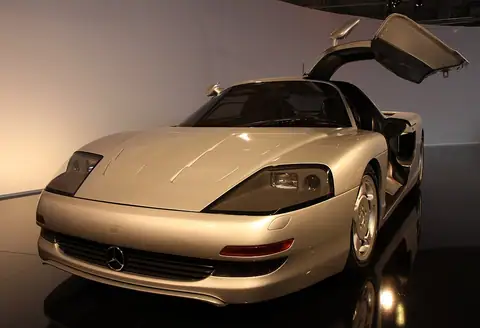
Mercedes-Benz · 1991
C 112
1 Built
See all 212 cars by Mercedes-Benz →
More from Germany
-
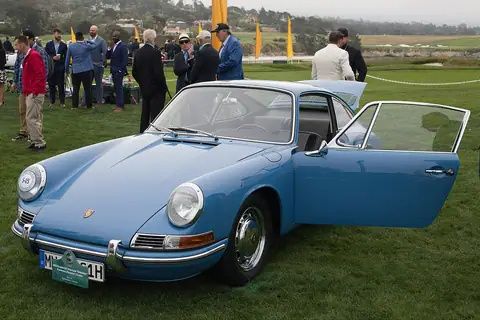
Porsche
901 (1964)
Production not yet verified
-
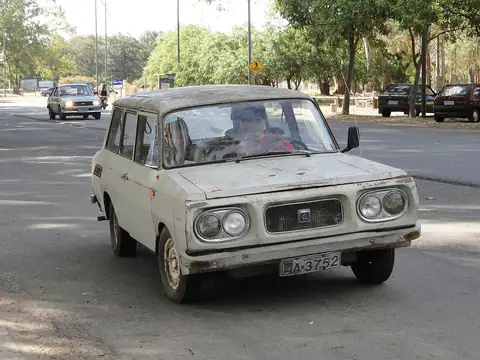
NSU
P10 (Nordex, Uruguay)
Production not yet verified
-
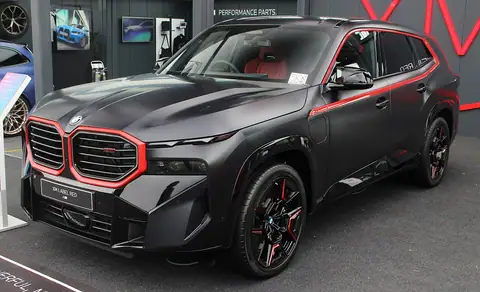
BMW
XM Label Red
Production not yet verified
-
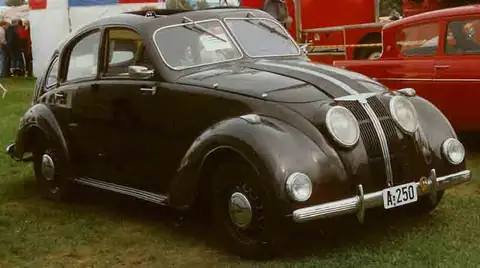
Adler
2,5 Liter (1937-1940)
Production not yet verified
71 other makes from Germany9ffAC SchnitzerAdlerAgria-WerkeAlbertAlpinaAMOAmphicarApolloArtegaAudiAuto UnionAutomobili PininfarinaBayerische AutowerkeBitterBMWBohseBoldmenBorgwardBovensiepenBrennaborBrütschChampionDauerDKWFMR (Messerschmitt)FuldamobilGemballaGepardGlasGoggomobilGoliathGumpertGutbrodHanomagHeinkelHorchHyundaiIFAIrmscherAll makes →