Makes › Mitsubishi › Pajero › Pajero Evolution (V55W) · Factory competition · 1997–1999 Rare
Mitsubishi
Pajero Evolution (V55W)
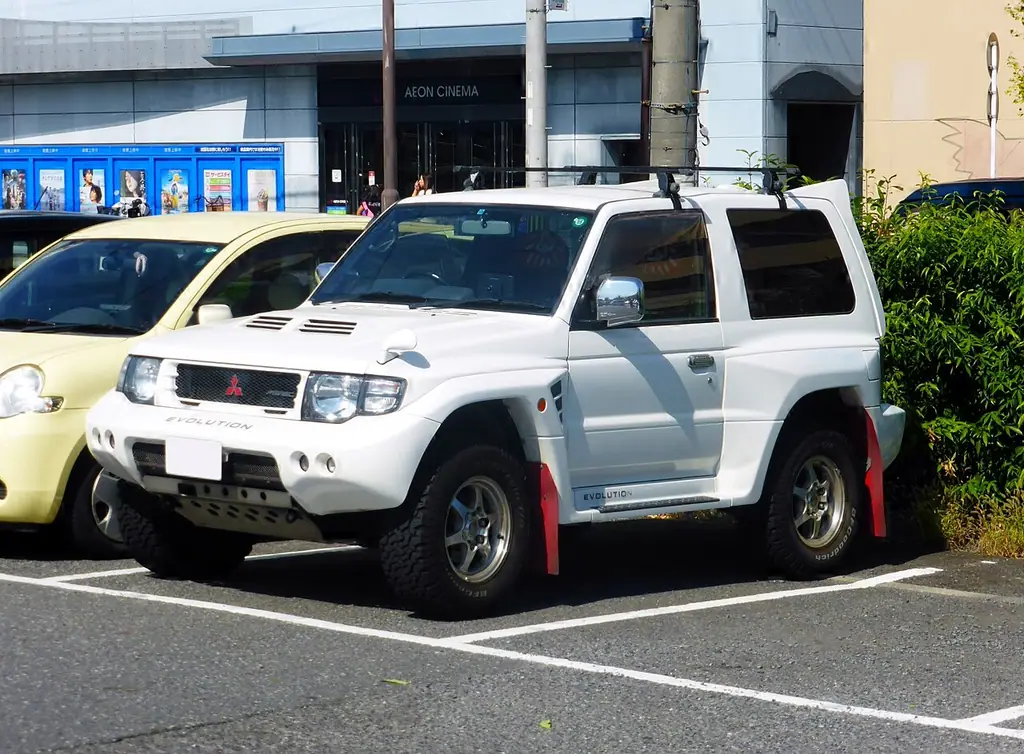
Road homologation version for the Dakar Rally T2 class (homologation special after turbo prototypes were banned for 1997).
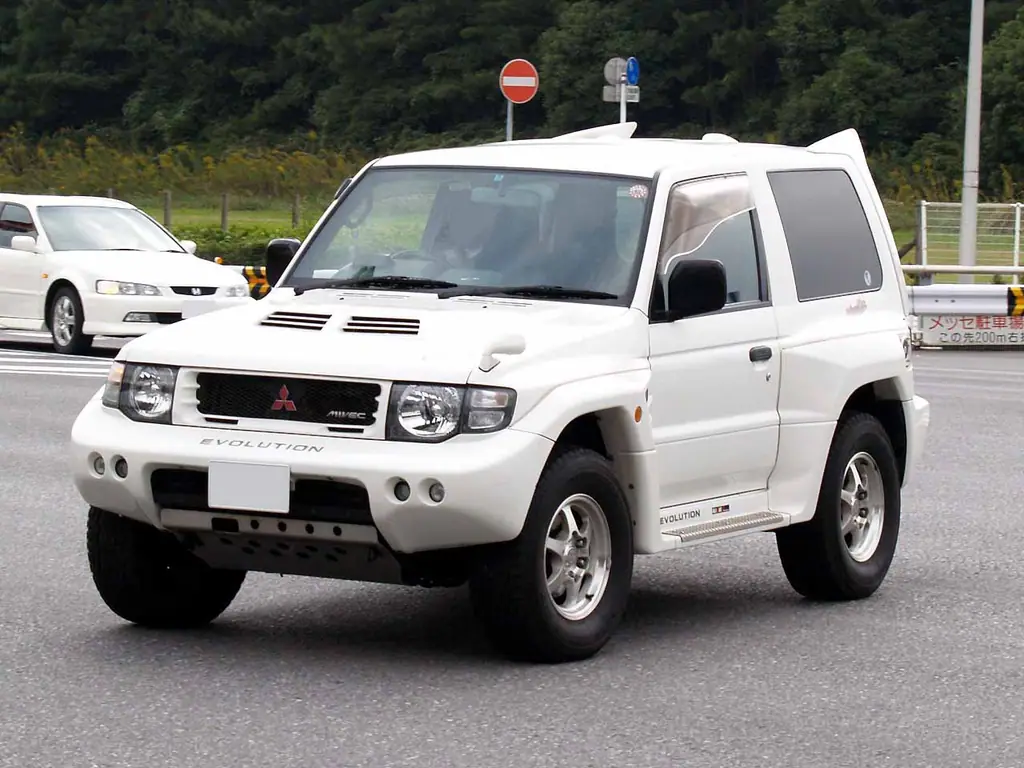
Photo: Comyu · CC BY-SA 3.0
Contents
01Overview
At a glance
- Built
- 2,500 Built
- Years
- 1997–1999
- Engine
- V6, 60 degree · 3,497 cc / 3.5 LFactory: 3,497 cc
- Power
- 206 kW / 280 PSFactory: 280 PS
- Top speed
- Not yet verified
- Body
- Not yet verified
- Designer
- Not yet verified
- In this archive
- Not yet verified
- Surviving
- Not yet verified
Sources and any conflicting figures are in the sections below.
Why it matters
The Pajero Evolution was a homologation special that allowed Mitsubishi to enter a strongly modified Pajero in the production-based T2 class of the Dakar Rally. Mitsubishi built it from 1997 to 1999 and then took the top three places overall in the 1998 Dakar.
How rare is it?
Six separate kinds of rarity – never combined into one number.
Each kind of rarity is rated separately and never combined.
Photos
Exterior, interior and detail photos with their licences.
 Mitsubishi Pajero Evolution (V55W) (Wikimedia Commons search)
Photo: Comyu · CC BY-SA 3.0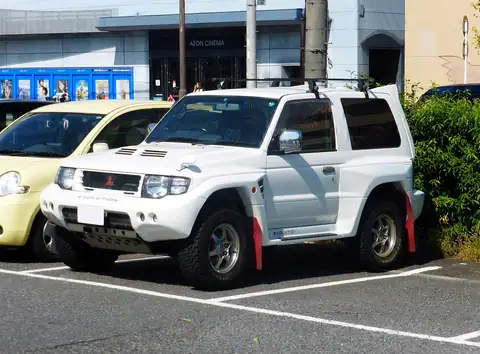 Mitsubishi Pajero Evolution (V55W) (Wikimedia Commons search)
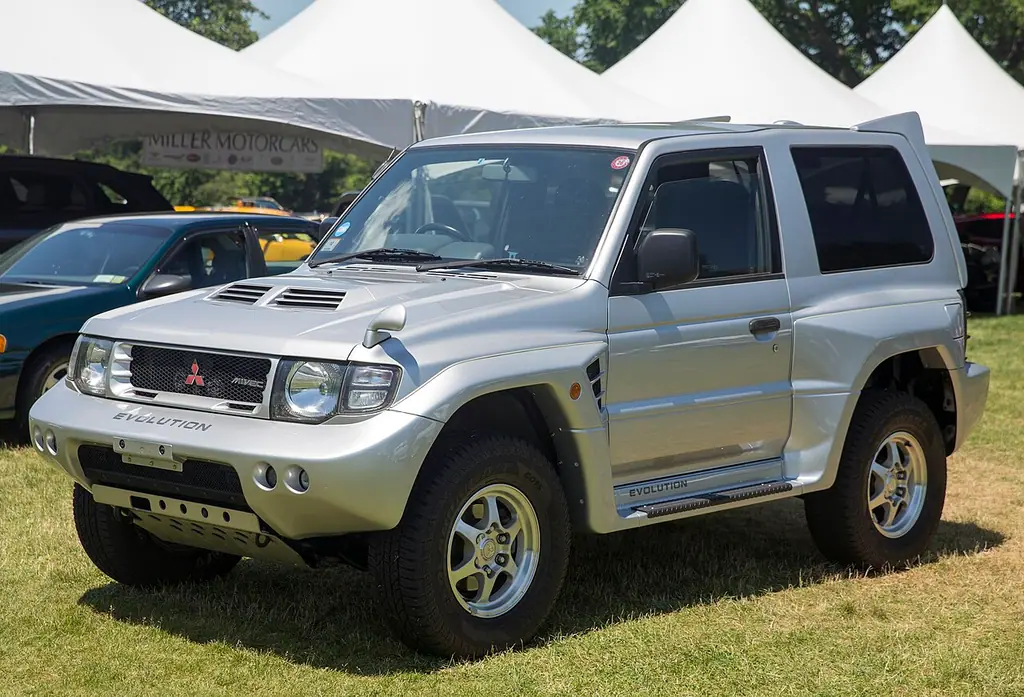
Photo: Tokumeigakarinoaoshima · CC0 1.0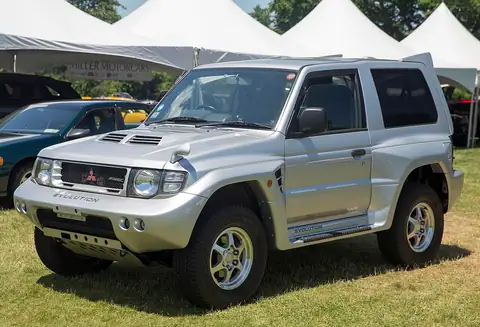 Mitsubishi Pajero Evolution (V55W) (Wikimedia Commons search)
Photo: Mr.choppers · CC BY-SA 3.0


02Production & history
Production
Every figure says what it counts.
| What is counted | Figure | Basis | Status |
|---|---|---|---|
| Total model productionplanned public sales (other figures 2,693–2,800 circulate) | 2,5001 | Factory production | Independently researched |
Independent counts (e.g. engine and colour) are never combined into a calculated figure. Surviving examples are never presented as original production.
History
Mitsubishi needed to sell 2,500 cars to the public to homologate the Pajero Evolution for the Dakar Rally's production-based class. The road car received new suspension, new differentials, a unique 3.5-litre variable-valve-timing V6, skid plates, Recaro seats, a widebody kit and mudflaps.
In 1998 Pajero Evolutions won the Dakar overall, taking the top three places and beating the faster T3 class cars over more than 10,000 km.
Variants
How each version differs from the standard Pajero Evolution (V55W).
No variants documented yet. Have a source? Contribute it.
03Specifications
Technical specifications
Engine
| Engine family | 6G742 Independently researched |
|---|---|
| Engine code | Not yet verified |
| Layout | V6, 60 degree3 Independently researched |
| Cylinders | 63 Independently researched |
| Displacement | 3,497 cc / 3.5 LFactory: 3,497 cc3 Independently researched |
| Bore | 93 mmFactory: 93 mm3 Independently researched |
| Stroke | 85.8 mmFactory: 85.8 mm3 Independently researched |
| Compression ratio | Not yet verified |
| Valvetrain | DOHC, 4 valves per cylinder, variable valve timing3 Independently researched |
| Fuel system | Not yet verified |
| Induction | Naturally aspirated3 Independently researched |
| Power | 206 kW / 280 PSFactory: 280 PS3 Independently researched276 bhp, 206 kW. Jalopnik also states 276 hp. |
| Power at | 6,500 rpm3 Independently researched |
| Torque | 348 NmFactory: 348 Nm3 Independently researched257 lb-ft, as also stated by Jalopnik. |
| Torque at | 3,000 rpm3 Independently researched |
Transmission & drivetrain
| Gearbox | 5-speed manual (carfolio); INVECS-II automatic also fitted3 Independently researchedJalopnik owner account describes an INVECS-II automatic and says some manual cars were built. |
|---|---|
| Gears | Not yet verified |
| Driven wheels | 4WD (Super Select), Torsen differentials front and rear2 Independently researched |
Chassis, body & dimensions
| Chassis | Not yet verified |
|---|---|
| Front suspension | Double wishbone with coil springs2 Independently researched |
| Rear suspension | Multi-link independent with coil springs2 Independently researched |
| Brakes | Not yet verified |
| Steering | Not yet verified |
| Body construction | Not yet verified |
| Wheelbase | 2,420 mmFactory: 2,420 mm3 Independently researched |
| Length | 4,075 mmFactory: 4,075 mm3 Independently researched |
| Width | 1,875 mmFactory: 1,875 mm3 Independently researched |
| Height | Not yet verified |
| Front track | Not yet verified |
| Rear track | Not yet verified |
| Kerb weight | 1,970 kgFactory: 1,970 kg3 Independently researched |
| Dry weight | Not yet verified |
Performance
| Maximum speed | Not yet verified |
|---|---|
| 0–100 km/h | Not yet verified |
| Fuel tank | Not yet verified |
“Not yet verified” means no source has been checked for that value yet. Nothing is estimated to fill a gap.
04Colours & options
Factory colours & interiors
Original paint and trim, with the number of cars in each where a source gives it.
Not yet documented. Have a source? Contribute it.
Factory options & codes
Codes are shown exactly as written by the manufacturer.
Not yet documented. Have a source? Contribute it.
05Individual cars
Chassis register
Every documented car, with its colours, history and where it is now. Open a row for the full record. Known chassis are not automatically authenticated originals.
Not yet documented. Have a source? Contribute it.
Competition history
Every race result of the individual cars, in date order. Click a chassis number to open its full record in the register.
Not yet documented. Have a source? Contribute it.
Auction & sale history
Documented public sales of the individual cars. Click a chassis number to open its full record in the register.
Not yet documented. Have a source? Contribute it.
See one in person
Museums where an example of this car can be seen.
No example is documented on public display yet. Have a source? Contribute it.
06Reference
Identification guide
How to tell an original from a replica or later conversion.
Being verified against factory or registry sources before it is published. Have a source? Contribute it.
Sources
Each number links to the exact facts it supports.
-
1
Jalopnik: Meet the Mitsubishi Pajero Evo – the last forgotten homologation special Level C
- 2500 planned public sales (other figures 2,693–2,800 circulate)
-
2
Meet The Mitsubishi Pajero Evo: The Last Forgotten Homologation Special Level C Jalopnik
- you know all about the 6G74
- Super Select 4WD ... Torsen diffs in the front and the back
- double wishbone with coils in the front
- multi-link independent with coils in the back
-
3
1997 Mitsubishi Pajero Evolution: detailed specifications Level D Carfolio
- V 6 in 60 deg vee
- 6 cylinder
- 3497 cc
- 93 x 85.8 mm
- double overhead camshaft ... 4 valves per cylinder
- naturally aspirated engine
- 280 PS / 276 bhp / 206 kW @ 6500 rpm
- @ 6500 rpm
- 348 Nm / 257 ft.lb @ 3000 rpm
- 348 Nm @ 3000 rpm
- 5 speed manual box
- 2420 mm
- 4075 mm
- 1875 mm
- weighs a claimed 1970 kg at the kerb
Keep exploring
More from Mitsubishi
-
Mitsubishi
Pistachio (1999)
50 Built
-
Mitsubishi · 2006–2007
Lancer Evolution Wagon MR (CT9W)
401 Built
-
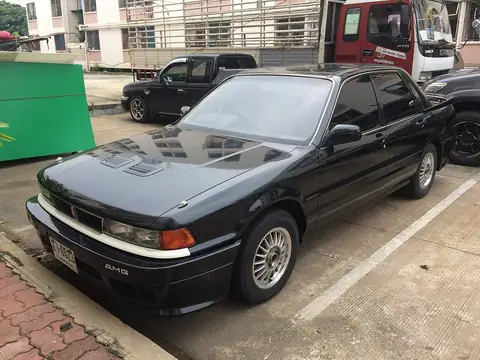
Mitsubishi
Galant AMG (E33A)
500 Built
-
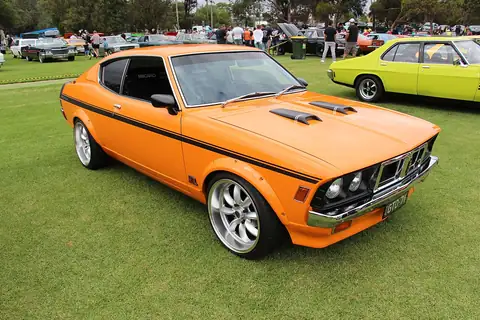
Mitsubishi · 1970–1972
Colt Galant GTO MR
835 Built
See all 52 cars by Mitsubishi →
More from Japan
-
Infiniti
M30 Convertible
Production not yet verified
-
Mazda
MX-5 ND 30th Anniversary Edition
Production not yet verified
-
Honda
Prelude Si States (1990)
Production not yet verified
-
Isuzu
117 Coupé (hand-built series, PA90)
2,458 Built
31 other makes from JapanAriaAsparkAutechAutozamDaihatsuDatsunDomeHinoHondaInfinitiIsuzuJiottoKuroganeLexusMazdaMazdaspeedMitsuokaMossMugenNismoNissanOrcaPrinceScionSubaruSuzukiTommykairaToyotaTRDVemacYamaha