Makes › Panhard › Dyna › Dyna Junior · Rare production · 1952–1956 Rare
Panhard
Dyna Junior
Dyna X-based roadster/cabriolet, Panhard’s small sports car.
Still being researched: full specifications. Everything shown is checked against the cited sources. Know more? Send us a source.
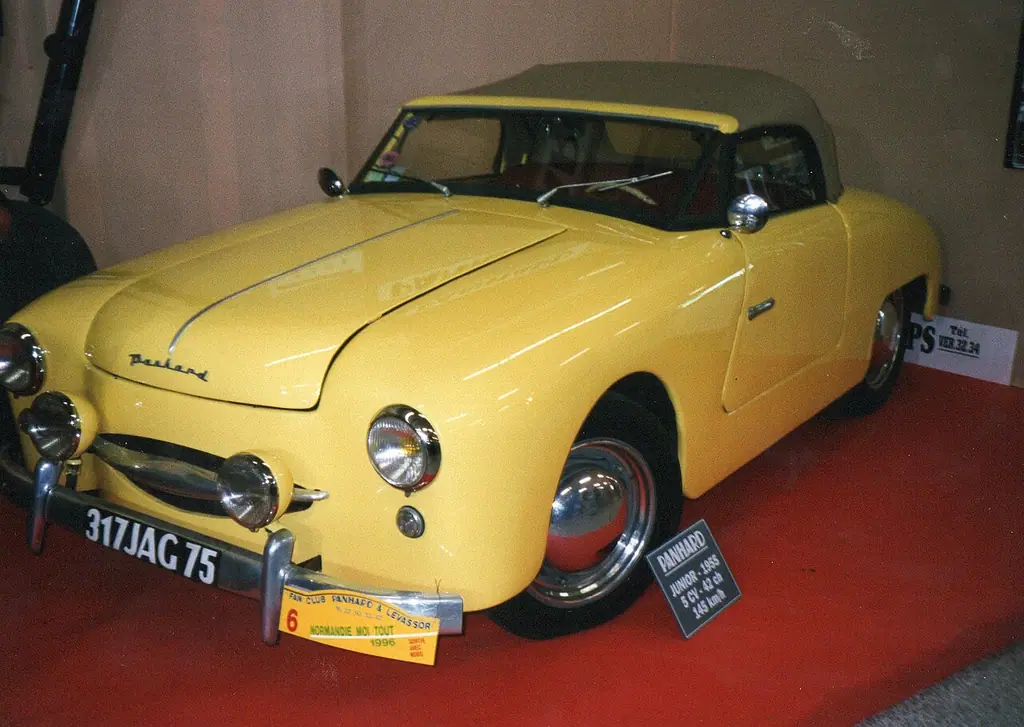
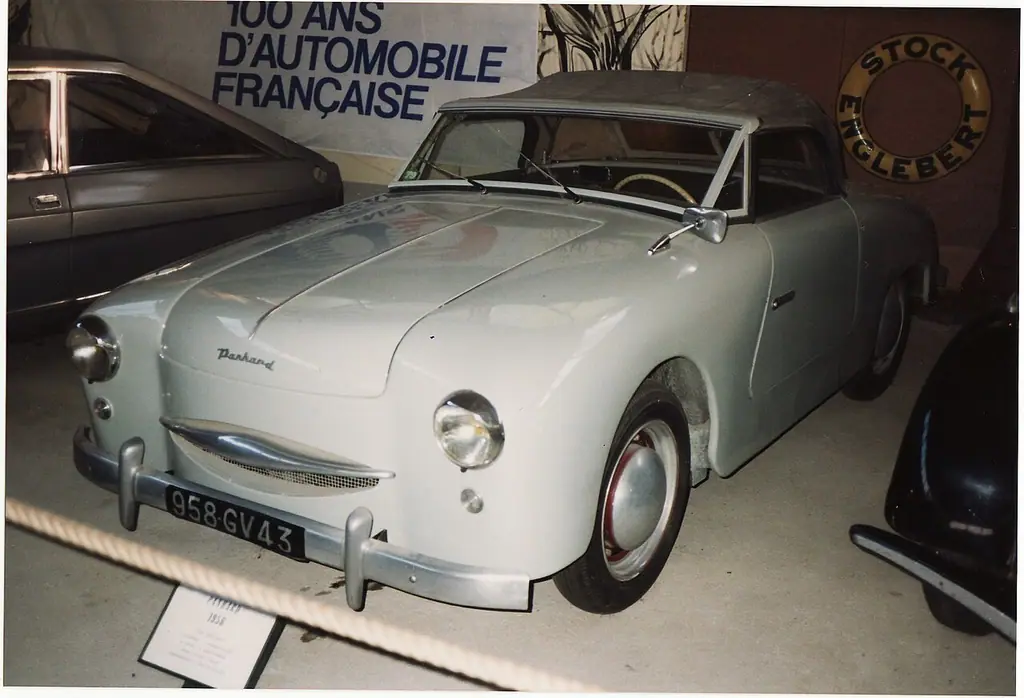
Photo: Andrew Bone from Weymouth, England · CC BY 2.0
Contents
01Overview
At a glance
- Built
- 4,700 Built
- Years
- 1952–1956
- Engine
- Two-cylinder · 851 cc / 0.9 LFactory: 851 cc
- Power
- 29.8 kW / 40.6 PSFactory: 40 hp · converted
- Top speed
- 130 km/hFactory: 130 km/h
- Body
- Not yet verified
- Designer
- Di Rosa (presented the original roadster prototype; Panhard redesigned it)
- In this archive
- Not yet verified
- Surviving
- Not yet verified
Sources and any conflicting figures are in the sections below.
Why it matters
The Dyna Junior was Panhard's small sports roadster, a light two-cylinder car aimed at a young public.
How rare is it?
Six separate kinds of rarity – never combined into one number.
Each kind of rarity is rated separately and never combined.
Photos
Exterior, interior and detail photos with their licences.
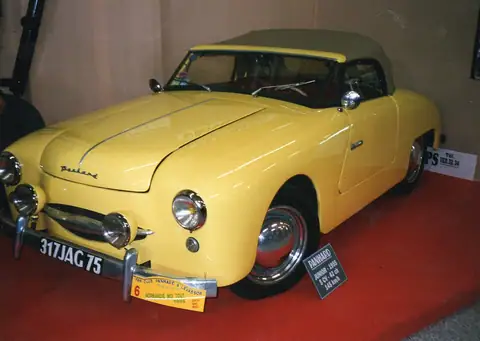 Panhard Dyna Junior (Wikimedia Commons search)
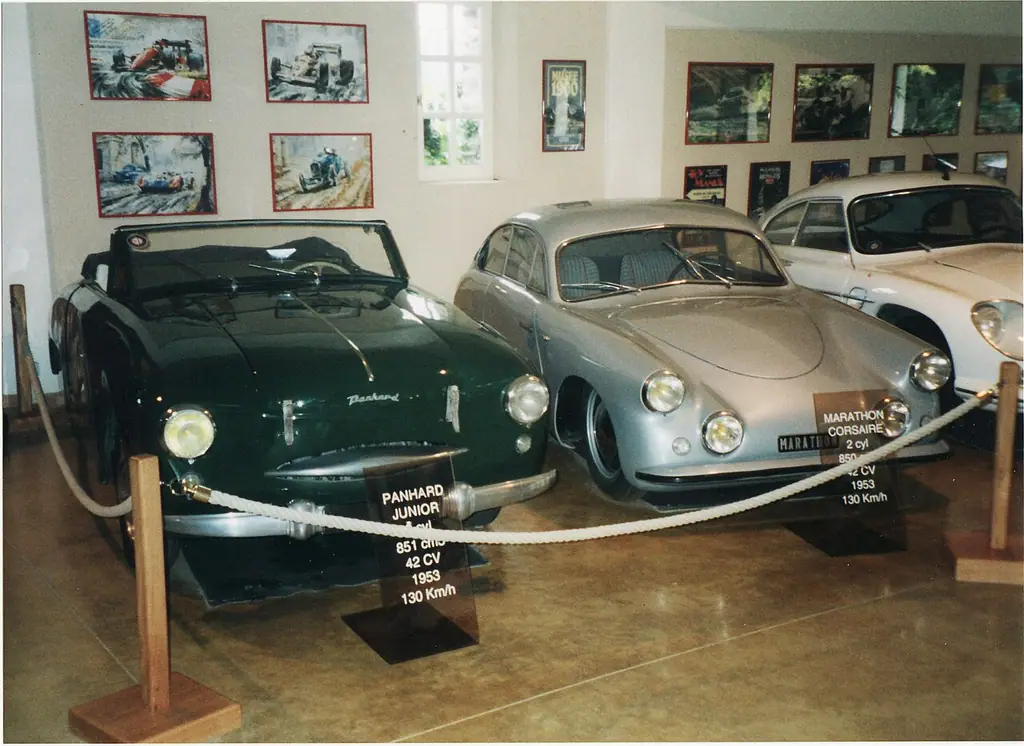
Photo: Andrew Bone from Weymouth, England · CC BY 2.0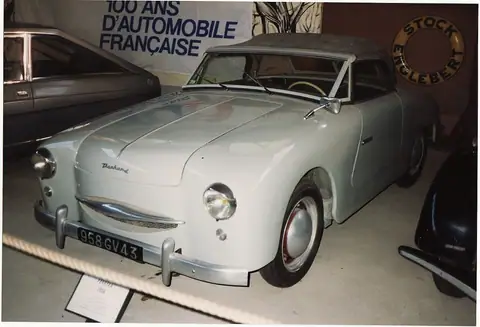 Panhard Dyna Junior (Wikimedia Commons search)
Photo: Andrew Bone from Weymouth, England · CC BY 2.0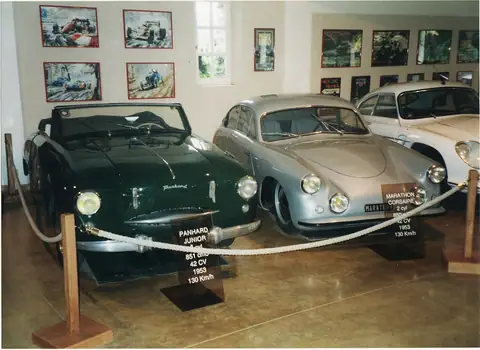 Panhard Dyna Junior (Wikimedia Commons search)
Photo: Andrew Bone from Weymouth, England · CC BY 2.0


02Production & history
Production
Every figure says what it counts.
| What is counted | Figure | Basis | Status |
|---|---|---|---|
| Total model productionapproximate total Dyna Junior production ('Production : 4 700 ex. environ'); other sources give 4,707 | 4,7001 | Factory production | Independently researched |
Independent counts (e.g. engine and colour) are never combined into a calculated figure. Surviving examples are never presented as original production.
History
According to a Spanish-language history, the Junior began in 1951 when Di Rosa showed Panhard a small, light roadster; Jean Panhard found the prototype too small and had it redesigned, ordered eight pre-series cars from Di Rosa, and then put it into series production. A 1954 magazine quoted by Forgotten Fiberglass dates the Junior to 1952, with an 851 cc engine.
The first series was a roadster and a cabriolet with a 750 cc engine; from 1953 a wider second series seated three on the bench, with 750 cc and 850 cc engines. The roadster stopped in October 1953, leaving the cabriolet, and the same source says production closed in 1956.
Variants
How each version differs from the standard Dyna Junior.
No variants documented yet. Have a source? Contribute it.
03Specifications
Technical specifications
Engine
| Engine family | Not yet verified |
|---|---|
| Engine code | Not yet verified |
| Layout | Two-cylinder2 Independently researched |
| Displacement | 851 cc / 0.9 LFactory: 851 cc2 Independently researched1954 Junior specification; first series used a 750 cc engine. |
| Bore | Not yet verified |
| Stroke | Not yet verified |
| Compression ratio | Not yet verified |
| Fuel system | Not yet verified |
| Power | 29.8 kW / 40.6 PSFactory: 40 hp · converted2 Independently researchedListed in the 1954 specification box; rating standard not stated. |
| Power at | Not yet verified |
| Torque | Not yet verified |
Transmission & drivetrain
| Gearbox | Not yet verified |
|---|---|
| Gears | Not yet verified |
| Driven wheels | Not yet verified |
Chassis, body & dimensions
| Chassis | Not yet verified |
|---|---|
| Front suspension | Not yet verified |
| Rear suspension | Not yet verified |
| Brakes | Not yet verified |
| Steering | Not yet verified |
| Body construction | Not yet verified |
| Wheelbase | 2,130 mmFactory: 83.9 in · converted3 Independently researchedFrom an enthusiast source (level D). Base Junior chassis figure, taken from a one-off Darrin-bodied car. |
| Length | Not yet verified |
| Width | Not yet verified |
| Height | Not yet verified |
| Front track | 1,220 mmFactory: 48 in · converted3 Independently researchedFrom an enthusiast source (level D). The source gives one track figure for front and rear. |
| Rear track | 1,220 mmFactory: 48 in · converted3 Independently researchedFrom an enthusiast source (level D). The source gives one track figure for front and rear. |
| Kerb weight | 735 kgFactory: 1,620 lb · converted3 Independently researchedFrom an enthusiast source (level D). Metal-bodied original car; the source's fibreglass estimate (1420 lb) is not used. |
| Dry weight | Not yet verified |
Performance
| Maximum speed | 130 km/hFactory: 130 km/h4 Registry reported1954 catalogue figure; the 1953 catalogue lists 120 km/h. |
|---|---|
| 0–100 km/h | Not yet verified |
| Fuel tank | Not yet verified |
“Not yet verified” means no source has been checked for that value yet. Nothing is estimated to fill a gap.
04Colours & options
Factory colours & interiors
Original paint and trim, with the number of cars in each where a source gives it.
Not yet documented. Have a source? Contribute it.
Factory options & codes
Codes are shown exactly as written by the manufacturer.
Not yet documented. Have a source? Contribute it.
05Individual cars
Chassis register
Every documented car, with its colours, history and where it is now. Open a row for the full record. Known chassis are not automatically authenticated originals.
Not yet documented. Have a source? Contribute it.
Competition history
Every race result of the individual cars, in date order. Click a chassis number to open its full record in the register.
Not yet documented. Have a source? Contribute it.
Auction & sale history
Documented public sales of the individual cars. Click a chassis number to open its full record in the register.
Not yet documented. Have a source? Contribute it.
See one in person
Museums where an example of this car can be seen.
No example is documented on public display yet. Have a source? Contribute it.
06Reference
Identification guide
How to tell an original from a replica or later conversion.
First-series Juniors (roadster and cabriolet) have two doors, the 1952 Dyna X grille with the Dyna name vertical on the bonnet, Dyna X bumpers with Panhard cast into the rear one, a 750 cc engine and a single central instrument. The 1953 second series is wider, with recessed door handles, hidden bonnet and door hinges, a three-piece windscreen and two central dials, and from June 1953 a horizontal-bar grille. The roadster has no door glass and opens from inside. Chassis numbers run 476.831 to 481.841 within the Dyna X sequence, then from July 1954 a separate Junior series from 857.435 to 857.974.
Sources
Each number links to the exact facts it supports.
-
1
Caradisiac – Panhard Dyna Junior (1952-55): le jouet Level C
- 4700 approximate total Dyna Junior production ('Production : 4 700 ex. environ'); other sources give 4,707
-
2
1953 Dyna-Panhard Sports Car - Designed by Howard "Dutch" Darrin / 1954 Dyna-Panhard Junior Level C Forgotten Fiberglass (Wayback capture)
- small wheelbase car with just a 2 cylinder motor
- 51.9 cubic inches (851cc)
- 51.9 cubic inches (851cc) 40 HP
-
3
1953 Dyna-Panhard Sports Car - Designed by Howard 'Dutch' Darrin Level D Geoffrey Hacker · ForgottenFiberglass.com · 2010-07-25
- 83.9 inches
- 48 inches
- Original car with metal body – 1620 lbs
-
4
La gamme en detail (Panhard range by year) Level B Club Panhard et Levassor France
- GM750 / 38ch SAE / 130 km/h
Keep exploring
More from Panhard
-
Panhard
CD LM64
2 Built
-
Panhard · 1948
Dynavia prototype
2 Built
-
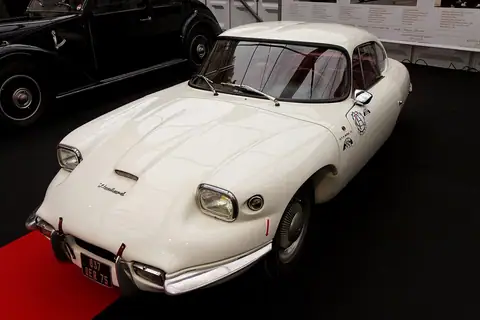
Panhard · 1962
CD (Le Mans 1962)
4 Built
-
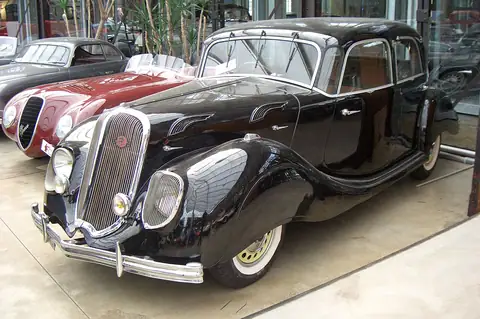
Panhard · 1936–1940
Dynamic
2,581 Built
More from France
-
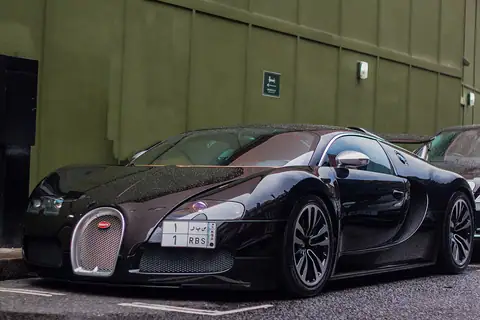
Bugatti
Veyron Sang Noir
Production not yet verified
-
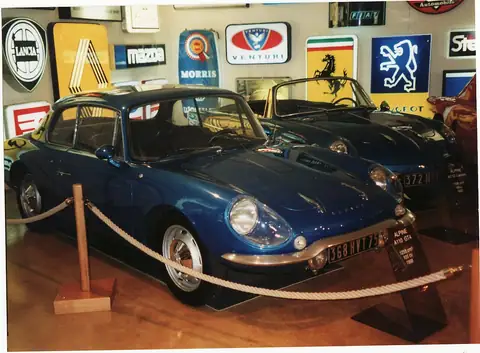
Alpine · 1963–1970
GT4 (1964-1969)
261 Built
-
Citroën · 1934
Traction Avant 7A
Production not yet verified
-
Peugeot · 1903
Type 56
Production not yet verified
69 other makes from FranceACMAAixamAlcatelAlpineAmilcarArzensAvions VoisinBACBallotBerlietBolloreBuccialiBugattiCGCharron, Girardot et VoigtChenard-WalckerCitroënClément-PanhardDAMSDarracqDBDB (Deutsch-Bonnet)De DietrichDe Dion-BoutonDe Dion, Bouton et TrépardouxDe La ChapelleDelageDelahayeDelaunay-BellevilleDerbyDSExagonFacel VegaFarmanFord FranceGentyGordiniHommellHopiumHotchkissAll makes →