Makes › Peugeot › 601 · Rare production · 1934–1935 Rare
Peugeot
601
Six-cylinder Peugeot successor to the 12 six; about 4,000 built including 160 cabriolets and roadsters, in production only about 18 months.
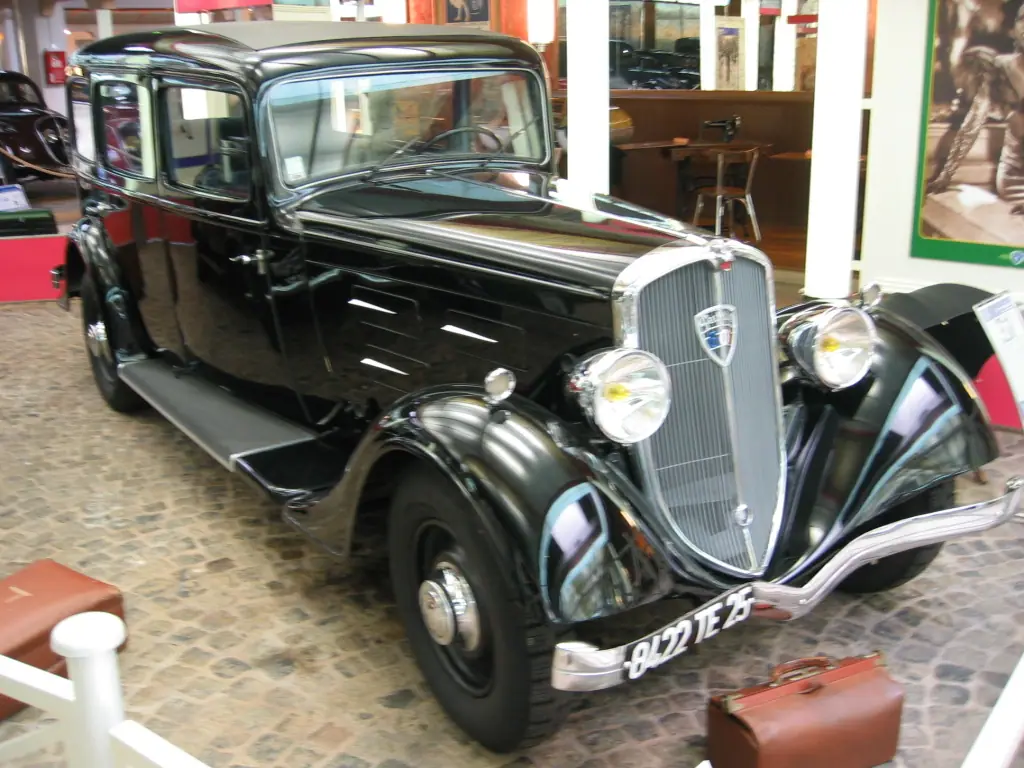
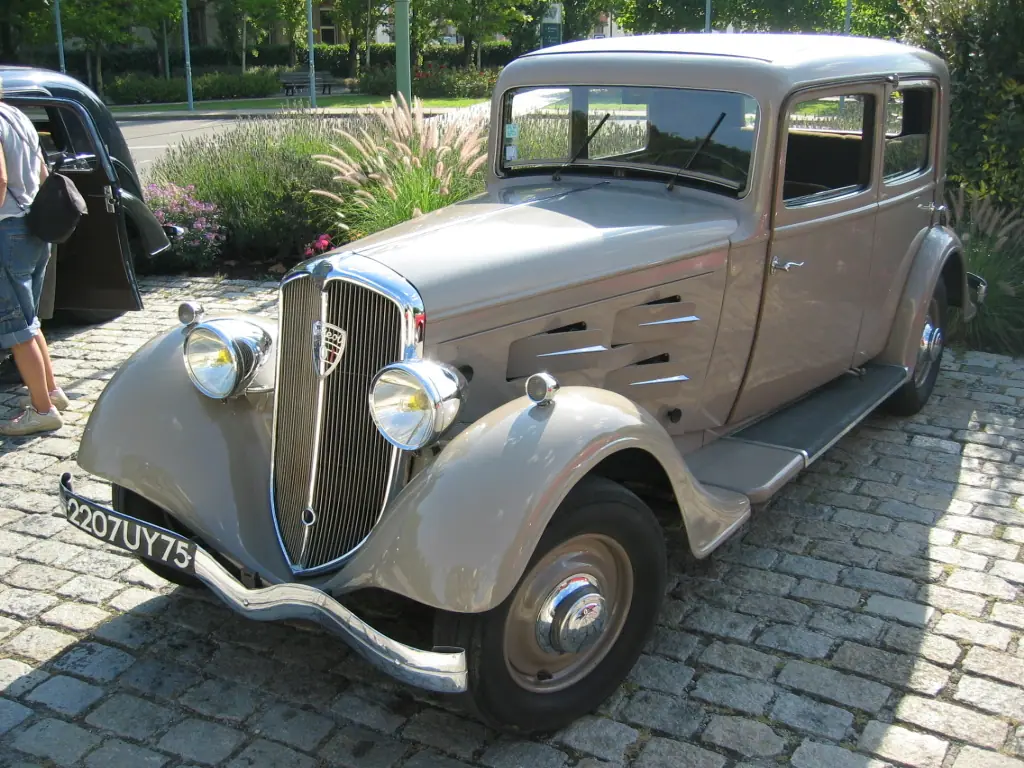
Photo: User:Arnaud 25 · Public domain
Contents
01Overview
At a glance
- Built
- 4,000 Built
- Years
- 1934–1935
- Engine
- inline six, side valves, one twin-barrel carburettor · 2,148 cc / 2.1 LFactory: 2,148 cc
- Power
- 44.1 kW / 60 PSFactory: 60 PS
- Top speed
- 110 km/hFactory: 110 km/h
- Body
- Not yet verified
- Designer
- Not yet verified
- In this archive
- Not yet verified
- Surviving
- Not yet verified
Sources and any conflicting figures are in the sections below.
Why it matters
The 601 was Peugeot's top-of-range six-cylinder car of 1934, a return to the six after the 12 SIX. Its short run and close look to the 301 kept sales modest.
How rare is it?
Six separate kinds of rarity – never combined into one number.
Each kind of rarity is rated separately and never combined.
Photos
Exterior, interior and detail photos with their licences.
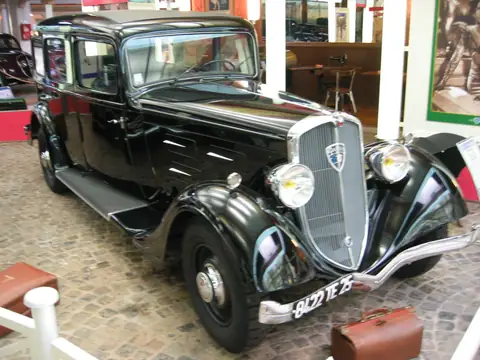 Peugeot 601 (Wikimedia Commons search)
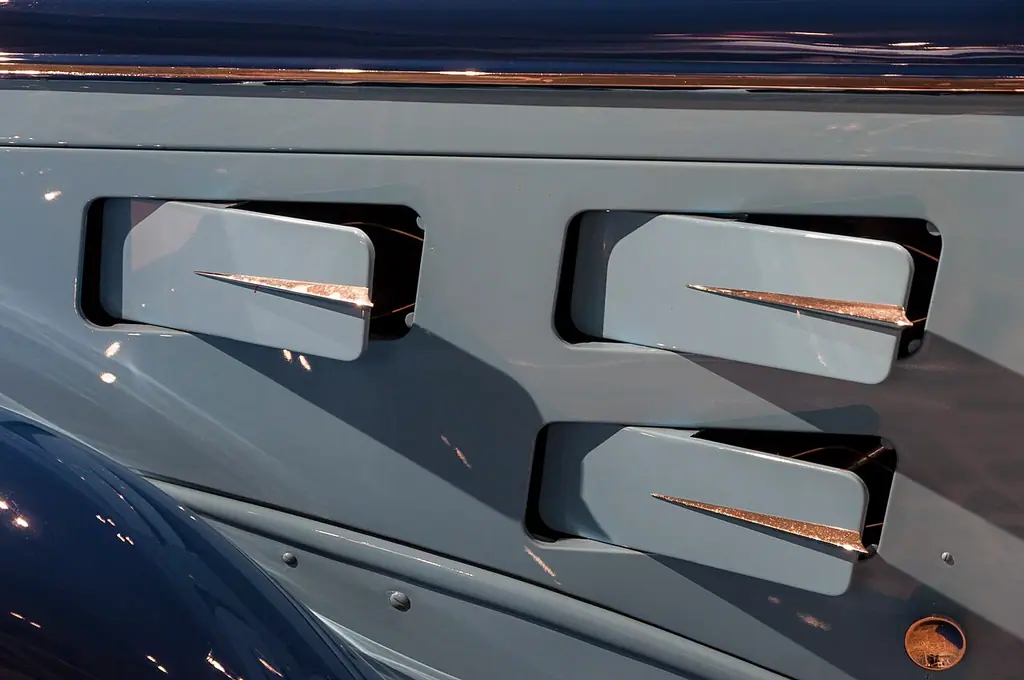
Photo: User:Arnaud 25 · Public domain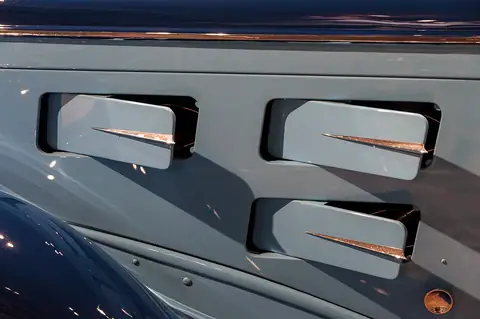 Peugeot 601 (Wikimedia Commons search)
Photo: Cette photo a été prise par André ALLIOT. · CC0 1.0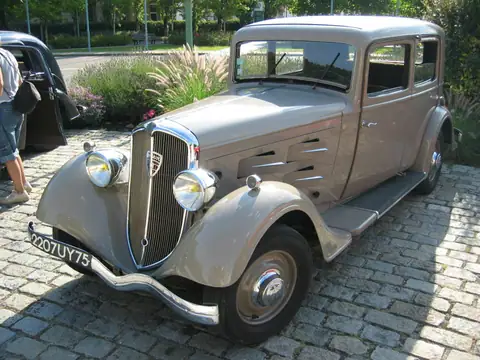 Peugeot 601 (Wikimedia Commons search)
Photo: Arnaud 25 · Public domain


02Production & history
Production
Every figure says what it counts.
| What is counted | Figure | Basis | Status |
|---|---|---|---|
| Total model production601 cars built, approximate, including 160 cabriolets and roadsters | 4,0001 | Factory production | Registry reported |
Independent counts (e.g. engine and colour) are never combined into a calculated figure. Surviving examples are never presented as original production.
History
Presented in 1934, the 601 used a side-valve six of about 2.1 litres and 60 hp. Like all Peugeots from the 201 C onwards, it had independent front suspension.
The model lasted under two years with very little change. Output was about 4000 cars, including 160 cabriolets and roadsters.
The coupe, cabriolet and Eclipse bodies were the highlight of concours events at the time.
Variants
How each version differs from the standard 601.
No variants documented yet. Have a source? Contribute it.
03Specifications
Technical specifications
Engine
| Engine family | Not yet verified |
|---|---|
| Engine code | Not yet verified |
| Layout | inline six, side valves, one twin-barrel carburettor2 Independently researched |
| Cylinders | 61 Independently researched |
| Displacement | 2,148 cc / 2.1 LFactory: 2,148 cc2 Independently researched |
| Bore | 72 mmFactory: 72 mm2 Independently researched |
| Stroke | 88 mmFactory: 88 mm2 Independently researched |
| Compression ratio | Not yet verified |
| Fuel system | one double-body carburettor1 Independently researched |
| Power | 44.1 kW / 60 PSFactory: 60 PS2 Independently researchedsource gives "cv"; unit treated as metric horsepower, not converted |
| Power at | 3,500 rpm1 Independently researched |
| Torque | Not yet verified |
Transmission & drivetrain
| Gearbox | manual, dry single-plate clutch1 Independently researched |
|---|---|
| Gears | 31 Independently researched |
| Driven wheels | Not yet verified |
Chassis, body & dimensions
| Chassis | Not yet verified |
|---|---|
| Front suspension | independent wheels, transverse spring1 Independently researched |
| Rear suspension | quarter-elliptic springs, hydraulic dampers1 Independently researched |
| Brakes | mechanical drums on all four wheels2 Independently researched |
| Steering | worm and nut1 Independently researched |
| Body construction | Not yet verified |
| Wheelbase | 2,980 mmFactory: 2,980 mm1 Independently researchedLower end of the 2.98 to 3.20 m range. The 1935 update gave 3.07 m and 3.42 m. |
| Length | 4,600 mmFactory: 4,600 mm1 Independently researchedLower end of a 4.60 to 5.15 m range given by the source, depending on body. |
| Width | 1,600 mmFactory: 1,600 mm1 Independently researched |
| Height | Not yet verified |
| Front track | 1,280 mmFactory: 1,280 mm1 Independently researched |
| Rear track | 1,340 mmFactory: 1,340 mm1 Independently researched |
| Kerb weight | 1,300 kgFactory: 1,300 kg2 Independently researched1300-1400 kg depending on body |
| Dry weight | Not yet verified |
Performance
| Maximum speed | 110 km/hFactory: 110 km/h1 Independently researched |
|---|---|
| 0–100 km/h | Not yet verified |
| Fuel tank | Not yet verified |
“Not yet verified” means no source has been checked for that value yet. Nothing is estimated to fill a gap.
04Colours & options
Factory colours & interiors
Original paint and trim, with the number of cars in each where a source gives it.
Not yet documented. Have a source? Contribute it.
Factory options & codes
Codes are shown exactly as written by the manufacturer.
Not yet documented. Have a source? Contribute it.
05Individual cars
Chassis register
Every documented car, with its colours, history and where it is now. Open a row for the full record. Known chassis are not automatically authenticated originals.
Not yet documented. Have a source? Contribute it.
Competition history
Every race result of the individual cars, in date order. Click a chassis number to open its full record in the register.
Not yet documented. Have a source? Contribute it.
Auction & sale history
Documented public sales of the individual cars. Click a chassis number to open its full record in the register.
Not yet documented. Have a source? Contribute it.
See one in person
Museums where an example of this car can be seen.
No example is documented on public display yet. Have a source? Contribute it.
06Reference
Identification guide
How to tell an original from a replica or later conversion.
Cars from the 1935 update had pierced sheet-steel wheels on 160x40 tyres. Wheelbase went to 3.07 m or 3.42 m, against the 2.98 to 3.20 m of the original car.
Sources
Each number links to the exact facts it supports.
-
1
La Peugeot 601 1934-1935 Level B LECAAV (club page, archived) · 2004-08-29
- environ 4000 exemplaires
- 6 cylindres en ligne 2148cm3 (72x88)
- 1 carburateur double corps
- 60cv
- 3500tr/mn
- Embrayage monodisque
- boite 3 vitesses et marche arri
- avec ressort transversale
- Ressorts 1/4 elliptiques
- Direction : vis et
- empattement 2,98
- Longueur 4,60m
- Largeur 1,60m
- Voies AV 1,28m AR 1,34m
- Vitesse : 110km/h
-
2
La Peugeot 601 1934-1935 Level D lecaav.com
- 6-cylindres en ligne 2148cm3 (72x88), 60cv a 3500tr/mn. Soupapes laterales
- 2148cm3 (72x88)
- (72x88)
- 60cv a 3500tr/mn
- Freins : mecaniques a tambours sur les 4 roues
- Poids 1300 a 1400 kg
Keep exploring
More from Peugeot
-
Peugeot · 1965
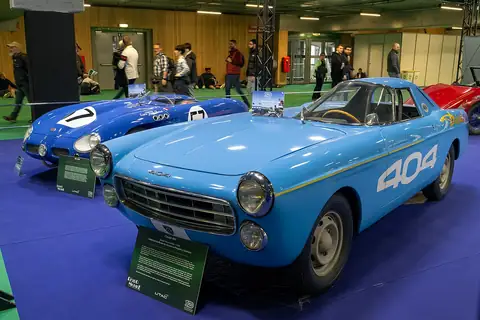
404 Diesel Record
1 Built
-
Peugeot · 1894
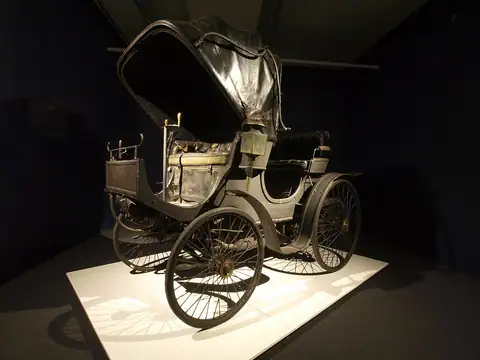
Type 6 phaeton (unrestored 1894 car)
1 Built
-
Peugeot · 1936
402 Andreau (prototype)
5 Built
-
Peugeot · 1937–1938
402 Darl’mat Spécial Sport (Pourtout)
105 Built
More from France
-
Citroën
BX Leader (limited series, 1985)
Production not yet verified
-
Delahaye · 1937
145 Cabriolet by Franay
1 Built
-
Venturi
Coupe 260 APC (1990-1996)
Production not yet verified
-
Bugatti · 1931
Type 51 Coupé by Dubos
1 Built
70 other makes from FranceACMAAixamAlcatelAlpineAmilcarArzensAvions VoisinBACBallotBerlietBolloreBuccialiBugattiCGCharron, Girardot et VoigtChenard-WalckerCitroënClément-PanhardDAMSDarracqDBDB (Deutsch-Bonnet)De DietrichDe Dion-BoutonDe Dion, Bouton et TrépardouxDe La ChapelleDelageDelahayeDelaunay-BellevilleDerbyDSExagonFacel VegaFarmanFord FranceGentyGordiniHommellHopiumHotchkissAll makes →