Makes › RUF › CTR (2017, carbon monocoque) · Specialist manufacturer · 2017 Ultra Rare
RUF
CTR (2017, carbon monocoque)
RUF's first own carbon-monocoque car, styled after the CTR 'Yellowbird' (not a 911 conversion)
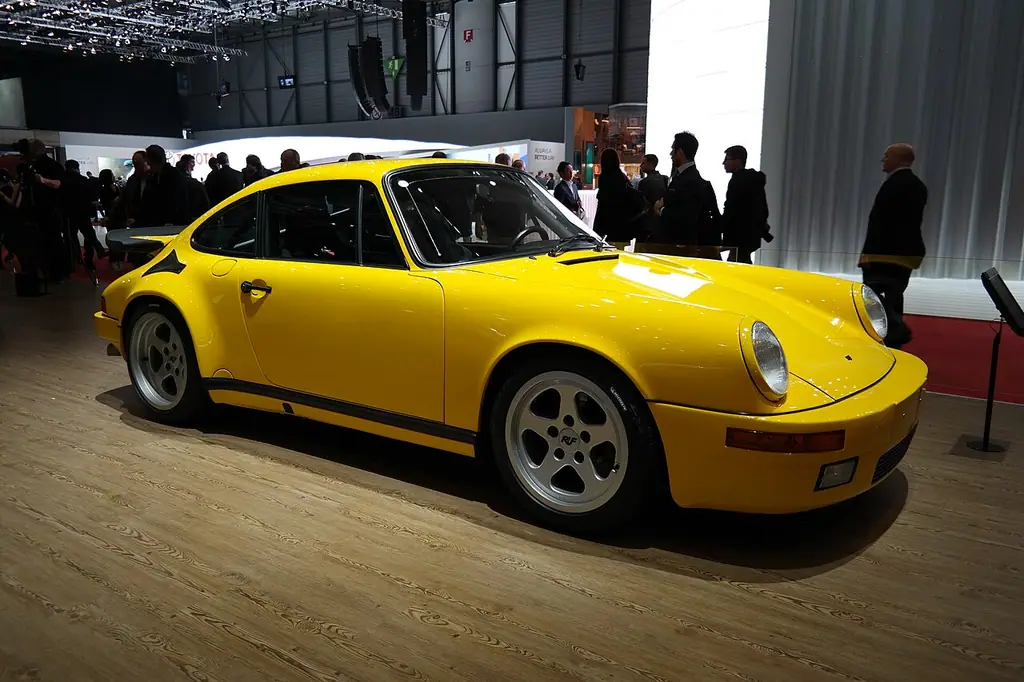
Photo: Norbert Aepli, Switzerland (User:Noebu) · CC BY 4.0

Contents
01Overview
At a glance
- Built
- 30 Built
- Years
- 2017
- Engine
- Rear-mounted twin-turbo 3.6-litre flat-six built by RUF, dry-sump lubrication · 3,600 cc / 3.6 LFactory: 3,600 cc
- Power
- 522 kW / 710 PSFactory: 522 kW
- Top speed
- 360 km/hFactory: 360 km/h
- Body
- Not yet verified
- Designer
- RUF Automobile GmbH (in-house design and engineering; Alois Ruf, President)
- In this archive
- Not yet verified
- Surviving
- Not yet verified
Sources and any conflicting figures are in the sections below.
Why it matters
The 2017 CTR is the first RUF built on a chassis completely of RUF's own design rather than a modified Porsche, and the first rear-engined car with a carbon-fibre monocoque. It was revealed on the 30th anniversary of the 1987 CTR "Yellow Bird" and deliberately echoes that car with a narrow body and a manual gearbox.
How rare is it?
Six separate kinds of rarity – never combined into one number.
Each kind of rarity is rated separately and never combined.
02Production & history
Production
Every figure says what it counts.
| What is counted | Figure | Basis | Status |
|---|---|---|---|
| Total model productionplanned limited run excluding Geneva prototype (later reportedly extended) | 301,2 | Factory production | Factory reported |
Independent counts (e.g. engine and colour) are never combined into a calculated figure. Surviving examples are never presented as original production.
History
RUF unveiled the car at the Geneva Motor Show on 7 March 2017. Alois Ruf said the concept had been in his head for a long time and that the 30th anniversary of the Yellow Bird was the right moment; development began five years earlier, with the aim of an analogue driving experience built around power-to-weight ratio, a manual gearbox and modern racing technology.
Series production was scheduled to begin by 2018 at Pfaffenhausen, with a limited run of 30 cars not counting the Geneva prototype. The 1987 original had reached 342 km/h at the Nardo Ring and earned its nickname when Road & Track photographers saw its bright paint at the Ehra-Lessien test track.
Variants
How each version differs from the standard CTR (2017, carbon monocoque).
No variants documented yet. Have a source? Contribute it.
03Specifications
Technical specifications
Engine
| Engine family | Not yet verified |
|---|---|
| Engine code | Not yet verified |
| Layout | Rear-mounted twin-turbo 3.6-litre flat-six built by RUF, dry-sump lubrication1 |
| Displacement | 3,600 cc / 3.6 LFactory: 3,600 cc1 |
| Bore | Not yet verified |
| Stroke | Not yet verified |
| Compression ratio | Not yet verified |
| Fuel system | Not yet verified |
| Induction | Twin turbochargers1 |
| Power | 522 kW / 710 PSFactory: 522 kW1Rating: manufacturerRUF also states 710 PS / 710 HP. |
| Power at | 6,750 rpm1 |
| Torque | 880 NmFactory: 880 Nm1 |
| Torque at | 2,750 rpm1Torque maintained to 4,000 rpm. |
Transmission & drivetrain
| Gearbox | Six-speed manual with limited-slip differential1 |
|---|---|
| Gears | 61 |
| Driven wheels | Rear1 |
Chassis, body & dimensions
| Chassis | Carbon-fibre monocoque of RUF design, steel front crash structure with integrated steel roll cage1 |
|---|---|
| Front suspension | Double wishbones, pushrod configuration1 |
| Rear suspension | Double wishbones, pushrod configuration1 |
| Brakes | Internally vented, perforated carbon-ceramic discs, 380 mm front and 250 mm rear; six-piston fixed calipers front, four-piston rear1 |
| Steering | Not yet verified |
| Body construction | Carbon fibre body1 |
| Wheelbase | Not yet verified |
| Length | Not yet verified |
| Width | Not yet verified |
| Height | Not yet verified |
| Front track | Not yet verified |
| Rear track | Not yet verified |
| Kerb weight | Not yet verified |
| Dry weight | 1,200 kgFactory: 1,200 kg1 |
Performance
| Maximum speed | 360 km/hFactory: 360 km/h1The same release also says "in excess of 360 km/h (223 mph)", "360 km/h (225 mph)" and "233 mph" in different places. |
|---|---|
| 0–100 km/h | 3.5 s1Source says "less than 3.5 seconds". |
| Fuel tank | Not yet verified |
“Not yet verified” means no source has been checked for that value yet. Nothing is estimated to fill a gap.
04Colours & options
Factory colours & interiors
Original paint and trim, with the number of cars in each where a source gives it.
Not yet documented. Have a source? Contribute it.
Factory options & codes
Codes are shown exactly as written by the manufacturer.
Not yet documented. Have a source? Contribute it.
05Individual cars
Chassis register
Every documented car, with its colours, history and where it is now. Open a row for the full record. Known chassis are not automatically authenticated originals.
Not yet documented. Have a source? Contribute it.
Competition history
Every race result of the individual cars, in date order. Click a chassis number to open its full record in the register.
Not yet documented. Have a source? Contribute it.
Auction & sale history
Documented public sales of the individual cars. Click a chassis number to open its full record in the register.
Not yet documented. Have a source? Contribute it.
See one in person
Museums where an example of this car can be seen.
No example is documented on public display yet. Have a source? Contribute it.
06Reference
Identification guide
How to tell an original from a replica or later conversion.
The 2017 car combines an all-carbon body with a carbon-fibre monocoque, a steel front crash structure and integrated roll cage, 19-inch centre-lock forged wheels (245/35 ZR19 front, 305/30 ZR19 rear), a 3.6-litre twin-turbo flat-six with dry-sump lubrication and a six-speed manual with limited-slip differential. Inside are two carbon-fibre seats, aluminium pedals and green-lettered analogue gauges.
Sources
Each number links to the exact facts it supports.
-
1
RUF CTR - 2017 RUF CTR Unveiled in Geneva Level A RUF Automobile GmbH · 2017-03-07
- limited run will include 30 units not including the prototype
- 3.6-liter twin-turbo flat-six is built by RUF; dry-sump lubrication system
- Displacement: 3600 cm3 (Technical Data)
- Twin-turbo 3.6L flat-six
- 522 kw (710 PS) at 6,750 RPM
- 880 Nm (649 lb-ft) at 2,750 RPM
- Max. Torque 880 Nm @2.750 - 4000/min (Technical Data)
- newly-developed six-speed manual transmission; through a limited-slip differential
- 6-speed manual gearbox (Technical Data)
- sends power to the rear wheels
- chassis beneath that surface also made of carbon fiber; front crash structure is built with lightweight steel as is the integrated roll cage
- double-wishbone suspension arms in a pushrod configuration for both the front and rear axles
- carbon ceramic brake discs (380 mm front, 250 mm rear) six-piston fixed calipers (front) and four-piston calipers (rear)
- skin, which is made completely of carbon fiber
- extremely light dry weight of 1,200 kg (2,640 lbs)
- Top-speed: 360 km/h (Technical Data)
- 0-100 km/h (62 mph) in less than 3.5 seconds
-
2
2017 RUF CTR unveiled in Geneva – Porsche Club GB Level B
- 30 planned limited run excluding Geneva prototype (later reportedly extended)
Keep exploring
More from RUF
-
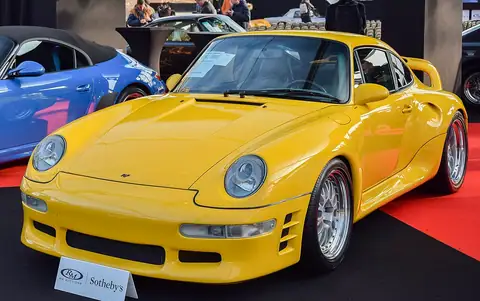
RUF · 1995–1997
CTR2
28 Built
-
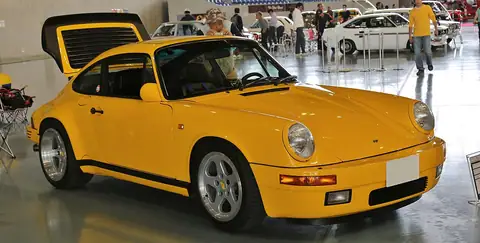
RUF · 1987–1992
CTR 'Yellowbird'
29 Built
-
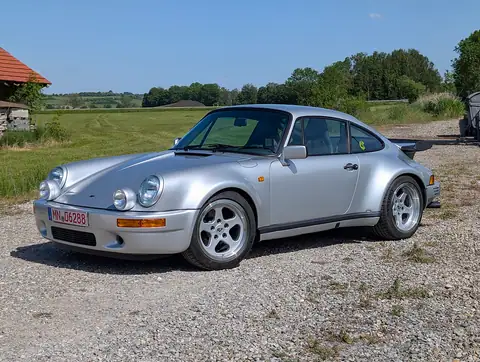
RUF · 1983–1989
BTR
30 Built
-

RUF · 2007–2012
CTR3
30 Built
See all 6 cars by RUF →The Porsche family →
More from Germany
-
Opel
Manta 400
245 Built
-
Wanderer
Puppchen
Production not yet verified
-
BMW
BMW 303
Production not yet verified
-
Lotec · 2001
Sirius
Production not yet verified
73 other makes from GermanyAC SchnitzerAdlerAgria-WerkeAlbertAlpinaAMGAMOAmphicarApolloArtegaAudiAuto UnionAutomobili PininfarinaBayerische AutowerkeBenzBenz & Cie.BitterBMWBohseBoldmenBorgwardBovensiepenBrabusBrennaborBrütschCarlssonChampionDaimler-Motoren-GesellschaftDKWFMR (Messerschmitt)FuldamobilGepardGlasGoggomobilGoliathGumpertGutbrodHanomagHeinkelHorchAll makes →