Makes › RUF › CTR3 · Specialist manufacturer · 2007–2012 Ultra Rare
RUF
CTR3
RUF's own mid-engined car (RUF structure, Cayman-derived front) with RUF VINs
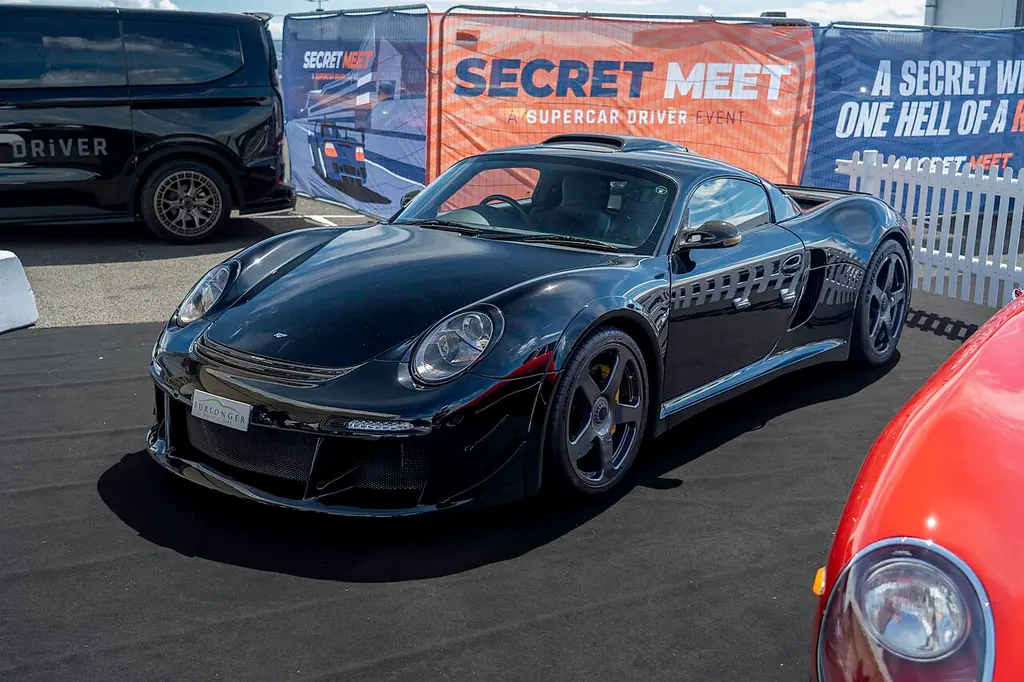
Photo: MrWalkr · CC BY-SA 4.0
Contents
01Overview
At a glance
- Built
- 30 Built
- Years
- 2007–2012
- Engine
- Mid-mounted twin-turbo flat-six, ahead of the rear axle; based on the Porsche 996 Turbo engine · 3,800 cc / 3.8 LFactory: 3.8 L
- Power
- 522 kW / 710 PSFactory: 700 hp · converted
- Top speed
- 375 km/hFactory: 233 mph · converted
- Body
- Not yet verified
- Designer
- Bennett Soderberg (body design); rear chassis engineered with Multimatic (Ontario, Canada)
- In this archive
- Not yet verified
- Surviving
- Not yet verified
Sources and any conflicting figures are in the sections below.
Why it matters
The CTR3 was RUF's first mid-engined car and its first model not based on a specific Porsche, although it still takes the front structure of a 911 GT3 RS. It was meant as RUF's step toward building its own supercar and was aimed at the Enzo and Veyron class, with a claimed top speed of about 233 to 235 mph.
How rare is it?
Six separate kinds of rarity – never combined into one number.
Each kind of rarity is rated separately and never combined.
Photos
Exterior, interior and detail photos with their licences.
 RUF CTR3 (Wikimedia Commons: Ruf CTR3)
Photo: MrWalkr · CC BY-SA 4.0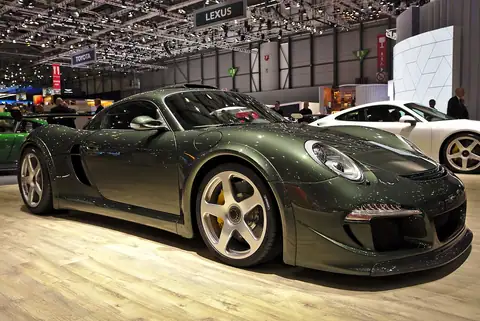 RUF CTR3 (Wikimedia Commons: Ruf CTR3)
Photo: Alexander Migl · CC BY-SA 4.0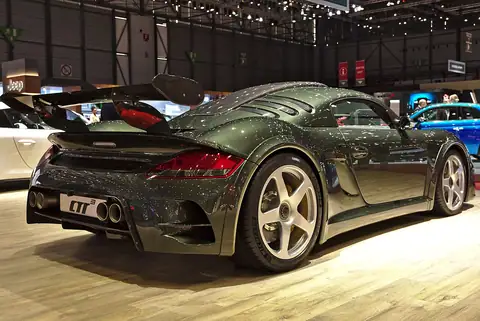 RUF CTR3 (Wikimedia Commons: Ruf CTR3)
Photo: Alexander Migl · CC BY-SA 4.0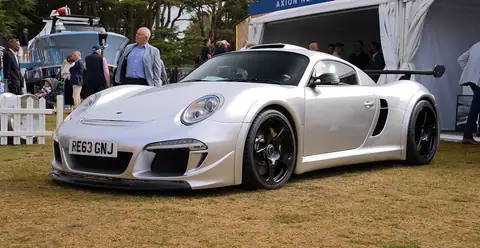 RUF CTR3 (Wikimedia Commons: Ruf CTR3)
Photo: MrWalkr · CC BY-SA 4.0
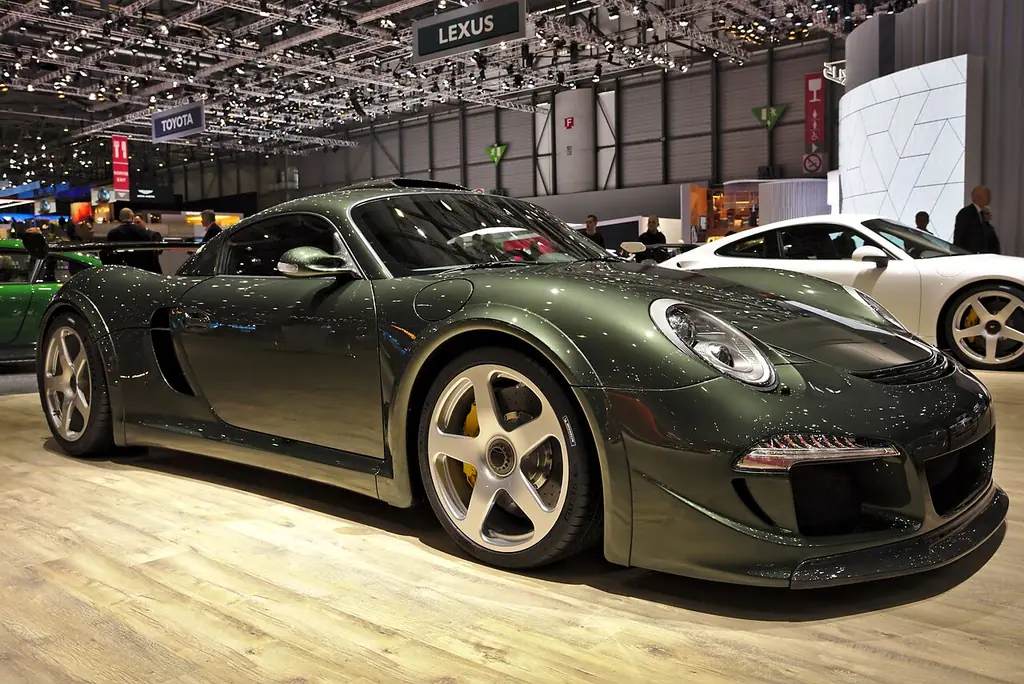
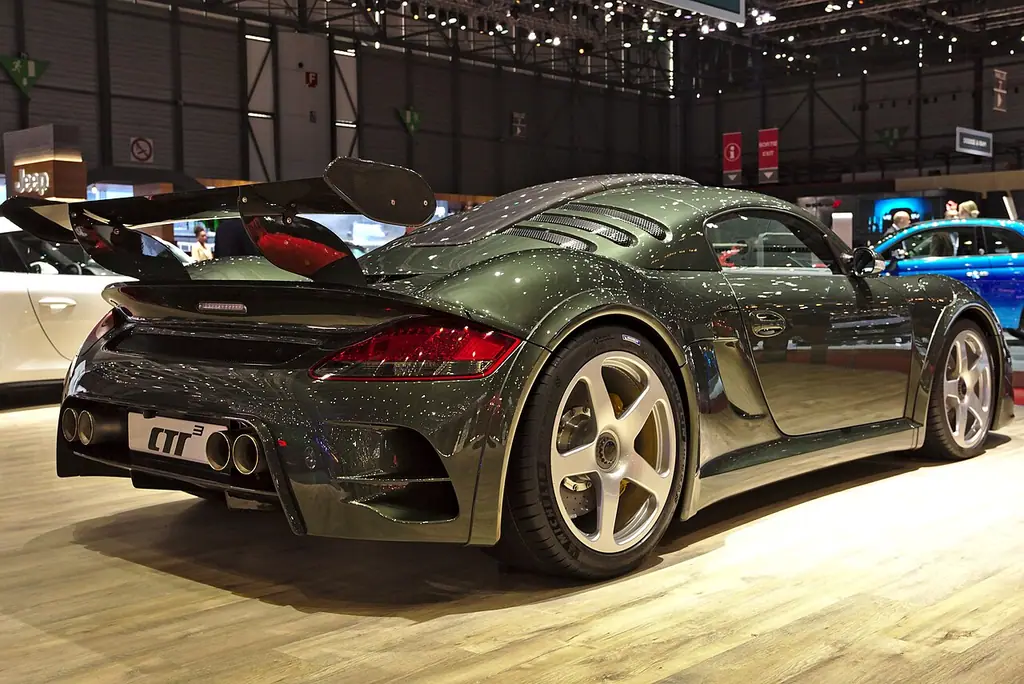
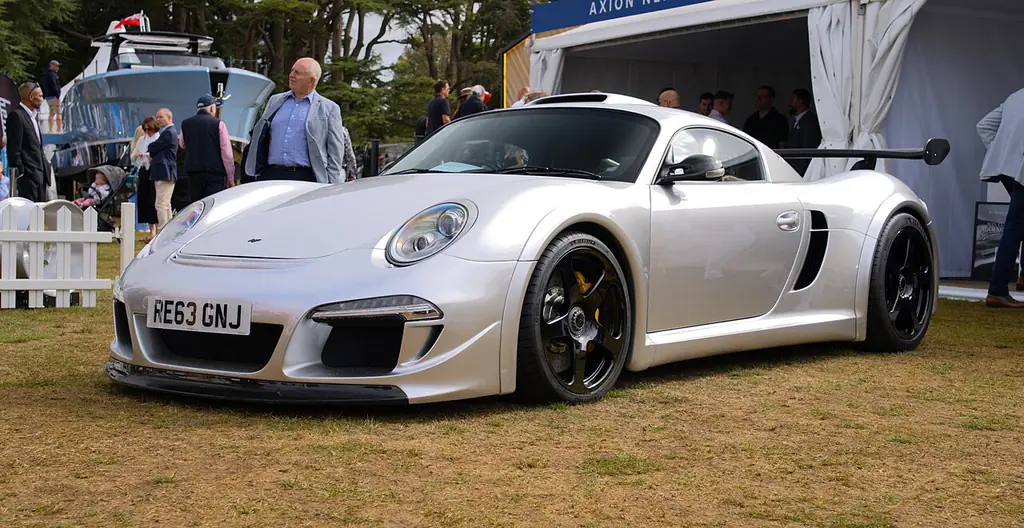


02Production & history
Production
Every figure says what it counts.
| What is counted | Figure | Basis | Status |
|---|---|---|---|
| Total model productionapproximate ('fewer than 30'), of which 7 Clubsport | 301 | Factory production | Independently researched |
Independent counts (e.g. engine and colour) are never combined into a calculated figure. Surviving examples are never presented as original production.
History
The project began as a clean-sheet design called R50, of which two prototypes were built, but the effort needed for series production proved too great and the car was re-engineered around the front platform of a 911 GT3 RS. The CTR3 was unveiled in April 2007 at the opening of RUF's new factory in the grounds of the Bahrain Grand Prix circuit; Road & Track reported that the Crown Prince of Bahrain had been struck by RUF's Yellow Bird in its 1987 "World's Fastest Cars" story. The body was drawn by Bennett Soderberg, then 26.
Road & Track expected customer cars from October 2007 at 380,000 euros and a plan for 50 cars over three years across Bahrain and Pfaffenhausen; evo quoted 420,000 euros. A later CTR3 Evo raised output to 800 hp and 730 lb-ft with a seven-speed dual-clutch gearbox and a claimed 236 mph, following the CTR3 Clubsport.
Variants
How each version differs from the standard CTR3.
No variants documented yet. Have a source? Contribute it.
03Specifications
Technical specifications
Engine
| Engine family | Not yet verified |
|---|---|
| Engine code | Not yet verified |
| Layout | Mid-mounted twin-turbo flat-six, ahead of the rear axle; based on the Porsche 996 Turbo engine2,3 Independently researched |
| Displacement | 3,800 cc / 3.8 LFactory: 3.8 L3 Independently researchedevo states the 3.6 L Porsche engine was increased to 3.7 L; evo's Lykan Hypersport report says 3.8 L. R&T value used. |
| Bore | Not yet verified |
| Stroke | Not yet verified |
| Compression ratio | Not yet verified |
| Valvetrain | Aluminium alloy heads, DOHC per bank, four valves per cylinder2 Independently researched |
| Fuel system | Bosch Motronic engine management, multipoint fuel injection2 Independently researched |
| Induction | Twin turbochargers3 Independently researched |
| Power | 522 kW / 710 PSFactory: 700 hp · converted3 Independently researchedPrototype/first-drive figure; evo quotes 691 bhp at 7600 rpm and 656 lb-ft at 4000 rpm for the production-intent car. evo: 691 bhp. |
| Power at | 7,000 rpm3 Independently researchedevo: 7600 rpm. |
| Torque | 891 NmFactory: 657 lb-ft · converted3 Independently researchedevo: 656 lb-ft. |
| Torque at | 4,000 rpm3 Independently researched |
Transmission & drivetrain
| Gearbox | Six-speed sequential manual (Hor), limited-slip differential2 Independently researched |
|---|---|
| Gears | 62 Independently researched |
| Driven wheels | Rear2 Independently researched |
Chassis, body & dimensions
| Chassis | Porsche 911 GT3 RS front structure (A-pillars forward) with steel tube-frame rear "birdcage" subframe engineered with Multimatic3 Independently researched |
|---|---|
| Front suspension | MacPherson struts, coil springs, dampers, anti-roll bar2 Independently researched |
| Rear suspension | Multi-link, push-rod-operated coil springs and dampers, anti-roll bar2 Independently researched |
| Brakes | Cross-drilled, ventilated carbon-ceramic discs, 15.0 in (380 mm), six-piston calipers front and rear, ABS3,2 Independently researched |
| Steering | Not yet verified |
| Body construction | Carbon fibre/Kevlar body with aluminium Porsche doors and bonnet3 Independently researched |
| Wheelbase | 2,624 mmFactory: 103.3 in · converted3 Independently researched |
| Length | 4,450 mmFactory: 175 in · converted3 Independently researchedEstimate (prototype). |
| Width | 1,940 mmFactory: 76.5 in · converted3 Independently researchedEstimate (prototype). |
| Height | 1,200 mmFactory: 47.2 in · converted3 Independently researchedEstimate (prototype). |
| Front track | Not yet verified |
| Rear track | Not yet verified |
| Kerb weight | 1,400 kgFactory: 1,400 kg2 Independently researchedR&T estimated 3085 lb (about 1,400 kg) for the prototype. |
| Dry weight | Not yet verified |
Performance
| Maximum speed | 375 km/hFactory: 233 mph · converted3 Independently researchedClaim; evo says 235 mph. |
|---|---|
| 0–100 km/h | Not yet verified |
| 0–60 mph | 3.2 s3 Independently researchedEstimate; evo quotes the same 3.2 s for 0-62 mph and 9.6 s for 0-124 mph. |
| Fuel tank | Not yet verified |
“Not yet verified” means no source has been checked for that value yet. Nothing is estimated to fill a gap.
04Colours & options
Factory colours & interiors
Original paint and trim, with the number of cars in each where a source gives it.
Not yet documented. Have a source? Contribute it.
Factory options & codes
Codes are shown exactly as written by the manufacturer.
Not yet documented. Have a source? Contribute it.
05Individual cars
Chassis register
Every documented car, with its colours, history and where it is now. Open a row for the full record. Known chassis are not automatically authenticated originals.
Not yet documented. Have a source? Contribute it.
Competition history
Every race result of the individual cars, in date order. Click a chassis number to open its full record in the register.
Not yet documented. Have a source? Contribute it.
Auction & sale history
Documented public sales of the individual cars. Click a chassis number to open its full record in the register.
Not yet documented. Have a source? Contribute it.
See one in person
Museums where an example of this car can be seen.
No example is documented on public display yet. Have a source? Contribute it.
06Reference
Identification guide
How to tell an original from a replica or later conversion.
A CTR3 has a carbon-fibre body (aluminium Porsche doors and bonnet, Porsche head- and tail-lights) over a steel tube-frame rear subframe, called the "birdcage", engineered with Multimatic; the wheelbase is 10.8 in longer than a 911's and the car is about 5 in wider and 4.5 in lower. The twin-turbo flat-six sits ahead of the rear axle, the transmission is a six-speed sequential manual built by Hor, and there is no rear window (a camera is used instead).
Sources
Each number links to the exact facts it supports.
-
1
2018 RUF CTR3 Clubsport – Sports Car Market Level C
- 30 approximate ('fewer than 30'), of which 7 Clubsport
-
2
Ruf CTR3 Level C evo
- sits in front of rather than behind the rear axle; based on the 996 Turbo's powerplant
- Aluminium alloy, dohc per bank, four valves per cylinder (Specifications)
- Bosch Motronic engine management, multipoint fuel injection (Specifications)
- Six-speed sequential manual, rear-wheel drive, limited-slip differential (Specifications)
- Six-speed sequential manual (Specifications)
- rear-wheel drive (Specifications)
- MacPherson struts, coil springs, dampers, anti-roll bar (Specifications)
- Multi-link, push-rod-operated coil springs and dampers, anti-roll bar (Specifications)
- 380mm carbon-ceramic discs all round (Specifications)
- It tips the scales at 1400kg
-
3
2008 Ruf CTR3: A first step toward supercar supremacy Level C Mike Monticello · Road & Track · 2007-05-21
- 3.6-liter Porsche-derived twin-turbocharged flat-6
- increased to 3.8 liters by Ruf
- twin-turbocharged flat-6
- Horsepower 700 bhp @ 7000 rpm (Specifications)
- 700 bhp @ 7000 rpm (Specifications)
- Torque 657 lb-ft @ 4000 rpm (Specifications)
- 657 lb-ft @ 4000 rpm (Specifications)
- used a Porsche 911 GT3 RS front platform; rear is a tube frame design
- 15.0-in. drilled & vented composite discs, ABS (Specifications)
- Aside from the aluminum Porsche doors and hood the rest of the body is all Ruf and done in carbon fiber
- Wheelbase 103.3 in. (Specifications)
- Length est 175.0 in. (Specifications)
- Width est 76.5 in. (Specifications)
- Height est 47.2 in. (Specifications)
- Claimed top speed is 233 mph
- 0-60 mph est 3.2 sec (Specifications)
Keep exploring
More from RUF
-
RUF · 1995–1997
CTR2
28 Built
-
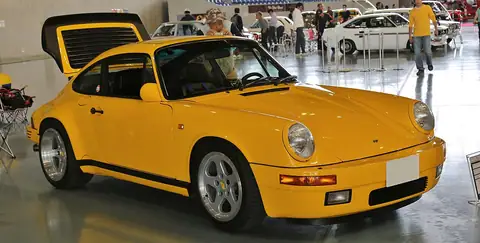
RUF · 1987–1992
CTR 'Yellowbird'
29 Built
-
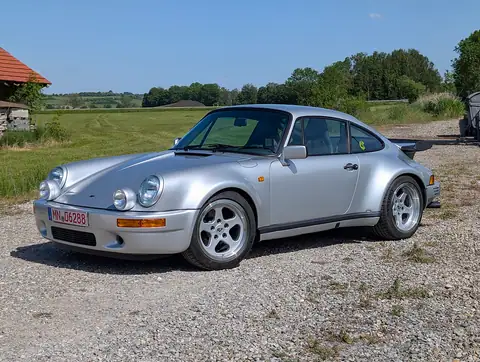
RUF · 1983–1989
BTR
30 Built
-
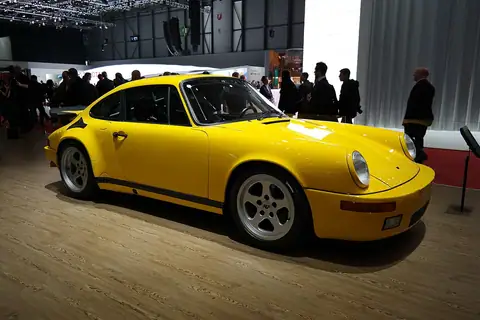
RUF · 2017
CTR (2017, carbon monocoque)
30 Built
See all 6 cars by RUF →The Porsche family →
More from Germany
-
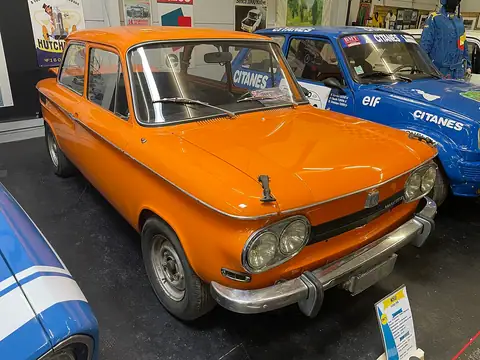
NSU · 1967–1971
TTS (Prinz 1000 TTS)
2,400 Built
-
Hyundai
i30 N Project C (2019)
Production not yet verified
-
Volkswagen
W12 Coupé (Nardo)
Production not yet verified
-
Opel
GT Roadster (2007) (2007-2009)
Production not yet verified
73 other makes from GermanyAC SchnitzerAdlerAgria-WerkeAlbertAlpinaAMGAMOAmphicarApolloArtegaAudiAuto UnionAutomobili PininfarinaBayerische AutowerkeBenzBenz & Cie.BitterBMWBohseBoldmenBorgwardBovensiepenBrabusBrennaborBrütschCarlssonChampionDaimler-Motoren-GesellschaftDKWFMR (Messerschmitt)FuldamobilGepardGlasGoggomobilGoliathGumpertGutbrodHanomagHeinkelHorchAll makes →