Makes › Saab › 93 'Monster' · Prototype · 1959
Saab
93 'Monster'
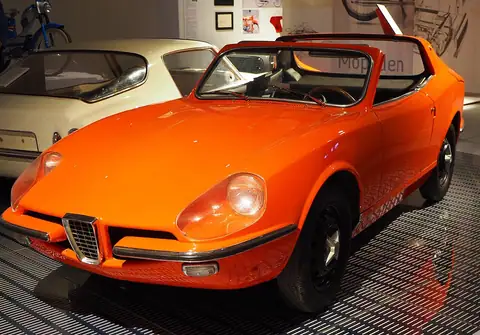
Lightweight twin-engined (two 748 cc two-strokes) Saab 93 experimental car
Still being researched: identification guide, full specifications. Everything shown is checked against the cited sources. Know more? Send us a source.
Contents
01Overview
At a glance
- Built
- Not yet verified
- Years
- 1959
- Engine
- two 748 cc three-cylinder two-stroke engines coupled into a six-cylinder · 1,496 cc / 1.5 LFactory: 1,496 cc
- Power
- 103 kW / 140 PSFactory: 138 hp · converted
- Top speed
- 196 km/hFactory: 196 km/h
- Body
- Not yet verified
- Designer
- Not yet verified
- In this archive
- Not yet verified
- Surviving
- Not yet verified
Sources and any conflicting figures are in the sections below.
Why it matters
The Monster was a one-off experiment, a Saab 93 stripped of weight and fitted with two three-cylinder two-stroke engines. It was never raced and the tests were not repeated.
How rare is it?
Six separate kinds of rarity – never combined into one number.
Each kind of rarity is rated separately and never combined.
02Production & history
Production
Every figure says what it counts.
No production figures recorded yet.
History
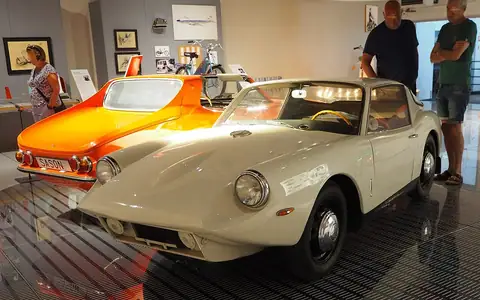
Built in 1959 as a lightweight Saab 93 with a plastic bonnet and two 748 cc three-cylinder two-stroke engines, the Monster has a combined swept volume of almost 1.5 litres. At the Satenas airfield Saab engineers timed it at 196 km/h, but the run was made in one direction only and without independent inspectors. At the Gelleraasen circuit near Karlskoga it proved hard to corner and the power was too much for a pinion in the transmission.
Autocar adds that Saab could not find a competition series that would accept it, so it never raced, and that the nickname Monstret is Swedish for monster. It is now in the Saab Museum at Trollhattan.
Variants
How each version differs from the standard 93 'Monster'.
No variants documented yet. Have a source? Contribute it.
03Specifications
Technical specifications
Engine
| Engine family | Not yet verified |
|---|---|
| Engine code | Not yet verified |
| Layout | two 748 cc three-cylinder two-stroke engines coupled into a six-cylinder1,2 Independently researched |
| Displacement | 1,496 cc / 1.5 LFactory: 1,496 cc1 Independently researchedSum of two 748 cc units; the museum says almost 1.5 litres. |
| Bore | Not yet verified |
| Stroke | Not yet verified |
| Compression ratio | Not yet verified |
| Fuel system | Not yet verified |
| Power | 103 kW / 140 PSFactory: 138 hp · converted2 Independently researchedThe Saab Museum says "well over 100bhp"; Autocar gives 138 hp. |
| Power at | Not yet verified |
| Torque | Not yet verified |
Transmission & drivetrain
| Gearbox | Not yet verified |
|---|---|
| Gears | Not yet verified |
| Driven wheels | Not yet verified |
Chassis, body & dimensions
| Chassis | Not yet verified |
|---|---|
| Front suspension | Not yet verified |
| Rear suspension | Not yet verified |
| Brakes | Not yet verified |
| Steering | Not yet verified |
| Body construction | Not yet verified |
| Wheelbase | Not yet verified |
| Length | Not yet verified |
| Width | Not yet verified |
| Height | Not yet verified |
| Front track | Not yet verified |
| Rear track | Not yet verified |
| Kerb weight | Not yet verified |
| Dry weight | Not yet verified |
Performance
| Maximum speed | 196 km/hFactory: 196 km/h1 DisputedUnofficial: one direction only, no independent inspectors. |
|---|---|
| 0–100 km/h | Not yet verified |
| Fuel tank | Not yet verified |
“Not yet verified” means no source has been checked for that value yet. Nothing is estimated to fill a gap.
04Colours & options
Factory colours & interiors
Original paint and trim, with the number of cars in each where a source gives it.
Not yet documented. Have a source? Contribute it.
Factory options & codes
Codes are shown exactly as written by the manufacturer.
Not yet documented. Have a source? Contribute it.
05Individual cars
Chassis register
Every documented car, with its colours, history and where it is now. Open a row for the full record. Known chassis are not automatically authenticated originals.
Not yet documented. Have a source? Contribute it.
Competition history
Every race result of the individual cars, in date order. Click a chassis number to open its full record in the register.
Not yet documented. Have a source? Contribute it.
Auction & sale history
Documented public sales of the individual cars. Click a chassis number to open its full record in the register.
Not yet documented. Have a source? Contribute it.
See one in person
Museums where an example of this car can be seen.
No example is documented on public display yet. Have a source? Contribute it.
06Reference
Identification guide
How to tell an original from a replica or later conversion.
Not yet documented. Have a source? Contribute it.
Sources
Each number links to the exact facts it supports.
-
1
The Monster history Level A The Saab Museum (independent enthusiast archive)
- two 748cc three cylinder two stroke engines installed in the engine bay
- combined swept volume of almost 1.5 litres
- Saab engineers timed the Monster at 196km/h
-
2
The most interesting treasures of the Saab museum Level B Autocar
- fuse a pair of three-cylinder engines to create a two-stroke straight-six
- 138hp six transversally in an otherwise stock-looking 93