Makes › Škoda › 1100 OHC Coupé · Factory competition · 1959–1960 Ultra Rare
Škoda
1100 OHC Coupé
Two aluminium-bodied racing coupés (raced 1960–62); neither survived intact, one reconstructed by Škoda in 2022
Still being researched: identification guide. Everything shown is checked against the cited sources. Know more? Send us a source.
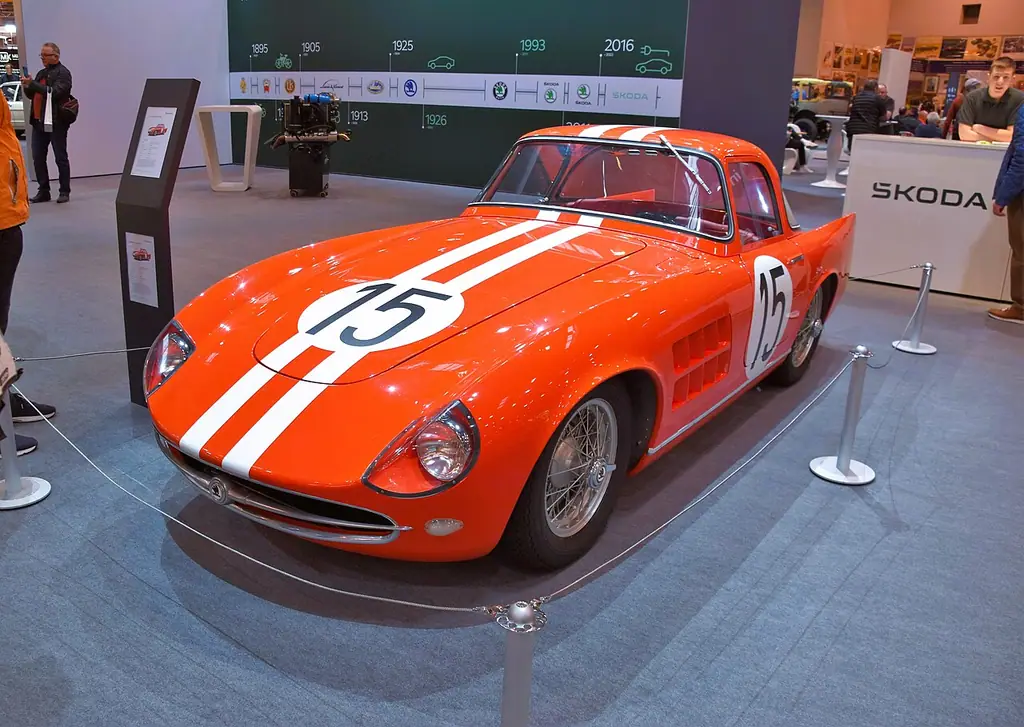
Photo: Charles from Port Chester, New York · CC BY 2.0
Contents
01Overview
At a glance
- Built
- 2 Built
- Years
- 1959–1960
- Engine
- Longitudinal four-cylinder in-line, naturally aspirated, behind the front axle
- Power
- 68.6 kW / 93.3 PSFactory: 92 hp · converted
- Top speed
- 200 km/hFactory: 200 km/h
- Body
- Not yet verified
- Designer
- Not yet verified
- In this archive
- Not yet verified
- Surviving
- Not yet verified
Sources and any conflicting figures are in the sections below.
Why it matters
The 1100 OHC Coupé was a closed, lighter development of Škoda's 1957 sports racer, built to follow Škoda's only Le Mans entry of 1950. Only two were made, and Cold War politics kept them out of western Europe.
How rare is it?
Six separate kinds of rarity – never combined into one number.
Each kind of rarity is rated separately and never combined.
Photos
Exterior, interior and detail photos with their licences.
 Škoda 1100 OHC Coupé (Wikimedia Commons search)
Photo: Charles from Port Chester, New York · CC BY 2.0 Škoda 1100 OHC Coupé (Wikimedia Commons search)
Photo: Charles from Port Chester, New York · CC BY 2.0
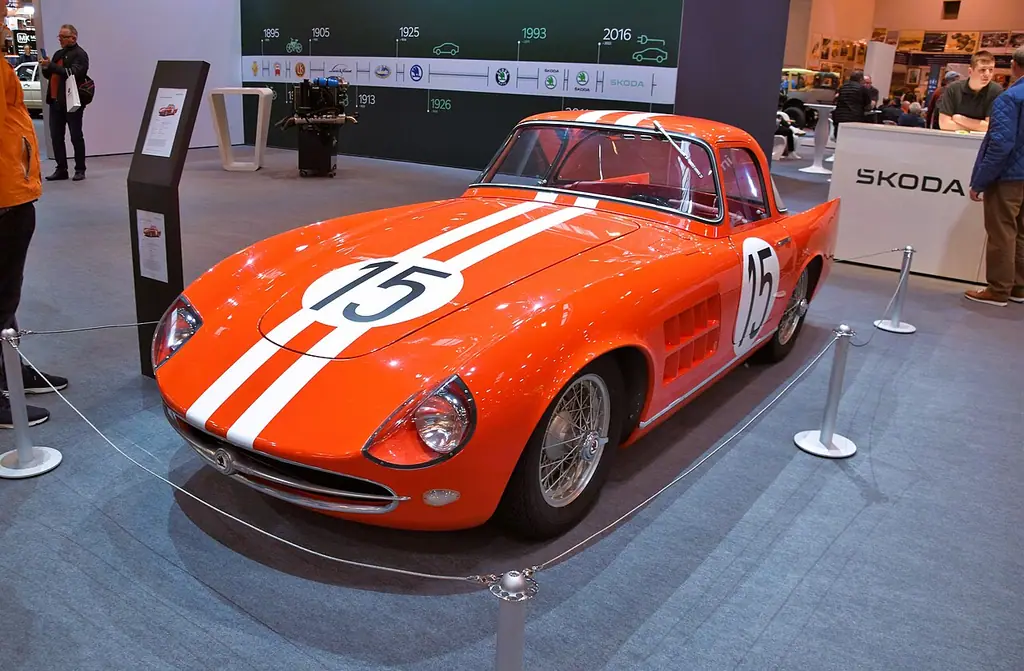


02Production & history
Production
Every figure says what it counts.
| What is counted | Figure | Basis | Status |
|---|---|---|---|
| Total model productioncoupés built | 21,2 | Factory production | Factory reported |
Independent counts (e.g. engine and colour) are never combined into a calculated figure. Surviving examples are never presented as original production.
History
Development of the 1100 OHC (type 968) began in spring 1956. After two open cars, the designers built two coupés in 1959 and 1960 with closed aluminium bodies, using parts from series models but a new lightweight truss frame of welded thin-walled tubes. Their racing career lasted from 1960 to 1962, and the first example took part in only five races. In 1966 both were sold to private buyers and converted for road use, and both later crashed.
The Škoda Museum and the company's prototype centre reconstructed one coupé from its original frame, chassis and engine, rebuilding the body from historical documentation; the project was completed in early 2022.
Variants
How each version differs from the standard 1100 OHC Coupé.
No variants documented yet. Have a source? Contribute it.
03Specifications
Technical specifications
Engine
| Engine family | Not yet verified |
|---|---|
| Engine code | Not yet verified |
| Layout | Longitudinal four-cylinder in-line, naturally aspirated, behind the front axle1 |
| Displacement | Not yet verified |
| Bore | Not yet verified |
| Stroke | Not yet verified |
| Compression ratio | 9.3:11 |
| Valvetrain | Overhead camshaft; aluminium cylinder and crankcase derived from the Škoda 440 "Spartak"1 |
| Fuel system | Two carburettors1 |
| Power | 68.6 kW / 93.3 PSFactory: 92 hp · converted1Rating: manufacturerPress release also gives 67.7 kW. |
| Power at | 7,700 rpm1 |
| Torque | Not yet verified |
| Redline | 8,500 rpm1 |
Transmission & drivetrain
| Gearbox | Not yet verified |
|---|---|
| Gears | 51 |
| Driven wheels | Not yet verified |
Chassis, body & dimensions
| Chassis | Lightweight truss frame welded from thin-walled tubes1 |
|---|---|
| Front suspension | Trapezoidal (two wishbones, one above the other)1 |
| Rear suspension | Coupling axle with trailing arms1 |
| Brakes | Dual-circuit; rear drums mounted on the differential1 |
| Steering | Not yet verified |
| Body construction | Not yet verified |
| Materials | Aluminium bodywork1 |
| Wheelbase | Not yet verified |
| Length | Not yet verified |
| Width | Not yet verified |
| Height | Not yet verified |
| Front track | Not yet verified |
| Rear track | Not yet verified |
| Kerb weight | 555 kgFactory: 555 kg1A 2017 Škoda article gives 618 kg for the coupés. |
| Dry weight | Not yet verified |
Performance
| Maximum speed | 200 km/hFactory: 200 km/h1Depending on gearing. |
|---|---|
| 0–100 km/h | Not yet verified |
| Fuel tank | Not yet verified |
“Not yet verified” means no source has been checked for that value yet. Nothing is estimated to fill a gap.
04Colours & options
Factory colours & interiors
Original paint and trim, with the number of cars in each where a source gives it.
Not yet documented. Have a source? Contribute it.
Factory options & codes
Codes are shown exactly as written by the manufacturer.
Not yet documented. Have a source? Contribute it.
05Individual cars
Chassis register
Every documented car, with its colours, history and where it is now. Open a row for the full record. Known chassis are not automatically authenticated originals.
Not yet documented. Have a source? Contribute it.
Competition history
Every race result of the individual cars, in date order. Click a chassis number to open its full record in the register.
Not yet documented. Have a source? Contribute it.
Auction & sale history
Documented public sales of the individual cars. Click a chassis number to open its full record in the register.
Not yet documented. Have a source? Contribute it.
See one in person
Museums where an example of this car can be seen.
No example is documented on public display yet. Have a source? Contribute it.
06Reference
Identification guide
How to tell an original from a replica or later conversion.
Not yet documented. Have a source? Contribute it.
Sources
Each number links to the exact facts it supports.
-
1
Škoda 1100 OHC Coupé: a racing car painstakingly reconstructed Level A Škoda Auto a.s. (Škoda Storyboard) · 2022-02-07
- Two copies of the ŠKODA 1100 OHC Coupé were built in 1959/1960
- naturally aspirated in-line four-cylinder engine
- a compression ratio of 9.3:1
- OHC valve drive ... cylinder and crankcase were made of aluminium
- two carburettors
- Its output was 92 hp (67.7 kW) at 7,700 rpm
- 92 hp (67.7 kW) at 7,700 rpm
- For short bursts, it could reach up to 8,500 rpm
- rear axle differential and five-speed gearbox
- a lightweight yet rigid truss frame welded from thin-walled tubes
- Trapezoidal suspension, consisting of two triangular wishbones arranged one above the other
- a coupling axle with trailing arms was installed at the rear
- Dual-circuit brakes ... rear drum brakes were mounted on the differential gear
- two-seater with aluminium bodywork
- an unladen weight of only 555 kg
- reached a top speed of around 200 km/h
-
2
Škoda Storyboard – 1100 OHC Coupé: a racing car painstakingly reconstructed Level A
- 2 coupés built
Keep exploring
More from Škoda
-
Škoda · 1935
935 Dynamic
1 Built
-
Škoda · 1950
Supersport (1950 circuit racer)
2 Built
-
Škoda
903
3 Built
-
Škoda · 1975
Buggy (type 736)
4 Built
More from Czech Republic
-
Tatra · 1931–1933
V570 prototype
Production not yet verified
-
Zbrojovka Brno
Disk
Production not yet verified
-
Aero · 1949
Minor Sport (1949 Le Mans)
2 Built
-
Nesselsdorfer Wagenbau · 1897
Präsident
1 Built
6 other makes from Czech RepublicAeroJawaMTXNesselsdorfer WagenbauTatraZbrojovka Brno