Makes › Stout › Scarab · Rare production · 1932–1936 Ultra Rare
Stout
Scarab
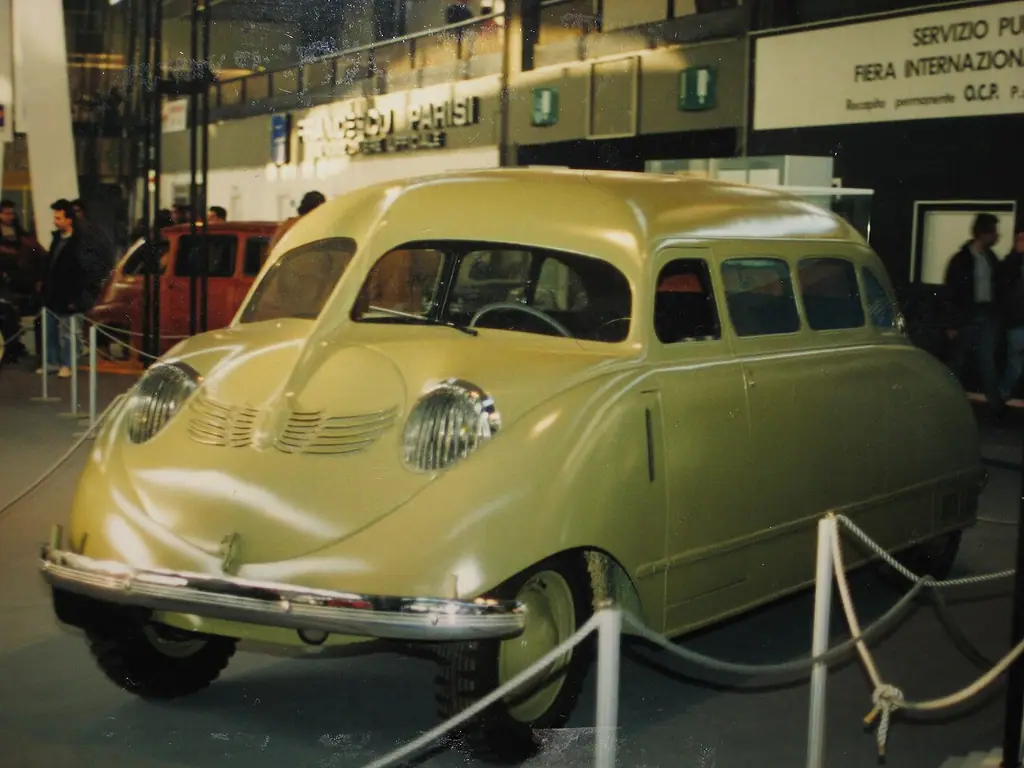
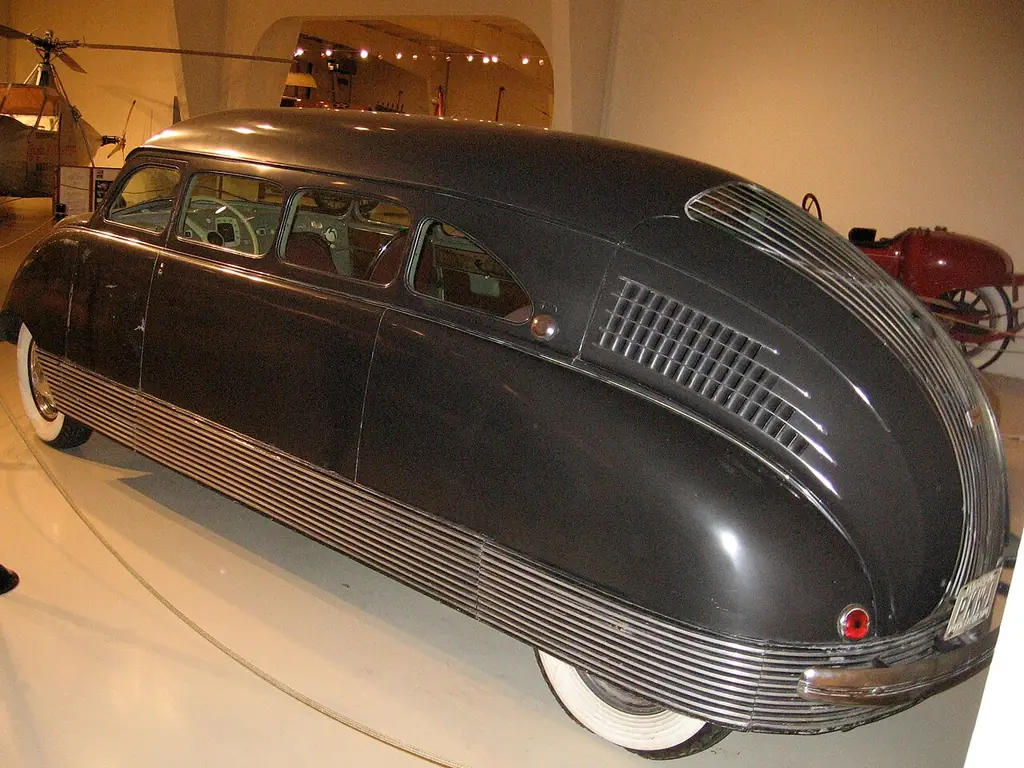
William Stout's rear-engined, unit-bodied minivan forerunner built in very small numbers
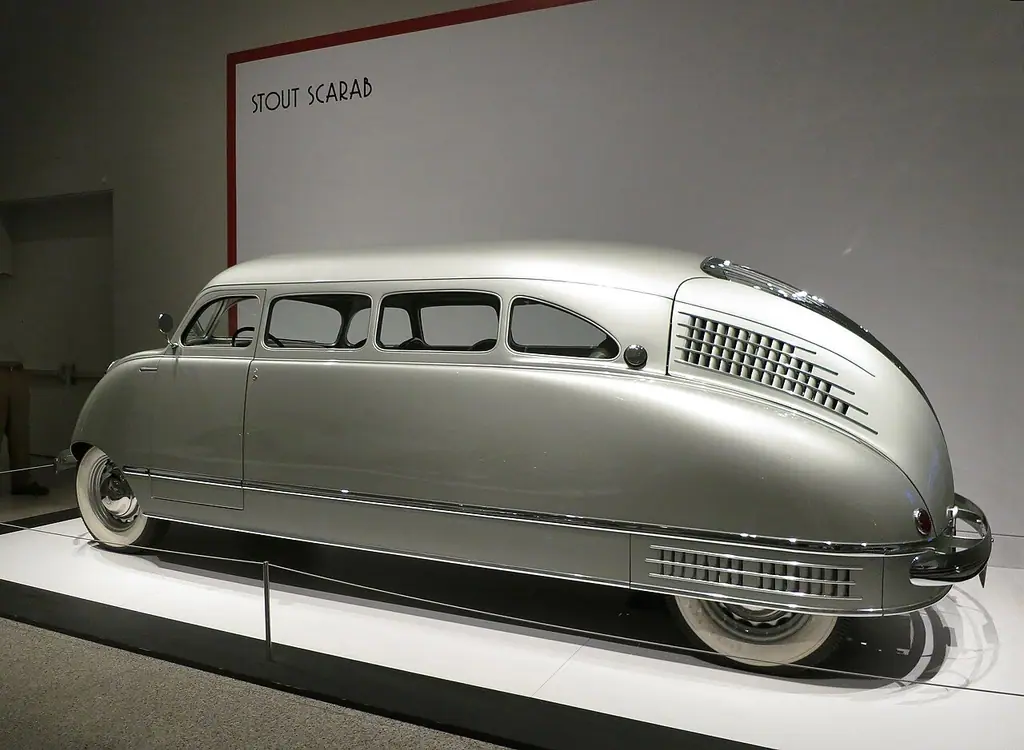
Photo: Jim Evans · CC BY-SA 4.0
Contents
01Overview
At a glance
- Built
- 9 Built
- Years
- 1932–1936
- Engine
- Rear-mounted Ford V8
- Power
- Not yet verified
- Top speed
- Not yet verified
- Body
- Not yet verified
- Designer
- William B. Stout (engineering); John Tjaarda (body styling of the first prototype)
- In this archive
- Not yet verified
- Surviving
- 5 (unknown)
Sources and any conflicting figures are in the sections below.
Why it matters
The Stout Scarab was an early rear-engined, one-box car that has been called an ancestor of the minivan. William B. Stout, the aircraft engineer behind the Ford Trimotor, applied aircraft methods: a space-frame structure, an aluminium body and a flat floor made possible by the rear V8 and the lack of a driveshaft.
How rare is it?
Six separate kinds of rarity – never combined into one number.
Each kind of rarity is rated separately and never combined.
Photos
Exterior, interior and detail photos with their licences.
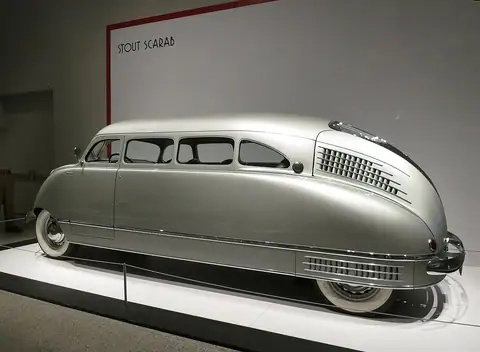 Stout Scarab (Wikipedia article: Stout Scarab)
Photo: Jim Evans · CC BY-SA 4.0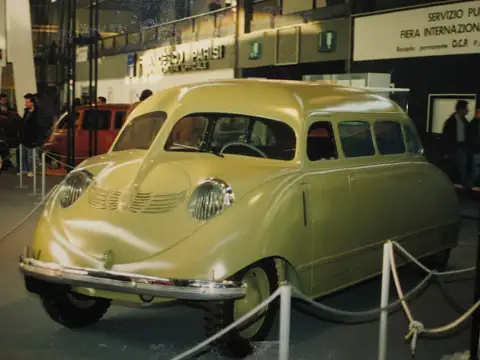 Stout Scarab (Wikipedia article: Stout Scarab)
Photo: user:Luc106 · Public domain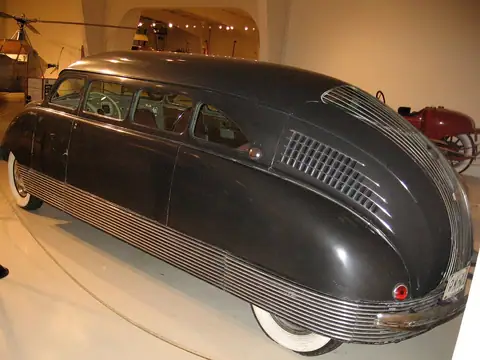 Stout Scarab (Wikipedia article: Stout Scarab)
Photo: No machine-readable author provided. Citroënist assumed (based on copyright claims). · Public domain


02Production & history
Production
Every figure says what it counts.
| What is counted | Figure | Basis | Status |
|---|---|---|---|
| Total model production"about 5 survive" per Cars at Large (another source on the miscfug blog says five still exist) | about 52Reported by enthusiast sources – not verified. Know the real figure? Send us a source. | Surviving examples | Unknown |
| Total model productionScarabs built (US$5,000 price limited the run; "only nine were built") | 91 | Factory production | Independently researched |
Independent counts (e.g. engine and colour) are never combined into a calculated figure. Surviving examples are never presented as original production.
History
Stout's company, Stout Engineering Laboratories in Detroit, completed the first prototype in 1932, with a body styled by John Tjaarda. The production Scarab was sold from 1935 at $5,000, and buyers included Harvey Firestone and Philip Wrigley. Each car was slightly different, and the cars were promoted by Stout himself, who liked to show the ride quality by placing a glass of water on the table.
Sources give nine cars built, with the New York Times saying no more than a dozen; about five survive.
Variants
How each version differs from the standard Scarab.
No variants documented yet. Have a source? Contribute it.
03Specifications
Technical specifications
Engine
| Engine manufacturer | Ford3 Independently researched |
|---|---|
| Engine family | Ford flathead V8, mounted at the rear4 Independently researchedFrom an enthusiast source (level D) – not yet confirmed by the maker or a registry. |
| Engine code | Not yet verified |
| Layout | Rear-mounted Ford V82 Independently researched |
| Cylinders | 82 Independently researched |
| Displacement | Not yet verified |
| Bore | Not yet verified |
| Stroke | Not yet verified |
| Compression ratio | Not yet verified |
| Fuel system | Not yet verified |
| Power | Not yet verified |
| Power at | Not yet verified |
| Torque | Not yet verified |
Transmission & drivetrain
| Gearbox | three-speed manual transaxle4 Independently researchedFrom an enthusiast source (level D) – not yet confirmed by the maker or a registry. |
|---|---|
| Gears | 34 Independently researchedFrom an enthusiast source (level D) – not yet confirmed by the maker or a registry. |
| Driven wheels | rear4 Independently researchedFrom an enthusiast source (level D) – not yet confirmed by the maker or a registry. |
Chassis, body & dimensions
| Chassis | Steel space frame2 Independently researched |
|---|---|
| Front suspension | Independent, coil springs around gas-filled struts2 Independently researched |
| Rear suspension | Independent, coil springs around gas-filled struts2 Independently researched |
| Brakes | Not yet verified |
| Steering | Not yet verified |
| Body construction | Aluminium body on early cars; steel body on later cars2 Independently researched |
| Wheelbase | 3,430 mmFactory: 135 in · converted4 Independently researchedFrom an enthusiast source (level D) – not yet confirmed by the maker or a registry. The 1946 experimental Scarab on conceptcarz.com also gives 135 in, but that is a different car and was not used. |
| Length | Not yet verified |
| Width | Not yet verified |
| Height | Not yet verified |
| Front track | Not yet verified |
| Rear track | Not yet verified |
| Kerb weight | Not yet verified |
| Dry weight | Not yet verified |
Performance
| Maximum speed | Not yet verified |
|---|---|
| 0–100 km/h | Not yet verified |
| Fuel tank | Not yet verified |
“Not yet verified” means no source has been checked for that value yet. Nothing is estimated to fill a gap.
04Colours & options
Factory colours & interiors
Original paint and trim, with the number of cars in each where a source gives it.
Not yet documented. Have a source? Contribute it.
Factory options & codes
Codes are shown exactly as written by the manufacturer.
Not yet documented. Have a source? Contribute it.
05Individual cars
Chassis register
Every documented car, with its colours, history and where it is now. Open a row for the full record. Known chassis are not automatically authenticated originals.
Not yet documented. Have a source? Contribute it.
Competition history
Every race result of the individual cars, in date order. Click a chassis number to open its full record in the register.
Not yet documented. Have a source? Contribute it.
Auction & sale history
Documented public sales of the individual cars. Click a chassis number to open its full record in the register.
Not yet documented. Have a source? Contribute it.
See one in person
Museums where an example of this car can be seen.
No example is documented on public display yet. Have a source? Contribute it.
06Reference
Identification guide
How to tell an original from a replica or later conversion.
Identifying features are the rounded rear-engined body with a roomy interior seating six to eight with a table and movable chairs, a steel space frame with aluminium body on the early cars (later cars had steel bodywork), independent suspension at all four corners with coil springs around gas-filled struts, and no running boards or door handles.
Sources
Each number links to the exact facts it supports.
-
1
PreWarCar – Stout Scarab: a very different kind of beetle Level C
- 9 Scarabs built (US$5,000 price limited the run; "only nine were built")
-
2
Futuristic Style: 1935 Stout Scarab (Part III) Level D Cars at Large · 2007-09-12
- Today, about 5 survive
- a rear mounted Ford V8
- rear mounted Ford V8
- a steel space frame wrapped with an aluminum body
- independent suspension at all four corners and springs wrapped around gas filled struts
- independent suspension at all four corners
- Later models were wrapped in steel body work
-
3
Stout Scarab (Indiacar infobank) Level D Indiacar · 2013-10-17
- powered by a Ford V-8 engine mounted in the rear
-
4
Blast from the Past: 1936 Stout Scarab Level D Adil Jal Darukhanawala · indiacar.com · 2001-05-01
- the famous Ford flathead V8 placed at the rear
- a Stout built three-speed manual transaxle
- his rear-engine, rear drive feature
- a long 135-inch wheelbase
Keep exploring
More from Stout
This is the only Stout documented so far.
More from United States
-
Lincoln · 1937
Model K Convertible Sedan by LeBaron (style 363A)
12 Built
-
Ford · 1986–1987
Sierra RS Cosworth (3-door)
5,042 Built
-
Chrysler · 1940–1941
Thunderbolt (LeBaron show car)
5 Built
-
Studebaker · 1964
Avanti R2 (1964)
281 Built
141 other makes from United StatesAC PropulsionAcuraAllstateAMCAmerican LaFranceAmerican MotorsAmerican UnderslungApteraArmstrongArnoltAuburnBaldwin-MotionBantamBarris KustomsBendixBerger ChevroletBill ThomasBollingerBremerBuckeyeBuffumBuickCadillacCallawayCastleCheckerChevroletChristieChryslerClenetCodaColumbiaConsulierCordCunninghamCzingerDana ChevroletDean JeffriesDeSotoDetroit ElectricAll makes →