Makes › Toyota › EX-7 concept · Prototype · 1970
Toyota
EX-7 concept
Mid-engined coupé concept built on a spare Toyota 7 (578A) chassis and shown running at the 1970 Tokyo Motor Show; one built.
Still being researched: full specifications. Everything shown is checked against the cited sources. Know more? Send us a source.
Contents
01Overview
At a glance
- Built
- 1 Built
- Years
- 1970
- Engine
- 90-degree V8, all-alloy DOHC, four valves per cylinder · 4,968 cc / 5.0 LFactory: 4,968 cc
- Power
- 336 kW / 456 PSFactory: 450 hp · converted
- Top speed
- Not yet verified
- Body
- Not yet verified
- Designer
- Not yet verified
- In this archive
- Not yet verified
- Surviving
- Not yet verified
Sources and any conflicting figures are in the sections below.
Why it matters
The EX-7 was a fully operational concept car shown at the 1970 Tokyo Motor Show, built on the chassis of a Toyota Group 7 racing car. It explored what a supercar based on competition underpinnings might look like.
How rare is it?
Six separate kinds of rarity – never combined into one number.
Each kind of rarity is rated separately and never combined.
02Production & history
Production
Every figure says what it counts.
| What is counted | Figure | Basis | Status |
|---|---|---|---|
| Total model productioncar built | 11,2 | Factory production | Registry reported |
Independent counts (e.g. engine and colour) are never combined into a calculated figure. Surviving examples are never presented as original production.
History
Toyota's Group 7 programme began in autumn 1967. After the 1968 Type 415S and 1969 Type 474S, Toyota laid down five chassis for the turbocharged Type 578A. Plans were hit when the 1970 Japanese Grand Prix was switched to Formula 1 cars, and a Turbocharged 7 was fatally crashed by Minoru Kawai in August 1970; the Group 7 project was abandoned soon after.
The leftover chassis became the EX-7, the fifth EX-branded Toyota after the EX-I to EX-III of 1969. Toyota showed it at the Tokyo Motor Show held from 30 October to 12 November 1970, where Toyota's own history describes it as a high-speed touring sports car for intercity travel. Only one was built and it has not been seen in public for many years, according to Supercar Nostalgia.
Variants
How each version differs from the standard EX-7 concept.
No variants documented yet. Have a source? Contribute it.
03Specifications
Technical specifications
Engine
| Engine family | Not yet verified |
|---|---|
| Engine code | Not yet verified |
| Layout | 90-degree V8, all-alloy DOHC, four valves per cylinder1 Independently researched |
| Displacement | 4,968 cc / 5.0 LFactory: 4,968 cc1 Independently researched |
| Bore | Not yet verified |
| Stroke | Not yet verified |
| Compression ratio | Not yet verified |
| Fuel system | Denso electronic fuel injection1 Independently researched |
| Induction | naturally aspirated (the two AiResearch turbos of the racing engine were removed)1 Independently researched |
| Power | 336 kW / 456 PSFactory: 450 hp · converted1 Independently researchedThe turbocharged racing version of this V8 is quoted at 800 bhp. |
| Power at | Not yet verified |
| Torque | Not yet verified |
Transmission & drivetrain
| Gearbox | Aisin Seiki CO SR-55 five-speed manual transaxle with heavy-duty clutch1 Independently researched |
|---|---|
| Gears | 51 Independently researched |
| Driven wheels | Not yet verified |
Chassis, body & dimensions
| Chassis | Yamaha-built Type 578A aluminium tubular chassis1 Independently researched |
|---|---|
| Front suspension | double wishbones with adjustable coil-sprung dampers, anti-roll bar1 Independently researched |
| Rear suspension | Not yet verified |
| Brakes | ventilated discs1 Independently researched |
| Steering | Not yet verified |
| Body construction | Not yet verified |
| Wheelbase | 2,250 mmFactory: 2,250 mm1 Independently researched |
| Length | Not yet verified |
| Width | Not yet verified |
| Height | Not yet verified |
| Front track | Not yet verified |
| Rear track | Not yet verified |
| Kerb weight | Not yet verified |
| Dry weight | Not yet verified |
Performance
| Maximum speed | Not yet verified |
|---|---|
| 0–100 km/h | Not yet verified |
| Fuel tank | Not yet verified |
“Not yet verified” means no source has been checked for that value yet. Nothing is estimated to fill a gap.
04Colours & options
Factory colours & interiors
Original paint and trim, with the number of cars in each where a source gives it.
Not yet documented. Have a source? Contribute it.
Factory options & codes
Codes are shown exactly as written by the manufacturer.
Not yet documented. Have a source? Contribute it.
05Individual cars
Chassis register
Every documented car, with its colours, history and where it is now. Open a row for the full record. Known chassis are not automatically authenticated originals.
Not yet documented. Have a source? Contribute it.
Competition history
Every race result of the individual cars, in date order. Click a chassis number to open its full record in the register.
Not yet documented. Have a source? Contribute it.
Auction & sale history
Documented public sales of the individual cars. Click a chassis number to open its full record in the register.
Not yet documented. Have a source? Contribute it.
See one in person
Museums where an example of this car can be seen.
No example is documented on public display yet. Have a source? Contribute it.
06Reference
Identification guide
How to tell an original from a replica or later conversion.
The EX-7 was yellow with a gloss-black front lid, rear deck and tail. It had a sharply raked nose with a retractable panel over a bank of headlights, glass roof panels either side of a central T-bar, upward-hinged door and roof sections that opened electronically while the seats rose, Miura-style slats over the rear window and two rectangular exhausts. It was right-hand drive with a centre-mounted gearshift.
Sources
Each number links to the exact facts it supports.
-
1
Guide: Toyota EX-7 - a Historical & Technical Appraisal Level B Supercar Nostalgia · 2020-10-18
- Only one EX-7 was ever built
- Toyota's 90 degree V8 ... four valve cylinder heads
- all-alloy DOHC unit displaced 4968cc
- Denso electronic fuel-injection
- the two AiResearch turbos were removed from the EX-7's engine
- Toyota rated the normally aspirated unit at 450bhp
- reinforced Aisin Seiki CO SR-55 five-speed manual transaxle
- five-speed manual transaxle
- standard Yamaha-built Type 578A aluminium tubular chassis
- double wishbones and adjustable coil sprung dampers
- ventilated disc brakes and new six-hole cast alloy wheels
- chassis with 2250mm wheelbase
- 2
Keep exploring
More from Toyota
-
No licensed photo yet
Toyota · 1966
2000GT Yatabe speed-record car
1 Built
-
No licensed photo yet
Toyota · 2019
Century open car (2019 enthronement parade car)
1 Built
-
No licensed photo yet
Toyota
2000GT Roadster (James Bond cars)
2 Built
-
No licensed photo yet
Toyota · 2018–2019
Century GRMN
2 Built
More from Japan
-
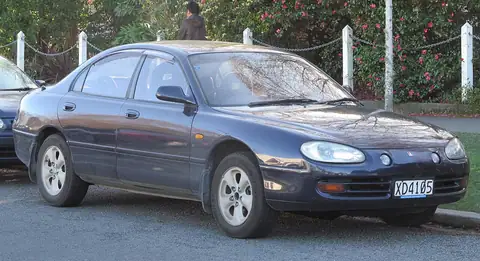
Autozam · 1992–1994
Autozam Clef
Production not yet verified
-
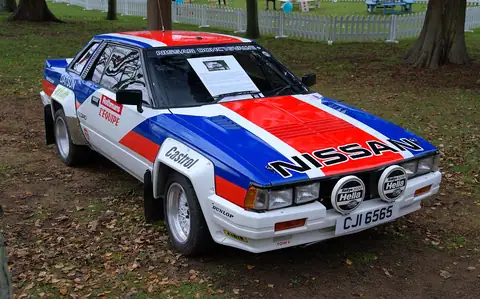
Nissan
240RS (BS110)
200 Built
-
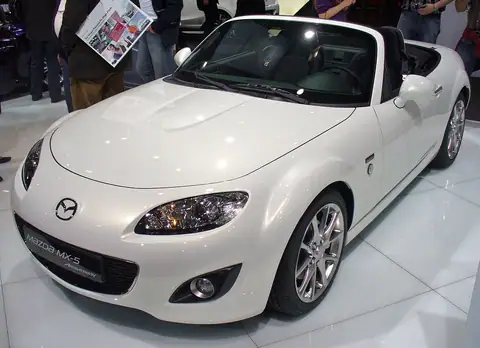
Mazda
MX-5 20th Anniversary (UK, 2010)
Production not yet verified
-
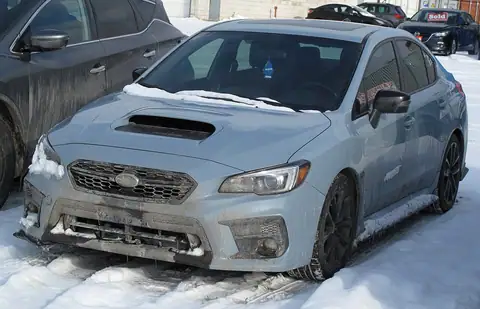
Subaru
WRX Raiu Edition (Canada)
Production not yet verified
30 other makes from JapanAriaAsparkAutechAutozamDaihatsuDatsunDomeHinoHondaInfinitiIsuzuJiottoKuroganeLexusMazdaMazdaspeedMitsubishiMitsuokaMossMugenNismoNissanOrcaPrinceScionSubaruSuzukiTommykairaVemacYamaha