Makes › Aston Martin › DB2/4 › DB2/4 Drophead Coupé · Rare specification Extremely Rare
Aston Martin
DB2/4 Drophead Coupé
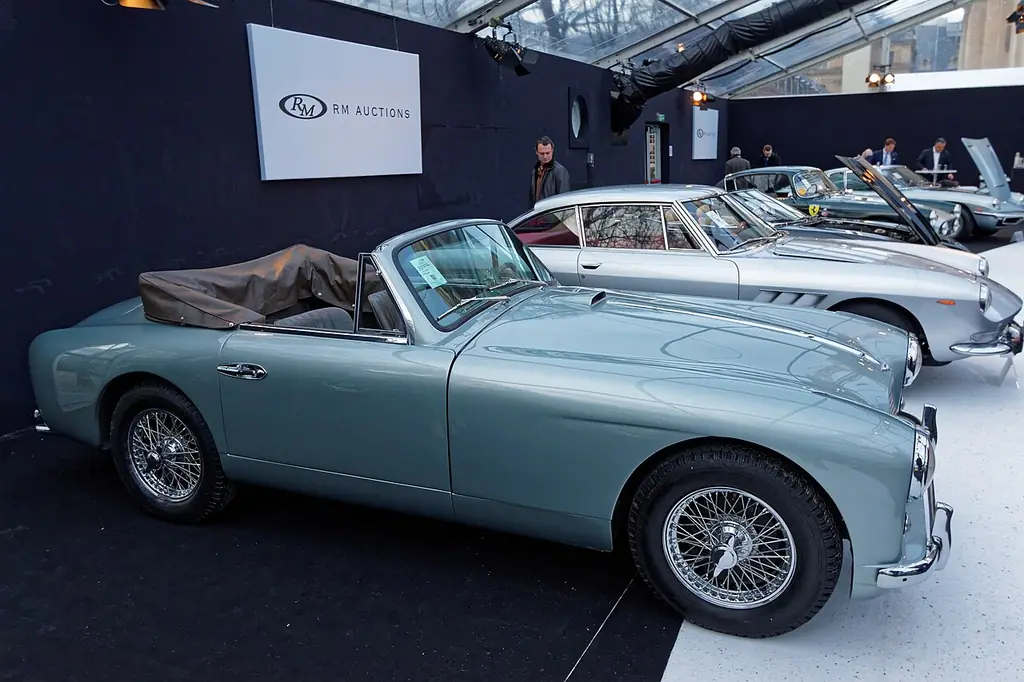
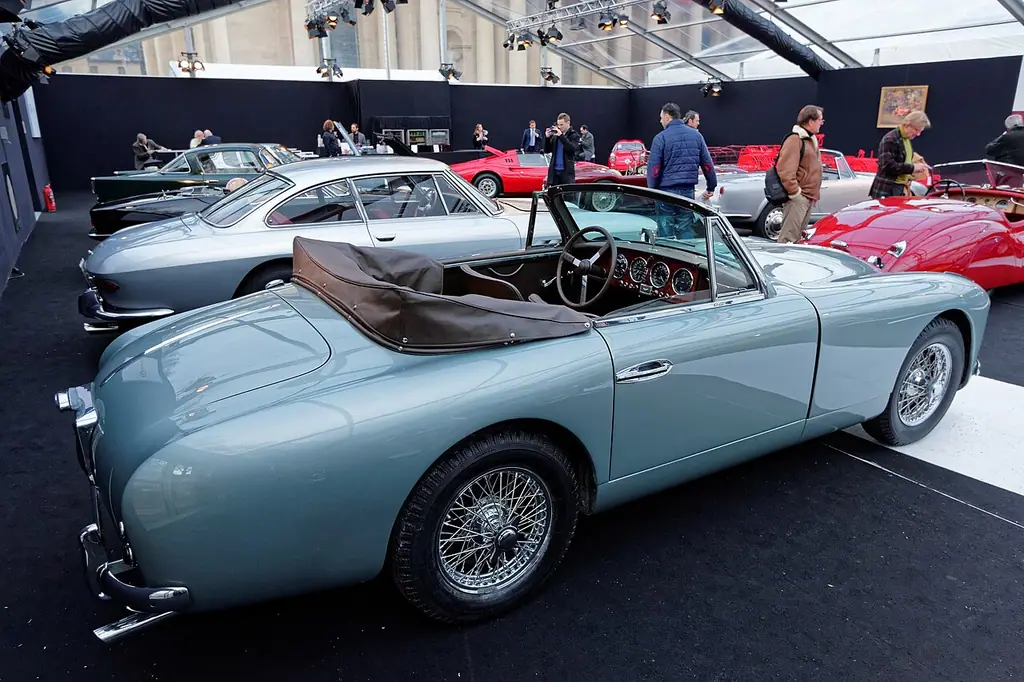
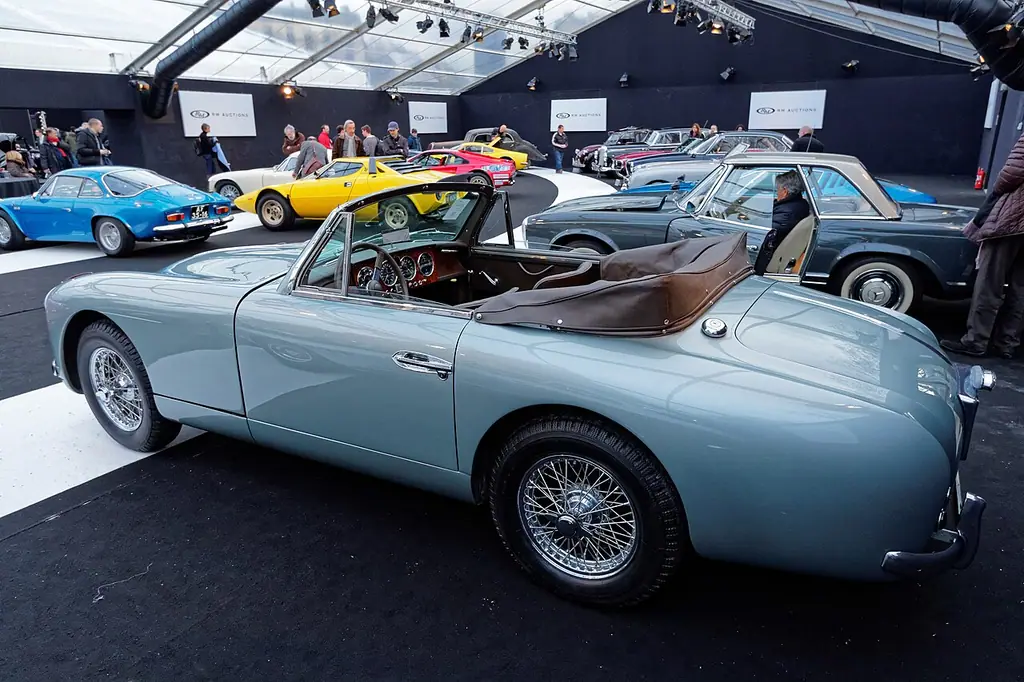
Open version of the DB2/4
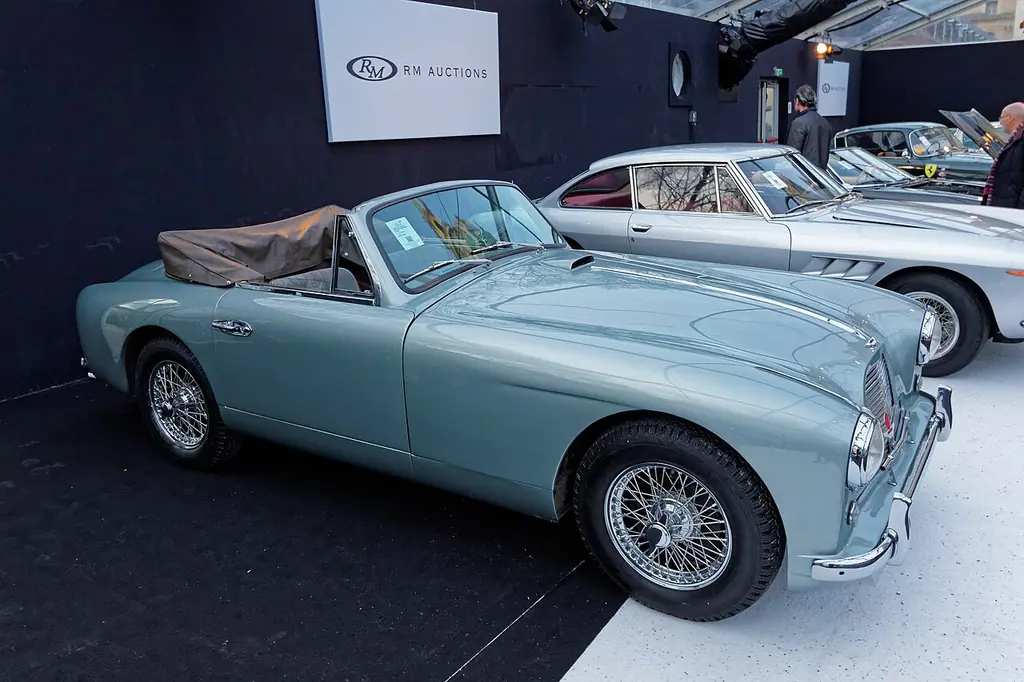
Photo: Thesupermat · CC BY-SA 4.0
Contents
01Overview
At a glance
- Built
- 102 Built
- Years
- Not yet verified
- Engine
- Inline six, twin overhead camshaft · 2,922 cc / 2.9 LFactory: 2,922 cc
- Power
- 104 kW / 142 PSFactory: 140 hp · converted
- Top speed
- 190 km/hFactory: 118 mph · converted
- Body
- Not yet verified
- Designer
- Not yet verified
- In this archive
- Not yet verified
- Surviving
- Not yet verified
Sources and any conflicting figures are in the sections below.
Why it matters
The DB2/4 Drophead Coupe was the open version of the 2+2 DB2/4 introduced in October 1953, usually with Mulliner coachwork. It was always a minority body style: Bonhams counts about 73 dropheads among 565 cars by October 1955 and elsewhere quotes about 102, while RM Sotheby's gives 102 of 761 DB2/4 in total. Left-hand-drive export cars are rarer still.
How rare is it?
Six separate kinds of rarity – never combined into one number.
Each kind of rarity is rated separately and never combined.
Photos
Exterior, interior and detail photos with their licences.
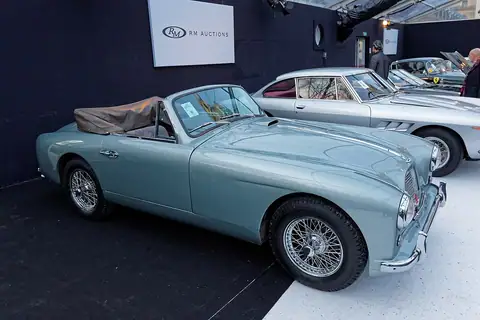 Aston Martin DB2/4 Drophead Coupé (Wikimedia Commons: Aston Martin DB2/4 Drophead Coupé (cabriolet))
Photo: Thesupermat · CC BY-SA 4.0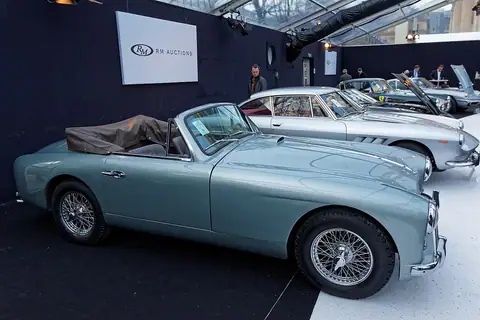 Aston Martin DB2/4 Drophead Coupé (Wikimedia Commons: Aston Martin DB2/4 Drophead Coupé (cabriolet))
Photo: Thesupermat · CC BY-SA 4.0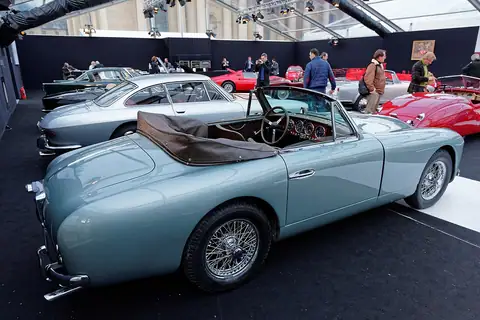 Aston Martin DB2/4 Drophead Coupé (Wikimedia Commons: Aston Martin DB2/4 Drophead Coupé (cabriolet))
Photo: Thesupermat · CC BY-SA 4.0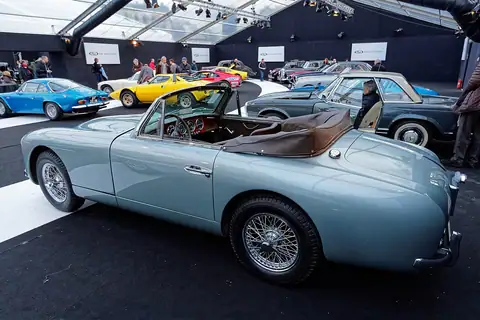 Aston Martin DB2/4 Drophead Coupé (Wikimedia Commons: Aston Martin DB2/4 Drophead Coupé (cabriolet))
Photo: Thesupermat · CC BY-SA 4.0


02Production & history
Production
Every figure says what it counts.
| What is counted | Figure | Basis | Status |
|---|---|---|---|
| Factory package productiondrophead coupés of 761 DB2/4s | 1021 | Factory production | Independently researched |
Independent counts (e.g. engine and colour) are never combined into a calculated figure. Surviving examples are never presented as original production.
History
The DB2/4 was launched in October 1953 to widen the appeal of the DB2. A smaller fuel tank and changes to the rear of the chassis made room for two small occasional rear seats, and the closed cars gained a hatchback rear door, one of its earliest applications. A raised roofline, one-piece windscreen and larger bumpers set it apart from the DB2.
The model kept the DB2's rectangular-tube chassis, trailing-arm independent front suspension and live rear axle. The standard engine was the 2.6-litre, W. O. Bentley-designed twin-cam six in 125 bhp Vantage specification, replaced in 1954 by a 3.0-litre, 140 bhp unit derived from the DB3S. Works cars started the 1955 Monte Carlo Rally, where Peter Collins won the traditional race around the Monaco circuit.
Variants
How each version differs from the standard DB2/4 Drophead Coupé.
No variants documented yet. Have a source? Contribute it.
03Specifications
Technical specifications
Engine
| Engine family | Not yet verified |
|---|---|
| Engine code | Not yet verified |
| Layout | Inline six, twin overhead camshaft2 Independently researched |
| Displacement | 2,922 cc / 2.9 LFactory: 2,922 cc2 Independently researched3.0-litre engine fitted from 1954; earlier DB2/4 cars used the 2.6-litre engine (RM quotes 2,580 cc for a late-1953 chassis). |
| Bore | Not yet verified |
| Stroke | Not yet verified |
| Compression ratio | Not yet verified |
| Fuel system | Two SU carburettors2 Independently researched |
| Power | 104 kW / 142 PSFactory: 140 hp · converted2 Independently researched3.0-litre engine; the 2.6-litre Vantage-specification engine was rated 125 bhp. |
| Power at | 5,000 rpm2 Independently researched |
| Torque | Not yet verified |
Transmission & drivetrain
| Gearbox | 4-speed manual2 Independently researched |
|---|---|
| Gears | 42 Independently researched |
| Driven wheels | Not yet verified |
Chassis, body & dimensions
| Chassis | Rectangular-tube chassis2 Independently researched |
|---|---|
| Front suspension | Independent, trailing arms2 Independently researched |
| Rear suspension | Live rear axle2 Independently researched |
| Brakes | Four-wheel drum brakes2 Independently researched |
| Steering | Not yet verified |
| Body construction | Not yet verified |
| Wheelbase | Not yet verified |
| Length | Not yet verified |
| Width | Not yet verified |
| Height | Not yet verified |
| Front track | Not yet verified |
| Rear track | Not yet verified |
| Kerb weight | Not yet verified |
| Dry weight | Not yet verified |
Performance
| Maximum speed | 190 km/hFactory: 118 mph · converted2 Independently researchedFigure quoted for the 3.0-litre engine. |
|---|---|
| 0–100 km/h | Not yet verified |
| 0–60 mph | 11 s2 Independently researchedQuoted as 'around 11 seconds'. |
| Fuel tank | Not yet verified |
“Not yet verified” means no source has been checked for that value yet. Nothing is estimated to fill a gap.
04Colours & options
Factory colours & interiors
Original paint and trim, with the number of cars in each where a source gives it.
Not yet documented. Have a source? Contribute it.
Factory options & codes
Codes are shown exactly as written by the manufacturer.
Not yet documented. Have a source? Contribute it.
05Individual cars
Chassis register
Every documented car, with its colours, history and where it is now. Open a row for the full record. Known chassis are not automatically authenticated originals.
Not yet documented. Have a source? Contribute it.
Competition history
Every race result of the individual cars, in date order. Click a chassis number to open its full record in the register.
Not yet documented. Have a source? Contribute it.
Auction & sale history
Documented public sales of the individual cars. Click a chassis number to open its full record in the register.
Not yet documented. Have a source? Contribute it.
See one in person
Museums where an example of this car can be seen.
No example is documented on public display yet. Have a source? Contribute it.
06Reference
Identification guide
How to tell an original from a replica or later conversion.
Mulliner-bodied dropheads carry LML chassis numbers, for example LML/736 and LML/839, and later cars carry 3.0-litre engines in the VB6J numbering series. Factory build sheets list non-standard equipment such as Alfin brake drums, Le Mans headlamps and driver's-door arm-rests. Factory left-hand-drive cars were sold through the US agent. A one-off Graber drophead, chassis LML/562, was built in Switzerland on a left-hand-drive chassis and should not be confused with the Mulliner series.
Sources
Each number links to the exact facts it supports.
-
1
RM Sotheby's lot catalogue: 1954 Aston Martin DB2/4 Drophead Coupe (London 2015) Level B
- 102 drophead coupés of 761 DB2/4s
-
2
1954 Aston Martin DB2/4 Drophead Coupe, chassis LML/736 (Quail Lodge Auction) Level C Bonhams · 2015-08-14
- 2,922cc DOHC Inline 6-Cylinder Engine
- 2 SU Carburetors
- 140bhp at 5,000rpm
- 4-Speed Manual Transmission
- employing the latter's rectangular-tube chassis
- trailing arm independent front suspension
- well-located live rear axle
- 4-Wheel Drum Brakes
- The car's top speed was now 118mph
- 60mph reached in around 11 seconds
Keep exploring
More from Aston Martin
-
Aston Martin · 1939–1940
Atom
1 Built
-
Aston Martin · 2013
DB9 Spyder Zagato Centennial
1 Built
-
Aston Martin · 1962
DP212
1 Built
-
Aston Martin · 1963
DP215
1 Built
See all 183 cars by Aston Martin →
More from United Kingdom
-
Alvis
TF 21
Production not yet verified
-
Frazer Nash · 1952–1954
Targa Florio
14 Built
-
Lotus
3-Eleven
Production not yet verified
-
Sunbeam
Grand Prix (1921)
Production not yet verified
134 other makes from United KingdomACAiredaleAlan Mann RacingAllardAlvisArabArashArielArmstrong SiddeleyArrowsAscariAtalantaAtlantisAustinAustin-HealeyBedfordBentleyBerkeleyBluebirdBMCBondBrabhamBristolBritish LeylandBroadspeedBrookeBrough SuperiorCampbell-RailtonCaparoCaterhamChevronConnaughtCooperCrayfordDaimlerDavid BrownDawsonDeLoreanDuttonElvaAll makes →