Makes › Aston Martin › DB4 › DB4 GT (Feltham-bodied) · Factory competition Extremely Rare
Aston Martin
DB4 GT (Feltham-bodied)
Short-wheelbase lightweight competition DB4 (non-Zagato); archive already covers the Zagato.
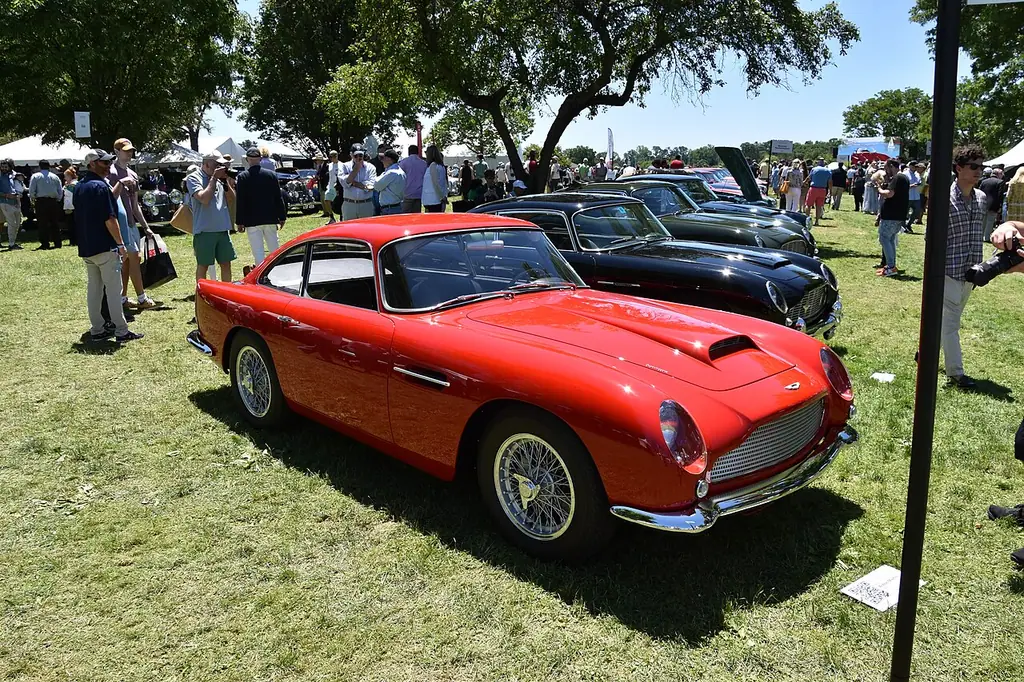
Photo: Charles from Port Chester, New York · CC BY 2.0
Contents
01Overview
At a glance
- Built
- 75 Built
- Years
- Not yet verified
- Engine
- Inline six (straight six), DOHC · 3,670 cc / 3.7 LFactory: 3,670 cc
- Power
- 225 kW / 306 PSFactory: 302 hp · converted
- Top speed
- 246 km/hFactory: 153 mph · converted
- Body
- Not yet verified
- Designer
- Not yet verified
- In this archive
- Not yet verified
- Surviving
- Not yet verified
Sources and any conflicting figures are in the sections below.
Why it matters
The DB4GT was Aston Martin's short-wheelbase, lightweight development of the DB4, designed to be equally at home on road and track. Aston Martin states that 75 Touring-bodied cars were built, with several lightweight versions made for racing. RM Sotheby's compares it with the Ferrari 250 SWB as a peer with extra English flair.
How rare is it?
Six separate kinds of rarity – never combined into one number.
Each kind of rarity is rated separately and never combined.
Photos
Exterior, interior and detail photos with their licences.
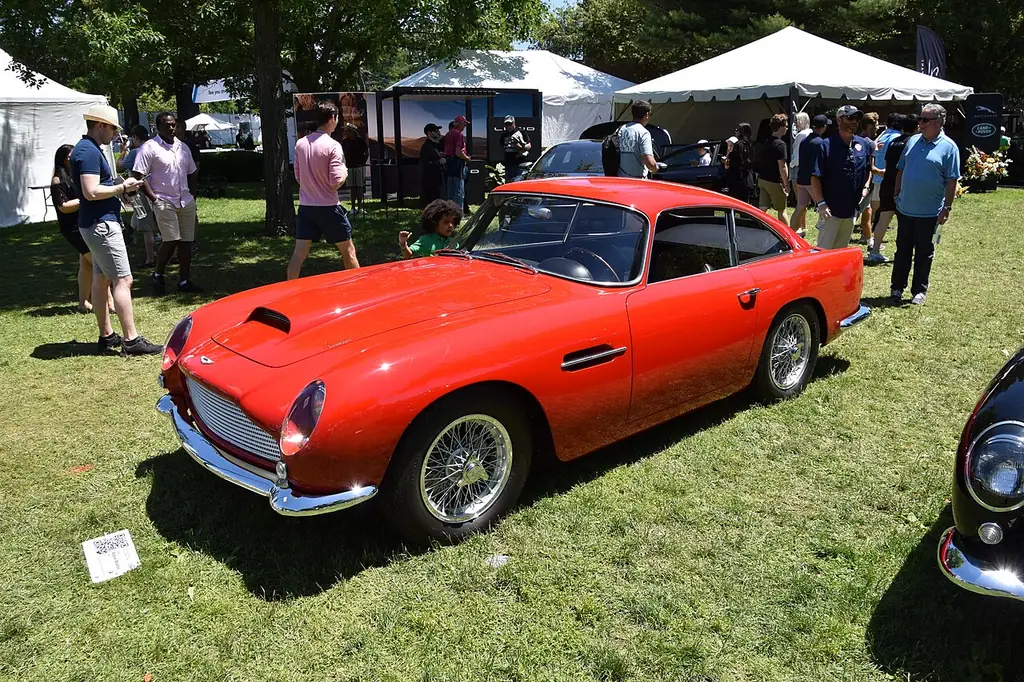
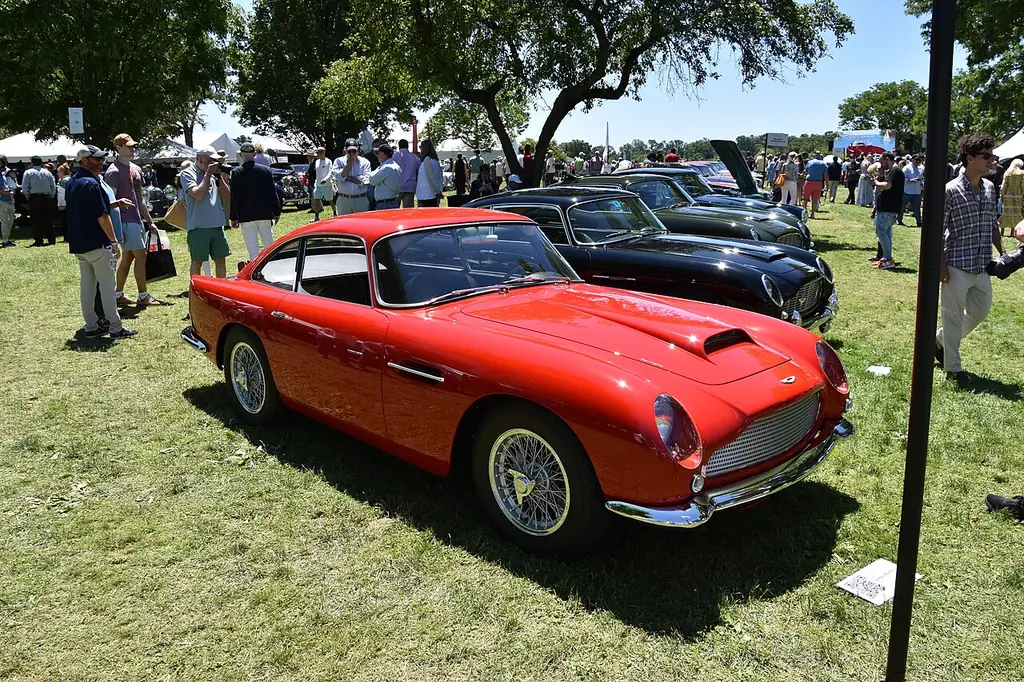
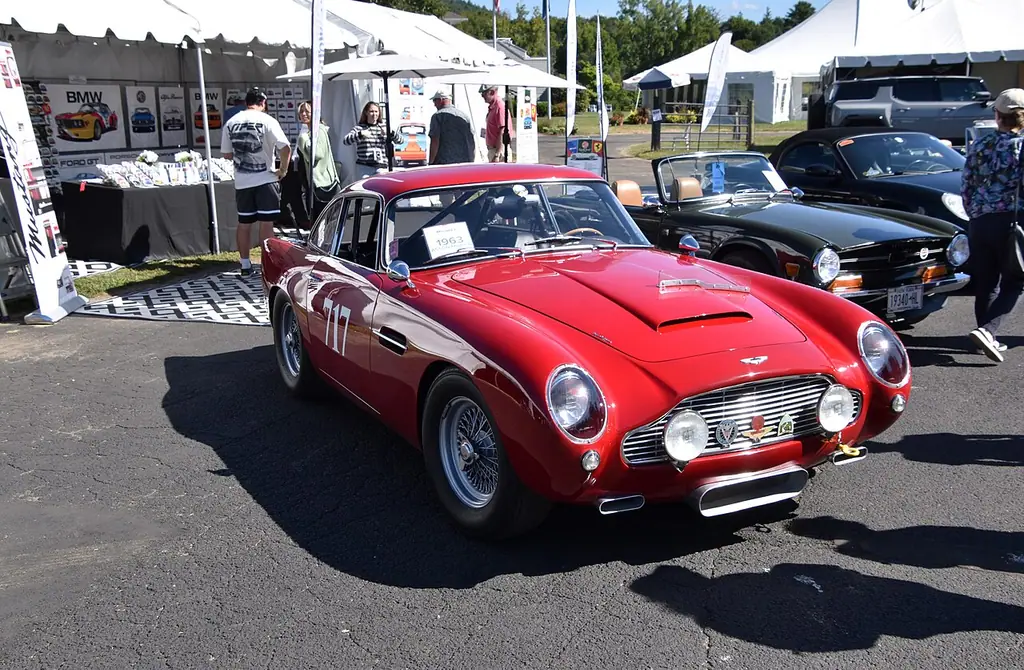
 Aston Martin DB4 GT (Feltham-bodied) (Wikimedia Commons: Aston Martin DB4 GT)
Photo: Charles from Port Chester, New York · CC BY 2.0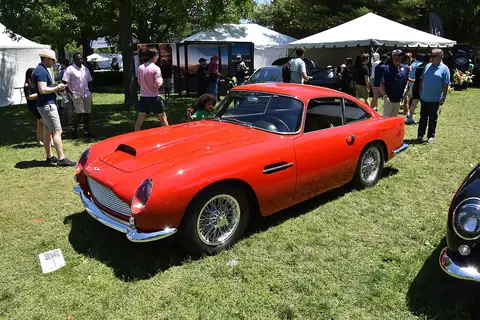 Aston Martin DB4 GT (Feltham-bodied) (Wikimedia Commons: Aston Martin DB4 GT)
Photo: Charles from Port Chester, New York · CC BY 2.0 Aston Martin DB4 GT (Feltham-bodied) (Wikimedia Commons: Aston Martin DB4 GT)
Photo: Charles from Port Chester, New York · CC BY 2.0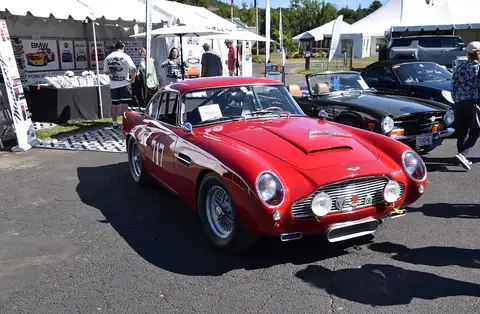 Aston Martin DB4 GT (Feltham-bodied) (Wikimedia Commons: Aston Martin DB4 GT)
Photo: Charles from Port Chester, New York · CC0 1.0


02Production & history
Production
Every figure says what it counts.
| What is counted | Figure | Basis | Status |
|---|---|---|---|
| Total model productionFactory DB4 GTs built, excluding the Zagato cars ("75 DB4GTs, plus 20 Zagatos") | 751,2 | Factory production | Factory reported |
Independent counts (e.g. engine and colour) are never combined into a calculated figure. Surviving examples are never presented as original production.
History
The DB4GT was unveiled at the London Motor Show in October 1959 with a shorter chassis, faired-in headlamps and an uprated engine with three Weber carburettors. It was 85 kg lighter than the DB4. Work had begun months before the DB4 itself was announced, and the prototype DP199 ran in March 1959.
The car raced widely and successfully with drivers such as Stirling Moss, Jim Clark, Innes Ireland and Roy Salvadori. Bonhams puts the split at 45 right-hand drive and 30 left-hand drive. Eight (RM Sotheby's) or nine (Bonhams) were built to lightweight specification, including the team cars for Tommy Sopwith's Equipe Endeavour and John Ogier's Essex Racing Stable. In 2016 Aston Martin began 25 DB4GT continuation cars.
Variants
How each version differs from the standard DB4 GT (Feltham-bodied).
No variants documented yet. Have a source? Contribute it.
03Specifications
Technical specifications
Engine
| Engine family | Not yet verified |
|---|---|
| Engine code | Not yet verified |
| Layout | Inline six (straight six), DOHC1 |
| Displacement | 3,670 cc / 3.7 LFactory: 3,670 cc1 |
| Bore | Not yet verified |
| Stroke | Not yet verified |
| Compression ratio | 9:13 Independently researched |
| Fuel system | Three Weber 45 DCOE4 carburettors; twin-plug head3 Independently researched |
| Power | 225 kW / 306 PSFactory: 302 hp · converted1Rating: manufacturerFactory page lists a second variant of 314 bhp at 6600 rpm, the Zagato. |
| Power at | 6,000 rpm1 |
| Torque | 325 NmFactory: 240 lb-ft · converted1 |
| Torque at | 5,000 rpm1 |
Transmission & drivetrain
| Gearbox | 4-speed manual (David Brown)1 |
|---|---|
| Gears | 41 |
| Driven wheels | Not yet verified |
Chassis, body & dimensions
| Chassis | Not yet verified |
|---|---|
| Front suspension | Telescopic shock absorbers and anti-roll bar1 |
| Rear suspension | Double-action lever-arm shock absorbers1 |
| Brakes | Girling servo-assisted front and rear solid discs1 |
| Steering | Not yet verified |
| Body construction | Touring Superleggera aluminium body, 18-gauge panels4,3 Independently researched |
| Wheelbase | Not yet verified |
| Length | 4,353 mmFactory: 4,353 mm1 |
| Width | 1,676 mmFactory: 1,676 mm1 |
| Height | 1,321 mmFactory: 1,321 mm1 |
| Front track | Not yet verified |
| Rear track | Not yet verified |
| Kerb weight | 1,269 kgFactory: 1,269 kg1First of two weights on the page (the second, 1225 kg, goes with the 314 bhp Zagato); weight basis not stated. |
| Dry weight | Not yet verified |
Performance
| Maximum speed | 246 km/hFactory: 153 mph · converted1 |
|---|---|
| 0–100 km/h | Not yet verified |
| 0–60 mph | 6.1 s1 |
| Fuel tank | Not yet verified |
“Not yet verified” means no source has been checked for that value yet. Nothing is estimated to fill a gap.
04Colours & options
Factory colours & interiors
Original paint and trim, with the number of cars in each where a source gives it.
Not yet documented. Have a source? Contribute it.
Factory options & codes
Codes are shown exactly as written by the manufacturer.
Not yet documented. Have a source? Contribute it.
05Individual cars
Chassis register
Every documented car, with its colours, history and where it is now. Open a row for the full record. Known chassis are not automatically authenticated originals.
Not yet documented. Have a source? Contribute it.
Competition history
Every race result of the individual cars, in date order. Click a chassis number to open its full record in the register.
Not yet documented. Have a source? Contribute it.
Auction & sale history
Documented public sales of the individual cars. Click a chassis number to open its full record in the register.
Not yet documented. Have a source? Contribute it.
See one in person
Museums where an example of this car can be seen.
No example is documented on public display yet. Have a source? Contribute it.
06Reference
Identification guide
How to tell an original from a replica or later conversion.
Feltham-built cars are shorter than the DB4, with the five inches taken out of the doors, and have faired-in headlamps under Perspex covers, no over-riders, and frameless wind-down windows. A luggage platform replaces the rear seats on nearly all cars. Other signs are a front oil-cooler scoop, light-alloy Borrani wire wheels with three-ear knock-offs, and a flat boot-mounted fuel tank, 30 gallons per RM Sotheby's. Chassis numbers run DB4GT/0162/R and engines 370/0124/GT. Lightweight cars have perforated chassis steel, aluminium floors and bulkhead, Perspex windows and simpler door panels.
Sources
Each number links to the exact facts it supports.
-
1
Aston Martin DB4GT & DB4 Zagato Level A Aston Martin Lagonda
- 75 'Touring' bodied cars were built
- DOHC Straight six, 3670 cc, 302 bhp @ 6000 rpm
- 302 bhp @ 6000 rpm 240 lbs-ft @ 5000 rpm
- 302 bhp @ 6000 rpm
- 240 lbs-ft @ 5000 rpm
- 4-speed manual DB
- Front: Telescopic shock absorbers and anti roll bar
- Rear: double action lever arm shock absorbers
- Girling Servo assisted brakes with front and rear solid discs
- 4353 x 1676 x 1321 mm
- 1269 kg
- 153 mph
- 0 - 60 mph: 6.1 sec
-
2
RM Sotheby's – 1961 Aston Martin DB4 GT (Monterey 2019) Level B
- 75 Factory DB4 GTs built, excluding the Zagato cars ("75 DB4GTs, plus 20 Zagatos")
-
3
1961 Aston Martin DB4 GT (chassis DB4GT/0162/R), Monterey 2019, lot 188 Level C RM Sotheby's · 2019
- higher compression ratio of 9:1
- twin plug head and triple 45 DCOE4 Webers
- keeping Touring's fine Superleggera lines
-
4
1961 Aston Martin DB4GT 'Lightweight' 4.2-Litre Sports Saloon, chassis DB4GT/0169/R Level C Bonhams · 2019-12-07
- lighter, 18-gauge bodywork
Keep exploring
More from Aston Martin
-
Aston Martin · 1939–1940
Atom
1 Built
-
Aston Martin · 2013
DB9 Spyder Zagato Centennial
1 Built
-
Aston Martin · 1962
DP212
1 Built
-
Aston Martin · 1963
DP215
1 Built
See all 183 cars by Aston Martin →
More from United Kingdom
-
Alvis
12/50
Production not yet verified
-
Jensen
C-V8 (all marks)
500 Built
-
Wolseley
Ten (1939-1948)
Production not yet verified
-
Gilbern
T11
Production not yet verified
134 other makes from United KingdomACAiredaleAlan Mann RacingAllardAlvisArabArashArielArmstrong SiddeleyArrowsAscariAtalantaAtlantisAustinAustin-HealeyBedfordBentleyBerkeleyBluebirdBMCBondBrabhamBristolBritish LeylandBroadspeedBrookeBrough SuperiorCampbell-RailtonCaparoCaterhamChevronConnaughtCooperCrayfordDaimlerDavid BrownDawsonDeLoreanDuttonElvaAll makes →