Makes › Aston Martin › DBR1 · Factory competition · 1956–1959 Ultra Rare
Aston Martin
DBR1
Works sports-racer; won Le Mans and the World Sportscar Championship in 1959.
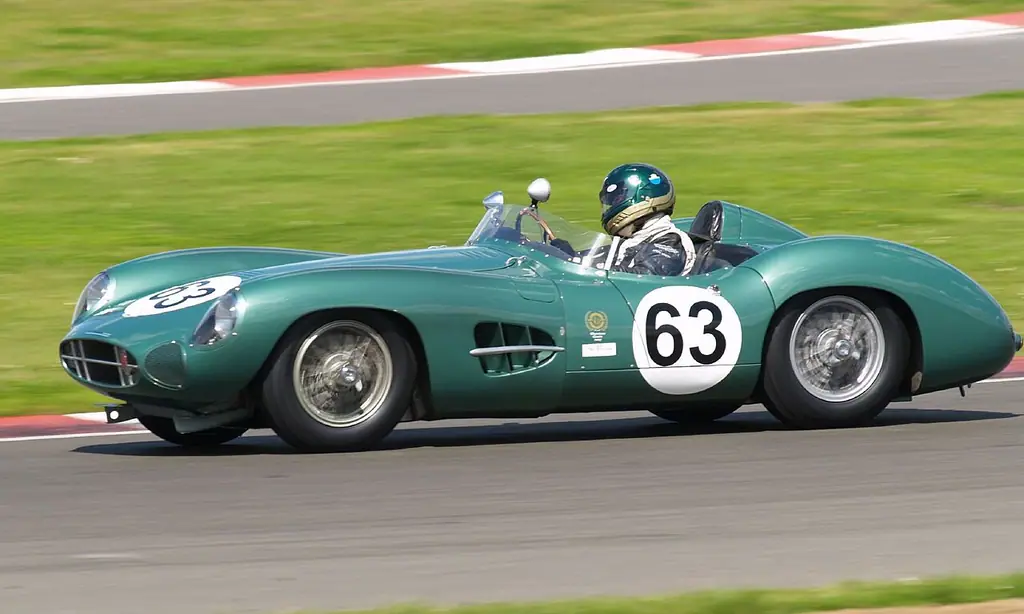
Photo: Darren · CC BY 2.0

Contents
01Overview
At a glance
- Built
- 5 Built
- Years
- 1956–1959
- Engine
- Straight six, twin overhead camshaft · 3,000 cc / 3 LFactory: 3 L
- Power
- 200 kW / 272 PSFactory: 268 hp · converted
- Top speed
- Not yet verified
- Body
- Not yet verified
- Designer
- Ted Cutting
- In this archive
- Not yet verified
- Surviving
- Not yet verified
Sources and any conflicting figures are in the sections below.
Why it matters
The DBR1 won Le Mans in 1959 and gave Aston Martin the World Sportscar Championship that year, the first such title for a British manufacturer. Only five were built by the factory, and the source calls it arguably the most important Aston Martin ever, a British counterpart to the Ferrari 250 GTO and Mercedes-Benz 300 SLR.
How rare is it?
Six separate kinds of rarity – never combined into one number.
Each kind of rarity is rated separately and never combined.
02Production & history
Production
Every figure says what it counts.
| What is counted | Figure | Basis | Status |
|---|---|---|---|
| Total model productionexamples built by the factory 1956–1958 | 51 | Factory production | Independently researched |
Independent counts (e.g. engine and colour) are never combined into a calculated figure. Surviving examples are never presented as original production.
History
Developed by racing design chief Ted Cutting, the DBR1 used a lighter, faster 3.0-litre engine than the DB3S, a semi-dry sump, a five-speed transaxle and a small-tube spaceframe chassis with Girling disc brakes. Chassis DBR1/1 debuted at the 1956 Le Mans 24 Hours. In 1959 a sister car won Le Mans, and Stirling Moss and Jack Fairman won the Nürburgring 1000 km in DBR1/1, Aston Martin's third consecutive win there, helping secure the championship.
Variants
How each version differs from the standard DBR1.
No variants documented yet. Have a source? Contribute it.
03Specifications
Technical specifications
Engine
| Engine family | Not yet verified |
|---|---|
| Engine code | RB62 |
| Layout | Straight six, twin overhead camshaft2 |
| Displacement | 3,000 cc / 3 LFactory: 3 L2 Independently researched |
| Bore | Not yet verified |
| Stroke | Not yet verified |
| Compression ratio | Not yet verified |
| Valvetrain | Gear-driven camshafts; 60-degree twin-plug head, replaced by 95-degree head with larger valves by 19582 |
| Fuel system | Triple Weber DCO carburettors (45DCO, later 50DCO)2 |
| Power | 200 kW / 272 PSFactory: 268 hp · converted2 Independently researched1959 specification (2,992 cc, 50DCO Webers). 1956 Le Mans 2.5-litre engine: 212 bhp at 7,000 rpm. A reproduction engine in the 2017 lot produced 301 bhp at 6,500 rpm. |
| Power at | Not yet verified |
| Torque | Not yet verified |
Transmission & drivetrain
| Gearbox | Five-speed transaxle2 Independently researched |
|---|---|
| Gears | 52 Independently researched |
| Driven wheels | Not yet verified |
Chassis, body & dimensions
| Chassis | Small-tube spaceframe2 Independently researched |
|---|---|
| Front suspension | Transverse torsion bars2 |
| Rear suspension | Longitudinal torsion bars, trailing links, Watt linkage2 |
| Brakes | Girling cast-iron discs with light-alloy calipers2 Independently researched |
| Steering | Rack and pinion2 |
| Body construction | Ultra-light 20/22 gauge alloy body designed by Ted Cutting2 |
| Wheelbase | Not yet verified |
| Length | Not yet verified |
| Width | Not yet verified |
| Height | Not yet verified |
| Front track | Not yet verified |
| Rear track | Not yet verified |
| Kerb weight | Not yet verified |
| Dry weight | Not yet verified |
Performance
| Maximum speed | Not yet verified |
|---|---|
| 0–100 km/h | Not yet verified |
| Fuel tank | Not yet verified |
“Not yet verified” means no source has been checked for that value yet. Nothing is estimated to fill a gap.
04Colours & options
Factory colours & interiors
Original paint and trim, with the number of cars in each where a source gives it.
Not yet documented. Have a source? Contribute it.
Factory options & codes
Codes are shown exactly as written by the manufacturer.
Not yet documented. Have a source? Contribute it.
05Individual cars
Chassis register
Every documented car, with its colours, history and where it is now. Open a row for the full record. Known chassis are not automatically authenticated originals.
Not yet documented. Have a source? Contribute it.
Competition history
Every race result of the individual cars, in date order. Click a chassis number to open its full record in the register.
Not yet documented. Have a source? Contribute it.
Auction & sale history
Documented public sales of the individual cars. Click a chassis number to open its full record in the register.
Not yet documented. Have a source? Contribute it.
See one in person
Museums where an example of this car can be seen.
No example is documented on public display yet. Have a source? Contribute it.
06Reference
Identification guide
How to tell an original from a replica or later conversion.
Chassis numbers take the form DBR1/1 for the first car. The cars use a small-tube spaceframe chassis and a five-speed transaxle with semi-dry-sump engine lubrication.
Sources
Each number links to the exact facts it supports.
-
1
DBR1: The Most Important Aston Martin Ever Produced Comes to RM Sotheby's Monterey Sale | RM Sotheby's Level B
- 5 examples built by the factory 1956–1958
-
2
1956 Aston Martin DBR1 (Monterey 2017) Level C RM Sotheby's
- the DBR1's RB6, 2,922-cc engine
- the straight-six's raucous notes
- the twin-cam urging one to let it rev
- a lighter, faster 3.0-litre engine than its DB3S predecessor
- camshaft drive also changed, from chain to gear-driven
- by 1958 all RB6s had 95-degree heads
- triple 45DCOs/50DCOs
- realizing up to 268-bhp
- the new semi-dry sump, five-speed transaxle
- five-speed transaxle
- set into a small tube spaceframe chassis
- front transverse torsion bar suspension
- longitudinal (against transverse) torsion bars, trailing links, and Watt linkage
- cast-iron Girling disc brakes with groundbreaking light alloy calipers
- perfectly geared rack and pinion
- formed in ultra-light 20/22 gauge alloy
Keep exploring
More from Aston Martin
-
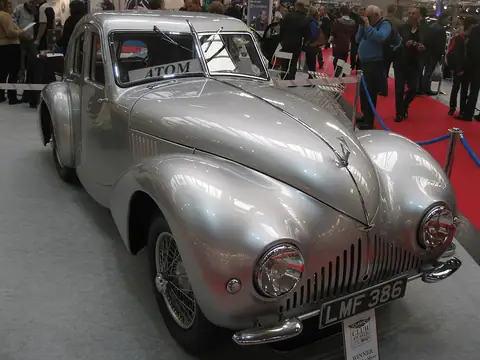
Aston Martin · 1939–1940
Atom
1 Built
-
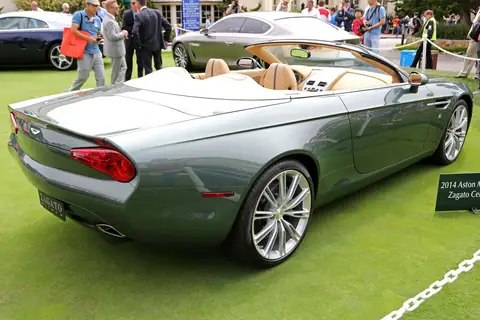
Aston Martin · 2013
DB9 Spyder Zagato Centennial
1 Built
-
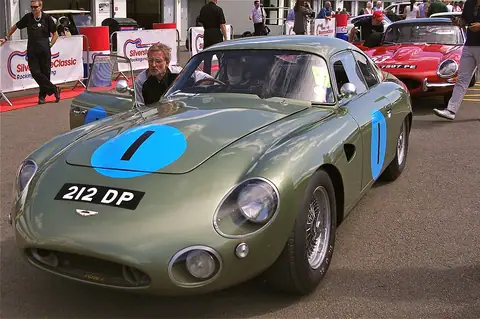
Aston Martin · 1962
DP212
1 Built
-
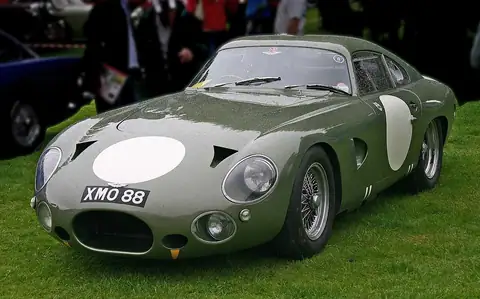
Aston Martin · 1963
DP215
1 Built
See all 183 cars by Aston Martin →
More from United Kingdom
-

McLaren · 2019–2020
Senna LM
20 Built
-
Bentley
S1 (1955-1959)
Production not yet verified
-
Jaguar
Jaguar 340
Production not yet verified
-
Peel
Viking Sport (1970)
Production not yet verified
134 other makes from United KingdomACAiredaleAlan Mann RacingAllardAlvisArabArashArielArmstrong SiddeleyArrowsAscariAtalantaAtlantisAustinAustin-HealeyBedfordBentleyBerkeleyBluebirdBMCBondBrabhamBristolBritish LeylandBroadspeedBrookeBrough SuperiorCampbell-RailtonCaparoCaterhamChevronConnaughtCooperCrayfordDaimlerDavid BrownDawsonDeLoreanDuttonElvaAll makes →