Makes › Aston Martin › Ulster works team car LM20 · Historically significant · 1935
Aston Martin
Ulster works team car LM20
Finished 3rd overall at Le Mans 1935, breaking the 1½-litre lap record
Still being researched: full specifications. Everything shown is checked against the cited sources. Know more? Send us a source.
Contents
01Overview
At a glance
- Built
- 1 Built
- Years
- 1935
- Engine
- 1,495 cc / 1.5 LFactory: 1,495 cc
- Power
- 63.4 kW / 86.2 PSFactory: 85 hp · converted
- Top speed
- 161 km/hFactory: 100 mph · converted
- Body
- Not yet verified
- Designer
- A.C. "Bert" Bertelli
- In this archive
- Not yet verified
- Surviving
- Not yet verified
Sources and any conflicting figures are in the sections below.
Why it matters
LM20 was one of the four 1935 works Ulsters (LM18 to LM21) that Aston Martin built for Le Mans, the last works team cars to run there until after the Second World War. Their designer, A.C. Bertelli, called these team Ulsters the best cars he ever built.
How rare is it?
Six separate kinds of rarity – never combined into one number.
Each kind of rarity is rated separately and never combined.
02Production & history
Production
Every figure says what it counts.
| What is counted | Figure | Basis | Status |
|---|---|---|---|
| Total model productionindividual car: works team car LM20, one of three 1935 team cars (LM18–LM20); 3rd at Le Mans 1935 with 1½-litre lap record (identity confirmed) | 11 | Factory production | Independently researched |
Independent counts (e.g. engine and colour) are never combined into a calculated figure. Surviving examples are never presented as original production.
History
LM20 started the 1935 Le Mans 24 Hours in the works team with C.E.C. Charlie Martin and co-driver Charles Brackenbury. In the second hour Martin passed Penn-Hughes in LM19, and later LM20 and LM19 were still running in fairly close formation before LM19 crashed in the rain. The cars were built at the Feltham works, and several of the LM chassis had their frames replaced in period.
Variants
How each version differs from the standard Ulster works team car LM20.
No variants documented yet. Have a source? Contribute it.
03Specifications
Technical specifications
Engine
| Engine family | Not yet verified |
|---|---|
| Engine code | Not yet verified |
| Layout | Not yet verified |
| Cylinders | 42 Independently researched |
| Displacement | 1,495 cc / 1.5 LFactory: 1,495 cc2 Independently researchedDescribed for the works Ulster team cars generally. |
| Bore | Not yet verified |
| Stroke | Not yet verified |
| Compression ratio | 9.5:12 Independently researched |
| Valvetrain | Single overhead camshaft2 Independently researched |
| Fuel system | Twin 1 3/8 in SU carburettors2 Independently researched |
| Power | 63.4 kW / 86.2 PSFactory: 85 hp · converted3 Independently researchedStated for the four 1935 LM cars (LM18 to LM21) as bhp. |
| Power at | 5,250 rpm3 Independently researchedStated for the four 1935 LM cars. |
| Torque | Not yet verified |
| Redline | 5,400 rpm3 Independently researchedStated for the four 1935 LM cars. |
Transmission & drivetrain
| Gearbox | Not yet verified |
|---|---|
| Gears | 42 Independently researched |
| Driven wheels | Not yet verified |
Chassis, body & dimensions
| Chassis | Undrilled chassis frame (the 1934 team cars had drilled, lightened frames)3 Independently researched |
|---|---|
| Front suspension | Not yet verified |
| Rear suspension | Not yet verified |
| Brakes | Not yet verified |
| Steering | Not yet verified |
| Body construction | Not yet verified |
| Wheelbase | Not yet verified |
| Length | Not yet verified |
| Width | Not yet verified |
| Height | Not yet verified |
| Front track | Not yet verified |
| Rear track | Not yet verified |
| Kerb weight | Not yet verified |
| Dry weight | Not yet verified |
Performance
| Maximum speed | 161 km/hFactory: 100 mph · converted2 Independently researchedSource says 'more than 100mph' for the low-radiator Ulster works cars. |
|---|---|
| 0–100 km/h | Not yet verified |
| Fuel tank | Not yet verified |
“Not yet verified” means no source has been checked for that value yet. Nothing is estimated to fill a gap.
04Colours & options
Factory colours & interiors
Original paint and trim, with the number of cars in each where a source gives it.
Not yet documented. Have a source? Contribute it.
Factory options & codes
Codes are shown exactly as written by the manufacturer.
Not yet documented. Have a source? Contribute it.
05Individual cars
Chassis register
Every documented car, with its colours, history and where it is now. Open a row for the full record. Known chassis are not automatically authenticated originals.
Not yet documented. Have a source? Contribute it.
Competition history
Every race result of the individual cars, in date order. Click a chassis number to open its full record in the register.
Not yet documented. Have a source? Contribute it.
Auction & sale history
Documented public sales of the individual cars. Click a chassis number to open its full record in the register.
Not yet documented. Have a source? Contribute it.
See one in person
Museums where an example of this car can be seen.
No example is documented on public display yet. Have a source? Contribute it.
06Reference
Identification guide
How to tell an original from a replica or later conversion.
The 1935 works Ulsters carry the LM prefix (derived from Le Mans); this car is LM20. Compared with the 1934 team cars they have a radiator 3 inches lower, giving a sloping bonnet line, and undrilled chassis frames, and they were painted bright red. Bertelli avoided the number 13 in the LM series.
Sources
Each number links to the exact facts it supports.
-
1
Ecurie Bertelli – Team Cars LM11 to LM21 Level B
- 1 individual car: works team car LM20, one of three 1935 team cars (LM18–LM20); 3rd at Le Mans 1935 with 1½-litre lap record (identity confirmed)
-
2
Aston Martin Ulster: a Le Mans and Mille Miglia veteran (LM19 feature) Level B Octane
- four-cylinder engines
- 1495cc, single-overhead-cam, four-cylinder engines
- high 9.5:1 compression ratio
- single-overhead-cam
- 13/8in SU carbs
- close-ratio four-speed 'box
- capable of more than 100mph for long periods
-
3
1935 Aston Martin Works Ulster LM19, lot 323 Level C Bonhams · 2015-06-26
- wrung out of the engines 85bhp at 5,250rpm
- 85bhp at 5,250rpm
- with peak revs of 5,400
- Chassis frames on these four cars were undrilled
Keep exploring
More from Aston Martin
-
Aston Martin · 1939–1940
Atom
1 Built
-
Aston Martin · 2013
DB9 Spyder Zagato Centennial
1 Built
-
Aston Martin · 1962
DP212
1 Built
-
Aston Martin · 1963
DP215
1 Built
See all 183 cars by Aston Martin →
More from United Kingdom
-
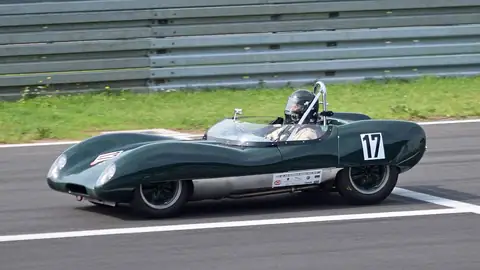
Lotus
17
Production not yet verified
-

Land Rover
Defender 90 NAS (North American Specification, US)
7,059 Built
-
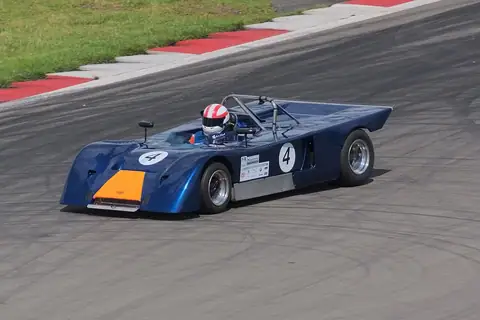
Chevron
B19
35 Built
-
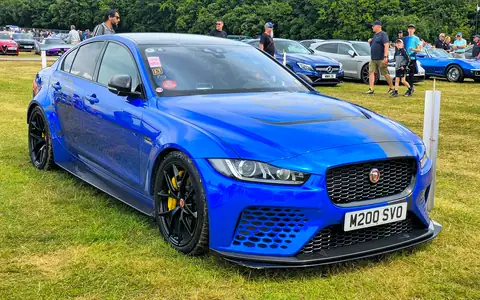
Jaguar
XE SV Project 8
300 Built
134 other makes from United KingdomACAiredaleAlan Mann RacingAllardAlvisArabArashArielArmstrong SiddeleyArrowsAscariAtalantaAtlantisAustinAustin-HealeyBedfordBentleyBerkeleyBluebirdBMCBondBrabhamBristolBritish LeylandBroadspeedBrookeBrough SuperiorCampbell-RailtonCaparoCaterhamChevronConnaughtCooperCrayfordDaimlerDavid BrownDawsonDeLoreanDuttonElvaAll makes →