Makes › Aston Martin › Works team › Works team cars LM5–LM7 · Factory competition · 1931 Ultra Rare
Aston Martin
Works team cars LM5–LM7
1931 Le Mans/TT works team; LM7 later raced by Mort Goodall incl. 1933 Le Mans
Still being researched: full specifications. Everything shown is checked against the cited sources. Know more? Send us a source.
Contents
01Overview
At a glance
- Built
- 3 Built
- Years
- 1931
- Engine
- 1,500 cc / 1.5 LFactory: 1.5 L
- Power
- 52.2 kW / 71 PSFactory: 70 hp · converted
- Top speed
- 145 km/hFactory: 90 mph · converted
- Body
- Not yet verified
- Designer
- A. C. Bertelli (engine by Renwick and Bertelli)
- In this archive
- Not yet verified
- Surviving
- 3 (independently researched)
Sources and any conflicting figures are in the sections below.
Why it matters
LM5, LM6 and LM7 were the three works International team cars of 1931, the first time Aston Martin fielded a three-car team of identical appearance. Their results kept the company going: with LM6 winning its class at Le Mans, the season was good enough for A. C. Bertelli to find new financial backing.
How rare is it?
Six separate kinds of rarity – never combined into one number.
Each kind of rarity is rated separately and never combined.
02Production & history
Production
Every figure says what it counts.
| What is counted | Figure | Basis | Status |
|---|---|---|---|
| Total model productionall three 1931 cars LM5, LM6 and LM7 survive (1980 report: LM5 in Canada, two in England) | 31 | Surviving examples | Independently researched |
| Total model production1931 first-series works team cars LM5, LM6 and LM7 ("these three cars") | 31,2 | Factory production | Independently researched |
Independent counts (e.g. engine and colour) are never combined into a calculated figure. Surviving examples are never presented as original production.
History
Bertelli, short of money, borrowed from H. J. Aldington of Frazer Nash, who agreed to the building of three new works cars for 1931, registered HX 4321, HX 4322 and HX 4323. They debuted in the Brooklands Double 12, where LM5 (Gallop/Cushman) took second in class behind LM6. At Le Mans LM5 retired after about 125 laps, as did LM7, while LM6 won the class and finished fifth overall. In August LM5 finished 14th overall and first in class in the RAC Tourist Trophy.
After the season LM5 went to financial backer Lance Prideaux-Brune and received a 2/4-seater body, then stayed with one owner for almost 50 years. It was mechanically restored by Ecurie Bertelli while keeping its original character.
Variants
How each version differs from the standard Works team cars LM5–LM7.
No variants documented yet. Have a source? Contribute it.
03Specifications
Technical specifications
Engine
| Engine family | Not yet verified |
|---|---|
| Engine code | Not yet verified |
| Layout | Not yet verified |
| Cylinders | 43 Independently researched |
| Displacement | 1,500 cc / 1.5 LFactory: 1.5 L3 Independently researchedDescribed as 1.5-litre. |
| Bore | 69.25 mmFactory: 69.25 mm1 Independently researchedDimensions given for the Renwick & Bertelli 1.5-litre engine generally. |
| Stroke | 99 mmFactory: 99 mm1 Independently researched |
| Compression ratio | 9:11 Independently researched |
| Valvetrain | Overhead camshaft3 Independently researched |
| Fuel system | Not yet verified |
| Power | 52.2 kW / 71 PSFactory: 70 hp · converted4 Independently researchedQuoted by Bonhams from the AMOC Register for the 1931 cars; Bonhams says LM5 was later rebuilt to race specification, "perhaps 90bhp". |
| Power at | 5,000 rpm1 Independently researched |
| Torque | Not yet verified |
Transmission & drivetrain
| Gearbox | Separate four-speed gearbox, torque tube, underslung worm-drive rear axle1 Independently researched |
|---|---|
| Gears | 41 Independently researched |
| Driven wheels | Not yet verified |
Chassis, body & dimensions
| Chassis | Not yet verified |
|---|---|
| Front suspension | Not yet verified |
| Rear suspension | Not yet verified |
| Brakes | Not yet verified |
| Steering | Not yet verified |
| Body construction | Not yet verified |
| Wheelbase | Not yet verified |
| Length | Not yet verified |
| Width | Not yet verified |
| Height | Not yet verified |
| Front track | Not yet verified |
| Rear track | Not yet verified |
| Kerb weight | Not yet verified |
| Dry weight | Not yet verified |
Performance
| Maximum speed | 145 km/hFactory: 90 mph · converted4 Independently researchedBonhams; RM says in excess of 90 mph. |
|---|---|
| 0–100 km/h | Not yet verified |
| Fuel tank | Not yet verified |
“Not yet verified” means no source has been checked for that value yet. Nothing is estimated to fill a gap.
04Colours & options
Factory colours & interiors
Original paint and trim, with the number of cars in each where a source gives it.
Not yet documented. Have a source? Contribute it.
Factory options & codes
Codes are shown exactly as written by the manufacturer.
Not yet documented. Have a source? Contribute it.
05Individual cars
Chassis register
Every documented car, with its colours, history and where it is now. Open a row for the full record. Known chassis are not automatically authenticated originals.
Not yet documented. Have a source? Contribute it.
Competition history
Every race result of the individual cars, in date order. Click a chassis number to open its full record in the register.
Not yet documented. Have a source? Contribute it.
Auction & sale history
Documented public sales of the individual cars. Click a chassis number to open its full record in the register.
Not yet documented. Have a source? Contribute it.
See one in person
Museums where an example of this car can be seen.
No example is documented on public display yet. Have a source? Contribute it.
06Reference
Identification guide
How to tell an original from a replica or later conversion.
The 1931 team cars share identical narrow doorless bodies with exaggerated cowled scuttles, lowered radiators and round drooping tails, with dry-sump 1.5-litre engines in Elektron lightweight cases. They were registered HX 4321 to HX 4323; LM5 carries the later 2/4-seater body fitted around 1932, supported by the build record.
Sources
Each number links to the exact facts it supports.
-
1
The 1931 Aston Martin team cars (May 1980) Level B Motor Sport magazine
- a three car team... These identical cars, LM5, 6 and 7
- All three 1931 cars survive today
- 69.25 mm. x 99 mm. and a capacity of 1,493 c.c.
- 69.25 mm. x 99 mm.
- 70 b.h.p. at 5,000 r.p.m. on a 9:1 compression ratio
- 70 b.h.p. at 5,000 r.p.m.
- separate, four speed gearbox, connected to the underslung, worm drive rear axle by a torque tube
- four speed gearbox
-
2
Ecurie Bertelli – Team cars LM1–LM7 Level B
- 3 1931 first-series works team cars LM5, LM6 and LM7 ("these three cars")
-
3
1931 Aston Martin 1.5-Litre International LM5, Villa Erba 2019 Level C RM Sotheby's
- four-cylinder engine
- 1.5-litre overhead camshaft four-cylinder engine
- overhead camshaft four-cylinder
-
4
1931 Aston Martin 1.5-Litre International LM5 Level C Bonhams
- engines produced 70bhp
- top speed of 90mph
Keep exploring
More from Aston Martin
-
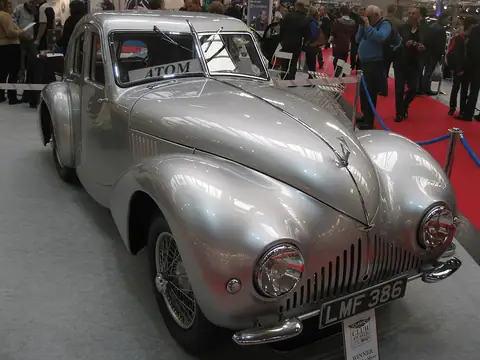
Aston Martin · 1939–1940
Atom
1 Built
-
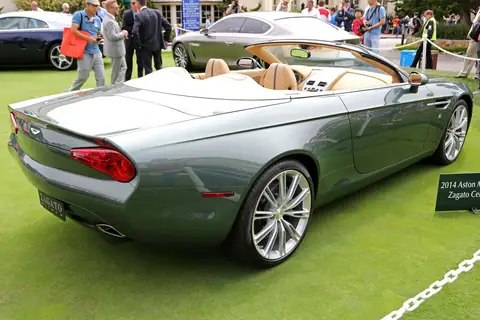
Aston Martin · 2013
DB9 Spyder Zagato Centennial
1 Built
-
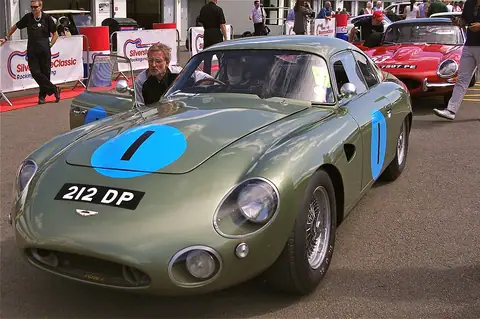
Aston Martin · 1962
DP212
1 Built
-
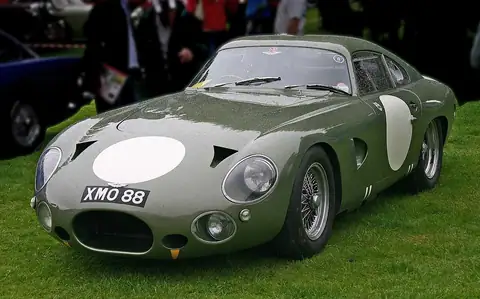
Aston Martin · 1963
DP215
1 Built
See all 183 cars by Aston Martin →
More from United Kingdom
-
Bentley
Bentley 4.5 Litre
Production not yet verified
-
Rolls-Royce · 1929–1936
20/25
Production not yet verified
-
AC
3000ME
73 Built
-
MINI
JCW 1to6 Edition (2023)
Production not yet verified
134 other makes from United KingdomACAiredaleAlan Mann RacingAllardAlvisArabArashArielArmstrong SiddeleyArrowsAscariAtalantaAtlantisAustinAustin-HealeyBedfordBentleyBerkeleyBluebirdBMCBondBrabhamBristolBritish LeylandBroadspeedBrookeBrough SuperiorCampbell-RailtonCaparoCaterhamChevronConnaughtCooperCrayfordDaimlerDavid BrownDawsonDeLoreanDuttonElvaAll makes →