Makes › Bristol › 450 · Factory competition · 1953–1955 Ultra Rare
Bristol
450
Works Le Mans coupés/open cars; factory ordered them destroyed after 1955, one survivor assembled from the best parts
Still being researched: full specifications. Everything shown is checked against the cited sources. Know more? Send us a source.
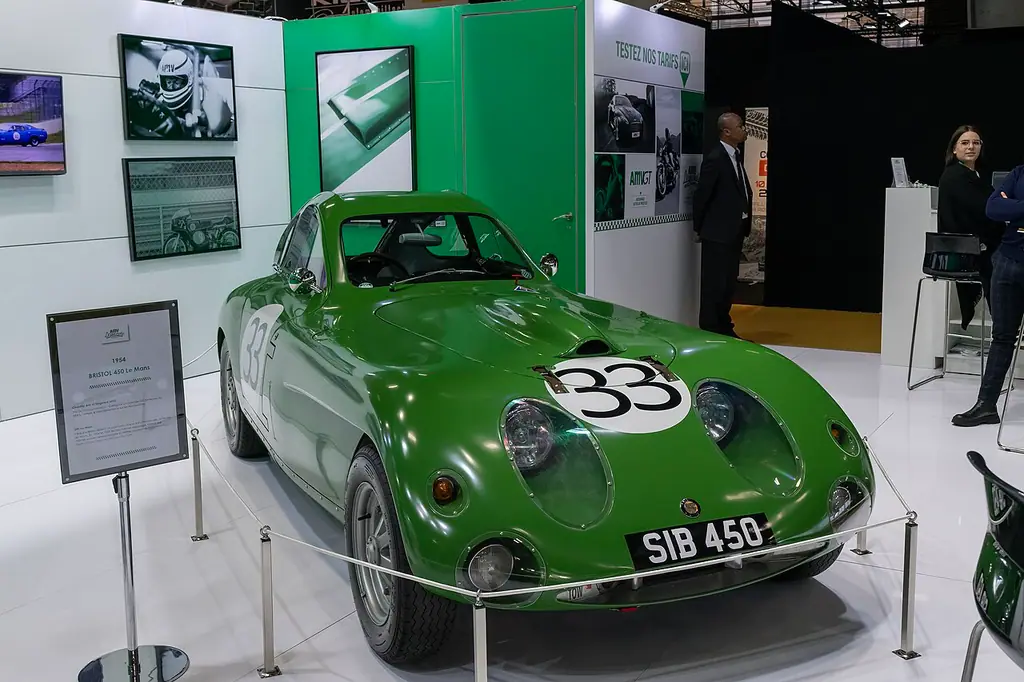
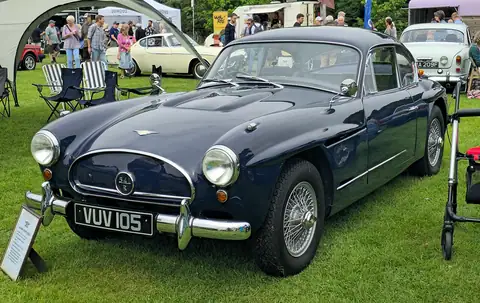
Photo: Alexandre Prevot from Nancy, France · CC BY-SA 2.0

Contents
01Overview
At a glance
- Built
- 3 Built
- Years
- 1953–1955
- Engine
- Not yet verified
- Power
- 127 kW / 172 PSFactory: 170 hp · converted
- Top speed
- 241 km/hFactory: 150 mph · converted
- Body
- Not yet verified
- Designer
- Not yet verified
- In this archive
- Not yet verified
- Surviving
- 1 (independently researched)
Sources and any conflicting figures are in the sections below.
Why it matters
The 450 was the works Bristol racing sports car, built for the 2-litre class at Le Mans and Reims from 1953 to 1955. It carried Bristol's BMW-derived six-cylinder engine to class wins and team prizes, and the effort ended after the 1955 season.
How rare is it?
Six separate kinds of rarity – never combined into one number.
Each kind of rarity is rated separately and never combined.
02Production & history
Production
Every figure says what it counts.
| What is counted | Figure | Basis | Status |
|---|---|---|---|
| Total model productionsingle car reassembled from the best parts of the three dismantled team cars | 12,3 | Surviving examples | Independently researched |
| Total model productionWorks 450 chassis built for the Le Mans programme ("built three fresh chassis") | 31 | Factory production | Independently researched |
Independent counts (e.g. engine and colour) are never combined into a calculated figure. Surviving examples are never presented as original production.
History
The first series appeared in 1953 as a twin-finned fixed-head coupé. During the following winter Kemish improved the air intake with inverted internal cones, known as "Kemish Straighteners", which were fitted to all team cars. For 1955 the cars received open two-seater bodies with a single asymmetric fin behind the driver, similar in feel to the Jaguar D-type. A results list shows three 450Cs finishing 7th, 8th and 9th overall at Le Mans in 1955.
After the 1955 Le Mans disaster Bristol withdrew from racing. The three team cars were dismantled, but the best parts were reassembled into a single car, which Anthony Crook kept for many years.
Variants
How each version differs from the standard 450.
No variants documented yet. Have a source? Contribute it.
03Specifications
Technical specifications
Engine
| Engine family | Not yet verified |
|---|---|
| Engine code | Not yet verified |
| Layout | Not yet verified |
| Displacement | Not yet verified |
| Bore | Not yet verified |
| Stroke | Not yet verified |
| Compression ratio | Not yet verified |
| Fuel system | Not yet verified |
| Power | 127 kW / 172 PSFactory: 170 hp · converted4 Independently researchedOutput "available in the Bristol 450s that raced at Le Mans". |
| Power at | 7,000 rpm4 Independently researched |
| Torque | Not yet verified |
Transmission & drivetrain
| Gearbox | Gearbox mounted at the rear (with inboard rear brakes)2 Independently researched |
|---|---|
| Gears | Not yet verified |
| Driven wheels | Not yet verified |
Chassis, body & dimensions
| Chassis | Not yet verified |
|---|---|
| Front suspension | Not yet verified |
| Rear suspension | Not yet verified |
| Brakes | Outboard front discs, inboard rear discs2 Independently researched |
| Steering | Not yet verified |
| Body construction | Not yet verified |
| Wheelbase | Not yet verified |
| Length | Not yet verified |
| Width | Not yet verified |
| Height | Not yet verified |
| Front track | Not yet verified |
| Rear track | Not yet verified |
| Kerb weight | Not yet verified |
| Dry weight | Not yet verified |
Performance
| Maximum speed | 241 km/hFactory: 150 mph · converted2 Independently researched"nearly 150 mph" on the Mulsanne straight. |
|---|---|
| 0–100 km/h | Not yet verified |
| Fuel tank | Not yet verified |
“Not yet verified” means no source has been checked for that value yet. Nothing is estimated to fill a gap.
04Colours & options
Factory colours & interiors
Original paint and trim, with the number of cars in each where a source gives it.
Not yet documented. Have a source? Contribute it.
Factory options & codes
Codes are shown exactly as written by the manufacturer.
Not yet documented. Have a source? Contribute it.
05Individual cars
Chassis register
Every documented car, with its colours, history and where it is now. Open a row for the full record. Known chassis are not automatically authenticated originals.
Not yet documented. Have a source? Contribute it.
Competition history
Every race result of the individual cars, in date order. Click a chassis number to open its full record in the register.
Not yet documented. Have a source? Contribute it.
Auction & sale history
Documented public sales of the individual cars. Click a chassis number to open its full record in the register.
Not yet documented. Have a source? Contribute it.
See one in person
Museums where an example of this car can be seen.
No example is documented on public display yet. Have a source? Contribute it.
06Reference
Identification guide
How to tell an original from a replica or later conversion.
The 1953 cars are fixed-head coupés with twin tail fins; the 1955 cars are open two-seaters with one large fin behind the driver. Mechanically the car has outboard front disc brakes, inboard rear discs and a rear-mounted gearbox, with hubs arranged for fast single-nut wheel changes. The engine used a six-port cylinder head and the Kemish air-intake cones.
Sources
Each number links to the exact facts it supports.
-
1
Tunnel Vision – Motor Sport, August 1999 Level C
- 3 Works 450 chassis built for the Le Mans programme ("built three fresh chassis")
-
2
Bristol 450 Level C thoroughbred-cars.com
- The sole survivor was kept for many years by Anthony Crook
- inboard rear disc brakes and gearbox at the rear
- outboard disc brakes at the front, inboard rear disc brakes
- top speed, on the Mulsanne straight, of nearly 150 mph
-
3
Bristol Type 450 Level B Bristol Owners' Club
- best of the parts reassembled into a single exemplar
-
4
Buying a Six-Cylinder Bristol Level B Bristol Owners' Club
- 170bhp at 7,000rpm available in the Bristol 450s
- 170bhp at 7,000rpm
Keep exploring
More from Bristol
-
Bristol · 1960
406 Zagato
6 Built
-
Bristol
Fighter
14 Built
-
Bristol · 1949–1950
402
22 Built
-
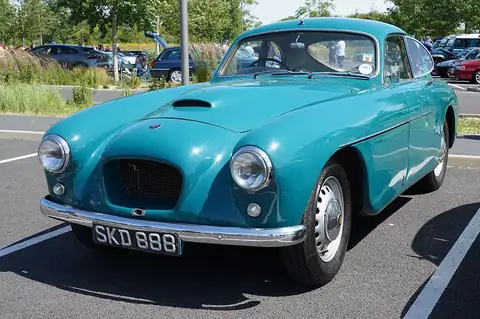
Bristol · 1953–1955
404
51 Built
More from United Kingdom
-
Bentley · 2002
State Limousine
2 Built
-
Aston Martin
DBR22
Production not yet verified
-
Lotus
17
Production not yet verified
-
Jensen · 1957–1960
541R
193 Built
134 other makes from United KingdomACAiredaleAlan Mann RacingAllardAlvisArabArashArielArmstrong SiddeleyArrowsAscariAston MartinAtalantaAtlantisAustinAustin-HealeyBedfordBentleyBerkeleyBluebirdBMCBondBrabhamBritish LeylandBroadspeedBrookeBrough SuperiorCampbell-RailtonCaparoCaterhamChevronConnaughtCooperCrayfordDaimlerDavid BrownDawsonDeLoreanDuttonElvaAll makes →