Makes › Chevron › B8 · Coachbuilt · 1968–1970 Ultra Rare
Chevron
B8
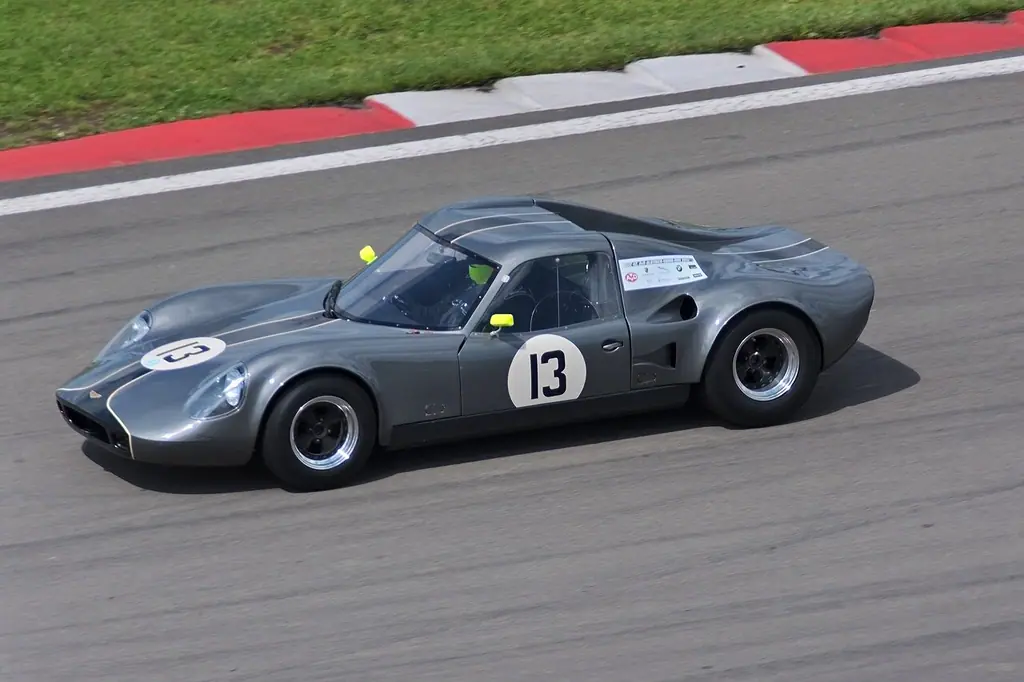
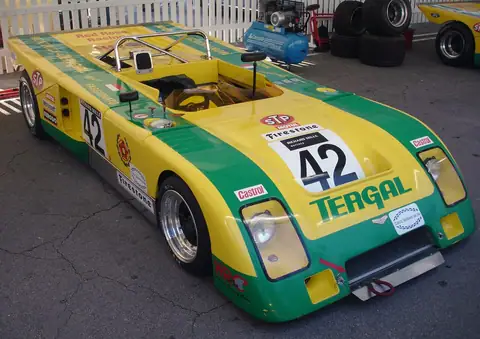
Chevron B8 GT racer of 1968-1970, 44 built with all engines.
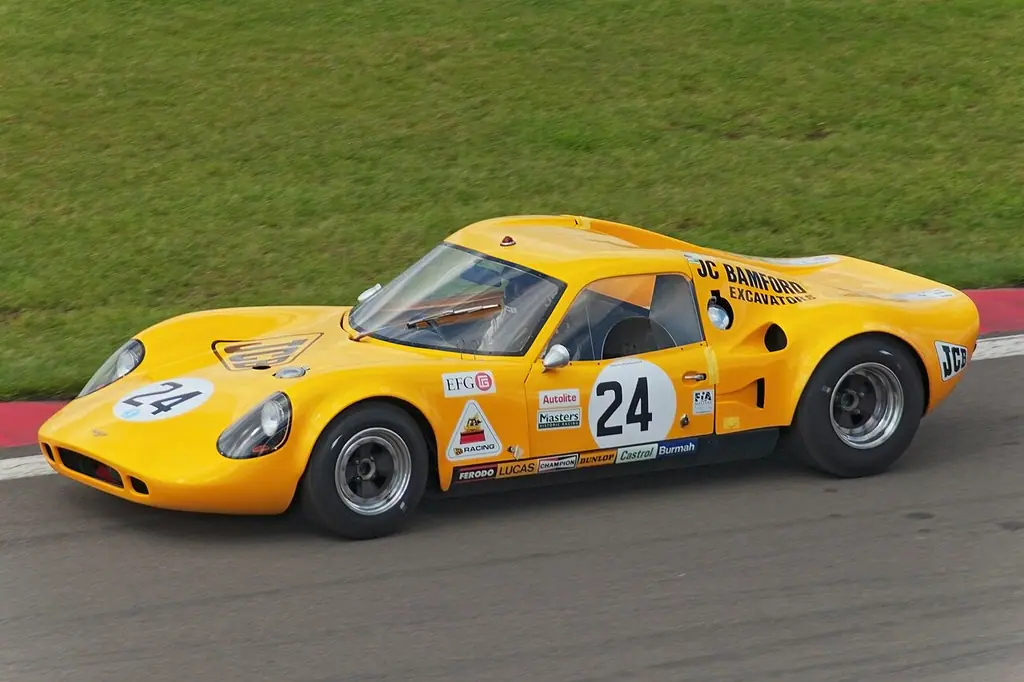
Photo: Kogo · CC BY-SA 3.0
Contents
01Overview
At a glance
- Built
- 44 Built
- Years
- 1968–1970
- Engine
- Inline four, mid-mounted longitudinally · 1,990 cc / 2.0 LFactory: 1,990 cc
- Power
- 145 kW / 198 PSFactory: 195 hp · converted
- Top speed
- 241 km/hFactory: 150 mph · converted
- Body
- Not yet verified
- Designer
- Derek Bennett
- In this archive
- Not yet verified
- Surviving
- Not yet verified
Sources and any conflicting figures are in the sections below.
Why it matters
The B8 was Chevron's 1968 GT racer: a fibreglass coupe on a steel-reinforced spaceframe, powered by a BMW four-cylinder engine. Chevron built 44 examples between 1968 and 1970. The racing archive records 55 outright wins for the type across its recorded events.
How rare is it?
Six separate kinds of rarity – never combined into one number.
Each kind of rarity is rated separately and never combined.
Photos
Exterior, interior and detail photos with their licences.
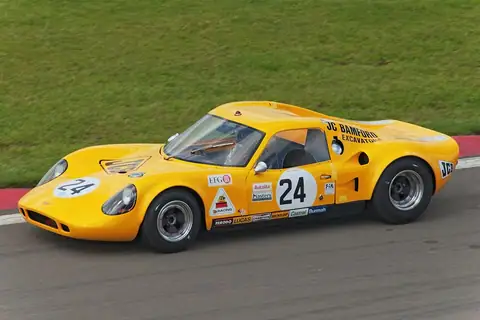 Chevron B8 (Wikimedia Commons search)
Photo: Kogo · CC BY-SA 3.0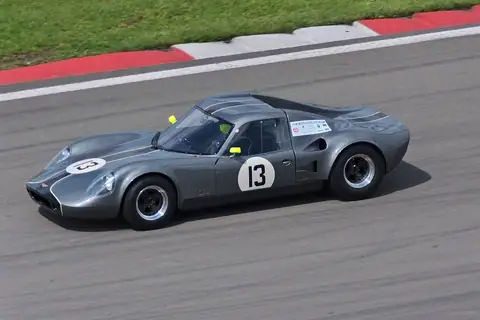 Chevron B8 (Wikimedia Commons search)
Photo: Kogo · CC BY-SA 3.0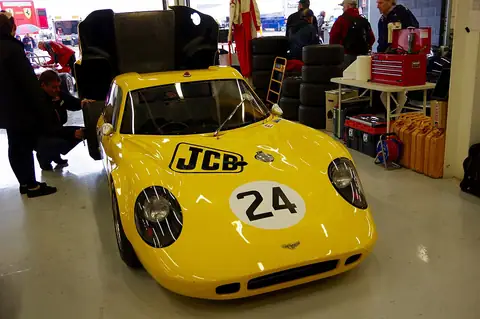 Chevron B8 (Wikimedia Commons search)
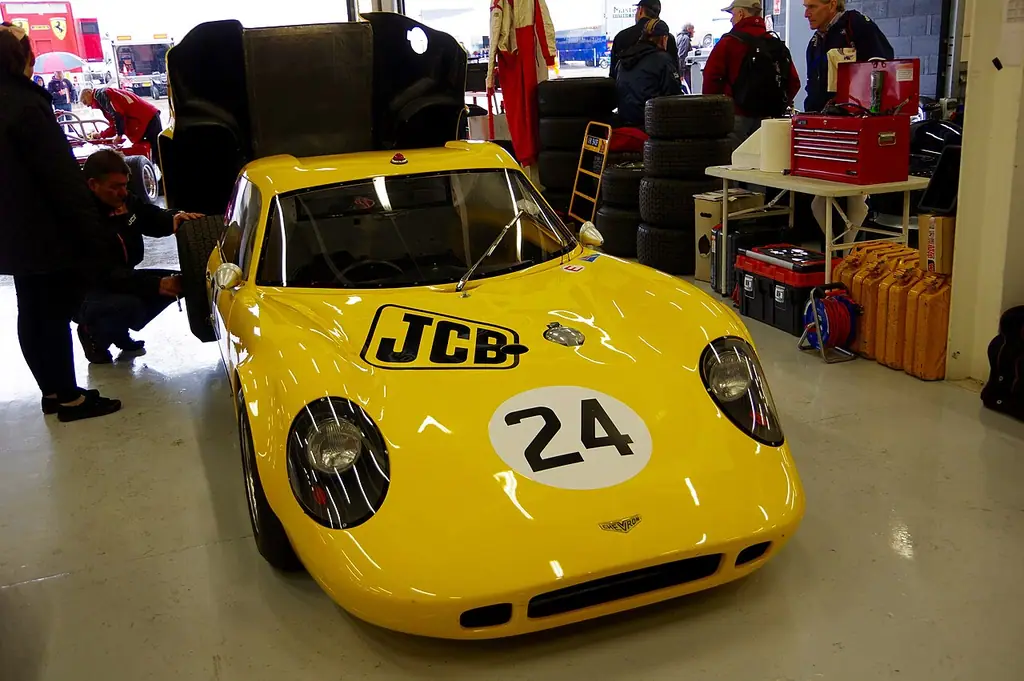
Photo: David Merrett from Daventry, England · CC BY 2.0


02Production & history
Production
Every figure says what it counts.
| What is counted | Figure | Basis | Status |
|---|---|---|---|
| Total model productioncars built 1968-1970, all engines | 441 | Factory production | Independently researched |
Independent counts (e.g. engine and colour) are never combined into a calculated figure. Surviving examples are never presented as original production.
History
Derek Bennett's company built the B8 as its 1968 GT racer, a successor to the B6 BMW. The homologation rule called for at least 50 examples. When the FIA checked the count, too few had been built, but Bennett convinced the officials that he had enough supplies and materials, and the car was allowed to race.
The B8 needed nearly a month to score its first win. In 1969 it took a class win at the Daytona 24 Hours. Chevron built 44 cars in total, all between 1968 and 1970.
Variants
How each version differs from the standard B8.
No variants documented yet. Have a source? Contribute it.
03Specifications
Technical specifications
Engine
| Engine manufacturer | BMW2 Independently researched |
|---|---|
| Engine family | Not yet verified |
| Engine code | Not yet verified |
| Layout | Inline four, mid-mounted longitudinally3 Independently researched |
| Cylinders | 44 Independently researched |
| Displacement | 1,990 cc / 2.0 LFactory: 1,990 cc3 Independently researchedS1 gives 1,990 cc, which matches its bore and stroke (89.0 x 80.0 mm). S2 gives 1998 cc (2.0 L) for the same engine type; the S1 figure is used. |
| Bore | 89 mmFactory: 89 mm3 Independently researched |
| Stroke | 80 mmFactory: 80 mm3 Independently researched |
| Compression ratio | Not yet verified |
| Valvetrain | Two valves per cylinder, SOHC3 Independently researched |
| Fuel system | Two Weber 48 DCOE carburettors3 Independently researched |
| Induction | Naturally aspirated3 Independently researched |
| Power | 145 kW / 198 PSFactory: 195 hp · converted3 Independently researchedSources write bhp; the figure is kept in hp and not converted. S2 gives 195 HP (143.52 kW) at 7300 RPM. |
| Power at | 7,300 rpm3 Independently researched |
| Torque | Not yet verified |
Transmission & drivetrain
| Manufacturer | Hewland FT2004 Independently researched |
|---|---|
| Gearbox | Five-speed manual3 Independently researched |
| Gears | 53 Independently researched |
| Driven wheels | Rear3 Independently researched |
Chassis, body & dimensions
| Chassis | Aluminium-reinforced steel spaceframe3 Independently researched |
|---|---|
| Front suspension | Double wishbones, coil springs over dampers, anti-roll bar3 Independently researched |
| Rear suspension | Lower wishbones, top links, twin trail arms, coil springs over dampers, anti-roll bar3 Independently researched |
| Brakes | Discs, all round3 Independently researched |
| Steering | Rack-and-pinion3 Independently researched |
| Body construction | Fibreglass body3 Independently researched |
| Wheelbase | Not yet verified |
| Length | Not yet verified |
| Width | Not yet verified |
| Height | Not yet verified |
| Front track | Not yet verified |
| Rear track | Not yet verified |
| Kerb weight | 590 kgFactory: 1,300 lb · converted5 Independently researchedStated as 'weighs 1300 pounds' for one car (chassis DBE 79) in S3; not specified as dry or kerb. The weight entry in S1 (11 kilo) is clearly wrong and is not used. |
| Dry weight | Not yet verified |
Performance
| Maximum speed | 241 km/hFactory: 150 mph · converted5 Independently researched'About 150 mph' is stated for one car (DBE 79) in S3, not as a model figure. |
|---|---|
| 0–100 km/h | Not yet verified |
| Fuel tank | Not yet verified |
“Not yet verified” means no source has been checked for that value yet. Nothing is estimated to fill a gap.
04Colours & options
Factory colours & interiors
Original paint and trim, with the number of cars in each where a source gives it.
Not yet documented. Have a source? Contribute it.
Factory options & codes
Codes are shown exactly as written by the manufacturer.
Not yet documented. Have a source? Contribute it.
05Individual cars
Chassis register
Every documented car, with its colours, history and where it is now. Open a row for the full record. Known chassis are not automatically authenticated originals.
Not yet documented. Have a source? Contribute it.
Competition history
Every race result of the individual cars, in date order. Click a chassis number to open its full record in the register.
Not yet documented. Have a source? Contribute it.
Auction & sale history
Documented public sales of the individual cars. Click a chassis number to open its full record in the register.
Not yet documented. Have a source? Contribute it.
See one in person
Museums where an example of this car can be seen.
No example is documented on public display yet. Have a source? Contribute it.
06Reference
Identification guide
How to tell an original from a replica or later conversion.
Original cars carried two Weber 48 DCOE carburettors and a Hewland FT200 five-speed gearbox. The 2008 continuation cars were built from the original designs, moulds and jigs and were given an FIA Historical Technical Passport; they used twin 45 Webers and a dry-sump BMW M10 engine. The original 1968-1970 run is 44 cars, so later cars are not part of it.
Sources
Each number links to the exact facts it supports.
- 1
-
2
Chevron B8 (review of a 2008 continuation car) Level C Roger Green · evo · 2008-12-04
- 2-litre BMW M10 in-line four
-
3
Chevron B8 BMW Specifications Level C Wouter Melissen · Ultimatecarpage.com · 2009-12-14
- Mid, longitudinally mounted (Specifications)
- Displacement | 1,990 cc / 121.4 cu in (Specifications)
- 89.0 mm (3.5 in) / 80.0 mm (3.1 in) (Specifications)
- 2 valves / cylinder, SOHC
- 2 Weber 48 DCOE Carburettors
- Naturally Aspirated
- 195 bhp / 145 kW
- @ 7,300 rpm
- 5 speed Manual
- Rear wheel drive
- aluminium reinforced steel spaceframe
- double wishbones, coil springs over dampers, anti-roll bar
- lower wishbones, top links, twin trail arms
- discs, all-round
- rack-and-pinion
- fibreglass body on aluminium reinforced steel spaceframe
-
4
1968 Chevron B8 Specifications & Dimensions Level C conceptcarz.com
- Inline 4
- 5 Manual Hewland FT200
-
5
1968 Chevron B8 (vehicle profile) Level C Daniel Vaughan · conceptcarz.com
- It weighs 1300 pounds
- a top speed of about 150 mph
Keep exploring
More from Chevron
-
Chevron · 1972–1973
Chevron B24
8 Built
-
Chevron
B19
35 Built
-
Chevron
B21
Production not yet verified
-
No licensed photo yet
Chevron
B16 Spyder
1 Built
More from United Kingdom
-
Jensen · 2001–2003
SV-8
20 Built
-
Jaguar · 1966
XJ13
1 Built
-
Aston Martin
DBS 770 Ultimate (2023)
Production not yet verified
-
Lotus · 1999–2000
340R
340 Built
134 other makes from United KingdomACAiredaleAlan Mann RacingAllardAlvisArabArashArielArmstrong SiddeleyArrowsAscariAston MartinAtalantaAtlantisAustinAustin-HealeyBedfordBentleyBerkeleyBluebirdBMCBondBrabhamBristolBritish LeylandBroadspeedBrookeBrough SuperiorCampbell-RailtonCaparoCaterhamConnaughtCooperCrayfordDaimlerDavid BrownDawsonDeLoreanDuttonElvaAll makes →