Makes › Continental Coachwork › Ascort · Rare colour
Continental Coachwork
Ascort
Coachbuilt car, more than 12 built.
Still being researched: identification guide, full specifications. Everything shown is checked against the cited sources. Know more? Send us a source.
Contents
01Overview
At a glance
- Built
- Not yet verified
- Years
- Not yet verified
- Engine
- 1,296 cc / 1.3 LFactory: 1,296 cc
- Power
- 13.4 kW / 18.2 PSFactory: 18 hp · converted
- Top speed
- 153 km/hFactory: 95 mph · converted
- Body
- Not yet verified
- Designer
- Mirek Craney
- In this archive
- Not yet verified
- Surviving
- 7 (independently researched)
Sources and any conflicting figures are in the sections below.
Why it matters
The Ascort was a fibreglass sports car built in Victoria, Australia, on a Volkswagen Beetle chassis. Its double-walled body on a light steel tubular frame and its twin rear-seat fuel tanks are among the features the source calls unique.
How rare is it?
Six separate kinds of rarity – never combined into one number.
Each kind of rarity is rated separately and never combined.
02Production & history
Production
Every figure says what it counts.
| What is counted | Figure | Basis | Status |
|---|---|---|---|
| Total model productioncars known to exist in 1981 (per the source's contributor, not a current count) | 71 | Surviving examples | Independently researched |
Independent counts (e.g. engine and colour) are never combined into a calculated figure. Surviving examples are never presented as original production.
History
Czech-born engineer Mirek Craney built the Ascort on a Beetle chassis, starting from the shape of his Karmann Ghia, with fibreglass and epoxy resin bodywork. The company Continental Coachwork Pty. Ltd. planned to sell the TSV 1300 at just under 2000 Australian pounds, when a Beetle export cost 972 pounds. The line stopped after a production run of 19 vehicles, because the price was unrealistic.
Variants
How each version differs from the standard Ascort.
No variants documented yet. Have a source? Contribute it.
03Specifications
Technical specifications
Engine
| Engine family | Not yet verified |
|---|---|
| Engine code | Not yet verified |
| Layout | Not yet verified |
| Displacement | 1,296 cc / 1.3 LFactory: 1,296 cc1 Independently researchedAchieved with a 69 mm stroker crank on the VW 1200 engine. |
| Bore | Not yet verified |
| Stroke | Not yet verified |
| Compression ratio | 7.5:11 Independently researchedSource prints '7:5:1'; read here as 7.5:1. |
| Fuel system | Twin Solex carburettors1 Independently researched |
| Power | 13.4 kW / 18.2 PSFactory: 18 hp · converted1 Independently researchedThis is the gain over the standard 36 hp VW 1200 engine as printed in the source, not a total output figure. |
| Power at | 5,200 rpm1 Independently researched |
| Torque | Not yet verified |
Transmission & drivetrain
| Gearbox | Not yet verified |
|---|---|
| Gears | Not yet verified |
| Driven wheels | Not yet verified |
Chassis, body & dimensions
| Chassis | Light steel tubular frame with rollbar1 Independently researched |
|---|---|
| Front suspension | Beetle front suspension with an added stiffer anti-roll bar1 Independently researched |
| Rear suspension | Not yet verified |
| Brakes | Standard VW items1 Independently researched |
| Steering | Not yet verified |
| Body construction | Double-walled body of fibreglass and epoxy resin fitted over the tubular frame1 Independently researched |
| Wheelbase | Not yet verified |
| Length | Not yet verified |
| Width | Not yet verified |
| Height | Not yet verified |
| Front track | Not yet verified |
| Rear track | Not yet verified |
| Kerb weight | Not yet verified |
| Dry weight | Not yet verified |
Performance
| Maximum speed | 153 km/hFactory: 95 mph · converted1 Independently researched |
|---|---|
| 0–100 km/h | Not yet verified |
| Fuel tank | 37.9 LFactory: 10 gal-us · converted1 Independently researchedEach of two tanks, 'almost 10 U.S. gallons'. |
“Not yet verified” means no source has been checked for that value yet. Nothing is estimated to fill a gap.
04Colours & options
Factory colours & interiors
Original paint and trim, with the number of cars in each where a source gives it.
Not yet documented. Have a source? Contribute it.
Factory options & codes
Codes are shown exactly as written by the manufacturer.
Not yet documented. Have a source? Contribute it.
05Individual cars
Chassis register
Every documented car, with its colours, history and where it is now. Open a row for the full record. Known chassis are not automatically authenticated originals.
Not yet documented. Have a source? Contribute it.
Competition history
Every race result of the individual cars, in date order. Click a chassis number to open its full record in the register.
Not yet documented. Have a source? Contribute it.
Auction & sale history
Documented public sales of the individual cars. Click a chassis number to open its full record in the register.
Not yet documented. Have a source? Contribute it.
See one in person
Museums where an example of this car can be seen.
No example is documented on public display yet. Have a source? Contribute it.
06Reference
Identification guide
How to tell an original from a replica or later conversion.
Not yet documented. Have a source? Contribute it.
Sources
Each number links to the exact facts it supports.
-
1
Weird & Wonderful VWs – The Ascort Level C LTV-VWC (Wheelspin newsletter) · 2001-06
- in 1981, just seven such cars exist
- thus obtaining a capacity of 1296 cc
- The compression was raised from 6:6:1 up to 7:5:1
- a pair of Solexes fitted instead of the usual one
- standard output 36hp
- That was 18 hp, or 50 percent more than standard
- ran smoothly up to 5200 rpm
- a light steel tubular frame over which the body was fitted
- the addition of a stiffer anti roll bar to the front suspension
- The brakes, wheels and tires were all standard VW items
- The body had a double walled construction
- a top speed of just short of 95 mph
- Each of these metal containers held almost 10 U.S. gallons
Keep exploring
More from Continental Coachwork
This is the only Continental Coachwork documented so far.
See all 1 car by Continental Coachwork →
More from Australia
-
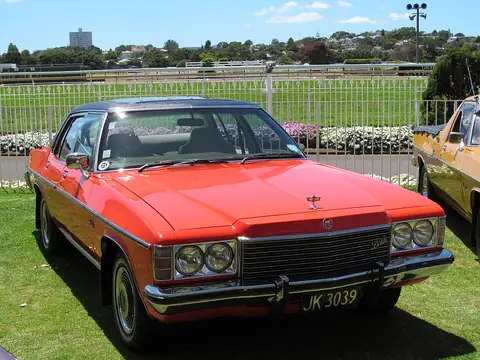
Holden
Statesman De Ville (Japan, imported by Isuzu)
Production not yet verified
-
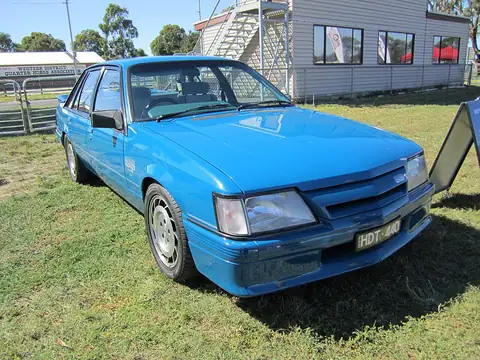
HDT · 1985
VK Commodore SS Group A ('Blue Meanie')
500 Built
-
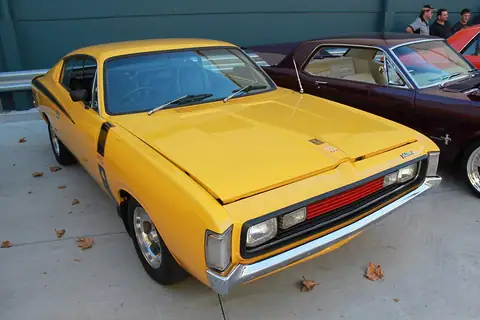
Chrysler Australia · 1972
Valiant Charger R/T E49
149 Built
-
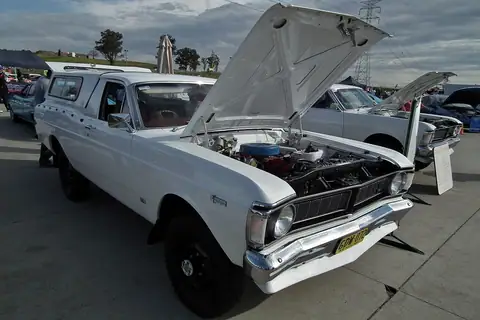
Ford Australia
XY Falcon 4WD utility
Production not yet verified
13 other makes from AustraliaAscortBolwellChrysler AustraliaElfinEmpireFord AustraliaHDTHoldenHSVLeyland AustraliaPurvisSchuppanVeskanda