Makes › Daihatsu › P-5 racing prototype · Factory competition · 1967–1969 Ultra Rare
Daihatsu
P-5 racing prototype
Daihatsu's 1.3-litre works prototype racer; at least four built, one survives with the factory.
Still being researched: full specifications. Everything shown is checked against the cited sources. Know more? Send us a source.
Contents
01Overview
At a glance
- Built
- 4 Built
- Years
- 1967–1969
- Engine
- inline four, DOHC, four valves per cylinder · 1,300 cc / 1.3 LFactory: 1.3 L
- Power
- 104 kW / 142 PSFactory: 140 hp · converted
- Top speed
- Not yet verified
- Body
- Not yet verified
- Designer
- Not yet verified
- In this archive
- Not yet verified
- Surviving
- 1 (independently researched)
Sources and any conflicting figures are in the sections below.
Why it matters
The P-5 was Daihatsu's works prototype sports racer of the late 1960s and won the GP-I class at the 1968 Japan Grand Prix. Daihatsu kept one car and had it restored to running order by its own staff in 2018–2019.
How rare is it?
Six separate kinds of rarity – never combined into one number.
Each kind of rarity is rated separately and never combined.
02Production & history
Production
Every figure says what it counts.
| What is counted | Figure | Basis | Status |
|---|---|---|---|
| Total model productionone car kept and restored by Daihatsu; fate of the other three unclear | 12 | Surviving examples | Independently researched |
| Total model productionP-5 race cars built ("at least four") | 41 | Factory production | Independently researched |
Independent counts (e.g. engine and colour) are never combined into a calculated figure. Surviving examples are never presented as original production.
History
Daihatsu built at least four P-5s. At the 1967 Japan Grand Prix the cars were disqualified with mechanical problems; in 1968 car No. 15 finished 10th overall and won the GP-I class, and a P-5 was third overall in the Suzuka 1000 km. In 1969 it took its best result, second overall in the Suzuka 1000 km.
Daihatsu kept one car, cosmetically restored about ten years before 2019 but without its engine. After an original R29B engine was found in 2018, employee volunteers at the R&D centre completed the car, which was shown running at the 2019 Automotive Engineering Exposition in Yokohama.
Variants
How each version differs from the standard P-5 racing prototype.
No variants documented yet. Have a source? Contribute it.
03Specifications
Technical specifications
Engine
| Engine family | Not yet verified |
|---|---|
| Engine code | R29B2 Independently researched |
| Layout | inline four, DOHC, four valves per cylinder2 Independently researched |
| Displacement | 1,300 cc / 1.3 LFactory: 1.3 L2 Independently researched |
| Bore | Not yet verified |
| Stroke | Not yet verified |
| Compression ratio | Not yet verified |
| Fuel system | Not yet verified |
| Power | 104 kW / 142 PSFactory: 140 hp · converted2 Independently researched |
| Power at | Not yet verified |
| Torque | Not yet verified |
| Redline | 10,000 rpm2 Independently researched |
Transmission & drivetrain
| Gearbox | Not yet verified |
|---|---|
| Gears | Not yet verified |
| Driven wheels | Not yet verified |
Chassis, body & dimensions
| Chassis | tubular space frame2 Independently researched |
|---|---|
| Front suspension | Not yet verified |
| Rear suspension | Not yet verified |
| Brakes | Not yet verified |
| Steering | Not yet verified |
| Body construction | fibreglass2 Independently researched |
| Wheelbase | Not yet verified |
| Length | Not yet verified |
| Width | Not yet verified |
| Height | Not yet verified |
| Front track | Not yet verified |
| Rear track | Not yet verified |
| Kerb weight | Not yet verified |
| Dry weight | 510 kgFactory: 510 kg2 Independently researched |
Performance
| Maximum speed | Not yet verified |
|---|---|
| 0–100 km/h | Not yet verified |
| Fuel tank | Not yet verified |
“Not yet verified” means no source has been checked for that value yet. Nothing is estimated to fill a gap.
04Colours & options
Factory colours & interiors
Original paint and trim, with the number of cars in each where a source gives it.
Not yet documented. Have a source? Contribute it.
Factory options & codes
Codes are shown exactly as written by the manufacturer.
Not yet documented. Have a source? Contribute it.
05Individual cars
Chassis register
Every documented car, with its colours, history and where it is now. Open a row for the full record. Known chassis are not automatically authenticated originals.
Not yet documented. Have a source? Contribute it.
Competition history
Every race result of the individual cars, in date order. Click a chassis number to open its full record in the register.
Not yet documented. Have a source? Contribute it.
Auction & sale history
Documented public sales of the individual cars. Click a chassis number to open its full record in the register.
Not yet documented. Have a source? Contribute it.
See one in person
Museums where an example of this car can be seen.
No example is documented on public display yet. Have a source? Contribute it.
06Reference
Identification guide
How to tell an original from a replica or later conversion.
Being verified against factory or registry sources before it is published. Have a source? Contribute it.
Sources
Each number links to the exact facts it supports.
-
1
MOTORSPORT: 1967 Daihatsu P-5 race car restored Level C
- 4 P-5 race cars built ("at least four")
-
2
MOTORSPORT: 1967 Daihatsu P-5 race car restored Level C Ben Hsu · Japanese Nostalgic Car · 2019-03-22
- not clear what happened to the other three cars
- R29B
- twin overhead cams ... four valves per cylinder
- 1.3-liter inline-four
- 140 horsepower
- 10,000 rpm redline
- Tube-framed chassis
- fiberglass-bodied
- 510 kg
Keep exploring
More from Daihatsu
-
Daihatsu · 1985
Charade 926 Turbo (G11)
200 Built
-
Daihatsu
Ayla Turbo Concept
Production not yet verified
-
Daihatsu · 1951
Bee
Production not yet verified
-
Daihatsu
Storia X4 (M112S)
Production not yet verified
More from Japan
-
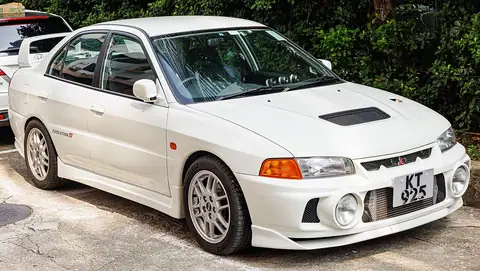
Mitsubishi · 1996–1997
Lancer Evolution IV (CN9A)
Production not yet verified
-
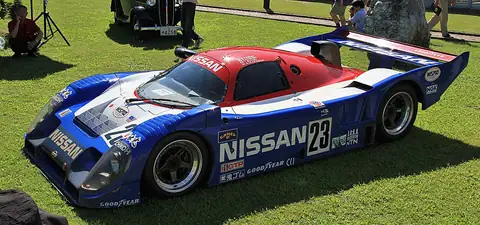
Nissan
R91CP (1991)
Production not yet verified
-
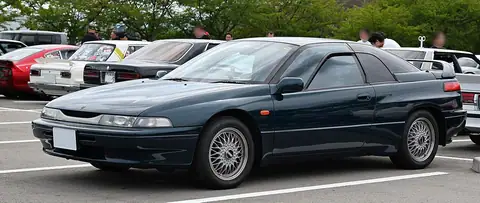
Subaru
Alcyone SVX S3
Production not yet verified
-
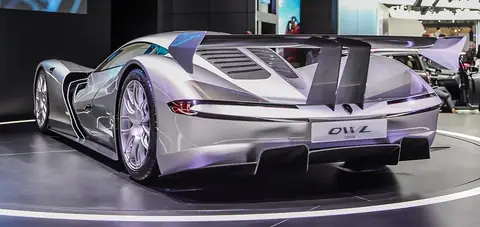
Aspark
Owl
Production not yet verified
31 other makes from JapanAriaAsparkAutechAutozamDatsunDomeHinoHondaInfinitiIsuzuJiottoKuroganeLexusMazdaMazdaspeedMitsubishiMitsuokaMossMugenNismoNissanOrcaPrinceScionSubaruSuzukiTommykairaToyotaTRDVemacYamaha