Makes › Daimler › Riemenwagen (belt-driven car), 2–8 hp · Rare production · 1895–1899 Extremely Rare
Daimler
Riemenwagen (belt-driven car), 2–8 hp
First Daimler series car; a Riemenwagen was the world's first motor taxi and Emil Jellinek's first Daimler
Still being researched: identification guide, full specifications. Everything shown is checked against the cited sources. Know more? Send us a source.
Contents
01Overview
At a glance
- Built
- 150 Built
- Years
- 1895–1899
- Engine
- Rear-mounted two-cylinder (Phönix, parallel cylinders cast in one block) · 750 cc / 0.8 LFactory: 750 cc
- Power
- 2.94 kW / 4 PSFactory: 4 PS
- Top speed
- Not yet verified
- Body
- Not yet verified
- Designer
- Wilhelm Maybach (for Gottlieb Daimler)
- In this archive
- Not yet verified
- Surviving
- Not yet verified
Sources and any conflicting figures are in the sections below.
Why it matters
The Riemenwagen was the first car Daimler-Motoren-Gesellschaft built in series, with roughly 150 made between 1895 and 1899. A Riemenwagen became the world's first motorised taxi, and a 6 PS example was the first Daimler bought by Emil Jellinek, the man who later inspired the Mercedes name.
How rare is it?
Six separate kinds of rarity – never combined into one number.
Each kind of rarity is rated separately and never combined.
02Production & history
Production
Every figure says what it counts.
| What is counted | Figure | Basis | Status |
|---|---|---|---|
| Total model productionapprox. total Riemenwagen built 1895–1899 | 1501,2 | Factory production | Factory reported |
Independent counts (e.g. engine and colour) are never combined into a calculated figure. Surviving examples are never presented as original production.
History
Wilhelm Maybach designed the car for Gottlieb Daimler at DMG, and it went into production from 1895. Its rear-mounted Phönix two-cylinder engine drove the rear wheels through a belt transmission, which gave the car its name. Engines grew from 2 PS through 3, 4 and 6 PS, and a 2.2-litre version reached 7.5 to 8 PS; most cars had the 4 PS unit. Emil Jellinek took delivery of a 6 PS double phaeton in October 1897, and Daimler and Maybach used the type to test electric ignition, including a Bosch-equipped 8 PS car on a five-day Alpine trial.
Variants
How each version differs from the standard Riemenwagen (belt-driven car), 2–8 hp.
No variants documented yet. Have a source? Contribute it.
03Specifications
Technical specifications
Engine
| Engine family | Phoenix two-cylinder12 hp version with 750 cc; 3, 4 and 6 hp versions; 7.5 to 8 hp version with a 2.2-litre engine. |
|---|---|
| Engine code | Not yet verified |
| Layout | Rear-mounted two-cylinder (Phönix, parallel cylinders cast in one block)3 Independently researched |
| Cylinders | 21 |
| Displacement | 750 cc / 0.8 LFactory: 750 cc3 Independently researched |
| Bore | Not yet verified |
| Stroke | Not yet verified |
| Compression ratio | Not yet verified |
| Valvetrain | Camshaft controlling the exhaust valves1 |
| Fuel system | Maybach spray-nozzle carburettor1 |
| Power | 2.94 kW / 4 PSFactory: 4 PS3 Independently researched |
| Power at | Not yet verified |
| Torque | Not yet verified |
Transmission & drivetrain
| Gearbox | Belt drive to the rear wheels3 Independently researched |
|---|---|
| Gears | Not yet verified |
| Driven wheels | Not yet verified |
Chassis, body & dimensions
| Chassis | Carriage-like body with rear-mounted engine; power to the rear wheels by belt1 |
|---|---|
| Front suspension | Not yet verified |
| Rear suspension | Not yet verified |
| Brakes | Not yet verified |
| Steering | Not yet verified |
| Body construction | Not yet verified |
| Wheelbase | Not yet verified |
| Length | Not yet verified |
| Width | Not yet verified |
| Height | Not yet verified |
| Front track | Not yet verified |
| Rear track | Not yet verified |
| Kerb weight | Not yet verified |
| Dry weight | Not yet verified |
Performance
| Maximum speed | Not yet verified |
|---|---|
| 0–100 km/h | Not yet verified |
| Fuel tank | Not yet verified |
“Not yet verified” means no source has been checked for that value yet. Nothing is estimated to fill a gap.
04Colours & options
Factory colours & interiors
Original paint and trim, with the number of cars in each where a source gives it.
Not yet documented. Have a source? Contribute it.
Factory options & codes
Codes are shown exactly as written by the manufacturer.
Not yet documented. Have a source? Contribute it.
05Individual cars
Chassis register
Every documented car, with its colours, history and where it is now. Open a row for the full record. Known chassis are not automatically authenticated originals.
Not yet documented. Have a source? Contribute it.
Competition history
Every race result of the individual cars, in date order. Click a chassis number to open its full record in the register.
Not yet documented. Have a source? Contribute it.
Auction & sale history
Documented public sales of the individual cars. Click a chassis number to open its full record in the register.
Not yet documented. Have a source? Contribute it.
See one in person
Museums where an example of this car can be seen.
No example is documented on public display yet. Have a source? Contribute it.
06Reference
Identification guide
How to tell an original from a replica or later conversion.
Not yet documented. Have a source? Contribute it.
Sources
Each number links to the exact facts it supports.
-
1
Daimler belt-driven car, 1895 - 1899 Level A Mercedes-Benz Public Archive (Classic M@RS)
- Altogether, around 150 units of the belt-driven car ... were produced
- 2 hp version with 750 cc displacement ... 2.2-liter engine, with 7.5 - 8 hp
- two jointly block-cast, parallel standing cylinders
- a camshaft for controlling the exhaust valves
- spray nozzle carburetor, the forefather of the modern carburetor
- carriage-like automobile with a rear-mounted engine ... transmitted to the rear wheels by a belt system
-
2
Die Daimler „Riemenwagen“ von 1895 bis 1899 (mbpassion.de, M. Jordan, 2024) Level C
- 150 approx. total Riemenwagen built 1895–1899
-
3
Die Daimler "Riemenwagen" von 1895 bis 1899 Level C Markus Jordan · mbpassion.de · 2024-12-27
- im Heck angeordnet; zwei parallel stehende, in einem Block zusammengegossene Zylinder
- 750 cm³ Hubraum (smallest version; up to a 2.2-litre engine)
- mostly 4 PS; variants 2, 3, 4, 6 PS and 7.5–8 PS
- über ein Riemengetriebe to the rear wheels
Keep exploring
More from Daimler
-
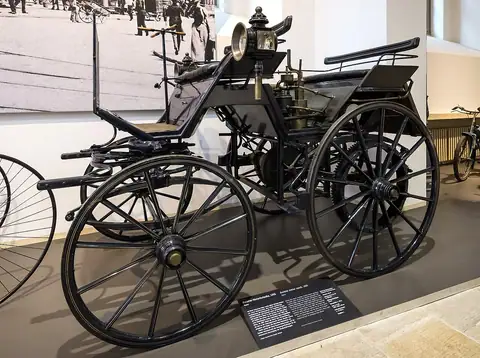
Daimler · 1886
Motorkutsche (motor carriage)
1 Built
-
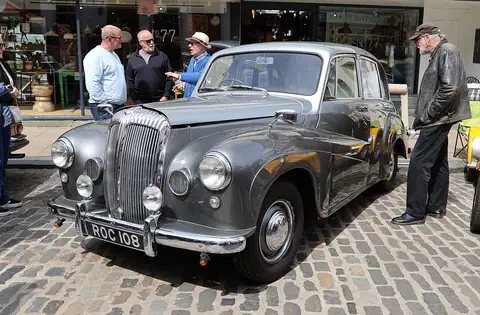
Daimler · 1954–1955
Conquest Roadster
50 Built
-
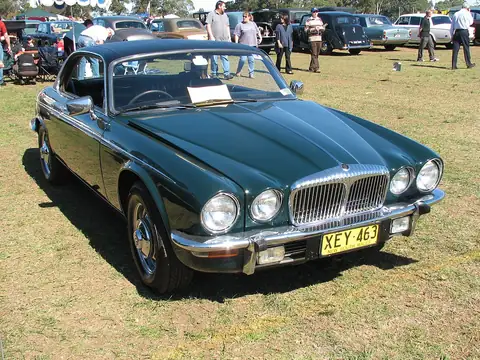
Daimler · 1975–1977
Double-Six Coupé (XJ-C)
407 Built
-
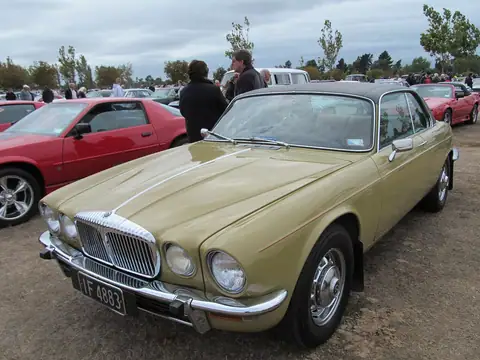
Daimler · 1975–1977
Sovereign 4.2 Coupé (XJ-C)
1,677 Built
More from United Kingdom
-
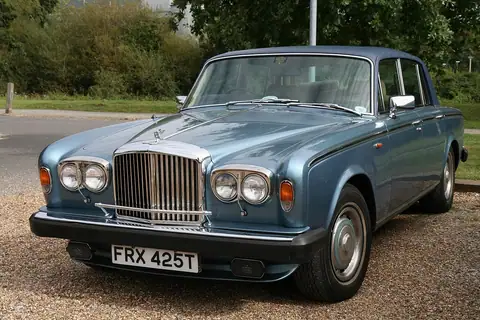
Bentley · 1977–1980
T2
568 Built
-
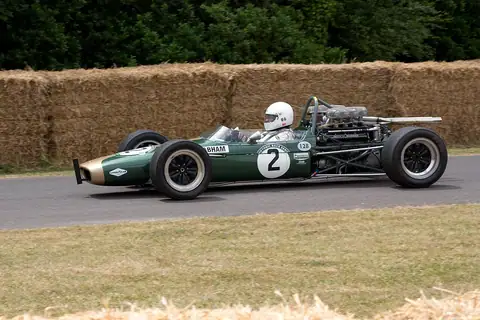
Brabham · 1967
Brabham BT24 (1967)
3 Built
-
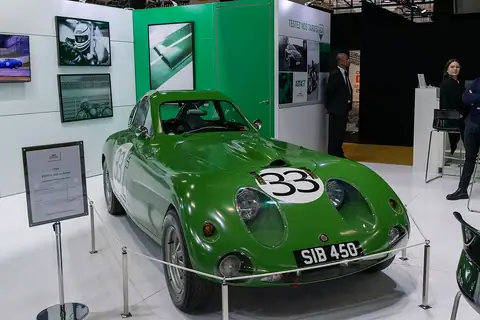
Bristol · 1953–1955
450
3 Built
-
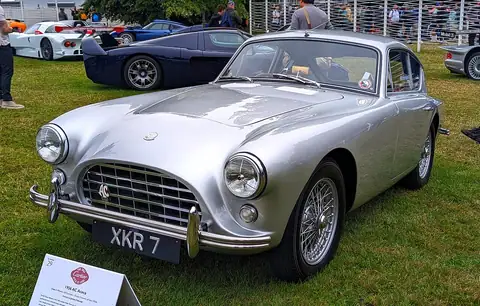
AC
Aceca (AC two-litre six) (1954-1963)
Production not yet verified
134 other makes from United KingdomACAiredaleAlan Mann RacingAllardAlvisArabArashArielArmstrong SiddeleyArrowsAscariAston MartinAtalantaAtlantisAustinAustin-HealeyBedfordBentleyBerkeleyBluebirdBMCBondBrabhamBristolBritish LeylandBroadspeedBrookeBrough SuperiorCampbell-RailtonCaparoCaterhamChevronConnaughtCooperCrayfordDavid BrownDawsonDeLoreanDuttonElvaAll makes →