Makes › Daimler › Stahlradwagen (wire-wheel car) · Prototype · 1889
Daimler
Stahlradwagen (wire-wheel car)
Daimler/Maybach integral-construction car with the first Daimler two-cylinder V engine and 4-speed gearbox, shown at the 1889 Paris World Exhibition; basis of the first Peugeot and Panhard cars
Still being researched: identification guide, full specifications. Everything shown is checked against the cited sources. Know more? Send us a source.
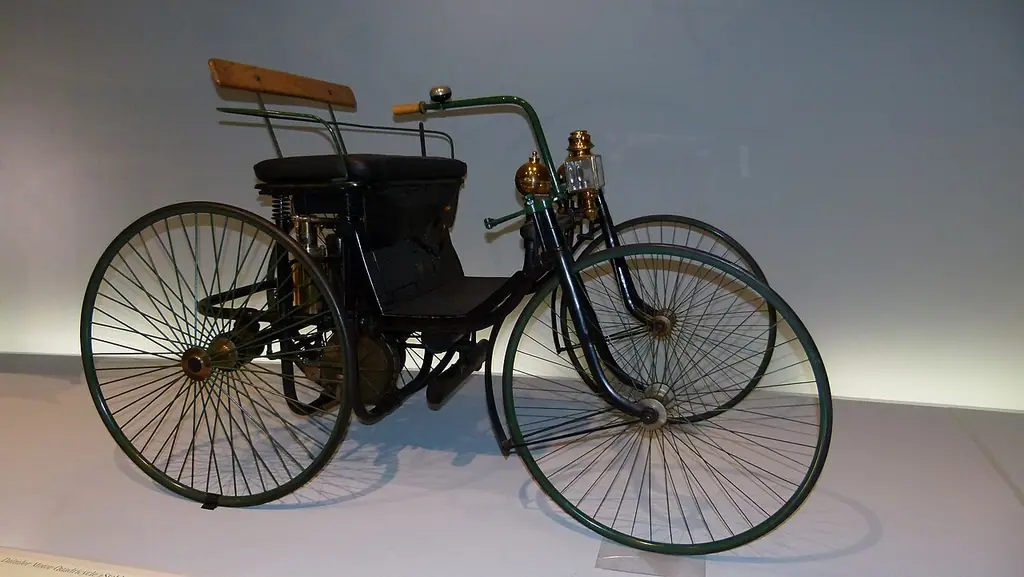
Photo: Brücke-Osteuropa · CC0 1.0

Contents
01Overview
At a glance
- Built
- Not yet verified
- Years
- 1889
- Engine
- V-twin
- Power
- Not yet verified
- Top speed
- Not yet verified
- Body
- Not yet verified
- Designer
- Gottlieb Daimler and Wilhelm Maybach
- In this archive
- Not yet verified
- Surviving
- Not yet verified
Sources and any conflicting figures are in the sections below.
Why it matters
The Stahlradwagen was the first true four-wheeled car to come from the Daimler and Maybach workshop in Cannstatt, after their earlier test vehicle, the motorcycle-like Einspur. It was shown at the 1889 World Exhibition in Paris, where it attracted great interest. The French makers Peugeot and Panhard & Levassor took up the Daimler engine for their first cars.
How rare is it?
Six separate kinds of rarity – never combined into one number.
Each kind of rarity is rated separately and never combined.
02Production & history
Production
Every figure says what it counts.
No production figures recorded yet.
History
After extensive tests with the Einspur, Wilhelm Maybach felt that a "real" car had to be built. The result was a four-wheeler with four seats, which was exhibited in Paris in 1889.
Its name refers to the construction: a tubular frame and steel wheels with wire spokes. By then the engine was a V-twin.
Variants
How each version differs from the standard Stahlradwagen (wire-wheel car).
No variants documented yet. Have a source? Contribute it.
03Specifications
Technical specifications
Engine
| Engine family | Not yet verified |
|---|---|
| Engine code | Not yet verified |
| Layout | V-twin1 Independently researched |
| Cylinders | 21 Independently researched |
| Displacement | Not yet verified |
| Bore | Not yet verified |
| Stroke | Not yet verified |
| Compression ratio | Not yet verified |
| Fuel system | Not yet verified |
| Power | Not yet verified |
| Power at | Not yet verified |
| Torque | Not yet verified |
Transmission & drivetrain
| Gearbox | Not yet verified |
|---|---|
| Gears | Not yet verified |
| Driven wheels | Not yet verified |
Chassis, body & dimensions
| Chassis | Tubular frame1 Independently researched |
|---|---|
| Front suspension | Not yet verified |
| Rear suspension | Not yet verified |
| Brakes | Not yet verified |
| Steering | Not yet verified |
| Body construction | Not yet verified |
| Materials | Steel wheels with wire spokes1 Independently researched |
| Wheelbase | Not yet verified |
| Length | Not yet verified |
| Width | Not yet verified |
| Height | Not yet verified |
| Front track | Not yet verified |
| Rear track | Not yet verified |
| Kerb weight | Not yet verified |
| Dry weight | Not yet verified |
Performance
| Maximum speed | Not yet verified |
|---|---|
| 0–100 km/h | Not yet verified |
| Fuel tank | Not yet verified |
“Not yet verified” means no source has been checked for that value yet. Nothing is estimated to fill a gap.
04Colours & options
Factory colours & interiors
Original paint and trim, with the number of cars in each where a source gives it.
Not yet documented. Have a source? Contribute it.
Factory options & codes
Codes are shown exactly as written by the manufacturer.
Not yet documented. Have a source? Contribute it.
05Individual cars
Chassis register
Every documented car, with its colours, history and where it is now. Open a row for the full record. Known chassis are not automatically authenticated originals.
Not yet documented. Have a source? Contribute it.
Competition history
Every race result of the individual cars, in date order. Click a chassis number to open its full record in the register.
Not yet documented. Have a source? Contribute it.
Auction & sale history
Documented public sales of the individual cars. Click a chassis number to open its full record in the register.
Not yet documented. Have a source? Contribute it.
See one in person
Museums where an example of this car can be seen.
No example is documented on public display yet. Have a source? Contribute it.
06Reference
Identification guide
How to tell an original from a replica or later conversion.
Not yet documented. Have a source? Contribute it.
Sources
Each number links to the exact facts it supports.
-
1
A Daimler triptych, part 1 Level B Louwman Museum
- The engine was by then a V twin
- The car had a tubular frame
- steel wheels with wire spokes, hence the name Stahlradwagen
Keep exploring
More from Daimler
-
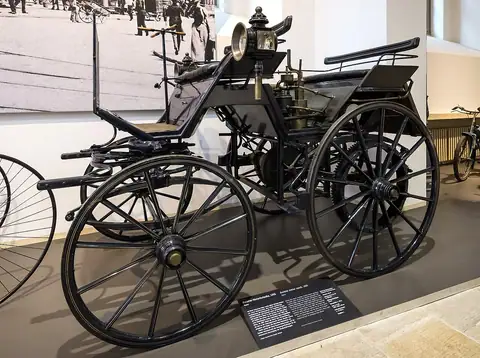
Daimler · 1886
Motorkutsche (motor carriage)
1 Built
-
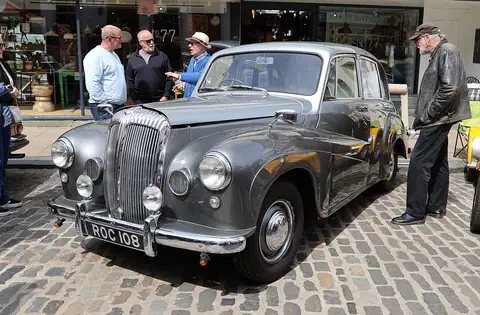
Daimler · 1954–1955
Conquest Roadster
50 Built
-
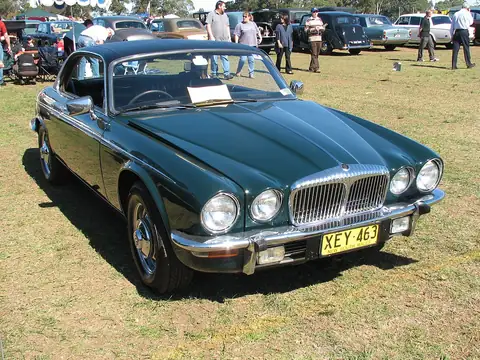
Daimler · 1975–1977
Double-Six Coupé (XJ-C)
407 Built
-
Daimler · 1975–1977
Sovereign 4.2 Coupé (XJ-C)
1,677 Built
More from United Kingdom
-
Aston Martin · 1960–1963
DB4 GT Zagato
19 Built · Aston Martin
-
Bentley
Continental T (1996-2002)
Production not yet verified
-
March · 1983
83G (1983)
Production not yet verified
-
Lagonda · 1979–1986
Lagonda Series 2 (1979-1986)
Production not yet verified
134 other makes from United KingdomACAiredaleAlan Mann RacingAllardAlvisArabArashArielArmstrong SiddeleyArrowsAscariAston MartinAtalantaAtlantisAustinAustin-HealeyBedfordBentleyBerkeleyBluebirdBMCBondBrabhamBristolBritish LeylandBroadspeedBrookeBrough SuperiorCampbell-RailtonCaparoCaterhamChevronConnaughtCooperCrayfordDavid BrownDawsonDeLoreanDuttonElvaAll makes →