Contents
01Overview
At a glance
- Built
- Not yet verified
- Years
- 1965–1966
- Engine
- Mid-mounted, stressed member of the chassis · 1,500 cc / 1.5 LFactory: 1,500 cc
- Power
- Not yet verified
- Top speed
- Not yet verified
- Body
- Not yet verified
- Designer
- Ghia (production coupe body); Fissore (prototype bodies)
- In this archive
- Not yet verified
- Surviving
- Not yet verified
Sources and any conflicting figures are in the sections below.
Why it matters
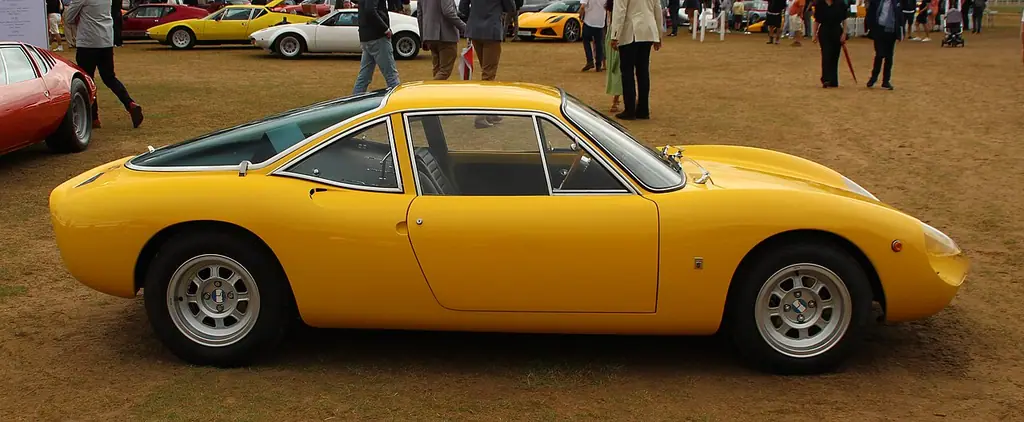
The Vallelunga was De Tomaso's first road car and was built to help pay for his racing programme. It was an early use of a central spine chassis with the mid-mounted engine acting as a stressed member, and it was shown by the Museum of Modern Art in New York as an example of technological progress and design.
How rare is it?
Six separate kinds of rarity – never combined into one number.
Each kind of rarity is rated separately and never combined.
Photos
Exterior, interior and detail photos with their licences.


02Production & history
Production
Every figure says what it counts.
No production figures recorded yet.
History
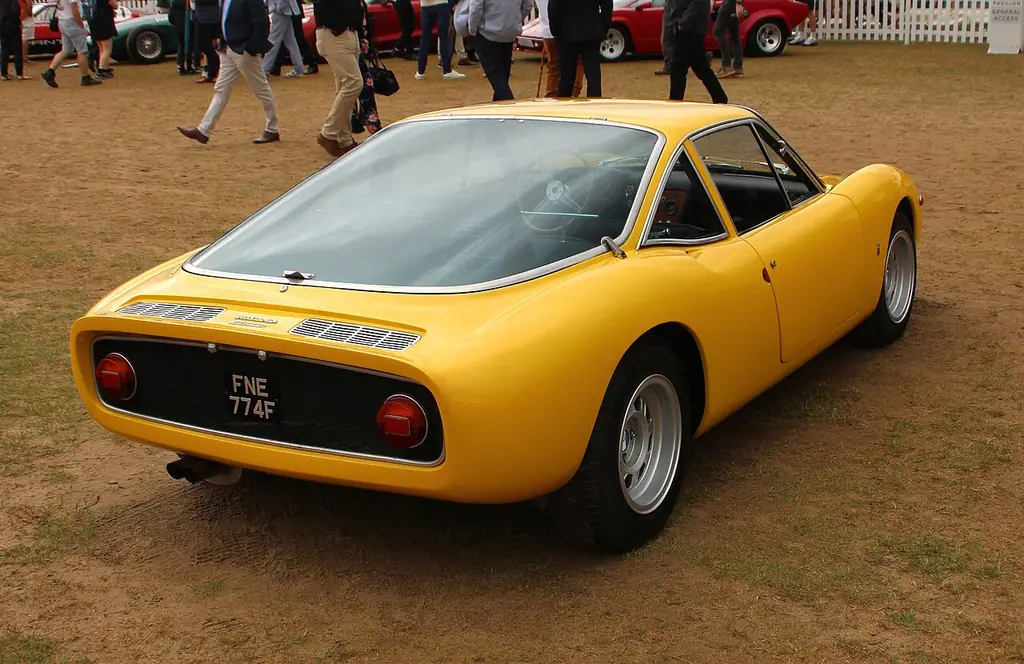
Alejandro De Tomaso introduced a prototype of the Vallelunga in 1963, named after the Italian circuit where he had raced. The first prototype was an alloy-bodied roadster, followed by at least two alloy coupes also styled and built by Fissore, one with a clamshell rear section. For production, bodywork passed to Ghia, which made fibreglass bodies with a glass hatchback over the engine bay.
Ghia records indicate 50 fibreglass Vallelungas built in 1965 and 1966; De Tomaso's eldest son thought the total nearer 58 including prototypes. The design later spawned the one-off Pampero prototype, and De Tomaso moved on to the V8 Mangusta.
Variants
How each version differs from the standard Vallelunga.
No variants documented yet. Have a source? Contribute it.
03Specifications
Technical specifications
Engine
| Engine manufacturer | Ford (Kent)1 Independently researched |
|---|---|
| Engine family | Not yet verified |
| Engine code | Not yet verified |
| Layout | Mid-mounted, stressed member of the chassis1 Independently researched |
| Displacement | 1,500 cc / 1.5 LFactory: 1,500 cc1 Independently researched |
| Bore | Not yet verified |
| Stroke | Not yet verified |
| Compression ratio | Not yet verified |
| Valvetrain | OHV1 Independently researched |
| Fuel system | Weber carburettors1 Independently researched |
| Power | Not yet verified |
| Power at | Not yet verified |
| Torque | Not yet verified |
Transmission & drivetrain
| Manufacturer | Volkswagen-derived transaxle with Hewland gear sets1 Independently researched |
|---|---|
| Gearbox | Not yet verified |
| Gears | Not yet verified |
| Driven wheels | Not yet verified |
Chassis, body & dimensions
| Chassis | Central spine chassis (square-oval steel tube) with front and rear subframes1 Independently researched |
|---|---|
| Front suspension | Not yet verified |
| Rear suspension | Not yet verified |
| Brakes | Four-wheel discs, unassisted1 Independently researched |
| Steering | Rack and pinion1 Independently researched |
| Body construction | Fibreglass (Ghia); alloy on the Fissore prototypes1 Independently researched |
| Wheelbase | 2,310 mmFactory: 91 in · converted1 Independently researched |
| Length | Not yet verified |
| Width | Not yet verified |
| Height | Not yet verified |
| Front track | Not yet verified |
| Rear track | Not yet verified |
| Kerb weight | 726 kgFactory: 1,600 lb · converted1 Independently researchedArticle says the coupe "weighed in at" 1,600 lb without defining the condition. |
| Dry weight | Not yet verified |
Performance
| Maximum speed | Not yet verified |
|---|---|
| 0–100 km/h | Not yet verified |
| Fuel tank | Not yet verified |
“Not yet verified” means no source has been checked for that value yet. Nothing is estimated to fill a gap.
04Colours & options
Factory colours & interiors
Original paint and trim, with the number of cars in each where a source gives it.
Not yet documented. Have a source? Contribute it.
Factory options & codes
Codes are shown exactly as written by the manufacturer.
Not yet documented. Have a source? Contribute it.
05Individual cars
Chassis register
Every documented car, with its colours, history and where it is now. Open a row for the full record. Known chassis are not automatically authenticated originals.
Not yet documented. Have a source? Contribute it.
Competition history
Every race result of the individual cars, in date order. Click a chassis number to open its full record in the register.
Not yet documented. Have a source? Contribute it.
Auction & sale history
Documented public sales of the individual cars. Click a chassis number to open its full record in the register.
Not yet documented. Have a source? Contribute it.
See one in person
Museums where an example of this car can be seen.
No example is documented on public display yet. Have a source? Contribute it.
06Reference
Identification guide
How to tell an original from a replica or later conversion.
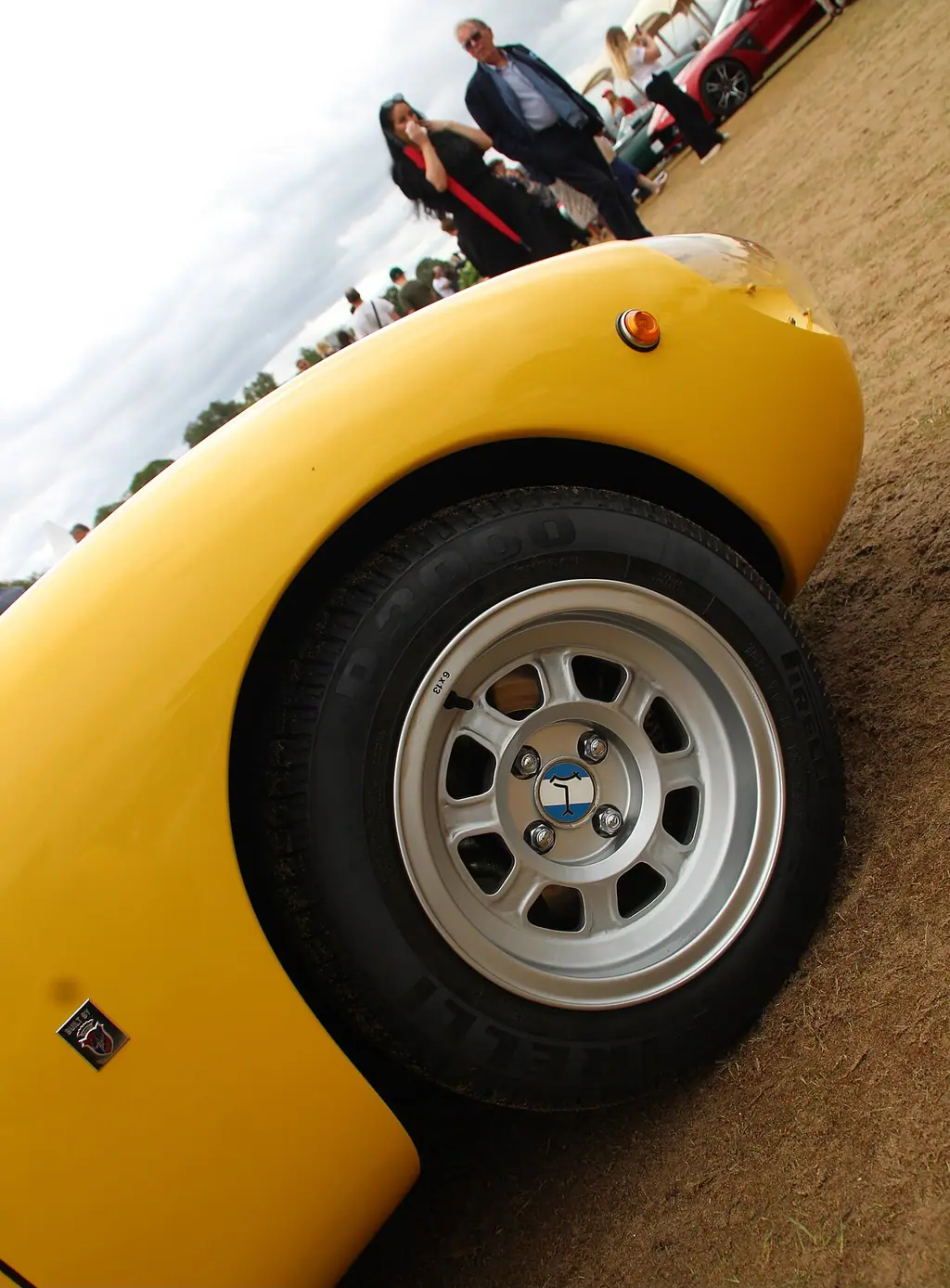
A production Vallelunga has a fibreglass coupe body by Ghia with a large glass hatchback over the rear engine bay, a 1500 cc Ford Kent engine with Weber carburettors, a Volkswagen-derived transaxle with Hewland gear sets, Campagnolo magnesium wheels and a 91-inch wheelbase. The alloy-bodied Fissore prototypes, with a hinged one-piece rear section, are separate cars.
Sources
Each number links to the exact facts it supports.
-
1
De Tomaso Vallelunga Level C European Car magazine (archived 2013) · 2013-09-25
- 1500cc ohv Kent engine
- mid-mounted engine becomes a stressed member of the chassis
- Weber carbs
- basically a Volkswagen transaxle carrying Hewland gearsets
- large, square-oval shaped tube running right up the middle
- unassisted four-wheel disc brakes
- rack-and-pinion steering
- the bodies were rendered in fiberglass
- 91-in. wheelbase
- weighed in at a mere 1,600 lb
Keep exploring
More from De Tomaso
-
De Tomaso
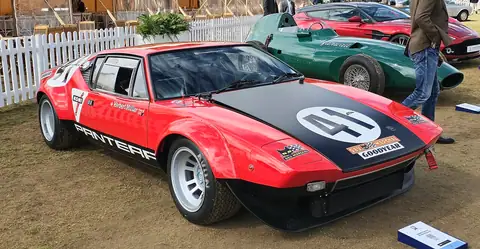
Pantera Group 4 (1972)
8 Built
-
De Tomaso
P72
72 Built
-
De Tomaso · 1970–1985
Deauville (1970-1988)
244 Built
-
De Tomaso · 1967–1971
Mangusta
401 Built
See all 20 cars by De Tomaso →
More from Italy
-
Lancia
New Stratos (2010)
Production not yet verified
-
Lamborghini
Lamborghini Cala
1 Built
-
Alfa Romeo · 1960–1961
Giulietta SZ (Coda Tonda)
217 Built
-
Ferrari · 1984–1985
288 GTO
272 Built
62 other makes from ItalyAbarthACM AutomobiliAlfa RomeoAres DesignATSAuto Avio CostruzioniAutobianchiAznomB EngineeringBandiniBertoneBizzarriniBrixia-ZüstCagivaCarrozzeria Touring SuperleggeraCeiranoChiribiriCisitaliaCizetaColoniCoviniDallaraDiattoF.I.A.L. LegnanoFerrariFervesFiatFissoreFlorentiaGhiaInnocentiIntermeccanicaIsoIsotta FraschiniItalaItaldesignLaffiteLamborghiniLanciaMaseratiAll makes →