Makes › ERA › R4D · Historically significant · 1934–1939
ERA
R4D
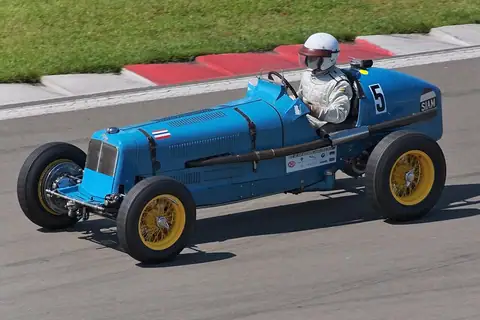
Raymond Mays' works car, converted B→C (1936/37) → D (1938)
Still being researched: full specifications. Everything shown is checked against the cited sources. Know more? Send us a source.
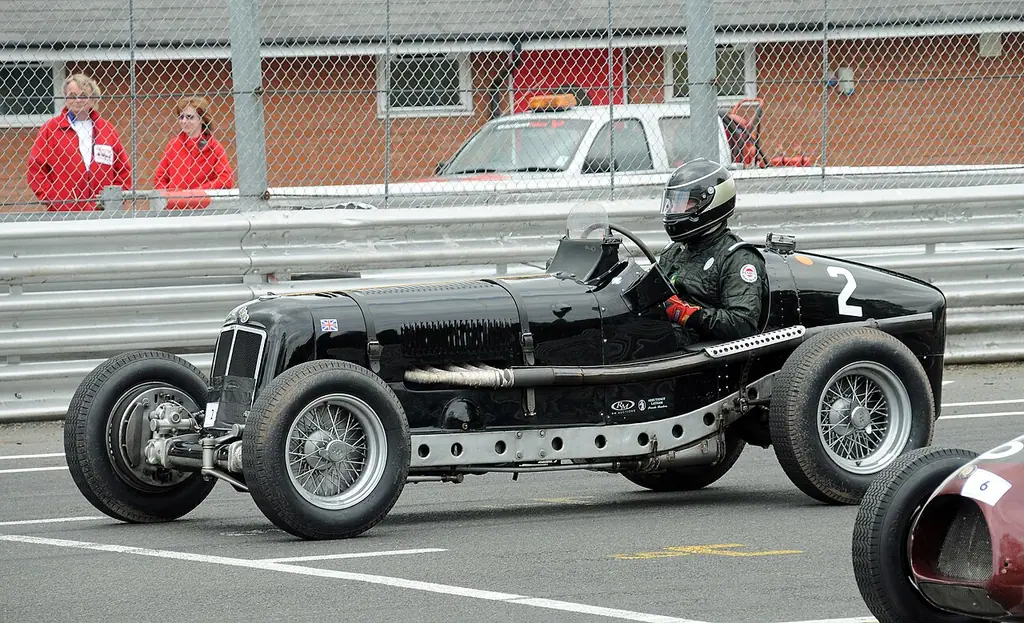
Photo: John Harwood · CC BY 2.0

Contents
01Overview
At a glance
- Built
- 1 Built
- Years
- 1934–1939
- Engine
- 2,000 cc / 2 LFactory: 2 L
- Power
- Not yet verified
- Top speed
- Not yet verified
- Body
- Not yet verified
- Designer
- Not yet verified
- In this archive
- Not yet verified
- Surviving
- Not yet verified
Sources and any conflicting figures are in the sections below.
Why it matters
The R4 chassis is credited with 26 victories, making it the single most successful ERA chassis ever built. The Ultimatecarpage text is headed R4D but refers to the car as R4B in its body; either way it is the Raymond Mays car converted to C-type and then D-type specification.
How rare is it?
Six separate kinds of rarity – never combined into one number.
Each kind of rarity is rated separately and never combined.
02Production & history
Production
Every figure says what it counts.
| What is counted | Figure | Basis | Status |
|---|---|---|---|
| Total model productionindividual car: chassis R4, which became R4D in 1938 with a new chassis frame (identity confirmed) | 11Strongest evidence | Factory production | Independently researched |
| Total model productionAll ERA cars constructed (the whole marque, of which R4D is one chassis) | 172 | Factory production | Independently researched |
Independent counts (e.g. engine and colour) are never combined into a calculated figure. Surviving examples are never presented as original production.
History
The car was driven mainly by Raymond Mays, who entered it in major Grand Prix and local British road races and hill climbs, especially Shelsley Walsh. Two years into its career a 2-litre engine and a revised box-section chassis with independent front suspension brought it to C-type specification, and a year later it became a D-type with a drilled lightweight chassis. It raced into the 1950s with drivers such as Reg Parnell and remains a regular competitor in historic Grand Prix races.
Variants
How each version differs from the standard R4D.
No variants documented yet. Have a source? Contribute it.
03Specifications
Technical specifications
Engine
| Engine family | Not yet verified |
|---|---|
| Engine code | Not yet verified |
| Layout | Not yet verified |
| Displacement | 2,000 cc / 2 LFactory: 2 L2 Independently researched |
| Bore | Not yet verified |
| Stroke | Not yet verified |
| Compression ratio | Not yet verified |
| Fuel system | Not yet verified |
| Power | Not yet verified |
| Power at | Not yet verified |
| Torque | Not yet verified |
Transmission & drivetrain
| Gearbox | Not yet verified |
|---|---|
| Gears | Not yet verified |
| Driven wheels | Not yet verified |
Chassis, body & dimensions
| Chassis | Not yet verified |
|---|---|
| Front suspension | Independent (C/D-type revision)2 Independently researched |
| Rear suspension | Not yet verified |
| Brakes | Not yet verified |
| Steering | Not yet verified |
| Body construction | Not yet verified |
| Wheelbase | Not yet verified |
| Length | Not yet verified |
| Width | Not yet verified |
| Height | Not yet verified |
| Front track | Not yet verified |
| Rear track | Not yet verified |
| Kerb weight | Not yet verified |
| Dry weight | Not yet verified |
Performance
| Maximum speed | Not yet verified |
|---|---|
| 0–100 km/h | Not yet verified |
| Fuel tank | Not yet verified |
“Not yet verified” means no source has been checked for that value yet. Nothing is estimated to fill a gap.
04Colours & options
Factory colours & interiors
Original paint and trim, with the number of cars in each where a source gives it.
Not yet documented. Have a source? Contribute it.
Factory options & codes
Codes are shown exactly as written by the manufacturer.
Not yet documented. Have a source? Contribute it.
05Individual cars
Chassis register
Every documented car, with its colours, history and where it is now. Open a row for the full record. Known chassis are not automatically authenticated originals.
Not yet documented. Have a source? Contribute it.
Competition history
Every race result of the individual cars, in date order. Click a chassis number to open its full record in the register.
Not yet documented. Have a source? Contribute it.
Auction & sale history
Documented public sales of the individual cars. Click a chassis number to open its full record in the register.
Not yet documented. Have a source? Contribute it.
See one in person
Museums where an example of this car can be seen.
No example is documented on public display yet. Have a source? Contribute it.
06Reference
Identification guide
How to tell an original from a replica or later conversion.
D-type specification, as described by the source, means a 2-litre engine, a drilled lightweight chassis and independent front suspension, with the car in that state today although many worn parts were replaced.
Sources
Each number links to the exact facts it supports.
-
1
ERA Club – car information / chassis histories Level B
- 1 individual car: chassis R4, which became R4D in 1938 with a new chassis frame (identity confirmed)
-
2
ERA D-Type chassis R4D Level B Ultimatecarpage.com · 2006-01-04
- Of the 17 ERAs constructed
- A 2 litre engine
- independent front suspension
Keep exploring
More from ERA
-
ERA · 1934–1939
R12B/C "Hanuman"
1 Built
-
ERA · 1934–1939
R14B
1 Built
-
ERA · 1934–1939
R1A
1 Built
-
ERA · 1934–1939
R5B "Remus"
1 Built
More from United Kingdom
-
Lotus
29
Production not yet verified
-
Jaguar · 1988
XJ42 prototype (convertible)
1 Built
-
Jensen
Interceptor (1950)
Production not yet verified
-
Bentley
Bentley 3.5 Litre
1,177 Built
134 other makes from United KingdomACAiredaleAlan Mann RacingAllardAlvisArabArashArielArmstrong SiddeleyArrowsAscariAston MartinAtalantaAtlantisAustinAustin-HealeyBedfordBentleyBerkeleyBluebirdBMCBondBrabhamBristolBritish LeylandBroadspeedBrookeBrough SuperiorCampbell-RailtonCaparoCaterhamChevronConnaughtCooperCrayfordDaimlerDavid BrownDawsonDeLoreanDuttonAll makes →